
Wilfrid Wood is known for his deep love of portraiture and pursuing honesty in his artistic expression, even at the risk of disturbing others.
Wilfrid Wood
Pursuing honest portraiture even when the consequences are uncomfortable
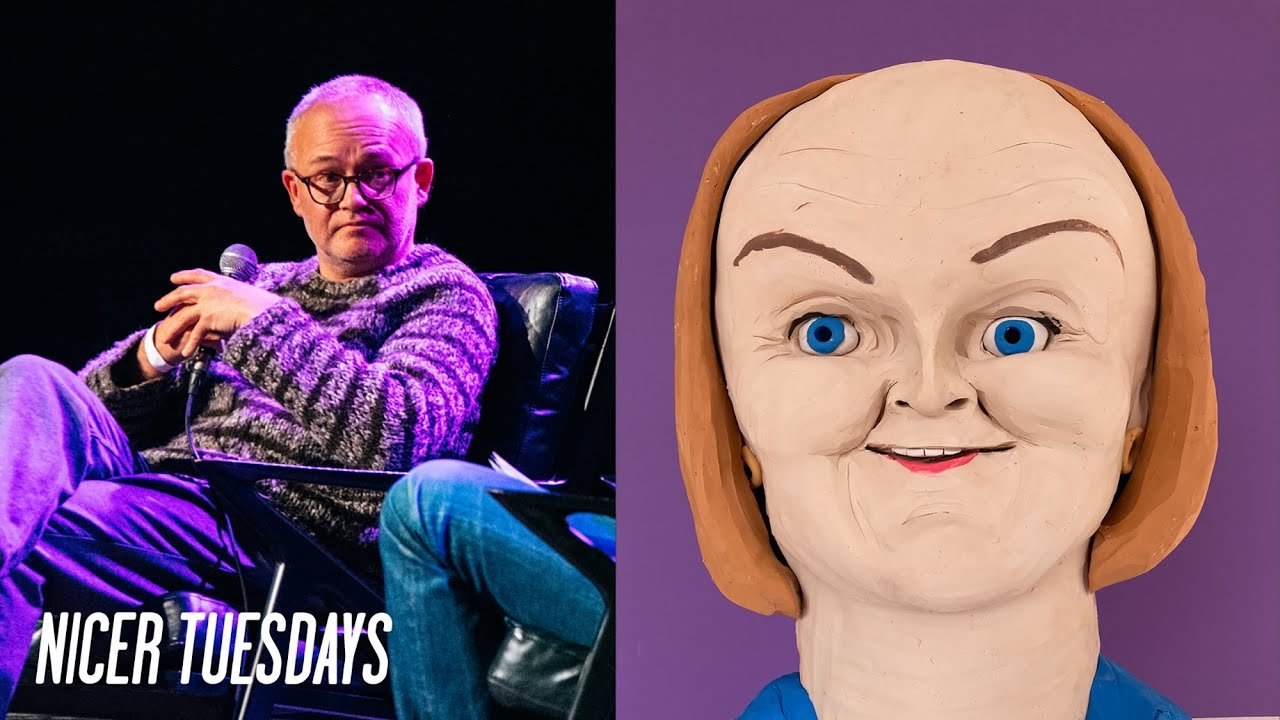
“I just have to do my job and suffer the consequences.”
Transcriptmay contain minor errors or formatting inconsistencies
How's it going all right yeah welcome to nice Tuesdays oh thank you very much how are you I'm all right have thinking it's suddenly a little horse I don't know if it's nerves or in fact I went swimming last night which sort of bugs me up a little right I'll be the swimming yeah maybe the fact it's a little bit chilly in here.
But we'll warm up hopefully I thought maybe Wilfred we could start with sculpture and caricature because you started on splitting image the TV show or at least it was one of your kind of first Geeks yeah what was it like working there.
And I guess what did you learn about the craft it was absolutely great because I've done graphic design at college and then worked in a Publishers which was extremely boring but it was good for earning a living working with people getting up in the morning for sure having been a student all the basic things of work was was good for for that period but there but but got I got fed up.
And then I knew someone who knew somebody knew someone who worked at this TV program and they were looking for apprentices and I just sort of applied for it turned up.
And I they got me on eyeballs and blinks which was eyeballs worked a little mechanism which meant they swiveled like that and blinking was a kind of horrible rubber bladder that you squeezed and the and the eyelids went so these mechanisms so I wasn't doing anything sort of creative particularly but I could drill holes and glue things and just fiddle around with bits so I was in very much in the back of the the office so to speak of the studio but then.
I did a few more slightly more interesting things like two-headed fish and dogs and pigs and things like that which were extra stuff that they needed on the program but it was just really good fun really pressurized really chaotic and it really made me see that it was possible to have fun at work and get paid for it I mean that does sound pretty good I have to say yeah there's lots of images behind us I think that's why every now.
And then there's a kind of a love but that's interesting I mean it feels like it's interesting that you started on eyes and eyes and blinking because I don't know your eyes even in your work today are such a big part of your work. And it seems to be a big part of the personality that you captured it was that's something that you've kind of started learning about on spitting image that like you know how eyes can be a kind of window to the soul almost well it's just absolutely key to a portrait.
But it's very subtle and and I'm always telling myself to to slightly amp up the eyes I think that they can do with a little bit of of of asymmetry is always interesting because no one's faces obviously a symmetrical but eyes can be very slightly off. And I try and give them a couple of extra millimeters off if I can spot it and that always gives a you know thumps up the character yeah we're going to come on to the kind of flattery or not of people that you you work with I guess in recent years you've moved increasingly into painting and painting live models how did that start. And I guess why did you decide to move into that that realm in that world well it was really because my dad was an artist and he died about eight years ago and he like a lot of artists have bought a lot of pastels because they look. So pretty in the box and they're about five or six boxes lying around in his old studio and so I had these things. And I basically thought either Chuck them or use them.
And I started using them. And I just found they were really lovely to to use and a kind of inbeteen drawing and painting in a way halfway halfway stage because oil pastels are really quite squidgy it's almost like you're using paint so I just got into that and from that I I had a show of oil of these pastels and then I I've recently got more into painting so it's just evolving from one medium to another I always you know think that's the the best thing to do as an artist is to keep moving your mediums around and then you hopefully don't get too stale even if you've got relatively the same subject matter is something is I guess becoming stale is that something you worry about you know. And something that kind of somebody's trying to freshen up yeah well you see so many artists that have really got their one thing and they repeat it Ad nauseam for decades and it. And it must get tedious for them. And so I'm sure it gets tedious for the audience but yeah I I do want to keep changing and learning from my own entertainment apart from anything else yeah and I guess I mean you you still do keep the plasticine going you keep the pain going yeah bottle pastels so it's kind of building on your practice rather than necessarily moving everything all at once yes exactly and it's really nice going from sculpting to 2D and then back again because they both inform each other quite usefully and as soon as you get fed up with one you've always got the other one to go back to for for new with with a with a like a half a percent new angle on it that you've that you've learned in the in the intermediary time sort of thing yeah I mean I want to come on to yeah I guess how you keep yourself motivated in a bit.
But I mean obviously a spitting image you kind of would basically yeah mostly it was celebrities or politicians and still a bit today you kind of depict celebrities and politicians whereas I guess you know quote unquote Ordinary People now a lot a lot of your subjects yeah what's the difference for you as an artist kind of doing a face that everyone knows or at least most people will know.
And I'm sure there'll be some behind us that are popping up and and yeah others you know people who are kind of again quote unquote ordinary well doing celebrities you feel you've got a bit of license I mean it and which is sort of generally Fair occasionally a little bit unfair perhaps but people who put themselves in the public eye are I hope and I imagine tougher and less they don't care so much how they're depicted or with spitting image anyway all star it started out with people being horrified at the way they were depicted on the on the Telly especially politicians and people like that and by the end of spitting an image if a politician wasn't on the program looking ridiculous they the politic the real life politician was upset so it's very ironic how that sort of thing works but I Madonna just won't sit for me.
So I have to do it from photos and I do my best to make her look you know full of the surgery she's had wears a real life a friend or a person that messages me through Instagram or something like that or Commission they're real people. And well not the Madonna isn't a real person.
But they're they're real they're real honest direct individuals and I'm more sensitive to them I think than I would be to a superstar and I guess you you're unlikely to meet Madonna walking down the street whereas someone who's yeah message you on Instagram you might have to see them again after you've after you come on there's that yeah but also they they probably know what their what they've come for you say especially if they're commissioning it.
So I don't think they're well sometimes it is a bit of a surprise to them perhaps but it's not that I'm not going out and out to upset them yeah I mean that's a really interesting point because I guess as I mentioned before you are kind of brutally honest sometimes with what you're seeing whether.
That's kind of accentuating yeah the difference between someone's eyes or a facial expression you might exaggerate slightly I'm sure you've upset people in the past who've sat for you how do you manage that and like I guess what do you say to them if they are upset I just sort of fudge it and and pretend I don't know well I say pretend I don't know what I'm doing but I kind of say do you think so I didn't really intend that to be I'm sorry that didn't quite work out or or I'll whereas actually maybe that was exactly what I'm meant to do so so it's just fine it's find a way of sort of softening it.
But the thing I've noticed is that you can't tell in advance what people are going to say sometimes you think people some some people seem like they'll they're up for anything and they're a bit like oh dear that wasn't quite what I was expecting or and then other people who think that you think they'd be very sensitive waves I'm mad for it and you can't push it hard enough so the one time I did this sculpture of someone called called Chop I can't remember his first name he was he invented no dupe he invented the the scent called dupe exclamation mark and he is a some old Queen who had loads of work done on him and he looked really ridiculous absolutely stretched out like that. And I did a plasticine sculpture of him and and really gave it the Max and it was in a magazine and thinking that he'd hate it and be be almost you know cross about it.
And it turned out he was the only person I'd done about 10 different fashiony celebs for this magazine he was the only one who really liked it reposted it and everyone was happy whereas other people like Dolce and Gabbana wouldn't allow it to be printed because they were so offended by it. And I thought I'd been I'd been fine to them so with with things like that you just what I've realized is I just have to do my job and suffer the consequences because if you start second guessing all the time what what each person is going to think of what you've done you're just your your hands struck or whatever the word is ham tight strings and tight strings yeah you're basically stuck and it inhibits you so you have I have to do my job I mean while you're doing it have you ever had that feeling of like oh I'm pushing this a bit too far they're going to be annoyed at this or generally are you kind of yeah I guess like comfortable with the fact that you're you're pushing it that far no sometimes I'm I'm a little bit worried about it.
But it's hardly going to kill anyone you know it's a it's it's it's it's it's fun and interesting hopefully it's rarely that people have a serious problem with it I mean they might be a little bit put off or a little bit I did draw one woman who burst into tears when she saw it but she was going through a divorce and she'd she'd spoken in detail about her divorce as I was drawing her.
So I mean she was just ready for for trouble it's not all it wasn't my fault it's a heightened emotional state yeah yeah I mean it kind of speaks to the relationship between the artist and the model it's at the same time it's like really intimate but also you have to have a bit of that critical distance as the artist to see them in a really kind of dispassionate way almost that's absolutely it I think that's almost the line that you're treading is is is quite a lot of human empathy plus a cold ice cube down your back thinking what can I do with this object in front of me.
So it's a very funny mixture and and I think that for someone like me a bit of both is quite necessary and has the best result and what's interesting is I think you're are you thinking about like an audience someone who's looking at this afterwards because I just think like if you're when you're working in magazines and you're interviewing someone you're thinking about you know not offending that person but you're also thinking about your audience and actually you're doing it for the audience rather than for yourself or for that person that you're interviewing necessarily whereas I guess when it's art it's not necessarily for an audience it's kind of all it is for you sometimes or it is for them.
So there's not that that complication well that makes sense this is a yes it does but it's this is a very big subject and I think maybe what you're talking about is the kind of difference between graphic designers illustrators and and fine artists or traditionally what you'd think of that distance difference is that obviously illustrators are usually doing things for and or very directly for an audience and for someone who's commissioned it and all and money's involved and all that sort of thing and a super pure fine artist should only be doing it entirely for their own satisfaction you you might save you to put them at the two extremes and I don't think I'm either really I'm somewhere in the middle and of course I'm aware of an audience but at the same time if you it is the the another recipe for repetition and caution if you're constantly worried about your audience so it's one of those things.
That's a bit of this and a bit of that yeah that's interesting I mean there's a lot of Courage involved in here kind of I guess yeah just going for it and not not worrying too much about the person your your drawing or the audience and what they might think I guess yeah you have to be quite you have to be quite bold and brave a little bit and but you you can see that with all sorts of artists all over the place I mean from for David Bowie to go from Ziggy Stardust to Young Americans what a nerve isn't it yeah true true or and then other other are like for Damon Hurst to do another spot painting what a total lack of imagination so you know yeah two sides of the same color sauce isn't it for sure I mean I do want to move away from this in a second but I'm interested is it harder to draw someone you know really well like is it harder to draw a really good friend or yeah a much harder it's awful but really just because I'm so much easier more easily satisfied with a stranger because I don't really know what they look like so I'm drawing them I think oh that's pretty good but if it's someone I know I'm constantly thinking that's not really what they're like so yeah much harder to draw people you know interesting did it take a long time to kind of learn how to look at a face because I mean yeah as I said I kind of you came around to it's nice that office before Christmas and did portraits of all of us which was very kind of you.
But I was kind of amazed by the focus and the way you were looking at my face even while we were kind of talking it was very it was very intense I couldn't keep my eyes off you is that what you're trying to say that's kind of what I'm trying to say yeah [Laughter]
did you was that something you had to teach yourself like how to study your face or did that just come down what it is is I think what I've over having done loads and loads of portraits I think what I've got reasonably good at is basically looking at her face and thinking about like 10 different things that have got to be in the drawing so I'm looking at you.
And I see glasses and I see a fair nose and I and I see afraid I didn't realize we're going to do this live on stage this is quite a lot of hair and and quite round dark eyes and and all those bits and quite a jaw all those all those bits have got jowls I think is what they ended up in they've all got to be in the drawing and it's almost like a mental little list that I've got in my head of what is what are the the key points and as long as I can keep on it with them other bits can slightly slide but there are some key things that you have to keep in mind if you're to get a likeness if likeness is your primary objective which it isn't always because Lucian Freud said no it doesn't matter whether a portrait looks like the person or not because nobody's gonna know who they are in 200 years.
So that's thinking like big big time you know your portrait is going to be around for 200 years it's going to be in a museum and it's going to be a really important work of art which is not the way you know most people or me really think about our work you know it's very important that my portraits looked like the person they are depicting otherwise I'm you know it's just a an a blank person a blank human I want it to be absolutely specifically individual to that very specific unique person if possible yeah and I think that really comes through I mean in all of the yeah the drawings you did that day of our team I mean yeah it's very clear that you've highlighted the unique things about that person.
And that's why you've accentuated do you always start with the same part just a question on process really do you always start with the nose or do you start with the thing that grabs you first from looking at their face where do you start a portrait normally I try not to do to get into too much of a habit I think habits are generally slightly to be avoided if you can one thing I do is every Sun not every Sunday most Sundays I go to the South Bank and there's a group of us that meet up and do Port 15-minute portraits we just like one of us sits there.
And then everyone around draws that person then they sit down then someone else comes and volunteers and sits there 50 minutes so you get loads of people a bit like when I came and Drew it's nice that bang bang bang bang bang and that's really good practice and it means that you start to get a bit kind of almost like oh God not another Fed Up of doing it and at that point you think right I'm going to start with the chin or I'm going to start with the that side of the no of the ear or something just to ring the changes and I think that's really good because it stops you from getting stuck so but that's that's that's the good thing about doing one and then another.
And then another.
And then another in in Rapid succession it's interesting I mean all so many jobs you know involve repetitive things that you have to do and actually the idea that you can mix it up and start somewhere different do something slightly different you can just draw in a slightly then use more tone or use more line or you know there's a drawing is is practically infinitely variable I'm very glad to say so you know there's always scope for some new sort of path to take into as an individual yeah a couple more questions about your kind of process I guess how do you generally find your models I mean it seems like you do get quite a lot of requests through social media but do you also just see someone on the street sometimes and go I must draw you and ask them there.
And then well I do but I shouldn't and I mustn't and the other day the other Dows walking just on the road where I live and this boy walked along with a massive afro and he looked fantastic and I was like and then I stopped myself so okay it was a school boy and I thought no and then. I went back home and said to my boyfriend God that guy walking down the road just saw him with this amazing afro and he said do not go up to school boys on the street ask them to come back to your flat so you can draw them. And I thought well yeah absolutely fair enough so no I don't ask people on the street and if I ask some old man with a big nose he'll say well you're only one at all because of my big knows so I don't ask people on the street anything like that luckily people volunteer on Instagram but it means basically I get good looking hipsters which I've had enough so if there's anyone a little bit you know off-kilter in the audience who'd like to send me a message on Instagram and isn't too good looking then Bring It On any takers out there do you find it easy working from life or from photos or what is the difference if there is a difference and are they just two very different skills yeah that. That's always a tricky one well the the if you do draw from photos you can do someone going you know it doesn't matter right and no you you've got all the work all the time in the world to do it but you can also make a cup of tea halfway through and the whole thing sort of can lack intensity but if you've got someone in front of you who is getting a bit bored and fidgety or pins and needles or whatever you you really have to concentrate and I think there's the the interesting thing about drawing a live person in front of you is the kind of energy and it's a little vibe that.
There is in the room and that I hope comes through into the drawing so I only really draw from Life unless it's Madonna then. I have to use a photo but yeah it's drawing from life is is exciting and it's much more interesting in terms of people as well let alone what they look like so I'll always draw from life if I can and how much when you're having you know when you've got someone sitting in front of you are you talking and that conversation is kind of I don't know somehow influencing the photos well I nearly always start by saying I'm sorry I can't talk if I'm drawing because some people cannot stop talking and it's and it. And it's too much. And I have to really say I'm sorry that then I can't do it.
But then my hairdressers you know yeah but then other people just talk a nice amount and that's fine so a little bit of of communication is fine but initially for for at least sort of five ten minutes no talking just just because it's really important that I try and get everything vaguely sort of set up.
But then later on it gets easier I guess we've spoken there about your your work your kind of process your practice I'm sure lots of people here as well will be wanting to understand I guess the more personal side of being being an artist what do you find like the hardest thing about being an artist and I guess how do you do you work around that because we've talked about you know making sure you're kind of freshening up your your process and things like that.
But yeah what's the what's the hardest thing about being an artist for you and how do you work around it I suppose one thing. That's difficult is having shows and shows have got to be done otherwise everything just stays in drawers or you only see it that big on Instagram or on a phone or whatever so having shows is quite it's expensive it's stressful everything's got to be fairly right about it you're terrified No One's Gonna Come also I'm just doing bad work for me really gets me down.
And it it puts an awful poison in the in the day but that's that's the only way. That's that's that's because I care about it and and it has to be like that really. But if I it is terribly disheartening and you think you'll never do another a good drawing or painting again and it is it.
But it's you know it's your own little tiny world of misery and it's fairly fairly temporary usually and it's very uplifting when you do do a good job you think or you make a little breakthrough or stuff like that.
But it's it's very emotionally it's a bit of a your own little personal roller coaster because you care about it so much all the time it's very my therapist says it's very hard to with an artist to pull apart what is the person and what is their work and she with an artist and and for most people they're too much more separate things but for me I almost am my work and my work is me. So if my work goes badly it's it's an extreme failure on my part. That's interesting yeah I mean I guess I was going to come on to talking about you know motivation and how you keep yourself inspired because I mean most yeah I guess most Freelancers at my age you're about to say I was not gonna say that not at all thrown me off I guess most Freelancers in this room are kind of you know they'll have they'll be working for agencies they'll have clients that have you know massive schedules and deadlines I guess you do also work to deadlines but they are sometimes kind of self-imposed deadlines I guess how do you keep yourself motivated you know stay inspired in that situation because I've always I've always got dogs biting at my heels it's part it's it's a little bit because I feel I I spent all of my 20s you know kind of doing odds and odds of jobs and trying to be a graphic designer but I was a crap graphic designer so I gave it up I'm glad to say because I was just useless at it.
And I did some work that I didn't like very much. And I feel like it's taken me ages to get to a point that I re where I'm really enjoying and so intensely involved in the work I do and it feels like time's running out. So it's just it's you know it's it's a it's an anxiousness and a and always the anxiousness to sort of prove myself and that just comes from a sort of edgy disposition really you know it's it's it comes from from a certain sort of uncomfortableness in life there's often a spur for an artist to create so it's always sometimes it's come from quite negative things but hopefully an artist can turn it round into something creatively positive it's kind of like restlessness and yeah I guess you said like anxiety around it yeah yeah I mean I always I always wonder if you know someone very Zen how what they could be an artist what art would they might they produce you I think in you know a certain amount of trouble in life is quite useful motivator yeah interesting we're going to have some questions from the audience that have been submitted from our audience and it's funny that you mentioned age because the first one is from Geo law who says as an artist do you ever think about retirement and if so what would that look like no not at all I imagine I'd just keep going but then it could sort of fade away or Peter out really.
But it's really it is my it's my fun and my entertainment and my the thing that that keeps me going so yeah it's not something I'm longing to give up in order to sit on a beach fair enough yeah thanks to you for that question question from Phoebe would you ever collaborate with a stop-motion animator I guess this is on the plasticine side of things well people are always suggesting that I do animation. And it's fine but they've basically got to do it foreign [Laughter]
I think Phoebe might be hoping to that you would say yes we can collaborate there but sounds like a bigger job question from Ayla what do you do when someone's sitting for you and they're really nervous do you have ways and techniques for yeah well for a start it's so funny how nervous people can be as if something awful is going to happen or I'm or I'm going to tell them something they didn't know about themselves that's that's awful so I it's it's quite strange whereas I and I don't know what I do to relax people apart from try and be fairly friendly and offer them a cup of tea and kind of be normal not be too weird and I try not to stare at them too much when they walk through the door or make an appropriate comments so you know it's just being nice just being nice relaxing and then I can get down to work and they the hopefully they're okay but it's very key that the it's a definite collaboration you know it really is because we're absolutely doing it together all the information I'm getting is from the sitter entirely so everything depends on them. So it's it's very much needs to be a nice relaxed and relatively sort of warm positive scenario so a cup of tea yeah cup of tea can do a lot cup of tea does a lot exactly question from Callum Taylor what mediums do you want to give a chance marble bronze chainsaw ice sculpture well.
Actually the thing that I keep putting off. And I really longing to start getting going on is simple old oil painting so yeah I've done lots of other stuff but oil painting is always the big one and I really want to have a go I'm liking this this kind of quick fire audience questions well is that the address the idea isn't it yeah yeah absolutely yeah Gracie asks which do you prefer to include in your portraits animals or babies because you've done some amazing dogs and some amazing babies as well.
So yeah which do you prefer I don't I'm not sure about that I mean both both are really good fun to put in a picture with adults uh I think they can both look funny popping up popping up in the picture yeah and a question from Haley our final question when you meet people do you think about how you'd model their face so if you're just a bar when you when you meet people oh yeah.
So when you meet people in a bar when you leave the world so when you meet people I'll be very very clear there do you think about how you'd model their face are you kind of analyzing every feature well like Perry I can't remember people's names because I because I'm not really I'm just looking at their face definitely and I don't listen to what they say because I'm just looking looking at their face so yeah I can get very transfixed by people's looks I've I always find it absolutely fascinating how people look and lovely and bewitching that's a lovely word for it yeah I guess final question for me if you could paint or sculpt any person living or dead who would it be is there anyone out there that you think just has the most amazing fascinating face that you would love to love to work with but yeah well I I'm sometimes you know a model or someone amazing looking comes in and well a bit like that quote of mine that you said at the beginning and sometimes very someone very ordinary comes in and I and I do a better picture of the ordinary person so people don't have to be spectacular looking in order for me to to hopefully do a good portrait but someone who I I I've always got repeatedly come back to is Paul McCartney because his face just seems to melt but more increasingly so he's always he's always someone I like to go back to have you done you've done his face a few times I've sculpted him. And I've drawn him okay okay and yeah he's he's still his face is still moving [Laughter]
downwards just get the just get the kind of electric heater on yeah when you're working with the plasticine well for it it's been an absolute pleasure I'm afraid that is all we have time for this evening so please everyone join me in saying a massive thank you to awkward [Applause]
Latest Talks
-
Murugiah
Why you should reject the formula and make art about things you love
Watch -
Amber Weaver
How does contemporary type design translate into the wider world?
Watch -
Delali Ayivi
How does photography give us the right to imagine our futures?
Watch -
Will Anderson and Ainslie Henderson
Bringing stop motion sorcery to BBC’s Small Prophets
Watch -
Ollie Babajide Tikare
The importance of not flattening the complexity of observation
Watch -
Marina Willer
Design thrives when you find poetry in the simple things
Watch