
Trevor Jackson is known for his love of pursuing numerous creative endeavors simultaneously while maintaining his individual principles. He is a prominent figure in various industries and mediums.
Trevor Jackson
Creative freedom means doing it entirely on your own terms
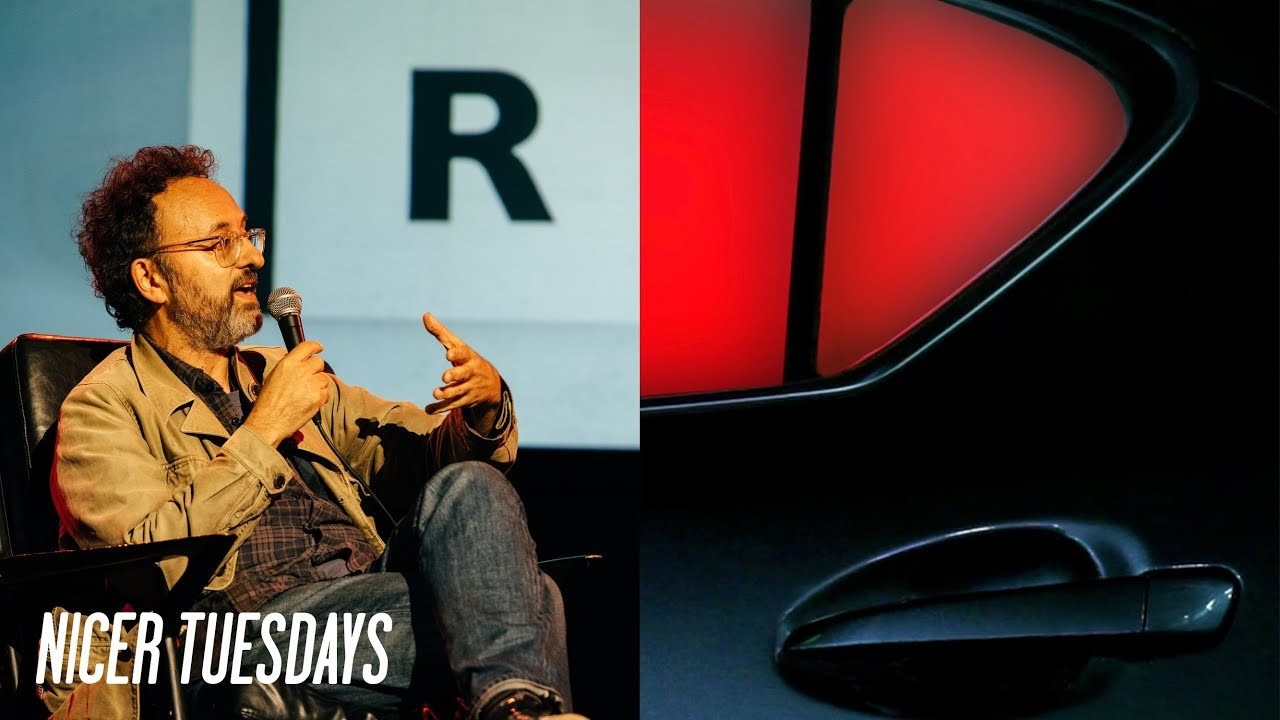
“Creative freedom isn’t just about doing what you want; it’s about doing it on your own terms.”
Transcriptmay contain minor errors or formatting inconsistencies
[Applause]
One of the challenges I had with writing that introduction was knowing how to describe you because you do so many different things that it is quite difficult to land on one noun that captures it all I mean you've done yeah. So much stuff so I guess I'm intrigued what a normal week looks like for you are you kind of constantly flitting between art design music projects or are there months at a time when you're just working on one thing I find I get the best out of myself when I do as many things as possible at the same time because I get bored very easily and so if I'm doing two very very different things I can stop one thing and go okay I'm sick of that I'm just going to do that instead so normally I really unless it's a really really big project that needs a lot of my time I very rarely work on one thing at a time interesting I mean I guess you've had from the very start of your career these kind of parallel careers in music and design and I read somewhere that initially you kind of kept those very separate kind of a separate as possible because lots of people out in the world at that point didn't really understand that you could have those two things simultaneously and you said that that changed for you in in 2015 with the format project for the vinyl Factory could you just talk us through a little bit about that project.
And I guess how it changed the way you thought about your career after that but just talking about what you said there the thing is what happened was when I first started doing design and I was also making music if the people I was I was designing recklessly for fanat I was doing music they'd be threatened and vice versa back then it was kind of very it's quite different it was quite rare for someone to be struggling all those different things and format with the first time I think I found my own voice where I joined uh my visual Aesthetics and my music together and they'd always been very separate I kind of never found a way to to have my own project where they they worked together. And now you're kind of fairly comfortable with that being yeah hand in hand I guess I love what I do so I'm comfortable with I mean I work by myself I've always worked by myself and I do exactly what I want how I want when I want it's pretty good luck that does sound that does sound good but one thing I was kind of yeah intrigued to hear about is you spoke before about how when you were growing up you I think your first kind of initial design education was about science fiction books comic comic books fantasy novels how much do you think that is that first kind of introduction to graphic design has influenced I guess your love of the the subject and yeah what you've gone on to do next I mean the thing was I in this country if you read comic books you're a bit of a wanker back then no one really thought I mean I used to go to Paris all the time and buy comics in Paris because their Comics were an art form and in the UK and even America you know if you read Comics you're a bit of a nerd and people didn't respect Comics at all.
But I was really really inspired by comics and video games so a lot of my early work was really all about that okay okay we will come on to some more recent work.
But I kind of wanted to have one more question about how you started out because in the late 80s when you started doing record covers you're working by hand I think with mostly or only a photocopy as your kind of only tool and I think you said you got your first computer in the early 90s so yeah yeah again I'm just kind of curious how did that that handmade nature of your early work how did that influence this is all done by hand so Back in 88 there were bigger companies that. And it's part of the reason why I've stayed independent because back then.
I had a very Punk DIY aesthetic to myself and like attitude I was very arrogant I want to do this myself I don't want to be one of those companies that employs 50 people at that time they were all run by old men who are now younger than me who were making records for records that they didn't really like but for me I was all this stuff was done by hand with rotoring pens and Ruby lith film it's like kind of a kind of yeah kind stuff out. And I did all this stuff then and when computers started coming in I kind of started experimenting with I had a Mac classic and at the time I kind of never Brody took me under his wing and he was around the corner for me in Liverpool Street he had a am I talking fast enough or too fast he had a studio I used to go and visit him and he he was a very very early adopter of computers and Max and I was inspired by him.
But I used him in a very different way I did stuff which was quite again kind of like quite 8-bit and and I didn't have a lot of money so everything was done with it I said with photocopiers and well I did things as cheap as possible so I could probably make as much money as possible if I'm honest with you fair enough yeah I mean staying briefly on the subject of kind of a designer's tools you once said an interview I think it was with us in fact the the current tools are the designers disposal mean that it's kind of easy for anyone to make professional looking work without necessarily having kind of training given that context I guess you also said that the intention behind the work becomes even more important I'm curious like what what do you mean by that how can the intention of a piece of work be more important than the outcome at the end because that's all that matters the reason you do something is what it's all about for me what I do this isn't a lifestyle to me.
This is my life.
This is something I've grown up on it's something that has helped me through really rough times it's pretty much fueled my life and for me right now like I said anyone can do anything that looks good I'm not impressed by things that look good anymore it doesn't move me I'm impressed by ideas I'm impressed by people that maybe the outcome isn't great but the reason they did it is fantastic and that I mean both in music. And in visuals that's really what excites me right.
Now I mean the democratization of design and technology is kind of interesting but at the same time I come from a generation where. And I sound kind of old and maybe younger people who go whatever but for me if I need like I remember I was really obsessed by Saul bass for instance right which yeah but at the time.
This is like in the 90s if I wanted to find About Soul bass there were no books there was no internet the only place I could go was the BFI library and look at microfish film and sit there going through stuff and getting photocopies it was a real struggle to get the research material I needed and that struggle made me care and made me passionate about everything I do because it wasn't a simple process and I've mentioned it before.
But I need things to be difficult if things are too easy for me I'm like no this isn't right this shouldn't be I need to have a struggle with everything I do it makes things feel more worthwhile at the end which is kind of difficult for my own life it's not great for me personally but I get the best results that way it's interesting you talk about there needing to be a struggle because one of your more recent pieces of work was you made a kind of visual world for looking at my pager which is the new single by KH AKA Forte which involved using some very like outdated software and outdated Tech like a text code generator could you just talk us through how you created that project because I feel like that sums up the the struggle that you're talking about well it was more of a struggle because I've known Kieran for 20 odd years. That's Kieran hebden yeah.
So because I I put out his first records on my record label I had at the time. And I haven't worked with him I mean I've kept friends with him.
But I haven't worked with him for a long time and he got in touch with me.
And I'm like wow this is kind of hard because he's a friend and now I've got to do something for quite a big record for him. And I probably presented more visuals for that project to him than I've done for anyone I probably did about 30 ideas for him and normally I presented three or something and he said to me he wanted something really immediate and something that didn't feel too overly considered and so pager I just thought oh old technology old messages kind of digital text and somehow we just stumbled upon using ASCII generators for which isn't an incredibly original idea.
But I try to do it in a in a an interesting clean way.
And so created the all the sleeves and the the video particularly took like 20 days nights of solid work by myself just doing the video and working for your friends is one of the hardest things you can do because you you don't want to let them down you know yeah exactly you kind of yeah you don't want to have that they're the harshest critics well they're probably not the harsh critics but you want to be your very best self for them right I felt I'm proud of me and also someone whose career I nurtured so I was I'm really proud of everything is done so I you know I wanted it to be as good as possible and how did you find these yeah text code generators and all this old this old Tech where was that kind of part of the struggle was finding the right pieces of equipment to make to make this work finding an ASCII generator to do images is piss easy but then when they said to me can you do a video doing the same thing that was a problem and I actually had on a really old MacBook from about 15 years ago I remembered I had a program on there.
But I couldn't output the the the visuals from that because the connection wise I couldn't do it.
So I had to shoot that off of us it was a convoluted way to create something which I probably could have done if I co if I found someone to code it I could have done it easier but I'm kind of I stupidly want to do everything myself and it took me a long time to do but yeah I mean I'd love to come on to that you're kind of working for yourself when by yourself because as I mentioned in the introduction you've worked with some of the biggest brands in the world but you've never launched your own Studio or agency I mean it's not like we're up here talking about your kind of team at the Trevor Jackson company so yeah why have you always kind of preferred to work on your own and why didn't you go down that route I guess of setting up a studio with 20 30 people because my aspirations are purely being creative and nothing more I've I've only been driven by China to have a great output of my work and most of my contemporaries around me people that run very successful agencies the majority of them don't seem that happy to me they're not doing the amount of creative work they want to do I've had a record label before. And I employ people and the responsibility of employing people just there's a burden to me I didn't want that I didn't want that feel on that responsibility to take care of anyone else and have to look after people not in an uncaring way if anything I care too much. So it just kind of forced me to and also I'm proud because every single thing you'd see I did myself every single I edit my I do everything myself apart from photography because I have great friends with photographers and I'm not as good as them.
And I'm really proud to say that everything it's my hand and also it's expression I I see myself maybe as a more an old school commercial artist you know. And it's important to me. That's an expression of myself and also going back to when I first started I was very anti corporations and anti-agencies and that whole thing I wanted to be a Maverick kind of Underdog that was my whole kind of Manifesto and it's just stayed that way it gives me a freedom and it's never stopped me from getting bigger projects I've never had a client turn around and say to me are you sure you can do that because you're just by yourself I've never had anyone say that and also it probably keeps me quite competitively competitive financially because I don't have the overheads of a massive company so it's been a win-win for me I've never considered but the times I've considered it I've realized this is not for me really does it affect the kind of timelines of projects I mean I guess you might be cheaper than some you know agencies but does it take you a bit more time. And is that a good thing in a way that clients can kind of have that yeah conversation with you every day for you know a longer time I don't want to blow my own trumpet but I've got millions of ideas and it's never a struggle to come up with a good idea ever it's hard it's I'm just being honest it's like I have billions of ideas and my ideas come to me in the shower in the morning I just some great idea pops into my head and I've learned not I think I did something for there was I was asked this question.
But it's nice a while ago.
But I've learned to never strain and sit there think what am I going to do because at the most random moment the idea just pops into my head it doesn't so but the answer to your question it doesn't affect the timeline at all anything you've earned the right to yeah to say that. And I think you know we can I mean I'm not saying they're good I'm just saying I've got loads of ideas a lot of them is A lot of them are ideas but I've got a lot of ideas I don't run out of them and obviously we can see on all the work behind me that.
But I'm really Keen to talk about your process because I think you know you've talked a bit about how you come up with you'll send a client like three ideas you know rarely more than that yeah I'm just interested like there's obviously such an Eclectic amount of work in your in your portfolio it's obviously you know is there anything that you feel kind of characterizes a Trevor Jackson project is it you know a similar approach that leads to very different outcomes how would you describe it I've kind of strived to never have a look to a specific kind of style which is probably hindered me in many ways but it was also it's always been most important to me that my work is a collaboration with my with my client and the work is about them not about me I've always put my client first and thought it's not about I don't want to imprint my personality on on the work so much it becomes more about me than them I mean I don't have that kind of ego I mean you guys asked me to come up here and talk about talk about myself and I don't want to do that I don't do that I don't feel comfortable just talking I'm more than happy to have a conversation I love it you know we haven't got time I can speak to other people I'm more interested in other people than I am myself so fundamentally I've forgotten what the question was but it was about it was about your approach to projects and I guess if it varies depending on the project or the client which it sounds like it does there's not a kind of set approach no no but the thing is it's interesting I've gone full circle because my work at the beginning kind of did I was I was learning a process and I've been through a really convoluted process over the last 30 years.
And I've now come to a point where I've kind of got into a a place where I feel I've got a visual language again and also with my my music I finally hit a point where. I think musically I've hit a point where.
I think I want it to be and I've kind of Gone full circle in a way visually for sure but again the client is always more important than me and talking about kind of looking at your early work sorry you've spoken before about how there was a kind of youthful exuberance to it and a kind of I guess a naivety to it but loads of energy in that and you've kind of tried to retain that throughout your career and I guess particularly recently but bringing in I guess a bit more of your experience how I guess some advice for people out there how do you kind of yeah manage that balance of youthful exuberance energy but also kind of bringing your experience into things amazing it's incredibly difficult and the thing for me is I'm attracted to like music I'm attracted to demos I'm attracted to People's First recordings where they have that essence of just messing about accidents happen and the results are beautiful I used to have that with my work.
And it it's changed and I've tried to find a way again to get it's almost impossible musically I've done it recently because I've bought new equipment and I've taught myself I've rejected all the processes I had before and got new pieces of equipment I don't know how to use I don't read the instruction manual I just play around and things happen I can't quite do that I mean visually I work with a lot of analog old technology and you can do that in a way because nothing can be planned things accidents happen and most of the most beautiful things that happen are the accidents and there's a sense of kind of excitement and childish Navy that comes with that but something I strive for because that feeling when you first stumble upon those things is incredible and you it's very very hard to to rekindle that but but in terms of just make keeping it fun it's just about choosing project I mean I'm very lucky I only do work that I want to do I don't take on every job partly because again I work by myself I don't need to fund a big studio so I can I only work on projects that I really really enjoy you know yeah and to your point I guess if you have a set approach to projects it's kind of probably more efficient but maybe you don't have some of those accidents or those you know kind of fun things you wouldn't be you might be surprised by that that I guess tends to happen when your approach is a bit more free to each project yes excellent moving on I guess in more recent times you've moved on to walking working on moving image our installation work I'm really interested to yeah to hear kind of why how that's appealed and how you've moved into that kind of space a bit more I mean when I wouldn't say it's art per se it's personal work it's just because of that reason because I think I put my clients before me a lot of the time I just wanted to again I can do it in music but visually I can't do that unless I'm doing personal work. So it's just been a way for me to kind of express myself visually away from the commercial work I do nothing more than that really but does it feed back into the commercial work at all or is it just kind of pure separation church and state no no I mean everything I do is me.
So there's no separate you know I used to got to say you've asked some great questions tonight but normally I get that question like oh how do you straddle between doing all the different meat you know stuff like it's just me I just do it any challenge that comes to me I just get excited by and I just do it.
So if no it's not overly considered like that you know and finally I wanted to talk about I guess the design a bit more writ large I listen to you speak on a design Museum panel connected to their exhibition on electronic music a couple of years ago and you said that you felt musically there'd never been a more exciting time than now. And I think partly that was to do with the democratization of Technology for music production do you feel the same about design I mean are you are you kind of feeling like there's there's never been a more exciting time than now in the in graphic design or do you feel the Design's kind of gone in the opposite direction in terms of variety or yeah fun generally there's just too much of everything for me right now.
So I'm I'm losing my perception of kind of what is good anymore because I see so many things I think look seem impressive but bombarded when I'm just going through my phone it's just hundreds of things I'm like does this really matter anymore if I'm honest so that's kind of like whereas music's slightly different because music is a is is probably the most directly affecting form of creativity that can just feed them it's a motive so music works on a completely different level to that music is like I don't know music is spiritual you know.
And I think when we're talking about design work and stuff like that I'm it's pretty easy to be a good graphic designer now it's very easy and it's easy and the thing is the thing that probably concerns me most at the moment is it's more about presentation now so you can promote really bad work and make it look great and that's my biggest I see things that I think wow that's look the the weight the way it's being presented is beautiful but the actual content is beyond average and I think that unfortunately now you have a situation where clients themselves are so confused they don't even know the difference between good work and bad work.
So I don't know if that's why I don't even know if it matters if things are good anymore I mean I think everyone here can yeah relate to that kind of bombardment that you talk about on your on your phones and I mean as long as you're as long as you keep you're into as long as you you do work which true to yourself that's all that matters right it comes back to that point about intention being almost more important than the outcome when it comes to certain projects you know why are you doing what you're doing 100 yeah Trevor thank you so much for joining us all right thank you everyone [Applause]
Latest Talks
-
Murugiah
Why you should reject the formula and make art about things you love
Watch -
Amber Weaver
How does contemporary type design translate into the wider world?
Watch -
Delali Ayivi
How does photography give us the right to imagine our futures?
Watch -
Will Anderson and Ainslie Henderson
Bringing stop motion sorcery to BBC’s Small Prophets
Watch -
Ollie Babajide Tikare
The importance of not flattening the complexity of observation
Watch -
Marina Willer
Design thrives when you find poetry in the simple things
Watch