
Timi Akindele-Ajani is a London-based photographer and director known for creating compelling stories through his visual work, including his short film Guests, which explores themes of racism.
Timi Akindele Ajani
The three T’s of magic storytelling
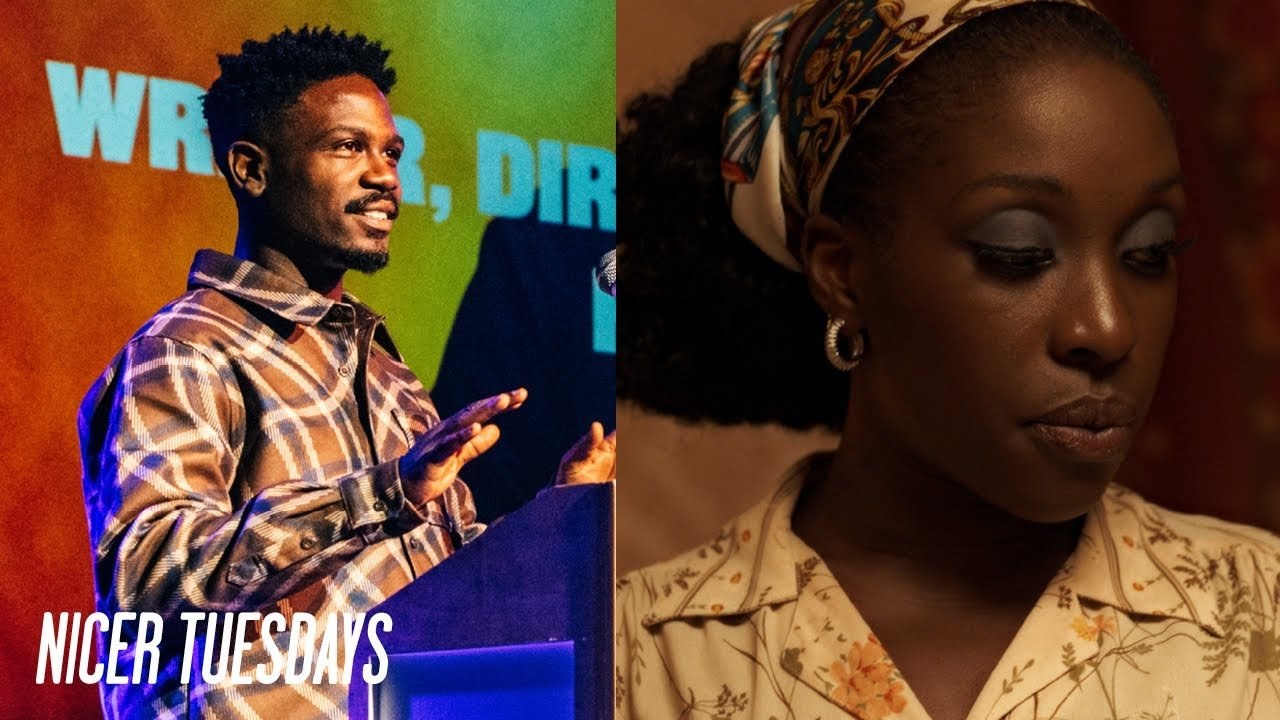
“In storytelling, the magic often lies in the uncomfortable truths we reveal about ourselves.”
Transcriptmay contain minor errors or formatting inconsistencies
Thank you thank you thank you thank you thank you everyone for coming out today sorry for making you C outside Alva love the talk so yeah magic storytelling my name is Timi Akindele-Ajani I'm a writer director and photographer from London East specifically greater London more specifically but we don't need to get into all of that first off I want to say a massive thank thank you to the people it's nice that over the past years they've been super cool and good to me and just sort of really supportive of my work. And I'm going to do what I can to return the favor by behaving myself here and not going over too much the time that you've you've given me okay.
So being a writer director and photographer I sometimes ask I get asked about how I move between the different mediums and the general response tends to be if I'm not taking photos I'm making a film. And if I'm not making a film I'm taking photos For Me Photography is more of a solitary way of expressing myself and there's no need for me to get crew or position permission I can just sort of go out and find a subject whereas film tends to be a bit more collaborative but deliberate in a different kind of way all of that is to say my work is really firmly rooted in visual storytelling occasionally work will take me out of town where I get unique opportunities to blend my skills in both these are some Stills I took on a Google filmm that I worked on out in Nigeria where my family is from so that was an amazing opportunity I got to go out to Nigeria and work out there.
And then other times it's right here at home where I might find myself inspired specifically barking which is where I come from and it's directly underneath my nose I might find something like this.
This is from my photography series my dead ends shout out to the then mayor of barking who was passing through the the now continued dagam Market which used to be the largest Open Air Market in Europe I believe but unfortunately it was a casualty of coid these are some other examples of stories that I've told a bit more recently and in order for you guys to get to know me a little bit I've decided to pair them up with pictures of me at work.
So this is a photograph of me looking very stressed on the set of my last short film.
This is a picture of me less stressed but we were shooting during coid so there was like an added layer of ♪
just this is a picture where much less stressful time maybe because it was a much smaller shoot and it was just me and a mate cor she's an amazing actor and then finally I didn't actually get any pictures of this one cuz we were working really hard but just imagine a very fun very pleasant shoot today I'm going to speak more specifically about my latest short film guests a story setting 1970s London about a Nigerian woman who invites her boss to dinner in the hopes of getting her prideful husband a job shout out to Callum Richards for his insane poster design a creative that you should all check out and as much as I'd love to show you all the the film and use that time that I've got here to do that instead of this I don't think that'll be the best use of my time.
So I'm just going to have to settle for the trailer you asked me earlier if we can afford all this the true answer is no maybe if tonight had gone ♪
differently ♪
cool yeah thank you I think that's the first time I've ever shown the trailer to anyone outside of like my small circle of friends I' like should I move it there should I move this here should I change this this Frame so thanks for for the reception and shout out to Pavilion Works obviously production company behind the film so mag you guys saw the first slide magic storytelling how does that connect to this obviously I it's a bit difficult cuz I can't show you all of my work but maybe I can show you guys a bit about how I think about storytelling instead so for a long time I've always seen storytelling as a really magical act I've not necessarily put that into any form or shape but maybe it's a combination of the element of performance or skill or just you know the suspension of disbelief in the case of Cinema you know 24 pictures in a second and we get this perception of like time and space and movement it's it's amazing it's an illusion I think it's pretty magical I never really thought to give the idea any shape until I was asked to come to speak to all you lovely people so bear with me but um I think it's based on three things three T's and we'll get into that now.
And I promise it's all going to make sense so the first T is teleportation the second T is telepathy and the third T is transformation it's going to make sense I promise I'm going to be using film as a reference point for how I sort of think about these ideas but I'm almost certain like 99.97% sure it should apply to all forms of Storytelling whether. That's photography or graphic design or illustration I think it should apply generally but hit me up afterwards if it doesn't and I'll give you another one or something.
So the first one teleportation teleportation can be defined as the transfer of matter energy from one point to another without traversing physical space between the those two points so every story should teleport its audience somewhere in the case of guests I chose to teleport my audience to the UK in the early 1970s these are some behind the scenes pictures taken by Eric Iden barbarini who might be running around taking pictures today as well again today on guest so much work went into teleporting our audience but I want to point out two specific individuals who were fundamental to that goal the first being Elena monton who's our production designer and Stephen James Dun A Director of Photography who I've seen and I know he's here.
So if you see him give him some love in our film we wanted to we wanted it to take place at a very specific time in a very specific space with a very specific set of people and specificity is really important to me as a filmmaker and a Storyteller at large a lot of the work that went into building the world you can sort of see here these are some of the details that you could have found on the set that is a picture of my grandma and a great uncle partying in the' 60s these are the base ingredients for so many Nigerian dishes a lot of these details are things that if you were walking around the set you could see but they were never really going to be the focus of the film.
But they lend a huge sense of authenticity and depth to the experience of the actors the crew everyone involved in the production.
But it also goes beyond production design into character and costume shout out to Nina soers for her amazing work on the film another creative that you guys should check out I hope you're writing these names down.
And then ultimately it goes into performance with our leads Ron and Michael making great efforts to bring a serious level of authenticity to their roles understanding how their characters might have sounded different might have moved different maybe even thought different and as convincing as this may all be at the end of the day it is make believe and we're just playing we're just having fun being silly it's a very fortunate position I find myself in whether.
That's Ellena with her steadfast dedication to period or Steve with his desire to photograph the film in a deliberate and immersive way it really felt like everyone understood the importance of teleporting our audience and how essential it would be to telling a moving story Ron care continues to be silly but this is why we love her okay. So to end that one teleportation in our case we were doing this with a period film.
But I think great stories should always take you somewhere whether. That's a broke photographer's bedroom in Hackney or an alien planet that's about to be destroyed you should teleport your audience Anywhere But Here the second te telepathy so telepathy is the communication of thoughts or ideas by means other than the known senses I really like this picture this is another behind the scenes picture because it's really sort of full of intention you've got Steve staring at the monitor earnestly me staring at the actors earnestly we're both trying to make sense of if our ideas that we wanting to communicate are coming through in the case of our story our overall intention was to tell a story about racism in a new way in a way that maybe was a bit different from how you might have encounter the story about racism and the idea at the heart of that intention was the idea that racism is a poison was like a poison it could be a poisonous pill in some ways I I tend to think about racism in the UK as like a pill it's hard to swallow often delivered in small doses it's available over the counter you don't need a prescription you can get it anywhere it's the kind of stuff that builds up over time slowly but surely poisoning you from the inside out.
And its effects can be felt not just on its victims but also on its perpetrators and privileged people who maybe don't have to think about it every day here I've tried to use some nature of telepathy to lean into the audio format of the talk presentation I'm doing here providing an illustration. So that maybe the idea of racism as a poison can be seeded just a little bit deeper into your minds these are the opening lines from the script to guests they describe a metaphor that we Ed to open the film I think you would have seen it in the trailer a plain white tablecloth slides over a lively West African print and a slight black hand Smooths out the creases so much intention went into ensuring the effective communication of this idea whether that was wrong ha like throwing the cloth over 17 times to make sure it was right the perfect way it goes over or Elan hand drying the cloth because there was a stain from the previous day of filming here we're leaning into the power of film to move an idea from my mind as the writer director literally through time and space into audiences far and wide and maybe even to some of your heads here today we'll see so second te telepathy use the various tools of your medium to transmit ideas directly into the minds of your audience finally transformation the last T it's known as a marked change in form nature or appearance so this is an idea that I've stolen from an old dead guy called Hegel and I'm not even sure if I'm saying his name right but shout out to him I use it to make sense of what transformation means to me within my storytelling so you have thesis you have antithesis and you have synthesis thesis being the current way of thinking antithesis being the opposite way of thinking and synthesis being a new way of thinking and there are three key areas where.
I think you can apply this principle of transformation.
That's character that's audience and yourself as the artist the audience should 100% Come Away with a different experience a new way of thinking as a result of experiencing your story you should be challenging ing preconceived notions upsetting some stereotypes you know just moving the ball around so the audience doesn't feel the same when they came to when they left going back up to the character your characters need to change during the course of your stories it should be one of if not the most important moment in their life if not is it a story wortht telling and then finally you should change as the artist each story you tell is a unique opportunity to challenge your own ways of thinking and learn about new ways of being and form new conclusions to give you guys some evidence of how much I changed during the process of making guests this is a very very real a very very authentic depiction of me before and after I did make the film shout out to my plastic surgeons for bringing me back from the brink I think I can see maybe no hopefully after this talk there's a few of you who want to check out the film unfortunately guest is not publicly available but it will be having its festival premere later this month at the British Urban Film Festival so if you are available for that please do come and check it out finally to wrap up this talk I want to point you all to towards this quote from Susan sonag I use it to guide my work generally but I think it nicely sums up the ideas from this talk the ultimate wisdom of the photographic image is to say there is the surface now think or rather feel what is beyond it. There is the surface now think or rather feel what is beyond it thank you very [Applause]
Latest Talks
-
Murugiah
Why you should reject the formula and make art about things you love
Watch -
Amber Weaver
How does contemporary type design translate into the wider world?
Watch -
Delali Ayivi
How does photography give us the right to imagine our futures?
Watch -
Will Anderson and Ainslie Henderson
Bringing stop motion sorcery to BBC’s Small Prophets
Watch -
Ollie Babajide Tikare
The importance of not flattening the complexity of observation
Watch -
Marina Willer
Design thrives when you find poetry in the simple things
Watch