
Thalía Gochez is a photographer, creative director, and fashion stylist known for her intimate portraits that uplift BIPOC narratives. She emphasizes the importance of fun in creativity and shares insights from her diverse career.
Thalía Gochez
How “perfectionism kills creativity” for photographers
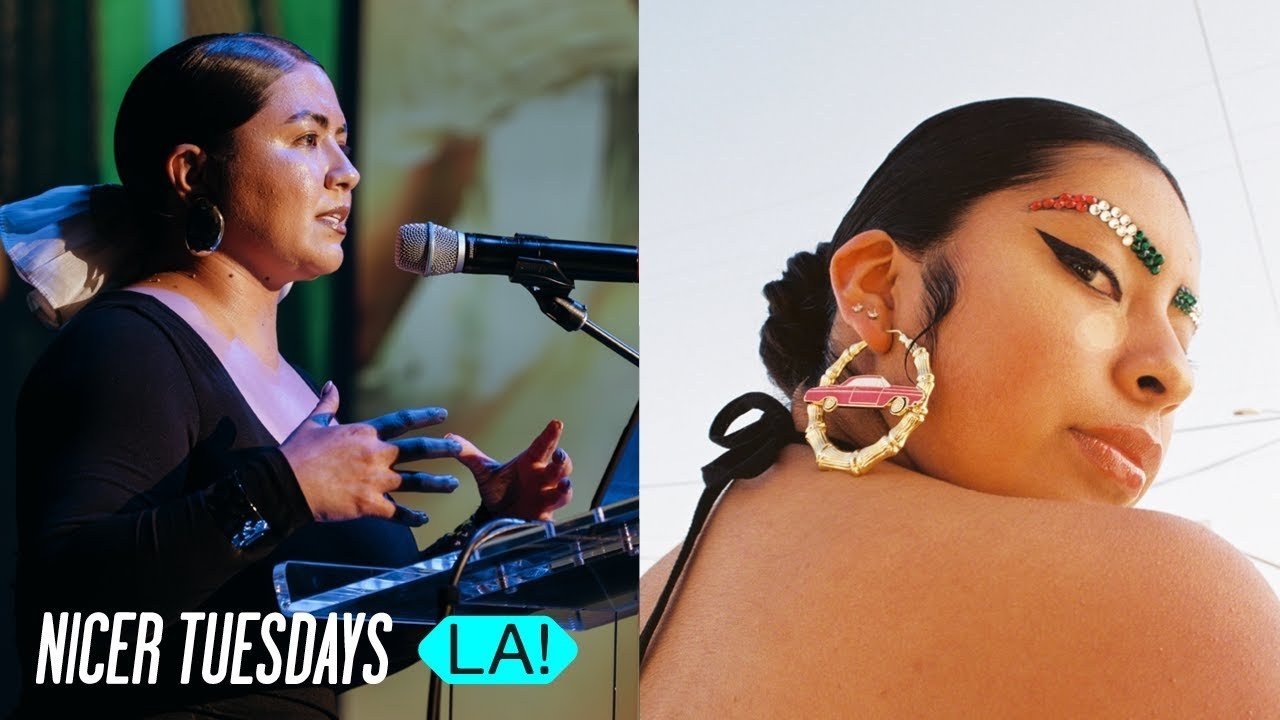
“Perfectionism kills creativity.”
Transcriptmay contain minor errors or formatting inconsistencies
[Applause]
Thank you so much for being here. My name is Talia Goches. I am a self-taught photographer from Los Angeles. I come from a household of Mexican Salvadorian immigrant parents, which deeply informs my work. I've worked with countless you know, Fortune 500 companies. I've showcased worked internationally, , in Germany, in France. I've worked with a lot of well-known publications, Vogue, , New York Times, the New Yorker, Wall Street Journal. I often get asked, "How did I do it? , how did I start?" And I usually give the most palatable answer. I say that I, you know, never really excelled in academia.
I just decided to go to my local community college and to get that financial aid money. You know, if you know, you know. And I yeah, I took some fashion merchandising courses. I decided to take specifically a styling course and I worked closely with a photographer on an assignment throughout the shoot. I just felt the urge to take the camera from him and and I know I know if someone's felt it, you know, and and I was like, I could do it. I could do it. And I was saying this internally, I didn't take the camera from him, but I kept feeling that inside. And I quickly realized once I got home that this was an urge that I needed to listen to up until that point. I've never picked up a camera. I am not classically trained. , yeah, I've never taken a course.
But the next morning, I went to my local Puruga, which is like a flea market, and I got a film camera, Manulta, for a dollar. The vendor was like, "I don't know if it works, but just give me a dollar for it." I kid you not. And I was like, "Okay, here's the dollar, you know, and you take two." And he didn't at that time, I didn't realize that he was handing me something that will quite frankly change the course of my life. I say that story feels good. But today I wanted to share a little bit more of what I was battling during that first time. I was anxious, depressed.
I didn't know what I wanted to do in life. I felt stifled by what my purpose was. And I worked closely [Laughter]
many months with a therapist about finding tools to help me stay present in my body. And I discovered photography. I often say that it found me, you know, when I needed it most. Get emotional every time. [Laughter]
, [Applause]
thank you. It found me when I needed it most and it quickly became a tool not over not only for creative expression but also liberation and I wanted to share a little bit about that and just my ethos and my process and what I believe in. So, in the beginning, a lot of folks they tell me, well, how do I start if I just want to pick up the camera? And I always say, start with story and substance. Start with what you're trying to say.
Start with finding your artistic voice, the technical aspect, the knowledge, finding the composition, all that, you know, stuff you learn in art school. No offense. , it's it's it's beautiful and it's great, but it happens with time. Find what you're trying to say. Find what your artistic DNA is. And truly, that will quite frankly frame the course of your artistic footprint.
So then they say, well, what if I don't know what I want to say? What if I don't know how to feel creative? I kind of live by this this quote right here, which is, so this is right here. It says, "The most personal is the most creative." And it's truly something that anchors me home. It's truly something that I live by. When you don't know, if you don't if you don't feel creative, if you don't know what you want to say, I often say tap into parts of your personal life, whether that's childhood memories, nostalgia, whether that's current emotional states, what's interactions you have in your personal life, that those are portals of inspiration.
Those are portals that will always anchor you home and will always be the most creative because it's true to you. And nobody can ever take that away from you. And I I deeply believe that that's why I've been so successful is because I always tap into that part of me and I don't get lost in having the latest gadgets, having, you know, these which is obviously so respectable, you know, these crazy light setups. It's really great, but for me, the heart and soul of every image is truly a love letter to myself. It's coming back to me, you know. , and I really want to encourage you all to explore that.
So I quickly wanted to share a slide about this was the first campaign I did is with Nike and it was with that $1 Manulta camera and I wanted to share that because I wanted to just emphasize on the importance of not being stifled by not having all this knowledge, not having the latest gadgets as I mentioned, not having this like $50,000 camera. Although my cameras are a lot better now, I I just wanted to inspire you all that you could, you know, get a Nike campaign as well if if you truly just try to find what you're trying to say and and almost like obsess about it. [Laughter]
That's what I do.
But I it it's it's led me to the greatest heights. Another valuable lesson that I've learned throughout this process is perfectionism kills creativity. You know, I in the beginning of my journey, I didn't ex like I mentioned, I didn't have the knowledge.
I didn't even have the funds to have a second body. During this photo shoot, my camera started malfunctioning.
I didn't know how to work it. , and the quickest, most easiest route would be to give up, would be to just end it. And I realized quickly that I have a responsibility to myself and my craft to end this with integrity and with love out of respect for me, but also the people in front of my camera.
So I got my little butt down the street and I went to the CVS and I got a disposable camera and I finished the shoot on a disposable camera. And I know that sounds quite wild, but to the left is was shot on the disposable camera. To the right is on my digital camera. And obviously you can see a slight difference in quality, but the story and heart and soul is still there. The composition's still there. And that just goes to show it doesn't really matter what camera you have. Just as long as you have the heart and soul to continue on and to explore your vision.
, photography will always give back to you, you know. , a next thing I wanted to share quickly is I often get asked like how do I find my models? How do I cast? And that's really important to me. And I think in this social media age, we get lost on like, let me just find the model with the the most followers. Let me just find, you know, let me just DM this one. And and that's all beautiful. Social media is such an incredible tool.
But this particular photo shoot, I was in my local marcado, my supermarket, and I saw this girl, her name's Yenna, and she was waiting in line checkout. She had a b she had her baby on her hip, she was in her work clothes, and I was just like, "Oh my gosh." Like, she's the one. Like she she was I was so taken back by her strength, by her beauty, and not just physical, but like who she was at that moment to me, you know? So, I pulled up on her on in the parking lot and she she thought I was so crazy. I feel so bad for her.
She was like she she thought I wanted to take a photo of her baby. I was like, "No, no, I want to take a photo of you. I'm a photographer." And she was like, "Uh, okay." Yeah. We ended up building a friendship and throughout the course of a few months we ended up photographing in her her parents' restaurant which she kind of grew up you know eating at. And I I say this story to you all because I think we are losing real life interaction. We are losing real life connection and this is also this is a medium of connection.
This is a medium of collaboration. I can't take a photograph, portraiture photograph without people, you know. And part of this is building that connection, building that trust. And I encourage you all to keep your eyes peeled and to look at the world around you and see what you can create. Another big part of my practice, which I know is so easy to conceptualize, is to have fun. But what I'm really trying to emphasize here is I can't be the photography photographer I want to be if I'm not relaxed. If I'm not having fun, if I'm not enjoying myself behind the camera, that is a key recipe into my practice. I'm able to explore different perspectives, different composition. When I'm able to tap into that childlike energy, and how do I tap into that childlike energy?
I have fun. I play the music that we want to play. I don't get stressed by the needs of the client, stressed by the needs of my expectations I have on myself. I let go of all that and I create a world what we can we can't really guarantee safety in this crazy world. But what I can try to create a world of sanctuary, of safety and love and connection and hopefully, you know, the the I always say that the images, the photog the photographs are a bonus if they're good. You know what's truly important to me is building an actual connection with the people I'm photographing. I'm and and these are just examples of different compositions and perspectives that I'm able to explore when I'm not, you know, like worried about anything else around me and you know, you know, you know, the industry stuff, you know, like that that can that can that can take a toll on you. But, , yeah, I I try to create a safety net around me around my creativity and I I deeply believe it's almost like protecting that inner child in me to have fun. Another thing I wanted to quickly talk about is historically I'm sure you guys know this is a very interesting medium [Laughter]
but it [clears throat] has always been you know there's always been a power dynamic between the model the subject and the photographer there's always been this like connection gap and it's like the photographer has ownership of the photos photographer is put on this pedestal and then the model is kind of like away and the core of my practice is to bridge that gap and I do that by moving with a set set of principles and I wanted to share a few of those today with you. Consent, clear communication, properly compensated, respect. These are all things that are often not talked about, but I openly have these conversations with the people I photograph.
Consent, like, do they know where their image is living? Do are they consenting to it? Do they and this could be obviously there's contracts for companies and you know obviously they'll know but even like art shows that I do or like little art you know publications I always have to have that clear communication and that consent with the photographs that I'm I'm working closely with community members I'm working closely with people that are are you know vulnerable and I wouldn't feel comfortable not exercising these principles without you know without having these clear boundaries you know and obviously ly, you know, properly compensated.
This is a conversation that often gets swept under the rug. And also too, it's like a lot of times we don't know what we're worth. We don't know what the the money. Let me tell you, but they have money. They have money here. I'm serious. , but anyh who, and respect. [Laughter]
I know you got you like that one. , respect. Honestly like I I don't know maybe this is just who I am but it is a privilege to take someone's photograph and I never want that to escape me.
I think as I mentioned a common theme in this talk is like you don't have to have the latest gadgets to be a great photographer and I deeply believe something that I believe is that our greatest photography tool is to engage in genuine conversation. We often like I think a big part of my practice is to intuitively know when to pick up the camera and when to put it down and to just talk. And I know sometimes we're not allotted that space on set or, you know, in in just fast-paced environments, but it is pivotal to my practice to carve out space to truly get to know the person I'm photographing because the images will always say tell, you know, the images will always you you'll see that. So, I I in order to do my job well and for me to sleep at night, I I want to truly get to know who I'm photographing. And I hope that inspires you all to truly try to get to know the people that you're photographing as well.
Thank you. And I just wanted to share a few slides of my work. Thank you guys. I appreciate you. [Applause]
Latest Talks
-
Murugiah
Why you should reject the formula and make art about things you love
Watch -
Amber Weaver
How does contemporary type design translate into the wider world?
Watch -
Delali Ayivi
How does photography give us the right to imagine our futures?
Watch -
Will Anderson and Ainslie Henderson
Bringing stop motion sorcery to BBC’s Small Prophets
Watch -
Ollie Babajide Tikare
The importance of not flattening the complexity of observation
Watch -
Marina Willer
Design thrives when you find poetry in the simple things
Watch