
Talia Cotton is a designer and coder known for her work at Pentagram and for founding her own design and technology agency, Cotton Design.
Talia Cotton
Coding, creativity and becoming your own boss
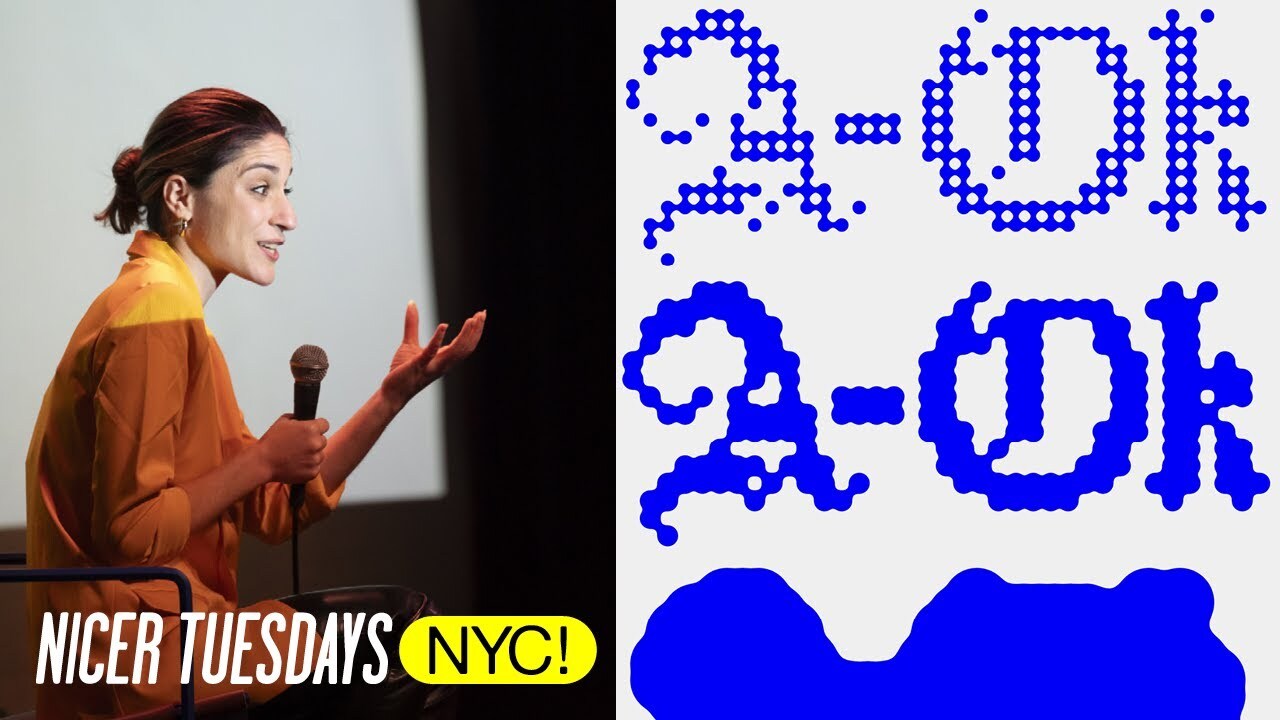
“Coding is just another form of creativity; it’s not about numbers, it’s about expression.”
Transcriptmay contain minor errors or formatting inconsistencies
[Applause]
there's no nice way to transition to sitting down hi everyone Hi T and I were both at the same conference in Toronto last week and I commented on how well-dressed she was and I was like I never know what to wear she's like well don't wear black and then.
I was like oh I only have black packed but of course the wonderful yellow a beautiful dress as well yeah no it all it all works out right guys beautiful dress Give It Up for the dress so you know we were chatting also before this that tal and I both worked at pentagram well I know you mentioned that I've seen you talk about how you left pentagram because you felt the need for a role that sort of matched your evolving style as a designer coder how have how has sort of establishing your studio impacted your creative freedom and and how do you think you brought if anything your past experiences into it what it what it all comes down to those as many of many people know before leaving pentagram and starting my own thing it came after a series of roles that didn't perfectly fit what I wanted to be doing and what I knew was possible I was always working at the intersection of coding and Design Technology branding things like that and because I was so young when I started off I was always the design directors at the positions that I held didn't exactly know how to direct me the CL the projects always fell flat in my eyes as somebody who saw the potential so even though by the time I left pentagram I was pretty much autonomous there.
I didn't really have to respond to any of the partners it still wasn't fulfilling that thing that I had always wanted to do so that is why I left that is why I started cotton and the real amazing thing is that it is exactly my dream come true it is everything I've always wanted as a designer at that intersection at that sort of like new type of career that didn't really exist before.
And now it's happening for other people as well which makes me so excited amazing yeah and I think what's so interesting about your work is you know being the sort of hybrid designer who codes it's not I've always you know understood that it's not really about the code as much as it's about what the code allows you to do with the design can you talk a little more as sort of as I said someone who's never made a website has never written a line of code how how you sort of approach that let's break it down.
This is the Spiel take out your notepads the Spiel is that with coding we see coding as a design tool just like figma just like your paintbrush coding is a design tool that has certain implications to it certain new things that are possible with code design can be interactive it can be generative it can be data driven it can be automated it can be adaptable you're writing this down right.
And then but here's the catch who cares who cares if it's all those things. And that's where a lot of creative coding nowadays Falls flat and what I realized about Midway through working at pentagram and doing my own work that does this is that in these new possibilities in Form and Function.
There are now new possibilities in meaning and impact which was perfectly timed because we're now in The Branding world. And in the design World asking all of these questions that are so hard to answer with just color and typography things like how do we represent Community how do we represent diversity how do we make something feel always relevant how do we make it evolve over time. So that is why that is why we do what we do and that is why there's so much potential in this new medium yeah and I think it's a really interesting Evolution I remember I think it was the MIT media lab branding 10 years ago or something where it was like oh it's a generative code identity but all it really did was just drew the same M over and over again didn't really enhance the concept it was just sort of a surface level almost like marketing trick and and I don't feel like that's what your projects are obviously doing thank you I actually I refer to that specific case study all the time as and for those of you who don't know the story MIT media that was sort of like the very first round of generative identities when that was like a thing it was done by I'm on stage so I'm blanking then.
That's the only reason I also think it's it's at the time what it was was compelling it's just we we have shifted beyond that yeah and two years later it went to pentagram went to Michael's team Michael even said how can I even possibly Rebrand this it's such an amazing generative identity and it all came down to Shirley in the office didn't know which one of the many logos to use so she just went to the most recent one in her folder and ended up using that which defeats the whole purpose of a generative identity so I think what that touches up on is it's less about sort of what I was saying which is like the meaning and the impact of the design but it also comes down to knowing really deeply the implications of Designing something that is generative or interactive or something really understanding like why would you want to do something like this and what are the drawbacks to it what are the limitations why would you not want to do something like that and really understanding that and pulling in the reins when you need to I mean how when you're presenting a concept that involves coding to the clients how do you sort of keep the focus on the design rather than the tech or the code I always say don't say the c-word don't say it's made with code because that drives people away they don't care what the technology is oftentimes they're scared by that it's the same thing where like you're not going to present a design concept and say oh my God you're going to love this guess what it's made with figma nobody's going to say that no one's going to Care instead you want to I do love telling them the name of a type face some some get paid for something.
That's right and but but it's it's good to just make it ideas driven and that's how you sell the concept and in the very end of the presentation they say well.
This is beautiful but how exactly are we going to make it.
And then you're like haha we made this with code and it's already done pay us more money that's always the best part of it how did you get into to coding it's a big question I know not really I actually the when I was at Parsons any Parsons people here when I was at Parsons there was really only one required coding class at the time no one really knew what they were teaching or what they were doing at the time I also entered it.
And I said this isn't going to be for me I'm just here to be a designer so I took that one class I fell in love with it on day one and then what I ended up doing was in school I loved it so much that I started just like doing it and applying it to all of my projects even if it wasn't a coding class project and that and what ended up happening was I was getting critiqued on my design that was made with code by designers who knew nothing about code so I was growing simultaneously as a designer and as a coder figuring out the lad but ended up I I am a designer first and foremost why why do you think so many designers are afraid of code and I count myself in that audience why there.
So I don't know why a lot of designers aren't a lot of designers love logic things I think if you're afraid of code that's okay you can be afraid of code it's not for you you do your thing that. That's for you.
But we are in a lucky place in history.
Now in design history in that when I was younger those of us who are love the intersection of like creative stuff but also the science part the logic stuff the English part it used to be that you had to like choose between being like okay maybe I'll be an architect or something a little bit more engineer but luckily now there's like this intersection this thing that you can use the logic on a daily basis and also make things that are highly creative I you know it's only been a couple minutes but you got to always it's coming you know it's coming the AI question the AI question. And I think what's been interesting to me about reading the different ways people are using AI is how many people are using AI for coding purposes and and that it can maybe help some people who maybe are finding difficulty with the technical aspect to sort of bridge that Gap I don't know you know do you use AI have you used it in your practice at all is that something that you're thinking about as someone who works in these worlds can I tell these guys what you said in your talk in Toronto out of context your delivery was so much better than mine is about to be can you say can you say oh I just I gave it I gave a talk about graphic design history.
And then I I felt bad because I didn't mention AI at all. And I just sat through five talks so I just said I'm really sick of talking about AI I think everybody CL about AI everyone just clapped and cheered everyone's like Yay we've all been thinking it like one of those things on Twitter people were like I said this.
And then everybody stood up and clapped but it. Actually didn't happen but but despite that I'm glad you asked despite how tired we all are about hearing about AI I am glad you asked it is going to be in our future forever and the reason I'm glad you asked is because is we use AI we use it for like the first 10 to maximum 15% of our projects maybe occasionally along the way but what we end up finding is that very often after that first 10 to 15% the AI totally breaks down and does not know how to follow our prompts because it's based on the premise that AI is made off stuff that already exists we are in the business of doing stuff that doesn't exist yet so so in that case it's reassuring that we are not we're not going to be replaced by AI because it's we're in this field pushing Beyond it so much.
So that if we are in the studio and we're able to very easily generate our idea with AI we say all right it's not a good idea enough we have to do better we have to push it better so so it's it's a positive thing it's a positive thing because it helps us get to that very first 15% but it also helps us get better ideas there's there's any I I I was having a conversation with an old professor of mine just this weekend and we were talking about how the economy of good ideas is going to increase because of AI because so many things are going to become so similar looking and if you have an original idea or if your style is so new or so original and authentic then it's going to be identified as something with a lot greater value which is a great thing yay creatives it's funny I wrote this article that was called AI can't give you taste and then a bunch of people who did AI really liked it because they thought they had taste and I think that's sort of what's interesting though is like what what's interesting to me about code that's different from using AI for Aesthetics is that like as you said it is kind of a tool to me. That's you know places where I see people use AI I think she in the audience tonight catri to Han did a did a talk for us a couple months ago where she talked about the study of the ping-pong process where you kind of are using AI to alter human output and then sort of shoot it back and forth and I think with code it feels very similar to that it's sort of like you're using it as a tool to alter a tool yeah that's exactly right which is just very different than using it to create or to create a surface texture yeah what we absolutely never would do is use AI for idea generation we do that all on our own and you all do that on your own and again it really is just the thing that sometimes helps us get a little bit further a little bit faster so we can go and watch TV or do more design yeah I know. There was I think I saw someone describing it as like I want AI to do the dishes which is like kind of like clean up after me.
So I can do the fun stuff the cooking the eating so in coding AI is the dishes well but again like I'm not a coder so you can tell me I'm totally off here but what I think is so funny about as someone who's a writer I wonder sometimes like when I am writing the process of writing is what helps me figure out what I'm doing do you is that something.
That's true with code where it's like is it really just about getting to an output or is the process of sort of writing that code affecting how you think about the result if at all very little we are it all comes back to we're all very ideas driven the idea comes first before we start the coding before we start the sketching and the coding process whether we use AI or not is just it's it's all based on that rooted idea okay occasionally we you know in the same way that once you have the idea and you're evolving Your Design whether it's coded or not you're evolving the design the idea stays the same but you can still critique the design and make the design better as you see it get closer and closer to being a finished piece you can say oh no this isn't exactly how we envisioned it maybe change the color change the size change the hierarchy whatever it is change in coding it's change how it behaves change how it responds things like that.
So we do make those incremental changes AI coding whatever.
But the idea is is the thing that drives it the whole the whole way something I wonder is like when you look at a lot of Studios that are creating work they have sort of a house style is there something that happens to sort of a house style when you are always using Code obviously your projects you know you've worked with so many different brands you're creating very different maybe aesthetic worlds but there's obviously a commonality and approach do you find that you know working with code how do you sort of make it not just look coded every time well one of the things that I've heard a lot by people by companies and organizations who approach us to do work with us is we love your work because it all looks so different and it's all so unique and I take pride in that because as you all know of have a branding background and pentagram whatever there's no aesthetic it's the idea is that you design for the client you design for for the subject you design for the problem and then the design follows so that's what we hope to achieve but there is a coded aesthetic everyone knows it close your eyes think creative coding it's pixels all over the screen and they're all doing something and you're like oh that's cool for like 0 five seconds and then you go and scroll to the next thing that does the same thing.
And it's boring what that specifically is made from is for Loops for Loops anyone knows what a forlo loop is for for Loops for Loops it's it's the it's the computer programming thing that says do something over and over and over and over and over again with slight iteration in between that's what makes automated processes so much easier using coding than using other other other softwares that don't have that.
So that's where where where you see a lot of like those small pixel those small pixels on the screen that's an automated process right there.
So that's that's why you see so much of that but again we it's not that we avoid for Loops it's not that we avoid automation as part of the process it's that that everything has a reason we're not going to just like experiment with this tool that we sort of know the capabilities of it's very controlled and very directed I don't know any code languages but are you using different languages based on your desired outcome I assume great question we are we're all JavaScript that's what well that is the programming language that we use as JavaScript there are a lot of other program languages and they will be able to do very similar things JavaScript is I think the second most common program language it's the one that it's the only one that natively a browser can read that makes it really easy to share a concept with somebody because you can deploy it on a website share a link and they don't have to download any software in order in order to view your design or your thing the JavaScript controls the HTML and CSS which are other coding languages they aren't programming languages but they're coding languages sometimes we use P5 we use P5 for any canvas based work usually if we're doing web work like work for the websites we're not going to be using P5 as much because a it's not ex as accessible as HTML semantic HTML but also it's a little bit heavier it's a little bit it's just you don't see that in most websites but P5 is also JavaScript so that's what it comes down to so just sort of shifting a little like you've been running the studio for a year and a half how many employees are you what do you what's your size We've currently got two employees I know at least one of them is here tonight I'm not going to call out the other one if they're not here Chris are you here someone woo for him yay so both Chris and Noah are here they're both my designer coders they're both equally skilled in design and coding and the way we're able to do the work that we do I think so much so much people often ask us you know how when does code come into the process when do you start and the answer is it's it's always at the same time we're always designing and coding as one because it's the same tool for us and the re the only reason we're able to do that is because of the skill that those two and my future employees are on because we can just rapidly code and it's just it's so much faster than any other medium for us well. And it's funny because you were saying you know like branding pentagram doesn't have a house style and I actually think very much most Studios do secretly have a house style in the sense that pentagram I feel loves to use bold typography they might use a different type face they might use but the tools that they kind of use and I'm curious how when you have multiple coders if everyone kind of brings their own perspective to how to approach a problem with code oh I love that question would that I'm not going to answer that directly but what that brings me to is one of the most important coding lessons I've ever learned which is that I don't know if I should say the full story here yeah I'll say I'll say the full story so you guys you guys saw the DNA type face that was here right that was done a while ago. I was presenting that to I was much younger I was presenting that to some folks in at MIT for some exhibit. And I was meeting with like the head director of technology I don't remember what his title was but he was like scary mancode Tech guy and I was like young girl Talia who didn't think she knew how to code that well.
And I showed him DNA type face and he loved it and he said this is amazing we have to make it accessible for everyone we have to show everyone the code and publish the code and and I said no no no don't publish my code publish the work publish the DNA type base it's design it's cool it's amazing but don't don't you don't need you don't need to see the code it's whatever and he was super triggered and he said and this is where the lesson comes in he said Talia the who you are your spirit is in the code that you write and and okay what the output is is what there it is DNA type face what the output is is what the output is but we all code differently and there's some beauty in that. And that's something that it took me a minute to really understand what that is but really every coder there's no right way to code if you're you have a certain output if if you're feeling like you're doing it wrong but the output is getting you somewhere you're not coding wrong there's no such thing as coding wrong okay maybe your syntax will get better over time but everyone has their own unique ways of coding I know Noah and I we have oftentimes I say to him. And I know that you are probably approaching this different from how I would do it here's how I would do it but take with this as you may and please keep your integrity as a coder and pursue this how you would and what ends up happening is just the other day he came in with this really cool way that I had never thought about about bezier curves which is now going to make our entire Studio process so much faster and that's that's again because we all have different ways of thinking about code which is a strength yay well. That's a very different thing about code than about design I mean there's so much conversation I think in design around like gatekeeping processes you know whether or not someone tells you what photo shop action they used how they made a certain texture and I think what's kind of interesting about code is well. And I'll use this sort of analogy here we were just at this conference in Toronto and Mindy Sue who I admire hugely showed a bunch of work and she said well I'm going to present all of the work for my lecture in the form of a browser and all the footnotes for the work that I'm presenting is actually hidden in the metadata comments on my website so if you want later to find these things all you need to do is just go look in the metadata I thought that was such a nice way of you know show not tell of encouraging people to sort of like get under the hood and dig in and and maybe an audience people who have never you know inspected a website before.
But it's true you you never get to see the round one process of work in most Studios but someone could go and look at a lot of the work that you have done as a studio and actually maybe see how you built it whether or not you want them to yeah 100% every so often I even get somebody say oh yeah and I actually looked and I inspected your thing. And I saw how you did it. And it's just it's so nice to see how you know the final thing can be a teaching tool way like a self-learning tool cuz you.
Actually see what's behind the r well I think that's big part of the sort of world of code I mean like GitHub sharing and people checking each other's pushes like I think there's kind of this universe of a little bit of Open Source collaboration which feels kind of antithetical to I think of what a lot of branding is like yeah yeah 100% and it definitely stabs you in the back sometimes I have a friend who did this whole open source tool that a lot of designers use I don't really have the right to say who it is I don't think they probably wouldn't care but just for that sake I'll say it's synonymous huge tool everyone uses it. And then. I was on Instagram the other day and I saw an ad for that tool and it wasn't his ad and basically what they did was they took all of that content and they're trying to like sell it. And I'm like frantically like commenting on every single one of these ads like oh this is done by such and such and you should go and it's a free tool and use it there.
But it's it's it's really complicated right now for designers who code because we want to uphold the same open- Source nature of coding and the history of coding but there are problems like that that do arise it's funny again I keeping like if I haven't mentioned it again I I do not code but I as someone who deals with archives that's something I think a lot about with archives where I'm you know sharing this public domain information these images that are free and accessible and I'm sort of like how do I share this with the the little guys the people the you know artists who I want to be inspired without handing you know the keys to Coca-Cola who should probably pay artists for their work rather than using archives yeah yeah how do you feel about being a boss I I like it I think I I had come from a position where.
I didn't have that great of an experience as an an employee in all of my roles as an employee I'm trying to say this as nicely as possible it's a safe space it was I wasn't always happy in my jobs and it wasn't always only because I wasn't doing what I wanted to be doing and I became a teacher because one day I was in class when I was a student and I looked at my teacher. And I was like oh my God I could be doing such a better job than this guy up here who like skipped half the classes to get anyway and the same thing happened with I I just wanted to be a good boss because I didn't always have one so learning from the things that I always saw going wrong I'm trying to implement them in the best way that I can every just to prove them wrong so that one day I can go up to those bosses and say hey it's possible you can not be an and still run a studio that's very successful and gets really good clients that's what I'm really trying to do am I doing it ask no one Chris later they'll tell you the honest truth but it's it's a big part of what I'm I'm trying to do right now no I think it's I think it's a very it's a slow Meandering process to you know learn how to how to do that.
And I'd imagine so like in a in a space like this where. There aren't as many models for a small Studio doing this kind of work what it even looks like to sort of how much work you need to do for that and and all that It's tricky because when you're running Studio it's a stressful process you're and when people get stressed they're not always thinking clearly about how to politely have a an effective conversation with someone human to human so I understand if it gets out of hand sometimes but there's no excuse to do that. So it really is kind of like juggling like like your stressful emotions how do you make sure you keep cool how do you make sure that like everyone is still in a good place especially if it's a small Studio it's so important can you tell us about any current projects you're working on very broadly yeah there's one that I can't say that I wish I could but it's ND but it's amazing the the one that I can talk about is one that I'm super excited about it is with I won't get into the details but the thing that I'm most excited about is that we are building a Victorian pattern generator if you've ever seen like Victorian patterns they are so ornate and the total antithesis of everything we see in design since the 1940s essentially because everything is like so geometric and like single color and Victorian patterns are the total opposite and every single one of them is totally different and you talk to me about Victorian patterns I know I know you know I'm telling these guys but what we're doing there is obviously since every single Victorian pattern is different and hand done we are making it generative so every single one is going to be different the catch is that I mean it's really really hard if you really look at them think about making like the code the system to program a computer into building one of those things while and still looking ornate and beautiful it's a really cool process what we're what we're ultimately going to be doing this is actually for a music technology company and and we're doing all the other branding and elements there.
But the since the Victorian patterns are coded there is potential to also make it driven by sound and driven by music.
So that's something that we're working on Noah is leading the charge on that project as well. And we're super excited to show it to you guys I got really a rabbit hole of Victorian patterns a couple years ago and specifically it was late 1800s French patterns and I found out that.
This is a total non seiter but I find it interesting and I think you may also find interesting which is that there used to be such rampant theft of textile design in France and wallpaper patterns that they actually required all wallpaper makers to register new patterns with the government to show that no one could be copying them but as a result because they were registered the gala BNF which is the French national library now has a collection of like 10,000 wallpaper and textile samples because everyone had to send them in every single time can we all have an Elizabeth appreciation moment how cool was that just now so also if you're in randomly I live in Providence Rhode Island but there's actually a show right now at the Ry Museum about about these French wallpaper patterns so everyone if you're interested in that you go onine and find them do a group field trip but that that project the Victorian pattern thing we're now in the in the process of making it and rarely do you guys see really the process behind the scenes yes you can inspect the page but you never really see like what we had to do to get there our most recent real on Instagram shows like Noah like from the back like debugging this thing. And I think in the end we're going to be be even more excited by the debugging process than the final thing so check that out it looks really cool how long does I always hear lore about debugging like what does that.
Actually mean is it like proofreading basically the code oh well the in the in our case debugging is the building it's like building building debugging debugging building building debugging debugging because this this particular project is a mouthful this is taking several this is I think our longest creative coding project that to date usually bugging is is more of like a boring QA process yeah. I was going to ask how long does I mean obviously these projects vary wildly but is there a sort of sense of I imagine it's slightly different than when you're doing a normal you know non-generative graphic design identity sort of the process could be very different each time like like I said we're very fast at the studio and sometimes we could do I I've definitely done like coding design like speed things I'll like make a bet with my friend I'll be like oh I can make that in 60 seconds Watch Me Go and then I'll just make it but so some things are super fast and some things it but because we're so fast it enables us to do the more ambitious projects like the Victorian textile pattern thing which now is taking us several several weeks of full-time work but maybe one day it'll take a lot faster because we have the new skill of doing that I saw on Instagram also it was talia's birthday this week so we can give that's I saw you were doing a Q&A in honor of your birthday and I think hitting yay birthday hitting a a milestone of Instagram followers but you did a nice Q&A and you were talking someone asked about inspiration which makes me sort of think of this because with a wallpaper we're talking about this idea of you know what does inspiration mean for everyone differently but can you talk a little bit about your perspective on inspiration yeah I always as many followers as I have I don't follow anybody unless I know them personally because we're friends all this to say that we don't look in the outside world of graphic design for visual inspiration ever as much as we possibly can help it unless it's wallpaper unless it's the process talking gra graphic design right we don't I I don't look at I I I just don't look at graphic Des don't look at that don't look at it and the re the presentation the the reason being that we are like I said we're in the business of doing new things. And that's always what we're trying to do because we're coding or and if we're always seeing things that already exist I'm always afraid that it's going to bias me.
And then the product won't be my own original idea instead what we do is we do what many branding agencies do we don't look at mood boards or inspiration like that we research and we ask questions and we understand the problem and we understand the people behind it. And we understand what their problems are and then we understand maybe some maybe some historical context we'll make some historical history or or references there the Victoria book samples we looked at hundreds of Victorian book samples to get to our final thing that.
That's where inspir the only place where visual inspiration will come in but often times it's mostly like what is the problem what is the concept that's going to solve that problem and what does that look like visually period don't look at anything else yeah it's funny my response that when we were chatting was I was like I've always thought you either need to look at nothing or everything it's it's in between that really screws you it's a great great great thing what would you tell young designers who are intimidated by Co but want to expand their design toolkit if you're intimidated by coding but you're excited by it if some it pequs your interest and you've never tried it before give it a shot like try it out if you're like what is this weird scary thing it's scary for everyone I I just for a little anecdote on my first day I I teach two classes a semester one of them is the intro coding class and the other one is the advanced coding class and the advanced coding classes for the folks who have a coding ego already and they like they feel confident enough to take the leap into taking the advanced coding class with Talia cotton who is scary when she's teaching the advanced coding class and on day one I scare the out of them and at the end of the class I'm like all right everybody like who's who's scared now who's intimidated and like everyone raises their hand and everyone feels like they're the worst person in the class but which is impossible because you can't have more than one worse person in the class but they all raise their hand all the to say that when you're coding you think you are so bad for so long the difference is and I think here's here's the core thing if you're coding it's going to be difficult there's definitely a higher a steeper learning curve for coders than say to learn Photoshop but everyone's going through that if you if it is difficult and you are not enjoying it get out of here don't don't code anymore go find your thing like you don't need a code if it is difficult but despite it being difficult you're like this is so cool like I really love that feeling of like finally getting to the end and I kind of want to see what's more here and you know push through that difficulty it is totally your thing and do push through it and do start applying it to other instances because the reward is so great when you're making like professional projects and doing what you've always wanted to do then you too could be up here in a beautiful yellow blazer I think that's all the time we have but thank you so much this was so funks by ♪
Latest Talks
-
Murugiah
Why you should reject the formula and make art about things you love
Watch -
Amber Weaver
How does contemporary type design translate into the wider world?
Watch -
Delali Ayivi
How does photography give us the right to imagine our futures?
Watch -
Will Anderson and Ainslie Henderson
Bringing stop motion sorcery to BBC’s Small Prophets
Watch -
Ollie Babajide Tikare
The importance of not flattening the complexity of observation
Watch -
Marina Willer
Design thrives when you find poetry in the simple things
Watch