
Studio Yukiko, founded by Michelle Philips and Johannes Conrad, is known for their experimental approach to design that prioritizes conceptual depth over aesthetics. They have collaborated with notable brands such as Sony Music, Apple, and Calvin Klein.
Studio Yukiko
How Studio Yukiko crafts its international and humorous design voice
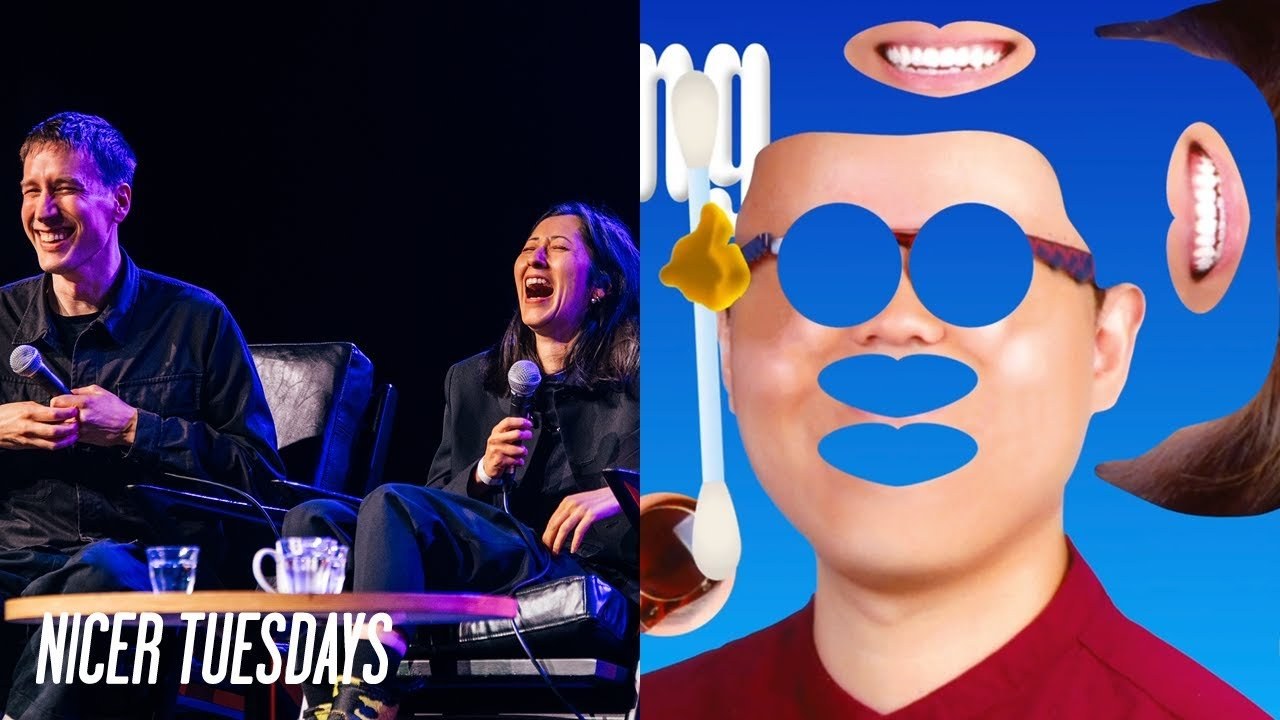
“We know we don’t know everything”
Transcriptmay contain minor errors or formatting inconsistencies
[Applause]
hello welcome hello only one of Michelle you brought the tea I know we didn't bring the tea okay I didn't bring my tea Johannes is not a team player we were asked to bring the tea with us for a comfy look and you didn't well thank you very much for joining us welcome to nice of Tuesdays thank usks yeah it's it's wonderful to be in London yeah I mean so you're over for how long you've been here for like about 10 days or something well you have been a bit longer right johanis yeah I've been here for about a week saw some art shows London is so nice it's so nice to be here. Actually want to move back to London I want to move back yeah well we will welcome you back with with open arms if you do decide to do that it's quite nice like hearing how great you found London I feel like you know we could all do with a bit of that to be honest us londoners let us know if anyone's got a job for us exactly well let's start I guess and let's start at the beginning I'm really Keen to know how you you met and how your kind of collaboration began how you first started working together as Studio Yukiko we studied at Brighton University different courses and then we met actually afterwards we started dating this it's quite a personal question to start I can't believe you're telling every honest I don't really know how was to phrase that you said it was Open Secret but that's in the first answer it's not much of a secret anymore no we were working at different agencies in Brighton.
And in London. And I think we really wanted to do something they were good agencies but we really wanted to explore a little bit our own creativity you know we were still young we're still young now we're still young we're less young Johannes had spent 10 years in London as from Germany so he was quite Keen to go back to Germany and yeah. I was up for Berlin so we went I guess we have everyone will will see behind us that your work your amazing work is going to be in a slideshow behind us.
But I guess people will have recognized a lot of it.
But yeah it's kind of going to be weing away behind us I guess was there one particular project either early on or at some point in in the kind of studio early days that you felt kind of took you to a different level as a studio or do you feel like it's just kind of grown very steadily kind of incrementally over the years what what how would you describe the kind of growth I think shall I take this yeah.
I think there's one I think when we started off we were in this really rundown old swimming pool and that was our our studio it was called stbd and actually Boiler Room had their their parties downstairs in the actual Boiler Room of the of the swimming pool which was it was such a good good time very bin very bin during yeah very B but during that time or during one of those parties we met some people who were starting a magazine and we sort of became friends with them well. Actually we kind of became best friends during the process of making this magazine and this magazine was Flur which deals with one street per issue and it's a sort of a romatic magazine and the way that we get to travel to a different City per issue and we had this plan that we were going to make it like two every year or something.
And now we're just I don't one every two years one one every three years. Anyway. But yeah.
I think I think we were quite lucky to to meet these these like-minded creatives and and to team up with them and and and create this project together it kind of felt like real team effort and I think everyone was very serious about it. And I think you know being together in this sort of like almost like a band that was traveling and Performing almost like in different cities it felt like a communal thing.
And it certainly gave us a lot of exposure and it was I think nice nice places like it's nice that covered it. So that helped I remember yeah it was like 2013 or 2015 I think I can't remember but we we wrote about the first the first issue yeah I we've been doing it for 10 years now so and I guess when it came to setting up your own studio what did you feel like the main kind of core tenets were of the studio that really you felt I guess set set you apart from you know there's a lot of Studios out there but you've done something really unique I guess what did you feel like right at the beginning was that core aspect that made you different what was the unique thing that we did no I think I mean flna was it was it was good because we became known for it. And we became known for working in quite a sort of experimental Hands-On way maybe and I don't think we ever said we're going to start a studio now I think it was a progressive thing we had a child this passing and our sort of first intern became our senior designer really quickly and then you know 5 years later we like 10 people.
But I think the the thing that makes us really Yuko is just our team like the it's all their individual creative voices they're they're all super unique you know they all have something really to bring and we've always tried to give them room so that they could bring their best you know.
So yeah but I think it's also like the way we approach every project is kind of with a curious mind like I think that we don't we don't need to know all the answers and before.
And I think the kind of way of like Discovery during the process is something that we that happens and I think I think maybe one of the sort of like key aspects of of our of our practice is to just yeah just be be curious and and always try new things out I think that. There was a lot of even especially in the beginning I think we didn't know much I think like we had never for example the magazine we we're like yeah sure we've done loads of magazines before we hadn't done any so we're just you know just trying things out and just telling ourselves that we we can do it and you know learning from there yeah I mean you've mentioned the flo magazine which I'd love to come on to and I love the idea of kind of yeah fake it till you make it say yeah we've done tons of those magazines don't worry about it we we'll be fine but I guess the big thing about that magazine is its kind of international aspect as well right you know as you said every issue goes to one particular Street in one city around the world and that is the focus of that issue of the magazine amazing idea for for a magazine but it's also something to do with Studio Yuko as well you have a very I don't know kind of like crosscultural or International I guess like viewpoint on things is that is that fair Michelle yeah.
I think so I mean I think that doing that magazine opened our eyes to sort of you know working a little bit more internationally I think it's more about I think that kind of thing makes you realize your blind spots if anything you know we do have quite an international team but we just know that we don't know everything and that you know if you're working sort of especially with other cultures or communities you need to you need to bring the experts in so to speak but I mean Zoom is well like what just made everything very Global very quickly as well you know.
I mean another thing is I guess you also work with a lot of experts from outside of the graphic design field right like I know you've worked with Architects and Poets how do those collaborations work. And I guess what do you get out of them you know bringing quite unusual disciplines into or different disciplines at least into your work johanes I mean I think this is sort of like letting on to what I was saying before I think like I mean the fake it while you make it I guess doesn't apply here.
But I think the fact that you know.
I think you or or we we tend to be I think we kind of need to make ourselves aware that we're not experts and everything right.
So I think like that we have to obviously tap into sort of a wider network of creatives who who know what they're doing but I think also just to kind of stay vulnerable and want to learn and continue to growth grow yourself I think means that you're you're kind of open to to tapping into this network and not just to pretend that you know all the answers but I think generally I think a collaboration for us it always is like working with different clients say for example examp a curator from a from an art shelf you you learn so much in the discussion between them between us I mean you you kind of pick up on on all the themes for example that this show is about or for example we just branded a a a pop award for popular music which is sort of the Brit award I guess of Germany and for that for for this we looked at sort of the whole DNA the strategy the mission or vision and values we named it we did the brand visual branding but then we also looked at the kind of core aspects of awarding music.
And we we teamed up with experts mental health experts to really discuss how how to like what are the kind of criteria of of like talking about arts or music in specific and are there still is it still relevant even to have an award what what are we awarding like there's no more best album who no one is even listening to that.
So I think kind of in this process you learn so much I mean I didn't I mean yeah sure like I I listen to music.
But I never I'm not tapping into sort of this microcosm of a specific industry and just by working with a wider field of experts you kind of learn so much. And that's a real Joy those type of projects I think I think there's also something nice about collaboration where you you have to sort of have faith in letting go of your vision a little bit it's like as soon as you bring other people in you're giving away some of that control of the vision.
But I think you have to have faith that like it might just go somewhere that you didn't even imagine it could you know which is mostly nice yeah mostly nice but also it can be a bit scary right.
I think like what I hear from you is that it's really I guess you're putting yourself in quite vulnerable positions which you know that is what learning is all about and you have to be very open to that.
But yeah I can imagine it when you've kind of established yourselves as a studio it might be quite easy to do the same project over and over again and people kind of come to you for very similar things.
But it sounds like you kind of always want to push things in New Directions and I guess yeah that that that is a bit of a vulnerable thing isn't it I actually I kind of I don't think we really do the same project over and over again I think we're quite we're quite rest list in the way that we always take on projects that are quietly different I mean sure often the format is similar like say we work with a museum and we brand a show visually but often when it comes down to sort of the core creative ask or task it's so different every every time we have to map out a new set of rules and a new way a new mechanic of approaching the the task so I think yeah we never I think it also comes kind of down from being I don't know maybe like just getting kind of bored quite easily I think we're RAR we're always on the H hand for new challenges I guess no definitely I mean it really shows in your you know when you look through all the projects that you've done there's such variety there I don't think there's any other Studio I can think of that really does that breadth of stuff and kind of take such an experimental approach to it I mean we're I guess like we're seeing a lot your work behind us I hope everyone will see as well like there's a lot of humor in your work which I kind of wanted to come on to because it's something.
That's often missed I think in design that. There is a why are you giving me that that look are you nervous about talking about humor I'm just worried if he's going to crack a joke I'm just going to get cancelled I mean I just want to read a couple of things from your your website which I'm assuming the pair of you have signed off on.
But there's bits of copy like release attentions of deep-seeded business problems with full service visual wellness and things like that which is obviously meant to be funny and it is funny but yeah what I guess like what role does humor play in your work how much are you trying to bring humor into your work when the when the right project you know it fits the right project I mean I'm German right.
I think it's just is about know just not taking yourself that seriously right I mean how many hours do you spend at work you've got to you've got to have a bill fun I think the other thing is maybe lowering sort of the expectations of clients like a you know they they might get something surprising good or bad that kind of approach but yeah it's it's nothing too deep it's just have a have a laugh I mean does it like if you're trying to have a laugh with I mean a serious question like a client certain clients probably wouldn't be that into that how do you manage those relationships when you're trying to do something.
That's experimental and a bit fun and I guess a client is not not in that you know frame of mind let's put it that way yeah there's definitely time when it's appropriate and time when it's not like we didn't not that's really hard for me. Actually I never know when not to crack a joke no I think we're we're quite lucky I mean we we I mean some clients are really up for the so we branded the restaurant for camper MH and they're quite eccentric as a brand you know and that and that was really nice and we thought well we just it's a restaurant but they're an eccentric brand so maybe we can do sort of an eccentric branding and the restaurant was called calan and then we I don't know came up with this really long winded story about a chameleon who is having an existential crisis because you know keeps changing his mood so it doesn't know who he is because it's a restaurant and you can I like rest or have a business meeting or something and but also he's really hungry so so that was the pitch to the client and they loved it and they thought it's really cool so we had really like sort of lines about like mortality or you know sort of breaking the bread of life and things like this.
But yeah.
So it's like you know some clients like us I think like but it's a classic sort of like Yuko approach I guess of just creating more corners you know some people cut Corners we create more corners in a way we just bamboozle the clients in our presentation till they go oh yeah they're just so irritated that they just go for it not another Corner please just please don't give us any more ideas tell me where to sign please I also I mean I guess another kind of similar thing similar question is about your style or your aesthetic as a studio and I guess you know to a certain extent you have to cater to the client and there is you know often a client in your work.
But there is always something that makes them kind of recognizable as a studio Yuko project is that something you think about do you think like oh this you know we'd love this to fit fit within our style or our aesthetic we want it to feel like a project that we've done or are you very much just like does that come out naturally and actually all you're trying to do is just focus on the client brief sorry very long- winded question.
But yeah people say it to us a lot oh that's really Studio y or like oh we saw a poster and we didn't understand it.
And then we found out you did it and that made sense you know things like that I do wonder when they say that I do think about what that is usually means it's either loud or it's grungy or something.
But I don't know we're doing it so of course it's going to yeah. So it's kind of your I guess your personal aesthetic your personal taste that's coming through in the in the work do you think not really I mean to be honest I think so Yuko is not just us we're about 10 10 other people in this studio so it's everyone we're just representing the the founding partners of I guess who are we but I think I mean sure yeah.
I think there's a lot of hands that work at Yuko so I think we have to acknowledge that.
But I think also if you like follow the accounts of the designers who work there they all have like really strong style like their own really strong aesthetic and like people who know us really well they'll be like oh that's such an era project oh I bet Seb did that you know that sort of thing which is really nice it's really cool okay interesting so it's kind of also about who you're bringing into the team and you want people with that like strong aesthetic that's doesn't look like other people's work totally yeah yeah that's interesting there's a question an audience submitted question which kind of covered that which is like what are you looking for from people who apply to to the studio and I guess that's that's one thing right like a very unique look to their work yes but don't overdesign your CV okay yeah interesting okay PDFs only please leave it in the design getting into the format I like it I want to come on to like specifically some of the projects now and actually you mentioned flaner magazine I'd love to start there because yeah we wrote about issue one back in 2013 I've just read but I guess your your Magazine's kind of gone through nine issues I think at this point nine editions the latest one focused on Boulevard per sorry in in Paris I think that my favorite one was the one that focused on ing Road in typ a that was issue eight I think can you just talk me through how you approached that issue because it's such an amazing looking magazine I'd love to know what the process was for kind of yeah for Designing that one art directing it.
So the for that issue we f got a res a three-month residency in Taipei we couldn't stay for three months but the editors did stay for 3 months and in the center and this little artist village and we went and stayed for a few weeks and I mean the the magazine is about walking so it's that's what we do a lot lot of walking really to get a sort of a a feeling for the streets and yeah it's about sort of building up network of artists writers thinkers poets you name it you know and everyone all the contributors local everyone has usually a connection to the street or something like this.
And then came back.
And then when the street had been chosen we were a little bit further down the line then we sent Seb for a little while to do more research meet all the artists this kind of thing.
And then I mean that it took like two years to produce this magazine I when you're doing Indie Publications it's you know you have to give people the time and the good working conditions you know to create these things. And we generally let the artists sort of we don't we don't tell them what to do you know we let them find what interests them about the street and let sort of do their own project.
And then usually they sort of brief us a little bit how to lay out.
But I mean the the general design is inspired of course By the Light boxes and the general feeling of the streets absolutely and we worked with a Taiwanese designer in Berlin who happened to have grown up on the street and his grandmother still lives there. So that was that was lovely yeah oh that's amazing I mean I guess like do you do you come home with you know thousands and thousands of photos of that street or I guess you didn't know necessarily was that street but yeah and signage and all that kind of thing.
And then going you're kind of waiting through it to to come up with the art Direction and design yes that is how it works yes I mean it's interesting because I think like everyone here I'm sure is a real Indie magazine fan and you know grew up reading great magazines Indie magazines but it has been quite a tough time it must be said for the Indie magazine World why do you still take on kind of magazine projects and I know you still do quite a lot of print and yeah I guess like what's it like working in that space at the moment yannes yeah I mean I think yeah this is a tough one I think it's so enjoyable working on periodicals because I think that not only is it you know do you revisit it you know and you can create sort of parameters design wise that can evolve and but also you know help you guide through the sort of subsequent issues I think it's also a really nice platform to collaborate with you know amazing artists or illustrators or photographers and to be able to commission them is so is so fun I think in the in the recent years we've done I mean Flur being one then we do also sofa is another self-initiated magazine this well that is kind of aimed more at gen Z and a bit more of a younger audience and I I think like having these sort of self-initiated projects really help us also you know Flex those sort of design muscles and just try new things out and be a little bit more bashful and you know yeah but So lately we've we've done less Indie magazines we've sort of focus more on working with bigger corporations I guess sold out startups no so we've just done a a I guess the equival door Dash It's called it's the US equivalent of just eats that they do also a magazine and they've had given us so much freedom to do whatever we want and also you know given us. Actually budgets that the broad sheets or the daily the traditional type of media won't have for illustrators to com to commission or we just did a book which is also hopefully going to be a Serial publication for hinge which is a sort of a shape of a of a phone it's a phone book essentially where we work with some incredible illustrators and it was so fun to be yeah to kind of basically connect with everyone and create this big network of of creatives and yeah but I want to shout out to Kier if they're here who worked on both those projects with us London based freelancer yeah great yeah I thought the the phone book but from hinge was was fantastic it was so good to see I think the the magazine you're talking about there. There was secret menu right with with door Dash I wanted to talk about that.
Actually because it is a food magazine if you go to you know the airport wh Smiths or anywhere there's a lot of food magazines out there right like it's a saturated space some of them don't look that great A lot of them look pretty terrible I guess how did you approach that you know how did you approach creating a really great Sumptuous food magazine and getting it to stand out cuz I think it is just yeah it looks amazing it looks so different to what else is out there just eat loads of order loads of food in sorry don't leave your computer just eat eat eat work so like cooking and designing are really similar things to do right you you have like yummy ingredients like typography like illustration you know. And it's just about how you combine those things. And I think that's it sort of we approached it with that spirit I mean the the the restaurants that they're profiling are like really local businesses and it's all about sort of what local businesses do for the neighborhoods and so it has this sort of Scrappy kind of attitude you know. And I think we sort of approach it with a similar Vibe of like just throw all the ingredients in and stir it around you know that is a great analogy for design I love it yeah no it's it's like cooking I've never thought of it that way.
But yeah it's so true I also wanted I mean you mentioned Johannes you mentioned sofa magazine that was one that you designed I think in collaboration with a kind of 16-year-old who you met through Instagram is that right or found through Instagram did that sound a bit weird that sound that sounded so cre yes I apologize I'd like Ed editor and Chiefs Ricardo and Ka scouted them I didn't I I I never any relationship with that woman oh my God I I apologize there was that was your question it was a badly worded question.
But yeah that was a kind of interesting collaboration right with someone who's not that I guess like experienced in the design world I mean they were they were doing this sort of editorial content that's where they were collaborating on I know it looks like it's been designed by 16 Robert that was really yeah that was really fantastic they brought their friends into sort of like group chats to discuss the themes and what they thought would be interesting to talk about. And we scouted the girl for the cover she was amazing and yeah had loads of power and those yeah yeah I do want to I mean I guess we've SP spoken a lot there about print and I want to kind of come on to some some other some other projects you recently completed the identity for the house de cultur and devel I'm going to try and say that in German House of world cultures which is in ber I think we've seen it. Actually behind us on the screen I guess it kind of put this idea of co-creation or like put co-creation at the heart of of the design can you talk us through that project because yeah it's got a really interesting story behind it yeah.
So now I need to shout out Sundy bya who's in the audience who did that with us as well oh that was that was fantastic that was a pitch and normally we don't like pitches but HOV is just such a legendary Institute in Berlin and it's a close to our hearts because we had already done quite a bit of stuff with them like we had the FNA festival and the for the taipe issue there. And we've worked with their literature department and things. So it was a pitch that we couldn't turn down when the new director Bon aventur and deong came on he really wanted to sort of open up.
But it's not the house de House of cultures of the world.
But the house of cultures of the world you know with this idea of there's not just one world there's not just one experience you know there's there's many experience many worlds it's a pluriverse like sort of moving away from the universe so this was sort of the brief and I mean he's built like an incredible team from around the world and they've all B Knowledge from around the world.
And we had to somehow reflect this in an identity that's quite simple and quite recognizable and also the previous identi Berlin loved and it's amazing and it was supering so it was like yeah totally NW wracking terrifying terrifying really easy I mean we started I guess quite in a formalistic way like really thinking about the actual building the actual location it's in TI Garten tier Garten's amazing huge Park you know in Berlin and we've done a book about it previously with Architects so we know a bit about. And it's it's like its own biotop so it's got its own microclimate and it's it's like 2 de colder normally so it's a really special place and you know when talking about the world as well we have to include the natural world.
So we were sort of playing with these organic forms also because of the roof shape it's got this winged roof which originally was supposed to be butterfly wings I think sort of freedom of in sort of about freedom of information things like this.
So we had these forms but it didn't feel like it was hitting their values or their goals you know. And this is also maybe where collaboration comes in a bit we gave it to Yun who someone who was working with us who's like a generative designer and she started making move with gesture or with language or sound or you know other ways of communicating other than just you know our us designers drawing and just experimenting with how does it feel when it moves and it was just there was one area that was so beautiful when these lines cross over and kind of like spaces open up you know.
And we just sort of intuitively felt that a really nice kind of metaphor for like you know spaces of information or intersections of knowledge sort of like opening up. And I think ultimately I thought it'd be so nice if it just wasn't any more recognized as these letters hkw which were so strong before you know but eventually recognizable as just some wooly shapes everyone could read that I mean it is it is fantastic I'm sure it'll come up again behind us on the screens but yeah it's such a great I mean did you have anything to add Johannes to that to that project or yeah with h with h no I mean yeah.
I think I you said sort of everything.
There is to say but I think the the fact of deconstructing these letter forms was something that suddenly there was something happening in the project that was really getting really interesting and I think also sort of in a I I mean you have to be really careful framing this but like obviously the you know there's always this Western point of view on the cultures of the world you know like it being a western or an institution based in Berlin it's there essentially even though with their international team obviously they're trying to sort of like put a stance against it.
But it's still Western sort of take on on the cultures of the world which is kind of a slightly problematic maybe Viewpoint or Vantage Point so I we felt also that breaking up these sort of Latin um the Latin letter forms was really interesting that they just became these shapes and the fact that obviously through movement and speech like you said they they became something else so order of also tapping into this idea of you know what is knowledge and how this knowledge get sort of passed on not just by the written written text yeah but yeah it's a really it's a nice project.
And I think it's continues to grow as a as as it's like a you know there's I think there's about 10 exhibitions per year.
So we get to work on on it continuously and yeah we just kind of started last year.
So we're looking forward to how it continues to grow and just a note that co-creation thing I mean that came from them. That's quite interesting they decided to hire a different Agency for the identity for the Publications and for the digital stuff so I thought that's actually quite nice because usually have one agency that does everything.
But I already somehow like intrinsically you know from the start.
There was this like we're all going to have to work together and you know give up some of our design to someone else and yeah interesting yeah that's not that usual in the kind of territorial world of of design is it no but again it's the idea of like you know giving up sometimes a bit of your vision you know to allow space for other people's can some you know really nice things can happen so fantastic sorry did you have no no but I think it's also I think during the last few years I think we've learned also by having a larger team I think this sort of idea of post ownership within the team and with the also sort of allowing other Design Studios to work with our our logo see what I did there no but I mean with that with this logo like I think it's really nice not to be too sort of like Precious yeah exactly with with the work I think it's it's opens up. And it's really interesting when other people work with it to see what comes out of it definitely that's a lovely note to end on I think we want to get get to some kind of quick fire audience questions if that's all right.
I think we touched on this already but yeah Charlene asks what's the secret for a CV to be recognized by design studio so I don't know if you have anything to add other than don't overdesign it put it in a PDF is that is that pretty much it say something nice I mean I yeah a joke just a joke get the names right and don't write Dear Sir Madam I can I honestly I can write a rule book for applying for jobs Fair okay well we'll move on Jacob asks what strategies do you use to attract new clients and I guess you don't you maybe haven't done this much recently but you said you know in the earlier days you maybe did have some strategies for attracting new clients is that one for you Johannes Michelle is nodding at you.
So I don't think we ever had like a sort of like a rule or strategies I think we always I don't know I think we just I think we did what did we do I think oh I mean we were you we worked hard we we we we're together so when when we went on holiday we'd take out portfolio and literally go door to door to agencies you know.
That's not true oh my God why I did I don't know what you were doing you were the pool H by the pool that sounds like a holiday mate what no when you go when you go away wherever you go women went to LA once Man twice twice I did say I'd have to maybe break you up at some point today you know to yeah to stop we this was going to be 30 minutes of therapy not unbearable okay. So when you go on holiday take your portfolio and hand it around to no don't do that that such a advice no doesn't sound like much bad advice bad ADV we did do a little bit of like yeah calling we did actually and and yeah I don't I don't know.
But yeah it didn't ever lead us anywhere it led us it led us to secret menu magazine four years later oh yeah oh yeah no no no yeah yeah you're right you're right you're right okay this is kind of amazing to watch live to be honest I'm really enjoying it here's a question from Z how do you navigate make creative differences when working in a team what differences yeah is that too sore a point right now yeah no how do you how do you kind of navigate Creative differences either between yourselves or you know within a team I mean that's an interesting one because we do all have quite strong quite a strong style and quite a strong vision and taste I'm really nice by the way I think the most differences come between us um I think we try and allow St I think we try and allow everyone to have really room to do their thing you know.
And sometimes there is a discussion about you know should we put this route forward should we not is it to this is it to that.
But I think at the end of the day if one of the designers really believes in it we'll do it.
Anyway you know. And I think yeah yeah kind of giving people space to I guess make the case okay yeah to make the mistakes yeah Johannes this last question is from Liam what intended change or influence on the world would you like your work to create just a small one to to finish off with wow I mean it's just design it doesn't it can't change the world guys no I do believe a laugh no come on I I do believe in in the power of like I mean it's not just design obviously we also work in sort of The Wider field of communication.
And I obviously that's that helps transport certain ideals and but I think that yeah I don't what was the question again what would you like your intended influence on the World to be through your work who something like that sorry I might have slightly paraphrased it there spread more joy spread more joy yeah spread more joy okay spread more joy that's very nice I would I would that's you're you're good I guess like one final final question from from me obviously like a lot of your work I think it's fair to say is kind of yeah on the more experimental side as we've said it's not so much on the kind of classic side how do you go about kind of keeping your ideas fresh keeping your inspiration like you know people obviously have challenges with you know motivation inspiration a lot what do you do to kind of make sure that you and your team are feeling kind of yeah their ideas are fresh you feel inspired that you can bring that kind of experimental side of things to to your work nice question I think it's about just keeping a mix I mean I think what does make us a bit special is that we sort of move between corporate cultural and Indie projects quite a lot. And I think that balance Keeps Us inspired you know we're not doing the same thing over and over again and we can bring what we learn from some projects into others and it means that I mean when we do Indie projects we're doing them with like a lot of local Berlin artists people we really respect you know like organizations like climate care or cream cake or like a experimental Club commission you know things like this and that just working with people you really admire is always inspiring you know yeah just staying curious I think also being sort of in discussion and just continuous learning I think you know just meeting all these different people is something. That's just really inspiring but also not just being sort of preset on ideas you know just sort of like I think maybe that's also something that I said earlier but like kind of to stay vulnerable and to kind of not pretend that you know everything but like just to kind of if yeah keep learning that's that's a lovely yeah.
I think it's we've kind of come full circle there and come back to curiosity and learning and and being vulnerable which are all very valuable lessons for all of us I think we will have to leave it there Michelle Johannes thank you very very much everyone give a round of applause for Studio you key codk thank you so [Applause]
Latest Talks
-
Murugiah
Why you should reject the formula and make art about things you love
Watch -
Amber Weaver
How does contemporary type design translate into the wider world?
Watch -
Delali Ayivi
How does photography give us the right to imagine our futures?
Watch -
Will Anderson and Ainslie Henderson
Bringing stop motion sorcery to BBC’s Small Prophets
Watch -
Ollie Babajide Tikare
The importance of not flattening the complexity of observation
Watch -
Marina Willer
Design thrives when you find poetry in the simple things
Watch