
Simon Wheatley is a photographer known for documenting youth cultures, particularly in France’s banlieues and London’s grime scene. He is recognized for his book, Don't Call Me Urban, which explores these vibrant communities.
Simon Wheatley
How does a photographer connect with marginalised communities across the world?
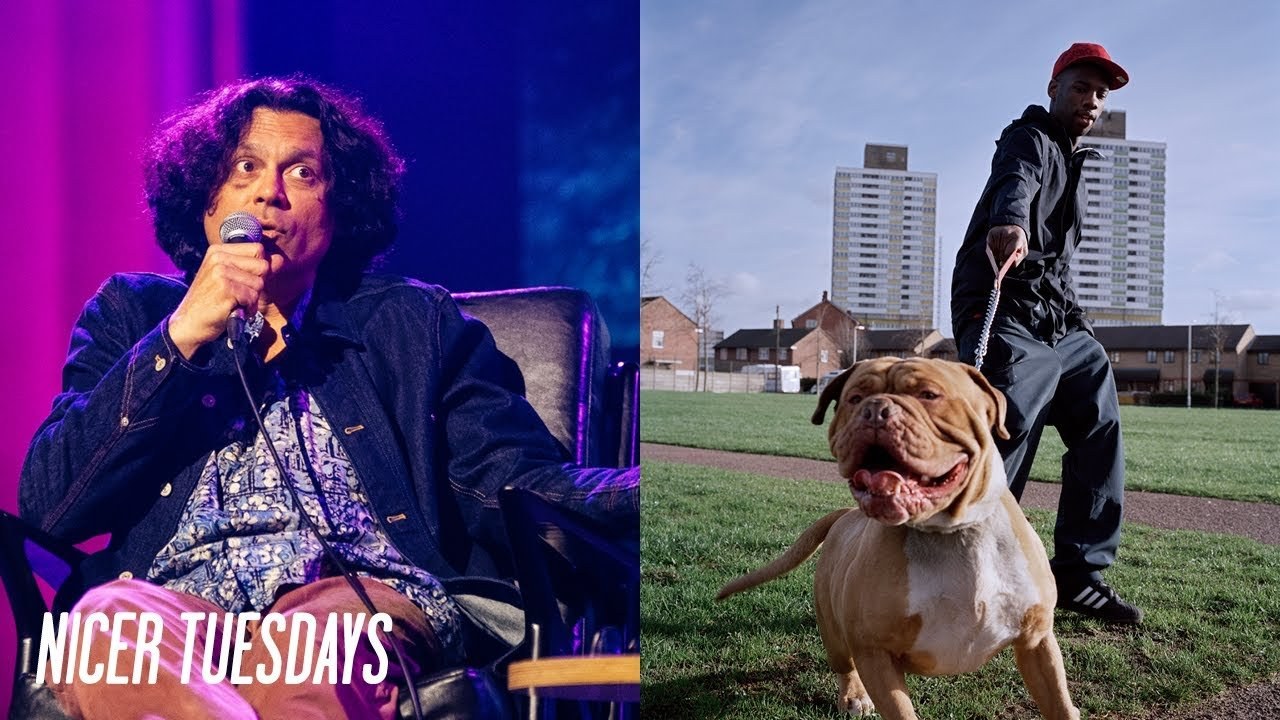
“Documenting youth culture is like capturing lightning in a bottle; it slips through your fingers unless you're truly present.”
Transcriptmay contain minor errors or formatting inconsistencies
[Applause]
hello welcome to nice Tuesdays nice to be nicely here yeah thank you very much for for joining us how are you doing I always say this time of year is is great yeah yeah it's nice to have some sunshine isn't it I mean just as I feel like it was supposed to rain all day and then it's just been like lovely and sunny as we arrived that was very nice it's been quite a busy time you though I feel like the last I don't know four days ago.
I think you you launched a collab with Cortez I mean that's that's amazing what was that like well I'd say they launched it with me really.
So I didn't I didn't know much about. And I still really don't to be honest it's been a bit surreal like I mean I sorry I'm getting some music here I'm not sure if that's everyone else can hear that.
But we're hearing some I mean quite nice Music In fairness but yeah hearing that it's quite intense that glare as well yeah it's quite intense isn't it.
But it stops you from being able to see everyone which is sometimes quite good yeah anyway thank you for turning the music off that was having a little little backing track for us moving on from the from that collaboration I guess like I wanted to start by just talking about your Beginnings as a photographer and why you picked up that Medium why you first picked up a camera what was it that first attracted you to photography as a creative medium well creativity I think came a bit later really I think firstly I was very much journalistic when I was at University and that's what I wanted to do but I was very unconfident actually. And I'd try and write and I'd end up like rubing most of it out. And then. I found a camera my father's old camera I just started taking pictures and in those days there was no digital photography so you couldn't rub it out.
And it just gave me something to do and I enjoyed it yeah just became my friend the camera became my friend then then. I found the dark room and I you you asked me earlier actually when we were talking about this about did you what was it a question of when did you pick up a camera and feel that was do you remember what you said exactly yeah I mean it was like what did yeah what was it kind of attracted to you what when you first picked it up what did that feel like that first time up a camera and and whether you felt that was like what I was meant to do it wasn't about about. Actually taking pictures it was about I think realizing that I was an observer I think that was the realization really what led me into photography that I was an outsider it was after school after University just at the end of University and I realized that I didn't have to try and fit in anymore which I'd always tried to do and that I could just be on my own with a camera in a dark room and find myself that's really interesting that you call yourself an observer I mean what does that mean does it is that kind of a almost like a comfort blanket when you have a camera with you then because it's kind of I guess removes you slightly from the the situation that you're in if it's a social situation or whatever is there a certain kind of yeah I guess like being an observer is slightly removed from the scene in a way isn't it yeah I I've realized that a photographer is it's something very for me at least it's something very almost delicate and I don't know if it's it's rare but I think you have to be able to be inside and outside a situation at the same time. That's such an interesting way of thinking about it yeah I mean the way you describe it like being an outsider it's it looking and we're going to go through kind of a bit of your your life story here in your chronology but it's interesting to me that so many of your most important artistics steps have happened outside of London and outside this country really we talked a bit about about Budapest and Amsterdam as two places where you went when you were you know in in the ' 90s I think and a younger man and you were you had these kind of moments of Freedom there can you tell me a little bit about those those moments I guess Budapest and and Amsterdam and what they meant for your yeah creative development or I guess your development as a person as well yeah I found myself in Prague at the after University and September M and I just decided not to go back to England just decided to stay and ended up in Budapest and that's where I I start to to just photograph the streets and it was a very interesting time you know post communism and the the sociology what that that that Fusion of two distinct economic ideology had spawned and that's I think I became an artist I think in in Prague when I saw William Klein's exhibition okay and I realized that before that I was very inspired by or very motivated by sardo's work really and and I studied in Latin America and his work in the minds particularly those pictures when I saw those I thought yeah I'm going to that's what I'm going to do because yeah had been as say University and obviously study Latin American studies then you he going to be very political and the literature of course is very political so so that's my basis as a photographer so you talk about this like fashion Club I've just done it's it's I'm I'm I'm quite oblivious to it and still yeah. So your first I guess when you started out you were very much thinking about it as photojournalism I mean Salgado is you know yeah like a war photographer would you describe him as or like a documentary photographer yeah that was kind humanist yeah very very motivated by social concerns he was an economist who was exiled by the military government in Brazil in the 60s and so I definitely identified with his his mission so so yeah Budapest was a time when again I could just be on my own and and go for long walks and it was just after graduating and yeah I could just revil in in that that loneliness which I feel is also a very important part of being a photographer you know for me at least being The Outsider and then I stopped because I stopped live I I came back I left Budapest because I was teaching English and overnight I heard that that Russian had been replaced by English or should we say American as the compulsory media of instruction in schools so I just felt that I was like part of some imperialist a new imperialist Takeover in Eastern Europe so I went back to London and yeah then ended up in I went back to Singapore Malaysia and I'm from you know for a while and then came back to England and thought right I'm going to try and work professionally and I got a job in a local newspaper and I got the sack after a month because it wasn't yeah it's a long story.
But I mean my first day there I my assignment was to go and photograph some daycare center which was going to close down. And it it was I think somewhere in Hammersmith and it was it made life more difficult for people of course.
And so I I remember taking two pictures to illustrate the the the humanity there some. There was it was a time of the the Balan war or just afterwards so there was I remember cian Refugee and there was a couple of other situations so I went back to the dark room and in those days you know local papers would print our own negatives printed a couple sent it down I remember before I left the the venue the the writer told me it's my first assignment said make sure you take a group picture I said what for no no no take a group picture so I left three exposures at the end just to fulfill that and my pictures got rejected my choices which I felt were were I mean I take better pictures these days but there was some kind of narrative there and they said no we want the group picture and I just refused to do it because I thought I told the story.
But the the guy who was running the paper had come through like the advertising department and he was this kind of classic 80s man with a white Mercedes kind of you know very like cheap cheapest white Mercedes you could get and and his rationale was the more people in the picture the more people were going to buy the paper so that was the first day didn't go off to a great start sales tactic to be fair have the entire Community people from a class or something huge difference in sales you know.
And then stuff like I remember there was there was some nightclub where where someone had been it was just off Bond Street I think Duke Street and there' been someone someone who died to the nightclub and so rather than just going shoot a picture of a door it's one of those small little clubs you know you go downstairs I I parked the car in such a way that I could I waited for the right space and I could have this silhouette inside the car was shot in black white of course.
And then it was yeah it was it was a winter it was just coming to Winter like November and so I left it silhouetted inside and and then out of the wing mirror you could see this black cab going at a slow shutter speed and when I went to meet the edit to get sacked one of the reasons I got sacked was because I'd shot a picture from inside a car like because I couldn't be able to get out but no I'd really waited a long time for that space and so it obviously wasn't my place no I mean I feel like local local journalism's loss is probably all of our gain to be honest in the in the long run you'd be surprised you know because I did a job the other day a commercial job.
And I've never seen a Payday like that yeah and it was it was like local newspaper photography I've never I couldn't believe it I respect the transparency yeah fair play I do quickly want to touch on Amsterdam as well because I feel like I mean we are going to get into to Grime and don't call me Urban and all of it.
But I feel like there's there's a lot of times in your life where you've you've moved somewhere. And it's kind of changed your your outlook and Amsterdam does feel like it was another moment like that in your life can you kind of give us a very quick summary of what that time was and what was going through your mind yeah I've always been very nomadic less so in the last few years I've come back to England and just felt like I belong for the first time and just haven't had any desire to leave but yeah Amsterdam I just I think I was living in London I'd started what became don't call me up in that summer summer of 98 and I I just survived on the odd wedding gig in those days and there was someone who was having a wedding in the south of France a friend of the I don't know some girlfriend I had or something vague D know Association and ended up in ended up in south of France and I wore like one of my father's old like batty shirts This Is Mine by the way and but I think it was also from quala and from the 60s probably his one and I wore some like trainers and a su had a couple of likers around my neck I still have the same pair of liers they they were secondhand when I bought them back in the day actually.
And I think someone must have thought I was some funky London photographer not that I was like really trying to scrape a living at the time and the next thing is that I I've should I've got a call. And I was part of this she was from Holland and I was part of some exhibition Holland with two renowned photographers so dress well you never know what what might happen you know.
And then that put me on a faster track in Holland and I went over there but but it took a while still to get onto that faster track took a year or so but what what Amsterdam gave me was a some kind of freedom of being away from the peer pressure of being in London and you know because I come from this like you could say you could say upper middle class background not only middle class that. There was a lot of pressure on me when everyone else is like doing well after University and you've got a dark room and a load of Hope really you know to and that that peer pressure it became very suffocating and always being compared with people and things and to go to Amsterdam and just live in the youth hostals and just feel free actually. And I spent a couple of Summer living in Amsterdam youth hostels is great you know just like wander around wander from one to the other and just in those days it was cheap too it was like5 a night and I mean I'd be serious ious I'd be have a portfolio and I'd be fing design agencies and trying to get work and and I' I'd photograph a lot of course in the youth hosts but everything that I mean what people might identify as my style now it all stems from that time.
And I think that in photography we it's always a reflection of something else somehow and and by positioning yourself in it's always it always stems from For Me Photography always stems from other experience that I have and I think just just being a bit looser and Freer and easier I think somehow that that went through into my work. That's a lovely yeah way of thinking about it. And I've never heard it said like that.
But it totally totally makes sense I'm going to kind of telescope a little bit.
But yeah you came back to London. And I guess I'm intrigued like when did you start photographing London's Grime scene how did that start.
And I guess did it then grow fairly organically what how did that all happen well Amsterdam's obviously not far and I I'd already started I really started what became don't call me and my work in Lamberth in in '98 I went to Amsterdam 99 silver link started also 98 so I'd come back to London and work on these projects you know as you not knowing you know what I was doing or and you know where I my struggles were leading and Amsterdam I would oh yeah in London I didn't have any breaks like like when I joined Magnum I hadn't had one I' never had a a story published in UK magazine but in Holland I'd I'd had some editorial breaks and the work that I was doing there the the magazines found interesting again maybe it helps like being an outsider again and and and being a foreigner there working but Holland's a very small place and after a while I felt a little bit suffocated there. And I found I needed I needed to come back to London and just I'd also been I think the Magnum office in London had had taken interest in the work I was doing there and that opportunity presented itself so I I moved back to London and and followed through with that and grime began in well my first C picture stems back to 2003 but it wasn't until 2004 that I was I renew what I was doing there with that when just by chance I I came across rwind magazine and yeah that just like opened the the doors really to I suddenly was photographing all these people who've become big names and who were big names on the Underground in those days too but but it was particularly the RO deep video shoot where I connected with the youngers in that area and to me that was really my Grime experience because that was the underground the youth clubs you know what what I published recently as Lost Dreams that to me is really my Grime work yeah the portraits are important of course as kind of the almost symbols of of my gr experience but but that work loss dreams is really kind of for me that was crime and what what was it like being a part of that scene I mean did you feel like you were part of the scene or were you kind of again we're using the same words but did you feel more of an outsider more an an observer how were you kind of treated in those spaces that you were you were shooting in I was welcomed yeah. I was welcomed definitely and I think that is a big part of why I live in London today and why I've stopped running away okay you did mention Magnum there and one thing that we've got some I think images I should have said yeah there's lots of your work on the screens behind us.
But we have some images in there of of this shoot you did in France in in 2005 I guess there were riots in 2005 and that's the first time you went there to kind of photograph I think it was yeah on the just the housing estate fourth largest housing estate on the outskirts of the city of BL I think it was yeah what was it about that story that kind of attracted you to it I'd been to BL I'd been to BL on a school trip when I was 13 and then also my my French like I'm going to really give my age away if I say o Lev project or gcses as as you all of probably you and he all know it was on the Chateau of the Lua Valley so again I'd gone to blua then.
And I remember being in London and there was sorry if anyone came to the photographers Gallery talk and I'll repeat this a little bit.
But I was there in London and every day there's new just distances in France and I was in the magnet office one day and I said what's going on can I have a look at the pictures and I heard that that no one from the Paris office was actually taking any so I was on the train that afternoon and the next day I was in the office and someone the editorial director said you want to go to blir blir okay that's a Time Magazine so I went there and you couldn't do anything in a couple of days everyone's hiding but I made a connection with a youth worker and I went back to Paris that weekend and decided yeah you know.
This is this is an interesting story those demographics with you know 50,000 people but 20,000 living on the edge of France's on the edge of town edge of Bourgeois pretty town in France's fourth biggest housing estate and yeah that was a year that I kept going back and forth and I was I was intensely involved in Grime in London as well.
And I' just be going back and forth working on those two stories and it was probably my most yeah it was that was my time I think really those I think there we have these phases in life. And I think me as that very busy like document photographer when I was like on my own in life single just like me and my cameras is out there I do I promise this isn't going to be a full kind of story here.
But there's one other episode that I really wanted to touch on which is another of these kind of you talked about yourself having a nomadic experience I guess this is the biggest Escape that you you had which was you went to India in 2008 and it ended up being 10 years that you you were living there just talk us through I guess what motivated that move what was going through your mind in 2008 and yeah why that why that move happened well I'd always wanted to to go back I mean I've been to Malaysia remember I left Malaysia when I was like about 10 and then 13 my parents came back I went to boarding school first and then yeah I went back again when I was about about 30 I don't know 34 something like that that age and I found the that it was just too shallow for me you know Malaysia it's a very commercial Place Singapore Malaysia this this these are there's no there's no history hisory really there's no there's no cultural depth there's no I mean Singapore makes an effort with the Arts but it's in a very very commercial place and I found I felt that I hadn't really like found my my my kind of ancestry my my deeper being I wanted I was very intrigued by by India so I wanted to go and and discover that.
So I went I went deeply into it and there are sorry there's not that many oh there's diore that's Northeast India yeah that's there's there's two I've got two bodies of work to edit from India those the three the three you've just seen and this the the nighttime work before night time works all from Kolkata and when I first arrived in Kolkata I was like oh wow this is like heaven I'm here.
But it didn't take long for me to to see Modern India as quite a dark place and so I didn't set out to shoot nighttime but but after a couple of trips the pictures I was making at night just had more resonance and maybe chimed with the experience I was feeling I'd gone to find my ancestry and I' descend from this like kind of high cast nobility from East Bengal and I had nothing in connection with my ancestor relatives or most of them I found them quite well snobbish really and just the whole whole like materialist this this what they call the K Yuga this this age of materialism that the the India peeking at at the moment and this obsession with with celebrity as well with Bollywood and cricket and I didn't really enjoy but I got stuck there for a long time as well for for various reasons and then when my daughter was born in 2011 in the Northeast just on the border with near the border with Burma up there then.
I started a photograph again and that's my other body of work of India which I have to edit at some point and I just felt I think the inevitable Joy of of of having a daughter and I started to photograph more freely again up there.
But then I as she got older and we we moved to Kolkata I I couldn't really do street photography anymore I didn't I didn't want to I think France was really the last journalistic project like heavily journalistic photojournalistic project I did India is more random street photography which is great if you're like young free and single was wondering about all day because you could go free you know what it's like is you can walk around for three days and not find anything you know.
But it's actually a colossal waste of time potentially as well you know when you've got responsibilities and things just a it's a luxury put it that way and also I didn't really I I didn't enjoy it anymore particularly after social media kick in and I just found I mean social media's made fools of all of us but but in India it has its own like peculiar Dynamic I think because of Bollywood and and everything's some kind of song and a dance and and then when my mother passed away as well in 2016 I just went searching for for something else and I started to learn Indian classical music.
And I pretty much stopped photography I mean you did yeah I remember you saying like the first time we met like you having your daughter kind of yeah you kind of fell in love with with photography off the back of that which I think is a lovely way of of thinking about it I mean what's kind of interesting is yeah you spent this 10 years outside of London. And I guess is it fair to say that you kind of missed this time or you you weren't here for this time when don't call me Urban was kind of getting this almost like iconic legendary status and you were kind of slightly removed from it I guess in a way yeah talk to me about that like did that is that how it felt that you were kind of slightly oblivious to this fact that this thing was you know becoming so iconic I wasn't oblivious to it I mean I'd come back in the summer and I'd still work I was working with the square a lot second generation of grime I've I've I haven't edited that film properly yes so only thing I've got to do and I was made a couple M couple music videos I was I was out there and still when I was back doing things.
But yeah yeah I don't know. That's fine that's a good good answer you've recently kind of returned to those photos and I guess the contact sheets of that first you know those first years of of don't call me Urban what's that experience been like like what's it like going back to these photos 20 years later sometimes more than 20 years. Now what's that been like yeah.
So yeah I got back I got back in 2020 decided to yeah to just come back here and the Indian experience I may I may go back later in life.
But I realized that that I belong I belong here more than there. And in India I'd I'd been actually writing a novel and it was just so long and complex and just I just got lost in it that I wanted to to do something more simple and photography is very very simple medium so come back and do that.
And I had all these these projects in my archive so that's how Lost Dreams and and silver link came about looking back at pictures after a long time it it's quite emotional actually with with the passage of time because you look at the photograph and you remember the experience of being there you remember particularly with silver link you know you remember like maybe where you were going that day and and you know I'd end up down in Richmond I'd finish in Richman and I'd get the bus back to my mom have dinner with her and and things like that so or you you people that you'd spoken to you'd met and your photography photography is deep like that you know if you in your your archive there there's so much so many memories so much experience that you the the for an emotional person like myself I can get lost in them I can just spend days looking at them and just remember things and people. And I mean sometimes like it's particularly with the the lamb work with these the youth that I was hanging out there just like kind of before my Grime experience I wonder what was I doing in those situations just like you know searching for for some I don't know I was trying to tell a story I guess about about the youth and the waywardness but yeah it's it's hard to put it into words really yeah I mean it is a very like it must be yeah amazingly kind of emotional going back to that time I've got further to go as well you know I'm looking forward to going back into the East European work when I was like teaching English and I'd photograph my classroom and things and at some point I really wanted to look at that word seriously as well yeah there's a lot to do as you say a lot to be done I do want to get to the the audience questions so we'll do this kind of the quick fire round I think I've got a few questions here from the audience this feels so quick far I feel like I've just just like run through things so quickly and we trying to condense it so Elsa says what's the most poignant thing the camera has taught you about yourself which is a very very deep question amazing that I am an outsider and and I always probably I always will be I mean my friends and and and there's some of them here today they know that I'm much more of a a one-on-one guy and I'm not really one for groups interesting Fabian says for collab with Cortez how did that come about what was the main driver for a project like that for you it came about because I yeah I mean I did this interview the other day in the face and I guess some of you have read it and the the the guy Mr Cortez Cortez he he he he I didn't I didn't know I didn't know who he was at the time Ireland records has sent me to unknown T session and there was this this guy just asked me. And I just remember feeling really sorry for him because he he told me I bought you a book.
And then I remembered he'd written to me on Instagram I looked at my messages and I remember feeling sorry for him that he spent like2 200 buying a book. And I I I I I I felt sorry from that day as well so didn't know didn't know anything about him again fair play for the transparency told me he told me afterwards he said to me like some I know you know later when one of these occasions that we've met he said that that when he he he saw that book first he he wanted to get it but he didn't he didn't have2 200 LS and then a year later he said right I'm going to get that now and he got it you know he's an interesting person very interesting final question from Monica and this one this another really great question how do you ensure your work is is accessible to the communities you're capturing I guess yeah you can take that in any way you you you like but yeah really interesting question how do you ensure your work is accessible to the communities you're capturing great question Monica is it why wouldn't it be I don't understand is it because the books are I mean obviously don't call me Urban is is is it's not my choice that. That's that's gone out of print and it's resale value is high but you could buy you could have bought that for £18 m when it was released so I don't feel it's my work is inaccessible and I feel that I'm still very much involved with with those communities I have I have good friends in those communities and I want to to to to do more work like projects mentoring in those communities and that's yeah that's that's kind of why exists a final question for me I guess just if there's any young photographers out in the audience any words of advice for them from your your experience like anything that you can share with any I mean you know not even photographers necessarily but young creatives out there I say you got us really be careful of this social media thing you know really you got us you got to just to be able to detach yourself from that.
And if I look back to Amsterdam and that that that that that peer pressure I think social media is some kind of strangulation we're being we're being strangled by peer pressure with that and you everyone's in such a hurry to to to to make not everyone I'm sorry if there's people out there who who are not but that is a general tendency you know it's and it's it's not their fault that that they're expected to to suddenly have some kind of social media presence but when I went into a dark room like for 5 years just could just evolve organically naturally as a photographer without having to to show anything to anybody I've said that before guys sorry and the whole kind of film digital thing is like it's just got out of hand you know with the cost of film and everybody thinking they've got to shoot film to be legit and even on the other side people like I I see I see people will will commission the film photographer when the digital photographer is better but they'll commission someone who shoots film because they shoot film and and I've seen people at an event go around with like just a a camera with a flash on it and just boom and they just get a film back and there's no whereas that scene the lighting in that scene is is actually quite interesting but they'll just like put this uniformity of a flash in it look at the India work you know how that's lit and also the digital camera would be far more capable of handling that low light situation but somehow people are trapped in this idea that youve got to shoot film. And it's so expensive now I only shoot film when someone pays for it seriously I'm unfortunate that people do want this kind of oh my like authentic work whatever but like there's so many situations particularly in low light where where digital is just so much better you know and how do we how do we learn in life you know the best way we learn is the best way to learn is through mistakes we make you know and like back in the day with I would with my doc when I have shoot five roles of film process it make my contact sheets it would cost me like a tener to do that you know which again was money I'd have to go and work I don't know in those days maybe I was on like4 an hour or something in off license or whatever I still have to work to pay for that. But in those five roles I could I could experiment a bit I could I could just do some photography rather than just always be concerned about I could I could let rip at sometimes you know when I found a situation and really really go for it you know you have to do you have to you have to find yourself you have to you have to allow look at my f my first 100 roles of film they're rubbish I'm sure that's not true but no but there's maybe one or two good ones in there. But in terms of like now every picture I shoot unless you're shooting a riot when there you're running and around and stuff but like if I shoot a situation every frame like has to be good but the situation emerges from from the contact sheet you can't like you can't you never know what's going to happen within the frame but you're Framing and that comes from that that kind of perfection in framing comes from a lot of practice you know and and Perfection of technique so you have to be able to do that.
So I'd say just you know shoot digital until you really know what you're doing and but it I don't know how we're going to get out of that it will happen I mean it's a lovely kind of note to end on you know it's a bit boring though isn't it it's an ending note don't you think it's like oh shoot the film digital I mean can you is there was there any more questions we could maybe a bit more spiritual or like I don't know something a bit more inspiring than all of you are thinking no man he's not I want to shoot film and you know but you get me I think it's a good you know you got to make some space to experiment and expl going to say then okay auth authenticity is everything and and just photograph what you interested in and this whole like yeah that's that's not that relevant this Obsession no obsession with like you know fashion and music.
That's more about the world that I've photographed not everybody is obsessed with with fashion and music.
But that does seem to dominate us a lot yeah but what can I say I want to say something really inspiring to to end with and I mean I keep going to that back to that word authenticity and yeah switch your phones off and just oh yeah that was the I was so fortunate to exist in that world you know and to be able to have lived in both worlds but if you can somehow just get away from that and oh go within you know.
I think that so much so much of of like we live in this such an external world now.
But I think human progress it does depend on the journey within you know but everything is so external now about having to kind of show what we're doing and things then just get out of that man that's amazing I mean I think like there's a lot of really really good me messages in there they all laughing at me they all laughing at me what have I [Applause]
said thank you so much ion w
Latest Talks
-
Murugiah
Why you should reject the formula and make art about things you love
Watch -
Amber Weaver
How does contemporary type design translate into the wider world?
Watch -
Delali Ayivi
How does photography give us the right to imagine our futures?
Watch -
Will Anderson and Ainslie Henderson
Bringing stop motion sorcery to BBC’s Small Prophets
Watch -
Ollie Babajide Tikare
The importance of not flattening the complexity of observation
Watch -
Marina Willer
Design thrives when you find poetry in the simple things
Watch