Samar Maakaroun designs multilingual scripts and is known for avoiding lazy visual stereotypes in her work.
Samar Maakaroun
Designing multilingual scripts without falling into lazy stereotypes
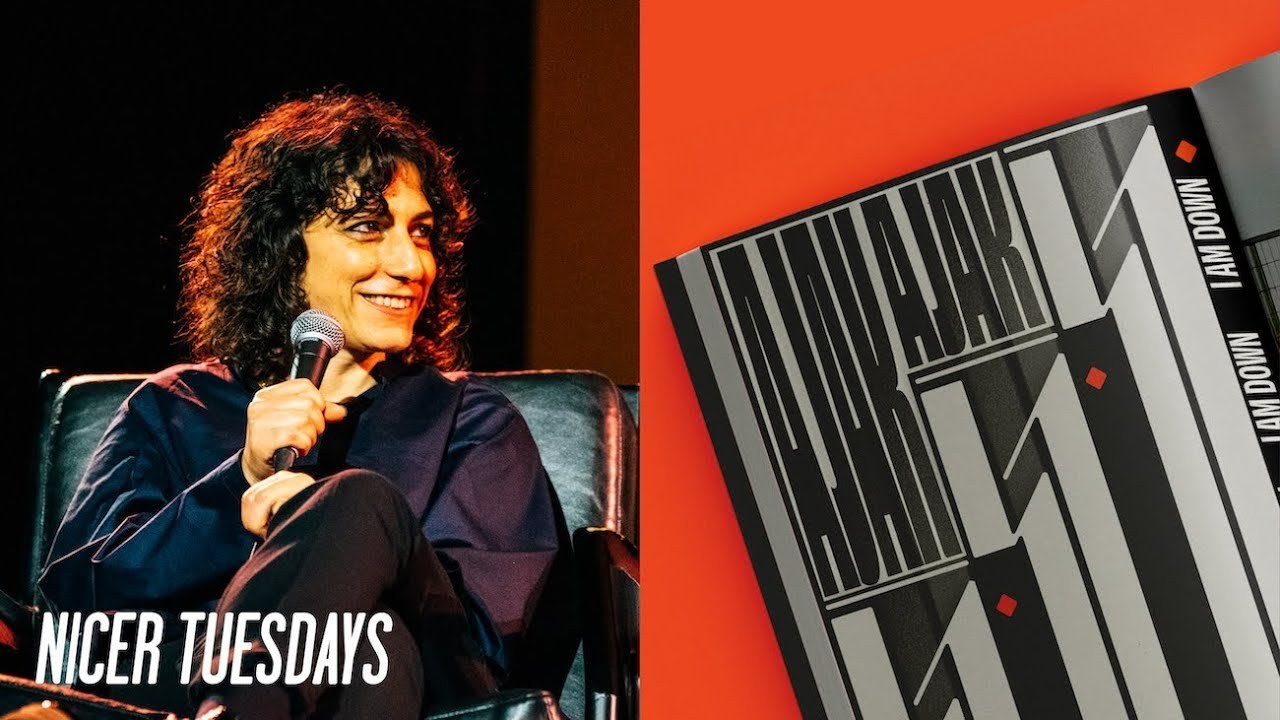
“Designing multilingual scripts is not just about translation; it's about understanding culture and identity.”
Transcriptmay contain minor errors or formatting inconsistencies
Hello hi thank you for wonderful introduction and thank you for the earlier speakers what a tough act to follow tonight amazing inspiration been brilliant thank you for having me well not at all thank you very much for for being here how are you doing are you I'm well you've warmed up a little bit from the yeah it was a bit cold isn't it coming in yeah it was but I didn't drink any tequila from your room just say that's why I there I I withheld myself for now for now for now well welcome and thank you so much for for joining us here tonight I thought maybe just to start with it'd be great to to go back to to the beginning I mentioned that you were kind of you grew up in in in Beirut could you just tell us a little bit about what that was like and I guess when you first realized that you had an eye for design or or kind of creative streak yeah yeah that was a a while ago I'm not a genzer I'm afraid but so I grew up in Lebanon during the time that is now called the Civil War but back then they didn't really call it civil war they called it the events of 72 the events of 75 that so like whenever things happened and it was a turbulent time in terms of like the outside context in a way but as a child you don't really understand perhaps the the the sort of context in terms of political you just feel the anxiety of your parents and the anxiety of the people around you and when I was a child I used to find a lot of joy in just kind of sitting down and drawing or thinking of something and making it out of paper I remember I was maybe seven or eight I decided I wanted to make like a popup house in a little notebook it was summarizing a French a French book that I read so we had to do these summaries of books that we read so and I didn't really maybe I didn't know what popup was but I just thought I'll have a goal I had this like idea in my head and um I spent I don't know how many hours just doing it and when when it was finished and it was it looked really rubbish but for me it looked like the biggest achievement in the world and maybe it's that moment that I tried to create in in design so somehow it's just the engagement in the creative flow and just carving little space where where you can play and and be yeah engage with color and shapes and forms it was like C for space for me I think this is this is perhaps the moment where I knew like creative stuff are enjoyable and it's a purely selfish like motivation.
That's where.
But it's interesting I mean like even as adults we kind of always trying to find that that kind of childish sense of play right and trying to like you can be so focused on something at that age and and you know really committed to something where.
Now we kind of find we're easily distracted perhaps from that kind of creative J yeah and it's hard to carve out to to three hours in your day to actually do that.
But it is enjoyable when it happens and it's like the term creative flow is a thing like you read about it in in in in books of sociology and psychology even if it's in writing or music but somehow you you just engage in something and you're not really putting any limitations on what you're trying to do and there is a sense of achievement when you kind of achieve it and get it done you have something in your head that materializes quite rewarding yeah definitely and do you did you grow up in a kind of creative or design household was there design around you a lot of the time or not at all okay not at all I was the odd one out I had a friend who used to use his siblings as props for his fashion show my siblings were not interested my whole household was not really creative and actually in in a context that's quite difficult at the time even in school like we used to have to cover time so all the creative sessions would go to be replaced to make up the math lessons we lost when we weren't at school so actually I had no access maybe up until I was 17 there was no museums where where I grew up I read a lot.
But that's about it like I don't think we we yeah. I was not surrounded I didn't even have Role Models so to end up here talking to you guys I don't know how that happened but just maybe an accident who knows not at all not at all. And I guess what age did you then come to the UK and what was that like you know what was that kind of that move like for you.
So I got a scholarship after graduated from college I worked for a while and I applied for a scholarship in 2004 we got it in 2005 and I was like I had a year to live in the UK where I could choose a master's degree do whatever I want and just explore a different city and it was really exciting time in in Rich in time.
And then I remember very clearly like there were few kind of major themes in in that transition in the sense at the time I was very fluent in English but I arrived and I kind of kept feeling like I'm not really understanding what was going on. And that's not it wasn't an issue of language it was more an issue of culture so I wasn't tuned into maybe the humor or the silences like you know Lebanese people are very loud they're very opinionated they tell you everything they're thinking even if you don't ask they they comment on your appearance they just really well here the culture is quite quite different actually if people don't like something they don't say anything so you have to watch the silences as opposed to listening to the words and and the humor as well the humor is like the highest form of intelligence but you could you could really understand a language very well but not necessarily really read the humor it takes a while to tune tune in to that the other thing I really liked about London was the Anon anonymity it gives you so coming from a place that's very kind of tribal in a sense that you're not an individual you are the daughter of so and so you belong to this family you belong to this kind of religious group you are supposed to have these thoughts there's a lot of limitations and expectations on who you are then you come to this massive City and nobody knows you.
And it's great because you can really invent reinvent yourself or be whoever you want to be or actually even start asking yourself who you want to be so I I found that to be although it was very scary right like because you you're alone you don't have any family you want to do stuff maybe that you don't necessarily know how to get a mortgage how to do x y and Zed like in terms of like the normal day-to-day things but at the same time the anonymity this blank page that you can you know recreate whoever you want to be I found that to be quite like exciting as a I didn't completely Rebrand myself maybe I did a bit of a brand uplift if we're talking branding terms but that's just a little Rebrand just a small one not a not a full overhaul like you might do at Pentagon yeah you then worked as a set designer I think for for quite a few years working with the director and playwright rabie muray I'm not sure if I've said that right apologies I'm intrigued how did that collaboration begin because it's yeah it seems like it's been a very fruitful collaboration for many years. And I'm kind of interested as well how does that side of your practice maybe influence the design the design side that you work on yeah it's a great question.
So the the collaboration started as a total accident we were we were having small talk like I knew of him and of his work.
So I was like okay what are you working on at the moment and he said well I'm doing this new play I'm like do you need help like I was just kind of curious and eager and young and he said yeah would you do and I said I'm a designer he like oh you can do the set design I was like set design how far is that from design he's like well it's kind of pretty much the same thing yeah you can do it so so I'm like okay I tried to kind of like pretend that I can do it.
And then I go back to the office and I tell my friend okay this guy just asked me to do the set design I have no idea how to do this will you help me like will we do it together and for the first six months and and OB clearly I was doing it as a volunteer I was not going to take any money for this because it was not you know something I could sell technically I cannot say to someone here you go I can be your set designer but the great thing about this collaboration is that he had a habit of working with people that were not specialist in their field he actually worked with actors were not actors and he worked with design set designers or whatever like collaborators he collaborated with were were not trained and he did that on purpose because he felt that those who are trained are perhaps too rigid in their style while if you work with people if you know what you want and you work with people who don't know what they're doing sometimes you fall on like these halfhazard accidents that you might like so I started working on this first performance and clearly like I was doing like hundreds of sketches trying to overd deliver just to compensate for my ignorance I had probably had been to one theater before I did this job and like we worked for 6 months half the time I don't know what I'm doing I'm winging it.
Anyway. And I'm just thinking okay it's going to be fine and he was great he was kind of quite relaxed about it all.
And then we do the first show. And it opens and no catastrophes happened and I thought okay this is good okay I mean you take on a job that you don't know what to do I feel like it's it's it's a great way to actually expand your knowledge set but at the same time there's also another thing that comes into it which is like working outside your comfort zone and this is where most of the learning happens like when you're just don't know what you're doing but you're doing it.
Anyway and shortly after this he came to me he's like oh we've just been invited to the Ia and London to Berlin and to Hanover and you're coming I'm like are you serious do I get to go and he was like yeah you know you're the team you're part of the team so we're all going so I ended up coming to London for the first time in 2003 invited as a said designer on an artist so this career ended up being more serious than my design career way before my design career became serious and and the beauty of this like kind of continuing to work we did about seven set seven performances together over a period of 10 years 12 years I learned so much from this like we ended up traveling a lot getting invited to a lot of festivals seeing a lot of work learning about stories that maybe relate to people stories that people want to tell how they receive them we could also see like the the live aspect of of performance makes you see people's reaction in real time which is not something we get to see as graphic designers we put stuff online and then people comment but that's about it you don't get to see an angry person saying why don't you have any actors on the stage so so there's a there's a huge element in that there's also like the responsibility of like putting the same set in different places communicating with different technicians of different cultures but you also have to turn up always like with the same performance and and this is where like all the kind of cultural transl like you know you realize how how so for example in Korea I remember we would go to the theater we had like about four days to set up go to the theater every day and we see they haven't set up anything.
And we' explain the set again and they say yes of course and they super polite you come back the next day nothing's happened then we realized after 2 days or 3 days someone told us they don't say no this is a culture where they don't tell you no so they actually they want to say no but I I think they misunderstood something. There was like a whole thing Lost in Translation eventually we managed to kind of resolve it this whole thing of like precision versus who's who's precise who's who works via approximation even like during the show the jokes that people laugh at in certain places can be sometimes the opposite or they can make other cultures maybe a bit uncomfortable so it's kind of maybe like throughout this journey of 10 years.
This is this is where.
I started to tune into the variety that that we are as human beings and how how actually how interesting that can be sometimes and how we when we work we sort of work from our own position as who we are but that some stories have a bigger like travel better some some humor doesn't travel some humor travels well well and all of these kind of nuances that come into this.
So interesting I mean it's all part of this kind of education you had I guess of like how different cultures are are different and how there's the the tensions in them yeah that kind of I guess started when you when you first came to to London and also the exposure was invaluable like just you know performance Modern Performance and also one thing to say like I wasn't doing the work of this specific director very much to do with the documents imagery so his work is very visual it's kind of a cross between Visual Arts we use a lot of tech and sometimes you have performances that have like three screens on stage or two screens on stage so it's not really. Actually building a whole Shakespearean context it's more contemporary in in its approach and the the the performance festivals we were invited to were all kind of contemporary performance so you know we've seen I've seen s such great work that I wouldn't have had access to had I not volunteered in this one moment moment in time.
So that's like you know talking about free internships or things you do sometimes for free like you never know where they lead yeah absolutely but there was was there a part of you that wanted to be a a stage designer or a set designer or what was it about graphic design that then kind of lured you lured you back I I never stopped like in a sense like what I was doing was graphic design for the performance because there were always posters and like you know the set of documents a sequence of images but the added element is you add it into 3D like into a space like a stage and you build a sequence of images also in real time so like what people enter and see and then how you destroy whatever you have on stage and then how you rebuild it.
So it's kind of like the same it's not really that difficult because I'm not building sets that are in a way like more complicated I was doing sets that are basically a sequence of images in real time in space right.
So I didn't see it as as a sort of difference well part of the same practice I guess and I wouldn't probably go to be a set designer for someone whose work is more elaborate in terms of set design production I still don't take myself seriously as a set designer although you know it it was because I worked with one director so it was more like you know a creative collaboration with one person whose maybe Creative Vision I I understand and interested in but I I don't know I don't think I would go for that job right yeah I mean sound sounds like an amazing collaboration over many years and he's become really big he W he's won award his work is in Tate in M everywhere so so I think people knew me from my work in set design before they knew me from my work in graphic design but I mean that's okay yeah sometimes you don't take the don't take the direct road to get somewhere I guess like my career is more like like a bumper cars sort of exercise than a straight line that's a very nice way of thinking about it I've never heard that analogy I like it I mean I guess let's come on to the the graphic design because obviously we've got lots of images of your work behind us here.
And I wanted to start with around I think 10 years ago you designed the the Citywide tourist brand for for Dubai which is still in use today which is quite unusual that it hasn't gone through another Rebrand you know it's really stood the test of time could you talk us through that project. And I guess the steps that to that that final piece of work that final delivery so I did that project I was a senior designer I think at the time with MC Sachi and they want the bid to do the brand but would they were more interested in doing actually the campaign so for them doing the brand was a way to get the campaign for the city and the brief changed over time from being a tourism brand to being a city brand right.
So the difference is a tourism brand is telling people come and visit Dubai the city brand becomes also starts to cover the the taxis the transport the sort of Ministries so all through that process we were going through all these brief changes it was a very complicated process lots of people involved everybody had opinions on everything color typography English Arabic even if they didn't read Arabic they still had no opinion it was kind of really layered and we went through hundreds of iterations I think for this project but what was interesting is I think this is where.
I started to kind of see a little bit what I'm trying to achieve because you know the setup of a project also influences the output so if you have the right people involved in doing the project you get a better out output and in this case part of the difficulty of running this project was a bit of like loss of translation between people so sometimes we had good ideas that we lost because people couldn't to read them or they thought they wanted to check the legibility so they would turn to their assistant who reads Arabic who's maybe their pa not necessarily their marketing director they say does that read does that not read and then you lose stuff and you go back and forth eventually the mark that we landed on kind of came up really towards the end of the of the process and it was a compact Mark so typically when you have a bilingual project you end up doing an English version Arabic version a bilingual version that means three faces for your brand instead of one and actually in this solution we proposed one face for the brand that lives in one place and it could easily sit on a car number plate and I believe someone told me even today people still pay $200 to put the logo on their car number plate I wish I charged license fees like what do you mean like the license PL yeah exactly like you license it for usage I would have been Rich but but I mean this is kind of what they were after and and it was the beginning of like you know thinking about how can you integrate languages or how can you. Actually think of ways to instead of having three different faces for every brand can you have one is there a way to have one that's consistent across the board and I think that's perhaps why this has lived on. There are things I don't like about this brand so that's why you know okay I'm just gonna stop here there lots of things I wanted to tweak but then you know I didn't have enough power on that team at the time. And this advertising so it's what it is okay I mean let's let's telescope forwards now I guess to to 2021 when you set up your own studio right to left which we talked about I talked about in the introduction what was it that made you want to set up your own agency I mean what were you finding well not finding I guess out in the wider design world that you wanted to kind of right. And I guess some of these themes have probably already come up in a couple of your answers already so it was after lockdown I think everybody felt after lockdown that we wanted to change I had by then.
I had been in London enough time to feel like I could set up a studio I've always wanted to run my own thing. So it was just a combination of things that I felt it was the right time. And I felt I could do it that was before I looked at the statistics of Studios ran by women in London because I mean good thing I did it before because maybe if I looked at the stats I' be like I wonder why that is like the the the numbers are really low and and I suppose part of what I was trying to do is to set up this method of co-creating instead of looking at working with another language as a a localization exercise so you do it in English first and then you do it. And it was constant in every project I did I found myself saying have you thought about you know starting from this language because actually the construction of the script is different so for example there's no uppercase in Arabic very often you get someone who's like oh I've come up with this great idea can you do it in Arabic and it's all uppercase and you're having to extend the x height of the Arabic but Arabic is actually a horizontal language it's not very vertical so you're forcing it so you're kind of trying to force these solutions to fit into a mold that doesn't ruin work for the script but being able to to speak and sort of design in both scripts you can actually very quickly start from somewhere that you know will work and travel well. And that's sort of what I was trying to do and part of having a studio so for me it was like okay can I expand this method can I work with people who speak other scripts and perhaps look at how it's done in other places and that was really the intention behind the studio M and I guess what what does your design or creative process look like and and and how does that differ from maybe I don't know the design process that that doesn't come from that same perspective that you're talking about yeah what does it look like to kind of start a project.
So I think it's very similar to any designer we start from type type faces we have a name we kind of think the the difference is that maybe I have a little more tools to work with which is the script I've also AC I like accidents just like Angela earlier.
I think I've discovered this while working with sometimes I would be working with teams that don't speak Arabic and I found that sometimes it helps if I give them okay.
So these are the letters this is what the positioning of the brand is play and don't worry that you can make as many mistakes as you want so just generate and I remember I was working at pentagram maybe five or six years ago with a good designer called Jess and and Marissa I think and they were both kind of toying with this brand identity for magazine for women and it was all in Arabic and they're like actually we're enjoying this you know we're displaying and they generated like a whole Board of ideas and and it was great because you see sometimes in not knowing it freees them from the burden of does this look good or does this look bad and allows them to play and I could find like some really good iterations that I probably wouldn't have gone there.
And sometimes all you need to do is turn the letter a little bit or just like kind of just to make it correct so I was like okay.
I want to do more of that there's something freeing in doing a bit of a ping pong sometimes so that's maybe something I like to to play with and I don't think it works for all designers some designers find it really uncomfortable to work with a script they cannot read but some designers enjoy it they just like sometimes they say well this looks like an elephant there like two three letters and it looks like an animal like we is shapes right we're all playing with shapes and forms and it's what can you do with these shapes and how far can you push them.
So yeah I mean you talked about play there and and used that word a couple of times and I was just kind of struck by how it yeah Echoes what you were talking about earlier when you were seven-year-old and playing with a kind of popup house but I mean tell me a bit about how play I guess functions within the studio how much you're using it and how you're using it and yeah I guess what influence it has on on the work that you do because it feels like it's a very important part of your process well I think as children we are probably less burdened by right and wrong and that makes everything possible like it sort of opens the opens the horizons and yes with clients in a in a design environment that is not you know very possible but I try to make space at the beginning of every project when everything is nice and dandy where we can actually play I try to use that time to do a bit of play to see if we can come up with things that that are not thinking we're trying not to think about what the client wants we're trying to think how far can we take this.
And in every presentation I do I always kind of present um the route that I think the client wants which usually the first safe route and then in the middle something that that maybe is a more of a leap maybe a step from the first rout so you can go a bit far and then the route that we come up with in the play is like the craziest truth in the end but I put it in the end after they've kind of seen a and they never go for it unfortunately I've never had a client say okay let's be brave but sometimes it does I mean sometimes it does work out they usually love it.
But it depends on you know who you're working with was their appetite to do something out there or not it will happen I mean we have loads of these sketches that are sitting there sometimes it if it's a complex structure with within the client you need to get consensus.
So then you know people are less likely to to be more risky in their approach so usually at the early stages of every project there's room to do that and once something selected it's more about the craft and the kind of refinement and and the detail within it I want to come on to some of the audience questions in a second but maybe just as a final question you've spoken about lazy visual stereotypes in the past and I guess I'm I'm interested in the context of design and maybe in branding as well what does that what does a stereotype look like I mean what does a lazy stereotype for you look like and how do we avoid them as as designers as well.
So I mean stereotypes are everywhere every culture has a stereotype I'm not going to list them.
So I don't want to offend anyone but I but I suppose when it comes to for example arabic speaking countries people often assume that it's one thing or like maybe they make the confusion between if you speak Arabic then you must be Muslim that's not true Arabic covers 24 countries that have Arabic as an official language this is from between the North of Africa all the way to the Arab peninsula to the lant and all these people are very different people and even the language itself is very different between all these geographies one stereotype that you see a lot when people are working with this area and they kind of say oh we we didn't know what to do so we'll give them a pattern you know but everybody has a claim on pattern we don't own pattern like it's you know everybody can use a pattern that's like one of those things that is has been overused just because people don't want to engage with the nuance and the perhaps the complexity of this area they're complex areas the news coming out of this area is is not is not perhaps always easy to digest or to understand but you know if you want to work in in in to be really authentic or Genuine you have to look a little bit deeper or at least use the script like the script is so varied and you have scripts that come from all of these different geographies so there's a lot to work with Beyond pattern so yeah if someone tells me I want a pattern in a like new meeting like new client meeting I'll be like no no we're not working with this guy big red alarm just starts going yeah in your head maybe one final question just because I I wanted to touch on this project 29 words for 29 letters which is I think we've seen some of the the visuals behind us as as we speaking can you tell us a little bit about that project cuz it's such a lovely lovely idea and a really nice project to talk about.
So this started from me having to translate some words repeatedly u in my life in London some of them are related to typography for example like you know someone would say if I show a shape for for a brand Mark or something is that siif or S serif I'm like what doesn't exist really in the script is actually quite different you have I don't know you have like 12 different calligraphic styles but then.
I started doing these presentations to contextualize and to say well you know we don't have vowels we have like di critics this is what the DI critics does to like little 101 of the script and then another word in like my day-to-day life and and they say like if you don't have a word for something it doesn't exist for you.
So if you didn't have a word for example for the color red then we don't see red or we can assume that we don't see red we invented the word to be able to because we see it it. So it's like this word that I always translated to people which is a smell it describes a smell it doesn't exist in English or any of the European languages and it describes a smell that the fish leaves on a plate after you wash it if you didn't use lemon or coffee because you have to because you know fish and it's not just fish it also can be from eggs or chicken and you know for us it's a big deal like if you smell this on a plate it's not good so if you if you're not really using like serious chemicals or like lemon to be able to wash your plates you smell it sometimes I would smell it in restaurants on a glass of wine or you just it stays it lingers so I I found myself explaining okay this use lemon no So eventually I decided to put it online and I designed some words and I was working with Miguel I think Miguel is here tonight so I like Miguel how about we animate some of these so we just kind of didn't explain a little bit little bit for him each and every word and we just did this little website cascading page yeah that's how it started and and I changed some of them through throughout like you know sometimes I do an invite for a talk I be like oh that's nice I'm going to put that for the tea change this.
So I Chang them every now.
And then well we need to have a word in English for that I think that smell it sounds like it's very specific but I do know what now you're going to start to smell it now okay that'll be the next the next event we'll have to have a vote on the next on that important word let's have some audience questions now.
So this one came in from from Wendy do you have any advice for how designers can make work.
That's more inclusive across alphabets and and different languages I think the advice would be to work with what you know. So if you speak an alphabet or your parents speak an alphabet or perhaps you don't speak it but your familiar with it a little bit maybe this is a good place to start and that would because that would be more true to who you are so I I wouldn't although my designers they they both speak Chinese I don't think I can learn Chinese you know that easily some some languages are quite difficult to learn if you want to take that on it's a dedicated three fouryear plan I think why not good for you go for it but but if the good place to start or quick place to start would be to start from what you know what's around you.
And then you know put some dedication there.
And then cross off afterwards amazing this questions come from nian what are the challenges of creating a bilingual or a multilingual brand identity I guess some of the yeah the unique challenges of of creating that kind of brand identity so I I think like the so one of the things would be that you you're sort of doing double the work if not two and a half of the work in a way because you have to think of one language and then you have to translate that or kind of think how is it going to work in the in the second language and then when what happens when they are together.
So in the case of Arabic for example because you have a direction difference you have right to left if you're thinking of a website for example the next would look like the back button the back button would look like the next button you have no uppercase the language is connected so there's lots of difficulties it's not perhaps too complicated if you're talking about English and French because they're both kind of Latin based the script looks the same. So it depends really which what is the where is the kind of mixture and I suppose sometimes it's also about thinking the one mark that ends up being used the most is the one that combines both languages unless you solve this in a naming way for example you name you use a name that that that links to one culture and then you have a symbol that comes from another culture or it's you use the type so you kind of can use some of the assets of brand identity to create this connection without necessarily having to have the two languages so it's it can come into every single aspect of of brand identity and and I suppose like you have to think of these relationships so that makes the exercise longer and double the work in a way um next question comes from from Deborah how do you scale a creative business in today's competitive market very big question difficult question yeah scale a creative business in today's competitive market I'm not sure like I don't have an MBA or or any of that like basically I set up studio for two years before I joined pentagram and I've been winging it.
So I'd say wing it scaling creative business it depends what you want to achieve is scale always the best thing I think maybe do you want to be big do you want to make a lot of money because a lot of people who or a lot of Founders that I spoken to they don't like it when they become very big because they lose touch with the work it becomes more about growth aggressive growth means you're hiring very quickly you may not be hiring the right people it's not comfortable for the people you already have I I don't think I've thought about this because it's never been something I wanted to do scale like really quickly and and go really big I think I like small I think I'm happy with that for I like that maybe I didn't answer the question sorry wrong wrong person to ask it too sorry Deborah I think a f a final question from from Tyler I think this is a joke but it it may not be all I want in life is to be a pentagram partner what could be completely serious what I want for Christmas is to be a pentagram partner what three things should I should I start doing to be one okay it doesn't necessarily have to be three but some things yeah Debra is it Debra this is Tyler Tyler Ty all right well I'll tell you the quickest way to become a pentagram partner but this stays in this room you can bribe me I accept cash Visa whatever payment method that's the quickest way we can talk after this talk there you go there's only one thing Tyler it's actually really simple yeah I don't know amazing thank you everyone for those those wonderful questions perhaps just a final question for me because I think this is really at the heart of a lot of what you do it does often feel like our world is becoming less open less tolerant which is so against what you stand for what role do you think design can play in restoring trust restoring tolerance between different communities different countries it's quite a big question to end with I appreciate that.
This is a deep question I mean I I I don't think you know we're doing this and there's a background of news that horrific that's coming out of RZA the genocide children dying I don't think we can answer this I think the problem in the world we've created is the people we have in power I think we have system that do not represent us they do not represent what we want we have some bullies and power as well.
And I I I don't feel like in terms of like the pecking order of of careers that sort of make a difference if you want to make a difference with where we are you want to be a politician or you want to be a lawyer who can build rules and regulations around what not to do and prosecute those who break them maybe doctors and nurses who maybe pick up the pieces of of the pain that's being caused I I don't see I mean maybe this is a very Bleak answer but it's it's hard to pretend with this background today that design can can make a big difference we can definitely do campaigns raise money for charity but I'd like to to see less pain caused for Charities to come to come in and and you know help you know why are we still having Wars why do we still have weapons like being used on such a on such a mass level I mean maybe if we take away all all the weapons that all the the arms that are being sold in the world we replace them with paintbrushes and pencils and papers maybe a few laptops if you want some fonts maybe I don't know maybe that would be that would be a nice image that's very yeah that's a nice reality like I'd like that to be the case I'm afraid that's what we have time for but Samar thank you so much for joining us thank [Applause]
Latest Talks
-
Murugiah
Why you should reject the formula and make art about things you love
Watch -
Amber Weaver
How does contemporary type design translate into the wider world?
Watch -
Delali Ayivi
How does photography give us the right to imagine our futures?
Watch -
Will Anderson and Ainslie Henderson
Bringing stop motion sorcery to BBC’s Small Prophets
Watch -
Ollie Babajide Tikare
The importance of not flattening the complexity of observation
Watch -
Marina Willer
Design thrives when you find poetry in the simple things
Watch