
Raj Dhunna is an illustrator known for his work on a comic book about British footballer Hamza Choudhury, the first British-Asian player in the Premier League. He aims to tell culturally significant stories with compassion and empathy, especially regarding sensitive topics like racism.
Raj Dhunna
Capturing the story of British footballer Hamza Choudhury through illustration
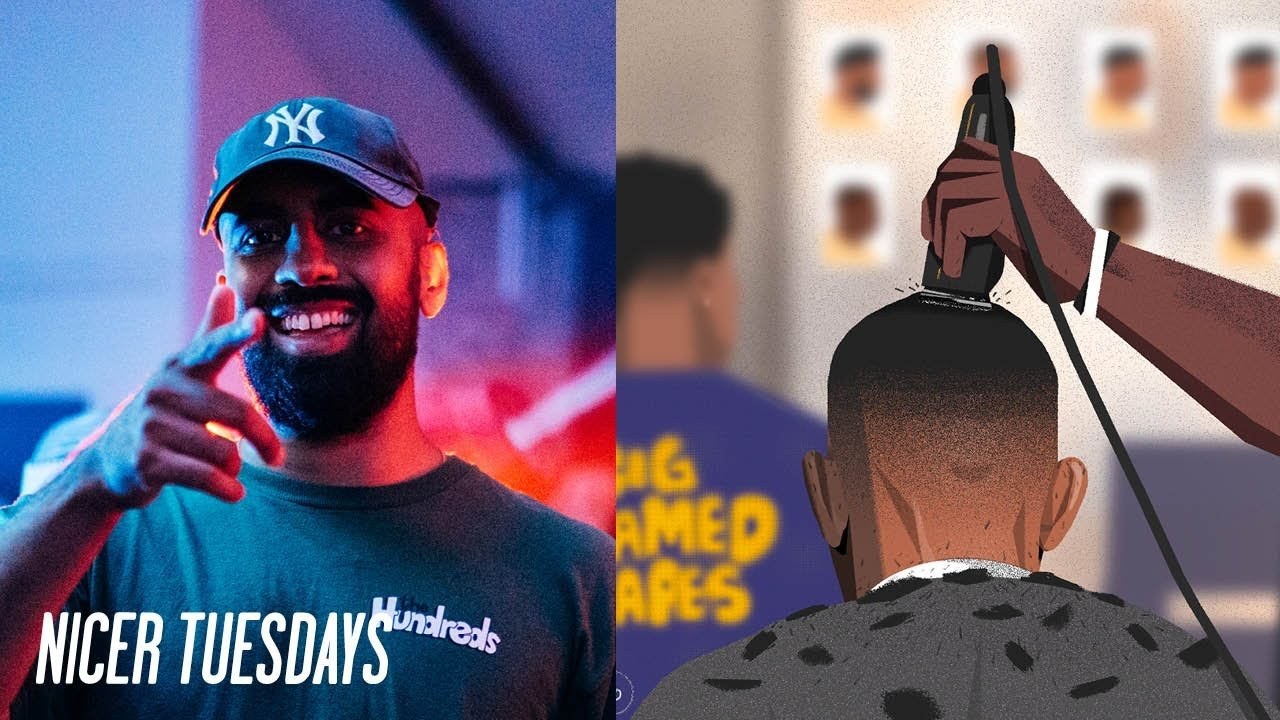
“I felt that I had a responsibility to tell that story with compassion and empathy.”
Transcriptmay contain minor errors or formatting inconsistencies
[Applause]
hello I'm raj I'm Raj Dhunna I'm an illustrator and today I'll be talking about what areas I work in me as a person what's in for my work.
And then going into that very special project I've I felt was really important to me which is about british agents in football because like you just said I am football man so going into it some of the areas I work in I'm pretty much going to cover but they they vary from lifestyle editorial advertising and a bit of moving image within and my background is I've got a digital design background and I've taught in the past as well on foundation degree level so some of the things that I like to maybe share with students when I spoke about this are pretty much very concisely some of the things I'll cover here so with this being lifestyle kind of work some of the things I like to explore are things we do in our day-to-day looking at fashion looking at how people congregate with one another.
And then also adding additional elements that are kind of moving image just add a bit more depth to the work. And I've always been fascinated by photography but I was never that good at it.
So I figured I could put that depth of field in my work to add some layering to the pieces and that is the kind of moving image route that I'm moving into because I do think it allows the subject to have a bit more of an interesting background as well as additional assets coming in and it's not overpowering to the composition working with typography so maybe not as good as the previous speakers but it's all good so on the left hand side was a piece for murky books on the right hand side top right was a piece for direct line and on the bottom was basically my own take for that one scene in scarface where you see the blimp and it said the world is yours and I was like how do I translate that to something else so this was that kind of I don't know whenever I see this piece I'm like yeah you've got this man oh you got this you can do this working in advertising so this was for the recent peaky blinders series and when I practiced this out loud I was so tempted to do the birmingham accent but I just thought I'd leave that I'd leave that for today maybe if you catch me in a bar I'll do it I'm working in editorial so on the left was a recent piece for the new yorker about burner boy and then on the right is a piece of the late great mf doom or caps so keep into that editorial thread I wanted to just give an insight into how I collaborate with whether it be an art director or an editor and that's to to supply sketches and it is something that I love doing I love working in my sketchbook.
So the pieces on the left are for the piece on the top right and when I was working with this particular art director it's really nice it was very collaborative like I said and the idea is you know I send I send a batch through and then they go yeah like how about you merge two and three together.
And I'm like yeah but I'll do it it might good it might might not look good but the whole purpose of that exercise is that it stretches me I suppose as a as a professional and it allows me to be open-minded to where somebody might see something working a lot more successfully than I initially did and I think that's pretty much what encourages me to keep working because I love the idea of dialogue and community and I do feel like this relationship you have with people you work with whether. That's design or illustration or you know if you're working in community centers or something like that there's always going to be a group or some people to really have your ideas of best interest and something like this is where I kind of get that I suppose so going back into that sketchbook.
This is something that I feel like is very very very integral to how it work and a lot of the time it's very personal to me as well.
So I'll be with a sketchbook at all times I'm not one of those creepy guys who draws people on trains and it makes a tick tock and then. I am not that person.
But I do like to draw from observation.
And I think I do it quite religiously and the sketchbook is a very safe place where you can make something that you don't like you can make something that you do like and it stretches my ability anyway and yeah. So something that I practice quite regularly so here on the left is a drawing from 2016 and on the right is a drawing from 2019 and this was at my grandparents house on their roof in jalandhar in punjab and then if I if I for whatever reason do not have this sketchbook on me I work on my iphone so these are digital drawings that I like to do and these are kind of single layer finger drawings that I just think they they allow me to express what I want to get across with immediate color and I kind of strip away outlines and it's always done in situ so I will never draw from reference this is always done kind of in situ and if the thing moves or whatever then I've got to adapt whatever.
But yeah. So all of these are done from observation which I think really I don't know categorizes my practice in some in some way because I might be working editorial and that's very immediate and I work from a reference but I can come and go and then I get this. And I'm there sweating for like two hours kinda like is this gonna look good is this a waste of my time you know it looks okay and working within culture is a very important thing for me to do and whatever culture that is I feel like there's various cultures that impact me in my day-to-day and I feel like maybe more recently I was at a stage where I can really articulate that through my artwork if prior to that I did it through maybe verbal conversations or a lot of like where there's a discourse.
And I jump in but now I feel like I'm at a stage where I can really portray my kind of thoughts in there without overtly saying exactly what I want to say where I keep maybe the essence of that within a piece so I grew up in a in a town called slough and that's kind of west from london and the great thing about that place was that it was very multicultural it was diverse everyone kind of bonded with one another and as cliche as it sounds but we didn't really look at nationalities we just kind of looked are you safe or not that are you cool you're fine and then we you know we would spark and spark a relationship like that and within this work that I'm trying to I don't know get across moving forward as well is that things like barbershop culture things like football culture things like jerseys because I and I suppose this was very much of the surrounding that I was in but never had a direct role model of somebody who did something in the creative industry so it was very much smoke and mirrors I I had no idea that. There was even a creative industry I didn't even know that. There was a term called illustration. So it was that thing that you just kept to this thing that you liked and other people would say it was wavy so you'd keep to it as well it's the only thing that will keep your attention.
And then you just carried on with that thing and with that being said football music music videos hairstyles things that really demonstrate how to be an individual is kind of where I looked inspiration because then I saw that in those areas they're unapologetically doing what they do and it looks so good so I thought okay I can do this. But in maybe this area and I'll hopefully develop so yeah with that thing of basketball jerseys this was a personal piece of a recent show called the winning time ♪
and then yeah we kind of get into sports illustration.
So I do a lot of this work but hopefully the previous pieces maybe demonstrate what I've always wanted to get across is that I'm not subject to this work.
So I love doing it because I want somebody to look at the work who doesn't necessarily like football and they don't look at and go oh it's just a football piece like hopefully somebody looks at this and thinks it doesn't have a blanket sports aesthetic the person making it has thought about the image making or the visual communication in it and really tried to relay a kind of a sense of emotion or a sense of playful composition.
And that's that's really what I try and get across and again that's the essence of my work in my head anyway so hopefully it comes across so left to right was a piece for champions general right of that was a piece of visa that was for the women's champions league final right of that was a piece for versus and like and I've just got to say I I love to work in reverses and I love everything they do and then on the right hand side was a piece for nike that went in their flagship london store which I worked with it's nice for that that was a few years ago and the final two on this before I get in the project.
But this is probably one of my favorite illustrations on the left-hand side of tomorrow and this was part of a wider project for adidas which was the ready for sport campaign and there is something that I I adore about side profiles I was I was thinking about doing a whole thing like this as well.
But I thought better not be quite strange but within this piece I feel like I stripped it down enough and got key elements in there and really paid attention to the things that I pay attention to so like if you've got a good fade I'm like brother. That's a good feed and I'll tell you.
So these these little details are things that I really want to get across in my work because I will say this to you I will say that to you.
And then on the right is ruben often cheek which yeah and then here here was a few pieces from the wider project. And it kind of worked as a set so yeah here is the project that I'd love to talk about and kind of deconstruct a bit further.
So this was a comic book with the target audience of being kind of young adults or a bit younger and the story revolves around a footballer called hamza chowdhury who at the time was like the first british asian footballer in the premier league so it was almost to tell a story. That's never been told and that to me fascinated me because again growing up in the area I did there's hella ballers like there's so many good footballers where I'm from and it is one of those things where we thought about it. And we scratched our head but maybe not not said out loud to one another because we didn't know the answer we just you know we just played the sport that we loved and what I do want to say is a thank you to some people because this project was a collaboration I want to thank feddy for recommending me for this federico I want to thank charlie who was the project manager on this vish who wrote it and john from here after design studio who worked on the layouts and collaborated with me a bit more with the design so it was in association with show racism the red card and the premier league and I just want to read a quote to you which was kind of in the briefing deck so in the uk not everyone feels welcome in football despite proclamations as the world's game or the beautiful game.
There is a barrier for entry that at the moment is proven impossible to break down despite b-a-m-e players making up 25 of all professional footballers british south asian players make up less than 2.5 percent of this figure I read this. And I was like what I was like so wide-eyed that's I cannot believe this. So that was something where I don't know like when you see things in numbers and figures and you know numbers don't lie it really it really does make you think about the impact and the severity of something. And that's certainly what that did for me and the thought of this reaching maybe an audience who live in a demographic that was not similar to mine where they didn't have an example of someone just being cool no matter how they looked I thought I had I don't know a responsibility to kind of really tell a story with compassion and empathy but also stylistically as well like maybe make it appropriate to the project.
So I worked with a set color palette for kind of cohesion as the book progresses it changes and it yeah moves on.
And then there's a brief kind of me playing around with layouts before we even had a story or yeah a story where I couldn't even work on the scans and then that progressed into this idea of me figuring out what goes where.
And I'm pretty sure when I was working with a client they were like is this what you've done so I'm so happy that they like carried on with me I've got I've got explicitly say that it worked out for the best and from there it kind of developed a bit more when we had a bit more of a story and using that sketchbook that I was talking about providing scamps and really hoping that the client sees a to b because they've seen my worked my worked up work.
And then if they've not seen my scam so this will be an introduction to that.
And then yeah that then it then it kind of progressed a bit more progressed a bit more and like I said this served as what goes where and a lot of things changed a lot of the tiling or the panels yeah and funnily enough you know like hamza chowdhury I don't know if you know but he had a huge afro and like I was saying about barbershop culture and hair culture I think is so significant to an individual so that was really nice to get to grips and really play around with so here were the initial ones that kind of got approval me drawing quite loosely from what he looks like as a kid to an adult and it was approved and then I kind of figured out how to strip this down because I thought actually or probably be too much to do and I think there was 70 plus illustrations within this book all done within a month or less than and that's included in three rounds of amends a lot of conversation and the story coming in and out.
So I had to work fairly quickly on this which all good or good or good I don't mean that in a cocky way by the way I just mean fine that's what the brief was yeah and then I figured out this way of how I could work in a process so I worked on this outline then.
I worked on shading and then I kind of introduced color and here are some of my favorite pieces and also to add I did animate bits like this. So it could live on social as well so hamsa charger has bengali roots and I've got punjabi roots so even though they're not the same.
But there are some nuances with asian culture that you can say okay like how about I introduce this and to charlie's credit and the team's credit they allowed me to really kind of put my ideas and thoughts into the mix and I felt like that added authenticity is probably the wrong word but I do feel like stirred it in maybe a better direction along with this as well. And some of the some of the research that I did for this was watching hanna-barbera cartoons and all my days I was just watching so much scooby-doo and like you know when someone's unveiled there's the villain you're like what else was in the villain so that was that was the best research ever.
And I tried to include maybe some satire within it or some light-hearted moments that would connect with the viewer I suppose and there is this image of hamza and his mum having a conversation that goes throughout. And I when I was working this up that was probably my most I don't know powerful thing that I feel like came across in terms of my opinion because as he grew up he still had the lessons and that culture of family and identity was very tied into this look at that so sick and yeah his here's some of the spreads so just let you know like I do there is a link to this if you did want to go on my instagram and get the link you can see the you can see the full convert digitally and we can see that color palette kind of moving on. So it starts yellows goes into reds and greens and then when he joins leicester it's kind of a lot of blues and there was one quite sensitive area within the within the comic which is where he suffers well he didn't suffer like you know someone say some racist stuff to him.
And then it affected him only him you know. I mean and this is what happened so there was this yeah this kind of scenario that happened and the thinking behind it was just to completely strip the color out of it because that's what happens like when you get when you get some someone saying stuff that they've not truly considered and they said to you and you're from this place it it just makes you speechless because you think like how do I reply to this because this person has no idea about anything.
But they can say something. And then they can just walk away from it.
But it's going to stay with the individual for however long it does so I tried to convey that in a very succinct way and that was probably this panel here where you know he receives this and hamza in the middle is conv he's a kid man he's a kid and he's confused and even as an adult you'll be confused and then on the right you've got his friend here and one very very little detail that I wanted to convey in this was that even though they're both shocked there is a difference of how they both kind of absorb that information and through the idea of tone and through the idea of mark making these nuances can come across because even if they're missed I think it's absolutely fine and if someone understands the nuance then it kind of adds to the piece a bit more and then he goes on to chop it up and break records and do what he does so yeah.
So I was proud to be part of a project that wanted to ensure the idea I don't know was treated by somebody who understood the nuances of the british asian experience and to relay this through hamza's journey was special to do so I do hope that people who have seen this in first foremost enjoyed it secondly try to understand maybe a different area that they're not not too familiar with and that has been me thanks so much [Applause]
Latest Talks
-
Murugiah
Why you should reject the formula and make art about things you love
Watch -
Amber Weaver
How does contemporary type design translate into the wider world?
Watch -
Delali Ayivi
How does photography give us the right to imagine our futures?
Watch -
Will Anderson and Ainslie Henderson
Bringing stop motion sorcery to BBC’s Small Prophets
Watch -
Ollie Babajide Tikare
The importance of not flattening the complexity of observation
Watch -
Marina Willer
Design thrives when you find poetry in the simple things
Watch