
Poulomi Basu
On ‘the oppression of specificity’ – why captions can obscure the truth of a conflict
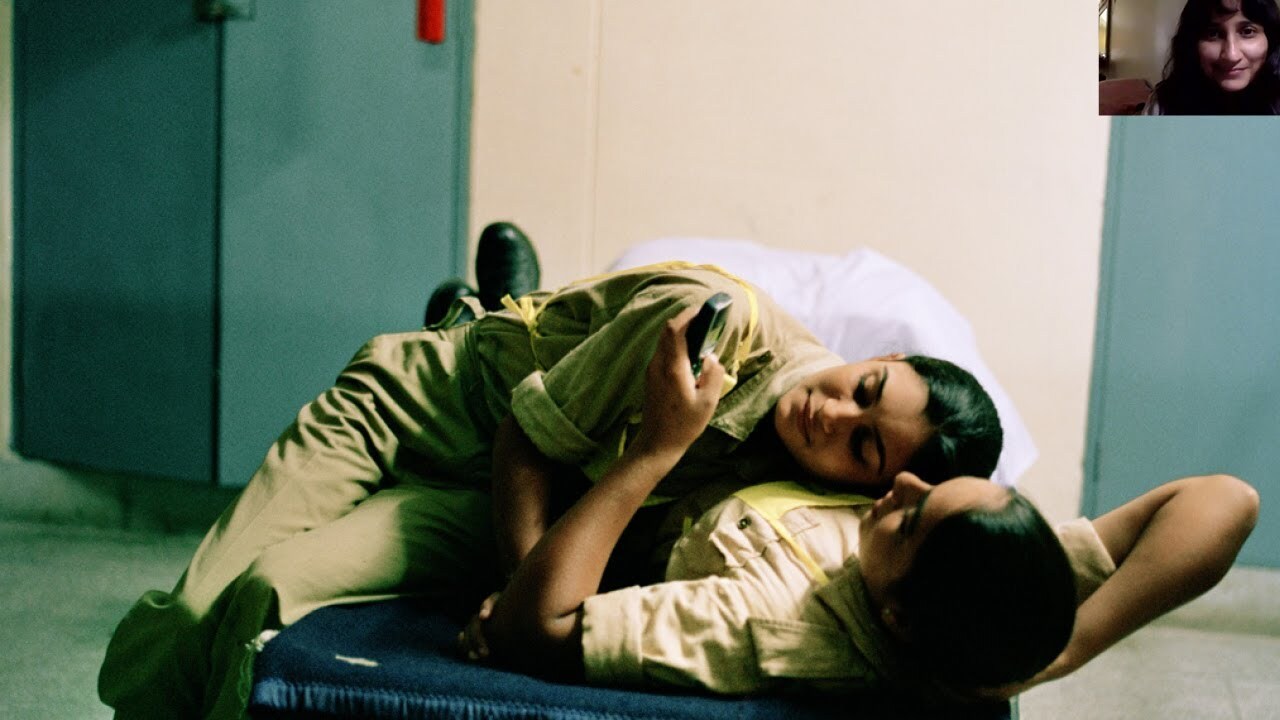
“When you put captions and words on images sometimes the image doesn't transcend itself beyond what it's meant to. I feel like some pictures should be suspended in time and not just belong to a specific space in a specific time.”
i'm delighted to welcome you all to this the very first nicer tuesdays online of 2021. first off i just wanted to say a massive thank you to all of you for signing up for today's event it's going to be a very special one as uh we're relaunching this year with a brand new format nice tuesdays online will still be held monthly on the last tuesday of the month that will stay the same what's different though is that this year each event is going to have its own theme and instead of four speakers we're going to be joined by just two but we'll be talking to them in more depth discussing their work and the issues raised by it and giving you folks at home more of a chance to ask your own questions tonight's event has a very
timely theme creative responses to crisis don't worry though this isn't going to be all about the pandemic i feel like we've all heard enough about that instead we want to look at how artists and designers have grappled with immense global challenges in their work everything from conflict to climate change thanks very much for bearing with me it's now time to meet our first guest palomi basu is a trans media artist photographer and activist her book centralia which came out last year journeys deep into the forests of central india to uncover a little-known and under-reported conflict that has been simmering for years
between an indigenous tribal people and the indian state palomi describes the work as a docu-fiction partly because it recognizes that in war truth is the first casualty and centralia is always looking to explore that unsteady relationship between reality and fiction the series won a national geographic explorer award and has been shortlisted for the 2021 deutsche bursa foundation photography prize i'm delighted to say that palomi joins me now uh from goa me if you could turn your audio and video on that would be that'd be great hi hello matt hi there welcome to uh nice tuesdays very happy to be here from goa yeah all
the way from ghost so you managed to escape from london about 10 days ago i hear i did i did i mean it was a brave feat to take a long flight and then quarantine for a few days then get like tested right but i'm happy i'm here yeah wonderful well thank you so much for joining us especially considering it's it's past midnight in goa and we're going to start kind of before we get down to speaking to you and discussing your work we're going to start by playing a short film um that you've made for us this evening it's something between a kind of a talk and a performance if i can put it that way um i'm sure the audience will understand
in a second what i mean by that um i should also say to those of you watching at home there are definitely some images here that you may find shocking or upsetting just to just just to warn you and we'll be back to discuss centralia in around nine minutes and again just a reminder to everyone as you're watching if you do have any questions for below me that pop into your head please drop them in the chat and we'll do our best to get to them afterwards um okay let's start by watching the film while protests reverberates on the streets of chile catalonia britain france iraq lebanon and hong kong and a new generation rages against what
has been done to their planet i hope you will forgive me for speaking about a place where the street has been taken over by something quite different there was a time when descent was india's best export but now even as protests swells in the west our great anti-capitalist and anti-imperialist movements for social and environmental justice the marches against big dams against the privatization and plunder of our forests our rivers against mass displacement and the alienation of indigenous peoples homelands have largely fallen silent on september 17th last year prime minister narendra modi gifted himself the fill to the brim
reservoir of sarvala sarovar dam on the narmada river for his 69th birthday while thousands of villagers who had fought that dam for more than 30 years watched their homes disappear under the rising water it was a moment of great symbolism accordingly centralia is a tale of fractured landscape in extremis it is a portrait of contemporary india a twisted spin on classical documentary photography that draws attention to a multi-layered conflict in which everyone seems to lose between the shifting planes of reality this is an india of the mind a place both hyper real and metaphorical familiar yet alien dazzled by an apocalyptic beauty by eclipse and fire by joy dread and
dream by life and death centralia is a passage deep into the forests of central india where a little-known and underreported conflict between a maoist guerrilla army and the indian state slowly simmers military encounters are faked and former insurgents wear the uniform of the police massacres are brutal and reprisals are swift within this labyrinthine conflict the people of this mineral-rich land are transfixed to give you just one example on 13th of june 2016 magdam hidme was dragged away by security personnel who had just raided her village the next day police sent back her body a stark nude body wrapped in plastic according to the account of her mother the body was mutilated with her wrist
and teeth broken and she had been raped later the police would release a photo of hid me her lifeless body sprawled across the ground wearing the uniform of a maoist guerrilla fighter accordingly the police there was just another outlaw fighter killed as they carried out raid to rid the area of illegal combatants bringing instability to this mineral rich area to the adivasis the tribal people she was another victim of a merciless assault on their rights as the indian state attempts to dismantle its own constitution and deny the rights of the indigenous people as the indian writer and activist arundhati roy has noted the indian government has turned the
entire tribal population into squatters on their own land it has criminalized a whole way of life in exchange for their right to vote it snatched away the light their right to livelihood and dignity hybrid methodology is choose specificity and is deliberately disjointed stripping images of tried visual cues that often simplify a complex geopolitical realities centralia explores the unsteady relationship between reality and fiction and how our perception of reality and truth are manipulated centralia also tells the several tales of women what they do when pushed to extreme situations and how they challenge their
own roles in the society especially rural women who are rising up against the state seeking to liberate images from the oppression of specificity gazing beyond the jungle book and associating this invisible conflict with the wider issues of environmental degradation this exploitation comes at a price the tan transmogrification of violence into the de facto language of politics freedom is shrinking and what we say and who we are is being obscured in the face of this rampant excavation of this environmental disaster the individual is crushed their identity erased and denied well thank you thank you so much for that palomi um yeah an incredibly incredibly powerful film um i guess to start with just a question
really we're here talking this evening about creative responses to crisis um for you what was the first spur to start creating this series what was it that caused you to think you know i need to tell this story well you know i've always been sort of interested in stories that are i mean i mean i've been interested in sort of telling stories from the hinterlands and parts of discovering my own country in a way that you know it's less known to the world or what it's like most people living within the country are unaware of you know but i was also interested in sort of representing showing telling stories about people who find
themselves ordinary people who find themselves gotten these extraordinary situations and also tell sort of stories intersectional stories of you know climate change environmental justice and women's rights and you know centralia is sort of sits at the heart of all these three issues yeah there's something that really um struck me and it's something that you talk about in that in that film is the phrase the oppression of specificity which i just i've never heard before and i'm fascinated by it um it's kind of talking about wanting to remove the specificity from your images um could you just talk to us a little bit about that and um yeah what do you mean by the oppression of specificity
i think when you put captions and words on images sometimes you the image doesn't transcend itself beyond what it's meant to so i feel like you know a lot of some pictures they should they should be suspended in time you know and not just belong to a specific space in a specific time especially in uh stories that you're trying to in trying to tell stories about in which you're sort of trying to present different versions of truth and the collision of perspectives to tell that story you know that's what i really that's that's what i really meant when i was trying to tell that yeah okay um i mean you've also spoken there about so
another phrase that always that really grabbed me was um wanting to remove the the visual cues that often simplify complex geopolitical realities um i'm really interested in those those visual cues that you talk about what what's kind of an example maybe of a visual cue that that oversimplifies a situation like the situation in centralia um i think one of the one of the story uh one of the pictures of uh magnum hitman in which you see her sort of dead body lying you know with the with the fake uniform of an insurgent's uniform on a tribal woman and then declaring her as a guerrilla fighter you know so by sort of telling that story but removing it it from its
context context in a way that when you see it you don't you can't tell what is happening when you look at the picture you think it's a gorilla that is that is lying with a gun but what is happening is that every single thing within that picture has been recreated and reframed to sort of tell you a version of truth that's being presented to you you know so that's what i tried to mend by removing visual cues but at the same time you know offering those multiple perspectives of the same situation to sort of interrogate as an audience you are interrogating what is happening rather than you know what is being presented to you as what you see
i guess i mean what it kind of leads me on to the next question which is all about that relationship between what you're doing um you know as an artist and photographer and what you might kind of traditionally call conflict photography or war photography which is probably too kind of yeah simple simpler term but um i guess yeah what what do you describe that relationship as i i know that you've you know done you've sat on panels alongside lindsay adario and people like that who are obviously very um very famous you know war photographers do you feel like there's a difference though between what you're doing and what lindsay daria is doing i think there's a
huge difference between me and lindsay's lindsay's and my work because she's a full-blown photojournalist whereas i don't think i do use journalism as a research tool but i don't call myself a photojournalist i think i use i'm somebody who uses a variety of approaches to tell a story you know so i i mean i don't want to i don't believe in this sort of i don't like to put myself in into boxes while trying to tell stories whereas lindsay is very much a photojournalist and an amazing one and i think for me i can't i can't do justice to a complex situation by presenting 30 pictures and saying this is the truth of the situation and
this is what is being presented to you in these words in these three lines of caption i've always struggled to do that because i've always i've been always interested in looking at gray areas in a situation and try to tell some nuance stories rather than stories that show you black and white within the space and especially in complex situations in complex conflicts i've always felt that there has to be an alternate way of telling stories rather than a straight say 15 to 30 picture s photo essay or how photo journalism usually does so i think i'm a very different kind of practitioner from lindsay yeah yeah that's it that's fair i mean i guess it
comes back to that word docufiction maybe just as a last question because i know it's incredibly late there now but um that word docufiction or that portmanteau dot q fiction that you've used to describe your work it's almost you know it's two different very different opposite um kind of words but you kind of put them together and i guess what does that what does that genre mean to you is it is it a difference yeah i guess difference from documentary and the difference i think throughout centralia i think a lot of the pictures you don't know whether what what you're seeing is truth or if it's
a lie so i think you're constantly sort of running in on this territory where you don't know what you're witnessing is is an actual situation or whether it has been staged you know so i think that's where the work sort of trends this sort of thin line between documentary and fiction because the truth is the as i said was it's the first casualty in any war in in any war and especially in in a conflict like chattisgarh you know where multiple actors uh have multiple roles and they're like shadows moving across the forest you know so it's it's fascinating to see how everybody is trying to tell you their version of the story
and you don't know who's lying or who's telling you the truth you don't know what's cr recreated or what is staged or what is a real situation you know so there's always this interplay between reality and fiction and you know it's up to you what you make of it you know fantastic well follow me i'm afraid we're gonna have to leave it there but thank you so so much for uh for joining us this evening and so late from from goa as well thank you really appreciate it
Latest Talks
-
Murugiah
Why you should reject the formula and make art about things you love
Watch -
Amber Weaver
How does contemporary type design translate into the wider world?
Watch -
Delali Ayivi
How does photography give us the right to imagine our futures?
Watch -
Will Anderson and Ainslie Henderson
Bringing stop motion sorcery to BBC’s Small Prophets
Watch -
Ollie Babajide Tikare
The importance of not flattening the complexity of observation
Watch -
Marina Willer
Design thrives when you find poetry in the simple things
Watch