Pablo Rochat is a social media artist known for his humorous and original approach to creative projects, including branding work with Balenciaga. He emphasizes the importance of silliness and audience reaction in his creative process.
Pablo Rochat
This social media artist iterates until the idea genuinely excites
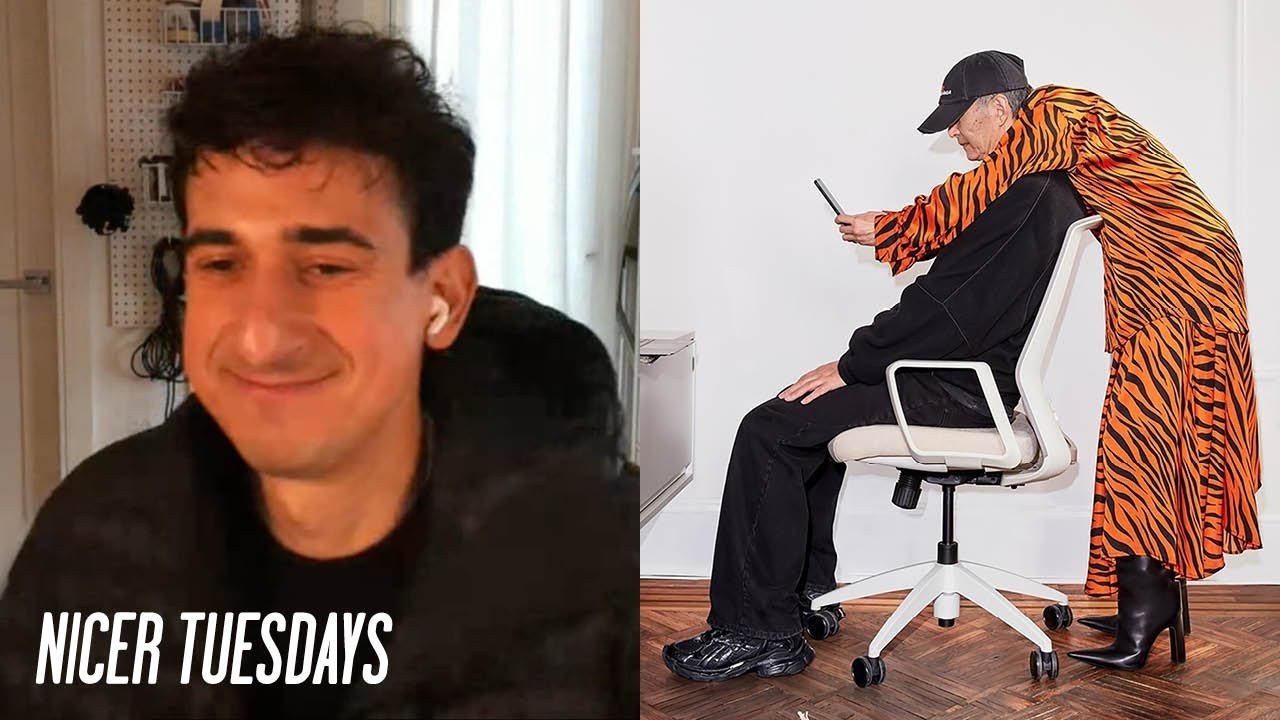
“The more I iterate, the better chance I have of producing an idea that I’m excited about.”
Transcriptmay contain minor errors or formatting inconsistencies
Pablo Rochat has been described as a prankster with a knack for social media originality in the past you might have seen his creative collaborations with the pigeons of his local neighborhood in san francisco which are equal parts hilarious and heartwarming or his life-sized airpods sticker prank which capitalized on people's anxieties around dropping their earphones yet he's also worked with some of the biggest brands and artists in the world his recent projects include directing a music video for drake and classically tongue-in-cheek campaigns for the likes of valenciaga and hermes he's also created illustrations and animations for the new york times and new york magazine among many others I'm delighted to say that pablo is our next guest for this month's nicer tuesdays hi pablo how are you hi there how's it going I'm very well thank you thank you for having me matt good fantastic yeah well thanks so much for joining us and yeah it's great to have you here.
So I guess unlike aurelia you're gonna not be doing a talk today instead I get to ask you lots of questions and also everyone in the audience as well please feel free as ever to pop your questions in the chat and and I'll do my best to ask pablo for you but pablo I guess my first question is you know you've done as I mentioned commissions for the new york times music videos for drake you've dreamed up campaigns for balenciaga the projects are all really diverse but does your approach differ for each or are there certain processes and steps you kind of tend to take for every creative project every creative brief I think it's funny I think I approach everything pretty similarly most of the time I'm being approached by a client to create some sort of creative visual communication for whatever it is whether it be a product or a song that I need to make a music video for it's I'm trying to like communicate visually in creative ways and that's what I'm always trying to do so whatever it is whatever I get briefed on I always start by going to my notebook and writing down as many ideas as possible while researching you know what has balenciaga done before in the past what can I add that's new so it's important to kind of understand what's been done before just in case I you know might have the same ideas which have been done before or I realize this client hasn't done some a certain thing before.
So that can inform a series of ideas so it always starts with me just sketching as many ideas as possible in my notebook I can show you here it's just I I separate the page into 10 squares and then each day I'll write 10 ideas and they're basically ideas for what the final product could be so it's the more I iterate the more I more ideas I produce the better chances I have of having a good idea that I'm excited about and from there the production is a whole other thing you figure out how to produce something.
But the creative process is really similar for every project it's so interesting to hear that it starts with a sketchbook and yeah it almost starts in that very kind of traditional way.
And then the outcomes are so kind of you know so diverse and so creative yeah.
So I used to you know start in photoshop like pull the image of the product that needs to be advertised or the artist that needs to be featured in a music video or whatever.
And then I would like photoshop a scene but I would get really I'd waste a lot of time trying to being distracted by actual visual elements and not be focused on what that actual idea was so for the past few years I've just always started with a pen and paper so the idea it starts with the idea not so much the actual visual material pablo humor is such a key ingredient to all your projects or at least the vast majority of them it's such a hard thing to give advice about and to explain because there's almost this assumption that you know you're either funny or you're not but do you find there are ways to approach a problem or a project to kind of coax out the humor is there a bit of a recipe to getting humor into a project I wish there was I mean I'm just constantly in the purdue in pursuit of a funny idea or funny solution to a problem I've always since I was a kid I've always wanted to make my friends laugh make my family laugh I've felt that if I were to make something.
And then someone laughs or smiles like that's that's all I need that's the end result and so I don't I don't know I might be a little naturally like more silly funny than most people.
But I I really think what's produces the most creative like funny work is having done a lot of published a lot of stuff so the more you practice the better you get just like anything else it could be someone who's like naturally very funny and just hasn't done any creative work or hasn't like stood up until a joke in front of someone and they their material is not going to work as well as someone who's less funny naturally but who's done it for years and years and understands how an audience receives something.
So basically the more I produce actually more importantly the more I publish and put something in front of my audience the more I understand what is funny and what isn't based on the reaction because a lot of times I will have something on a piece of paper that I wrote wrote down just by myself in my office that I think is genius funny it's gonna be awesome.
And then I make it. And it.
Actually falls flat I'm always surprised of what I what doesn't work. And sometimes what does work but over time it just takes practice to be funny I think that's a really interesting way of putting it. And I guess this is a really good example of the collaborations I mentioned with your yeah your pigeons in in I think it's chinatown in san francisco but I guess oh sorry yeah please go I'm also just a big fan of comedy and entertainment and so I'm just always learning from being an audience member as well and you can kind of get to understand why if you kind of think about it closer like why something made me laugh or whatnot so you're you can analyze outside of humor as well not just your own yeah interesting I was going to ask you about kind of because I guess when you look at your website there's a whole section of things that you call freebies which I think are just kind of little experiments and little fun things that you wanted to kind of share with your audience it's a really big it's almost an advertisement for not necessarily waiting for the project to come to you right and just constantly making stuff and you'll you'll eventually find something that could become a I guess a bigger project at some point or feed into another project yeah I'm 100 I mean the where I'm at now and the work that I do now for business for clients it all comes from it all stems from me doing my personal work you know I I was working in in advertising agencies and internally at companies in the past and I was always doing independent projects because oftentimes the ideas that I think are more interesting that I come up with are less likely to be sold in a presentation to a client so what I've found is that if I just publish it on my own and prove that there's an audience and and prove that based on the engagement that people are interested in whatever creative idea I have that's kind of a way of selling myself as a creative to a client they see me publicly doing something already and they see it working and that gives them the confidence to maybe reach out to me to do my to work with me.
So the personal projects always feed the professional projects in that way. And so it's always important for me even if you know oftentimes I do get busy with client work to always kind of remember that the only reason why I'm getting client work is because of the personal work that I did yeah it's such a valuable way of thinking about it.
And I think yeah a good lesson for anyone who wants to be kind of yeah creative and get the big project is kind of to keep just keep creating I guess in many ways if you can of course we've had some great questions through from the audience already already which is fantastic and please do keep them coming and a couple of people are asked like how do you keep inspired how do you overcome creative block I guess they're kind of two sides of the same question and any yeah any kind of insight into what happens when you're you're feeling slightly uninspired and what you do then yeah I'm glad that was a question because I think some people I get messages and emails about this. And I some people might think that it's like it's easy or I'm good at it.
But I'm good at coming with a creative idea or whatever.
But I it's always it's never gotten easier I just decide to spend my entire days working on producing creative work. So it's really about the time that I put in and the creative blocks happen all the time.
And it's like more rare that I don't have a creative block than I do and so you know. I have to give myself the assignment to have a certain my amount of ideas per day because I can easily kind of slack off if I feel like I'm not I'm not putting anything good on paper and so let's just wait till tomorrow but I think that if you were just to take an hour break walk or go exercise or do something else and come back the creative block might have will have eased a bit and you just have to show up to your desk and it's like it's a it's challenged it's hard work it looks fun and it is I'm very lucky to be doing what I'm doing but I spend an abnormal amount of time in my notebook trying to think of a prank or a silly idea and oftentimes I think that my success and my creative work comes not just from you know having creative ideas but actually being willing to try something really silly out in the world I think a lot of people have good ideas and clever jokes just to themselves with their friends but I've kind of dedicated a lot of my time during the day to go and actually make make the stuff and so it's just about spending time with it and yeah but you know you have to everyone kind of works in their own way so but I'm obsessed with trying to get over creative blocks it's like my number one image into me. And it happens every day so for me it's like an exercise and taking a nap yeah honestly I think so many people will be very relieved to hear that even you get great block and you know even you struggle with it.
So that's that's great I don't yeah I don't really post about the creative block because I'm not sure what I would post and I don't want anyone to boohoo me.
But it happens it's happening yeah it's happening relief for everyone I'm sure there's a really interesting question here from leonora I'm sorry I'm not sure if I've said that right apologies if I haven't how did you make the transition from working in an ad agency to doing your own projects because I think that is a really difficult transition to to make for lots of people even if they do want to do it.
So yeah how did you find that that transition from ad agency yeah yeah well first of all I learned so much at the advertising agency not only did I make really good friends that are like-minded and also learned how to actually have an idea and sell it through to a client which is a super important skill I think basically I like I said before I was coming up ideas for briefs that I was getting as an art director in the agency and oftentimes the ideas that I thought were really exciting were kind of too off beat for the client or something that kind of they weren't familiar with in a way.
And so the my favorite ideas weren't really getting sold through but I still wanted to make them. And so you know I posted on instagram posted on reddit on youtube and you know you have your friends that you're posting to it first and then your friends might share it with another friend and just the more time that you spend publishing personal work inevitably more people will become aware of it and but also you should be aware of what your audience is liking not liking if you want to if you do want to entertain people with a personal idea it's important to test them and you know move in a direction where you are both excited about the work that you're making and also other people are excited to experience the work that you're making so basically after hours after you know or at lunch or when I'm pretending to work on a client project I'm just making a post for instagram or collaborating with a friend to post something on youtube it's just about putting in the time and actually publishing stuff that's the hardest part because it is scary but you really don't have much to lose you have a lot to learn when you do publish your personal projects I think there's a really interesting point that you've made kind of in the last couple of answers which is really you know we do focus a lot on ideas but actually the challenging part is the going out and making it.
And then there's another challenging part which is putting it out into the world once you've done that yeah yeah well you know.
I think a lot of creative block is fear in a way that I won't have another good idea or if I decide not to post something I'm it's a lot of it's based in fear that no one else is going to like it. So it is about overcoming that.
And then you can always create pseudonyms or a fake another instagram account to just test out ideas or just text it to a friend but even texting it to a friend doesn't count I don't think because they're gonna might be nice to you regardless and so publishing it to strangers is like the most valuable learning that you can get from producing your own creative work. And I guess do you do you also accept your do you have to accept that you know sometimes you're going to get it wrong sometimes you're going to make something that people won't like or will take issue with particularly as your audience grows as yours has yeah yeah I mean I am I'm not making hits every day I'm some work that I post in the future is not going to be as good as the work that I've done in the past even though it's subjective I might think about that for myself and I do get down about it because I work hard to try to entertain people and when people are less entertained from something that I make than something I've made before then you know I try to think like what why why didn't that work.
And so yeah you do have to deal with the pain of sucking a little for I think your whole career you just kind of have to get used to it. And it's never feels good but it's a part of it. And it's worth it in the end yeah definitely sorry I'm finding this I've never been more distracted by what's been on the screen while doing a q a before it's absolutely amazing watching your work coming up we've got a really good question from from adrian how do you approach working across various mediums I guess you know we talked to the beginning that you've done music videos you've done illustration worked on animations you've done kind of things out in the real world you know yeah how do you find working across so many different disciplines yeah.
I think I mean I love it it's just a new opportunity to do something creative sometimes I it gets it could be it can get a little stale to work in the same medium at least for me I'm pretty you know add in that I like to switch my focus and try a new material or media and so it suits the type of work that I like to do which is a variety of things.
And then you know in the beginning it's scary because maybe I was just mostly making kind of funny videos or animations and then suddenly a newspaper asked me to do illustration something I haven't done before.
And then you know you go through the process and you get it done and and then you realize oh wait I could do I can convert my creative thinking from one medium to another medium what's another me so just then a music video happens and I feel a little bit more comfortable tackling that problem because I've tackled new problems before.
And so just the more variety of projects that I do the more comfortable I get with doing a variety of projects but you know like I said it's always scary but yeah there's always a chance of of sucking of doing shitty work there's always that chance and we I'm always scared of that yeah that's what I'm sure we all are as well yeah I know that very true there's a question here from harriet who says could you talk a bit more about your 10 ideas a day sketchbook I guess yeah maybe be good to get a bit more detail on are they all in one theme those ideas for the day or are they kind of very yeah very distinct you just kind of letting your mind go completely free what does that look like those 10 ideas a day yeah. So so I do it both for client work and personal work where if I were to get a brief from a client let's say they have a it's like nike and they have a shoe they like a basketball shoe that they want me to create a video for or whatever it may be I get a piece of paper I draw a grid of 10 squares and then I say okay today I'm going to have 10 ideas about this shoe it just forces me to to not be precious with the first idea or get too attached with the first idea or get too discouraged by a bad first idea and knowing that I have nine other opportunities to have a good one that day and so basically you know I write a I draw because I'm kind of visual and the end result is going to be visual so I draw out what the idea could be like the shoe is flying through the air and going from one town to another bad idea but like okay that's the idea.
So I draw a shoe fly in the air and then I write the shoe is gonna fly in the air from one town to another town and then okay next idea whatever the next idea is so it forces me not to be spend too much time on one idea and to have multiple ideas because I'm always surprised by what can come next especially half after having maybe a couple bad ideas good ideas are feel like they may be on the way.
So it's just quantity with a mix of a little bit of quality and basically the more ideas I put down the more chances I had of having a good one and then you get to go back the next day and look at it with fresh eye and kind of do your own editing and then also I have a catalog of like thousands of ideas now that you know I've had probably I've done like two shoot campaigns already so I can go back and see 50 if I get another project about a shoe for example I already have done some thinking about that. And I can revisit it.
So I have a library of ideas that's really yeah it's very very interesting and I think yeah just great to hear as well that there's it's kind of taking the pressure off yourself isn't it.
That's the that's the most important thing because I think that pressure that you put on yourself can be so difficult one important thing that I kind of talked about.
But I think it's really important is to give yourself permission to write down bad ideas because oftentimes I get stuck and find myself in some sort of creative block when I am not coming up with any good ideas in my head and so the page is left blank so if I literally force myself to write down a few bad ideas and it's embarra I couldn't I made him embarrassed by myself to have like a bad idea or an idea that I've seen before or whatever it. Actually loosens you up and kind of gets the ideas flowing and better ideas coming so writing down bad ideas is harder than it it you think but it.
Actually helps get through the creative process I wanted to ask a question about kind of labels and I think in the press you've been called everything from a prankster to a trolling expert at one point what do you make of those labels I mean do you agree that kind of describes what you're doing sometimes or would you prefer people not to use those kind of terms how do you feel about them I don't mind I think it's like I admire a great prank a good troll that I see online so you know I don't think I'm not doing that all the time but oftentimes I am I do have an idea for a prank and some every once in a while I will do one and publish it. And so those labels will come with that kind of work. And I don't really mind it's always been hard to kind of put on a label on what I do kind of differ it's different for each job.
But I don't late I don't think the labels really matters more just like with the work what is the work because that's what people are going to see anyways definitely but yeah really interesting love pranks really good question from joseph here how do you make sure you have creative wriggle room with a brief or how do you how do you deal with a client who's closed-minded ♪
well for a client who's close-minded I think it's important because they're coming to you for a service that you nail the brief as much you can based on what they are asking and then give them options and for something outside the box so I wouldn't come to a client with a idea. That's outside the outside of the brief because I think it's better unless I have an idea. That's also inside the brief that they were kind of looking for in the beginning so I would both satisfy their appetite for whatever idea they briefed you for but then also introduce a new idea.
And then I always I'll put that at the end of the presentation just so I cover all the bases I think it's important to cover their base especially like I really do want to provide a good creative service and sometimes it's not going to be the most interesting work but you can always you're in the meeting already you can you can pitch some additional ideas afterwards fantastic I guess one final question because I think we're slightly running out of time.
But we've had a couple of questions I guess come yeah fit into the same yeah same same kind of I guess basket is there anyone you'd like to work with in the future is a question from adrienne and then yeah I guess I was kind of thinking is there a particular project you'd love to do that you haven't yet had the opportunity to do so two questions there who would you like to collaborate with and what kind of project do you want to do I don't know there's probably a lot of people you know I'm a big fan of music obviously working with drake was a dream I don't know I can't answer that right now but like working with musicians is fun and then.
And I do in terms of like general projects that I might want to pursue this year or in the future is most of what I do right now just comes in the form of like a digital asset whether it be you know a video or like or an image I do kind of want to explore more physical projects whether it be you know a mural or I think a clothing line I do like yeah amazing absolutely the idea of producing a pair of so yeah fantastic pablo listen thank you so much for for joining us that was absolutely amazing I'm afraid we're going to have to leave it there.
But yeah thank you for joining us on nicer tuesdays online
Latest Talks
-
Murugiah
Why you should reject the formula and make art about things you love
Watch -
Amber Weaver
How does contemporary type design translate into the wider world?
Watch -
Delali Ayivi
How does photography give us the right to imagine our futures?
Watch -
Will Anderson and Ainslie Henderson
Bringing stop motion sorcery to BBC’s Small Prophets
Watch -
Ollie Babajide Tikare
The importance of not flattening the complexity of observation
Watch -
Marina Willer
Design thrives when you find poetry in the simple things
Watch