
Olly Lang
From an iPhone snap of a brother in a Sydney dust storm to 600,000 views
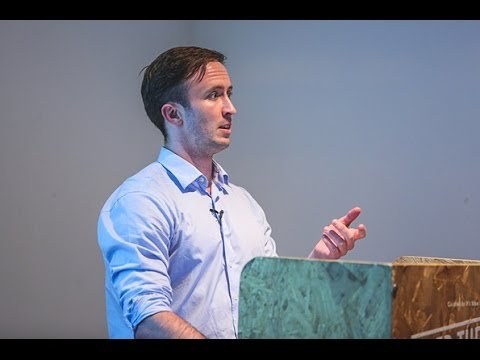
“I'm not a photographer. But I think there's this general rule which can come to which is kind of follow the money and if I had to follow the money a billion dollars is a good figure to start with.”
all right testing this is on yep thank you first to it's nice to that and park for tonight it's a real it's actually a real privilege to talk to you all about photography because I am not a photographer my background I have two degrees one in medical science one in business I'm a childood accountant I work in software Consulting and I'm not a photographer.
But I I like many people here take photos of the mobile phone I started back in 2008 and I was sharing images on Twitter at the time from Sydney which is where I'm from I moved to London about just over a year ago. And we had this massive dust storm in Sydney and I took a photo of my brother pretending to be a zombie and it went pretty well I wased to seeing uh I think maybe 80 to 120 views on twitpic which is where.
I was using to share my images at the time. And this went up 300 600,000 3,000 and because I shared it on Twitter and it was being shared a lot I had Germans ask me are you okay you know.
But it kind of gave me some realization that you know the right the right composition the right context and social media is is a very powerful platform to share an image it also kind of made me aware that my brother looks pretty awful it does so and then I I started taking Ro street photography with a mobile phones and this is shot a few I think 2011 with a iPhone 4S my first experiences with mobile photography were really around street photography I would walk out of work which was not a very creative experience in finance and I would set my exposure and I' Shar street photography Sydney's not bad for that pretty good white so this image kind of taught me a lot gave me a lot of credibility in terms of what a phone could do because I could prove to people that you can actually take decent photos with mobile phones that you can actually take quality work for these devices and I show a lot more street photography everywhere. I went phone was out turning through battery to the point where I now carry two extra Bates with me. And I can always plug them in and keep keep shooting editing on the Fly sharing on the same day and same hour same minute if it's worth sharing shooting street photography now in London so you know humorous incidents all these people here shooting the London nakan bike ride my purpose is not to shoot what's happening but also get the context get a composition try to take all the lessons I got from National Geographic Magazines which is what I grew up with you know this kind of high quality photo journalism which kind of gave me an interest in photography but gave me no information no idea what film they use what camera to share these images now on a platform where I can actually talk to people.
And if they ask me what devices have you used I can tell them so shooting these sort of things to riots in Sydney street photography sort of looking at interesting compositions and not having to be constrained by shooting through a viewfinder shooting almost like the hand is a kind of an extension of the eye not having to look actually at the screen but knowing that what's going to be in frames they call it shooting from the hip but I it's not from here it's from wherever I need the camera to be a lot of street photography I think this is where mobile photography is really blossomed there's a lot of apps that allow you to edit images on mobile on mobile devices but for me it's this discrete device which allows you to really capture what's happening around you whether it's in an event whether it's something you see on the tube or just you know everyday scenes again in Sydney this is shot full stretch trying to get some sort of composition here shooting fashion trying to get you know high quality images out of a mobile phone using because there's no app for light you know light is its own thing it's no there's no way you can make an app which is going to give you better light you can control it but you can't bring it I bought a little LED 120 LED sort of video light and I've used that in shooting portraits and in shooting events which gives me images which no one else would have with a phone so just little things which kind of could could give me a bit of a creative Edge and then the big pillow fight recently trala square and at one point my phone got smashed out my hand by a pillow and luckily there's about that much feathers from all these pillows so it just went bounce it's fine I think what's what I've learned most is not what I've shot but what I've seen SE I've seen so so many images on mobile phones these devices allow you to create and consume on the same device you know you're not you're not taking images and going somewhere else to consume you can switch quite quickly between creative and consumption. And I've learned a lot about the power of Silhouettes and Symmetry and sunsets which you see a lot of but I've always tried to take lessons from the great these these photographers who really they try to contain so much flavor in an image and and that's kind of been my motivation is always shoot and share the best images I can so Iceland's not too it's not too hard to take a good photo in Iceland but I think I'm going to go into some slightly more less visual stuff now and try to talk to you about what I've kind of come to learn from mobile photography starting from the top iPhone and various other phones with cameras in about 2008 I took. So many photos in 2009 I had a 3 GB sorry 32 GB iPhone 3GS and I just took photos every day and I'd say probably about 100% of those are crap and but you've got to take those bad images it used to be 10,000 you know your 10,000 first images are your worst you know this this kind of photography thing.
Now I think it's your first 100,000 you know it's really it's really because the cost of me taking those images is almost nothing you know it's just time whereas developing film going to a dark room all these things. That's just no longer around that's no longer a problem I had my first photo exhibited in Berlin in 2010 which was great it's kind of weird to have an image exhibited in Berlin and to live in Sydney kind of annoying for your photos to go further than you you know.
But I've just recently got back from a trip to to Berlin to meet the guys another app which which does photography then myself and a friend Mish who we kind of bonded over this this obvious mobile photography experience we created a in Australia wide Instagram exhibition.
And we had a few people donate some things we ended up having this great exhibition of mobile photography of Australian Suburbia and we started with 25 oh sorry two 2,500 images being submitted to a hashtag and from those we took 33 images we put them in an exhibition space and it was fantastic and the whole Community turned up in Melbourne and then a strange thing happened people kept using the hashtag and it developed this kind of Life of its own and so even though we cut off the entries at one point a lot of the good images kept coming in and so we had to put up a live feed of images which had been submitted between the cut off and the actual exhibition.
So I've been curating mobile photography exhibition at headon photography Festival in Sydney for a couple of years and up in Derby at format photo Festival working quite closely with the director about how you can bring mobile photography into a photo festival and what it can be you know there's just so much potential in a device which allows you to interact and allows you to consume and create and allows you to kind of participate and I think participation is where a lot of this is kind of taken off in the last few years.
I started teaching with the Australian Center for photography as a first step and recently I've been teaching at the Tate and the VNA bit more on that later and then last year berbery contacted me and said oh we need somebody to take photos for a campaign we need you to go to rock concerts and take photos with an iPhone and there's this special thing when you get into a photo pit at a rock concert and everyone's there with their dslrs and you've got an iPhone the guy next to you goes what's going on.
But I shot about 24 gigs both here in London. And in New York and it was ridiculous because remember I'm not a photographer you know I'm I just do this when I can as I can and then.
I founded the selfie School because I thought it was a ridiculous idea.
And it still is but to give people the ability to learn photography through taking selfies is one of the most powerful ways because we do treat these things like mirrors we treat them these mobile devices with so much more trust than you might imagine and I've been writing for filter the British Journal photography mobile magazine and I recently got interviewed by time lightbox which was really great as well just to be able to give photojournalists a bit of perspective of what they could be doing with this space so this was berbery these are the shots shooting to a brief with something a bit different sorry they're not large for the people at the back there it's pretty much black and white grainy traditional rock and roll which is great because an iPhone in low light we'll stick to black and white thanks it's really about capturing what a client needs and I think what you get a lot of these days is pleasing images as sunsets Silhouettes symmetry these things which people can consume without really having to deal with any you know information whereas I think brands that are doing it well they're trying to create an image an iconic image or at least a representation of the brand through the imagery selfie school I taught at Asos 35 fashion bloggers and one guy who was teaching them how to take selfies so it's kind of do what I say not what I do I don't take that many selfies but it was phenomenal to see how these people could quite quickly go from you know not really understanding what they were going to do with the creative process to to taking some some awesome shots and this is at the take Gallery again just giving people this kind of perspective of how they can react to light and color and composition it's not something that they face you know they don't have this feedback loop of oh have you tried this you know so giving them this real experience of somebody looking over their shoulder and they're going to take this away and not take a thousand selfies they're going to take this away and think about how they're going to capture their family and friends they're going to think about how they take photos in all sorts of circumstances so it was good fun so I guess why has this happen because you know I'm not a photographer.
But I think there's this general rule which can come to which is kind of follow the money and if I had to follow the money a billion dollars is a good figure to start with you know Instagram was sold for a billion dollars and there's a good reason that it was sold for that much the guys who found it Instagram were went to Stanford and they were taught by a guy called BJ fog who I'm sorry again to the people down the bottom it's not really that interesting all the interesting stuff's up here but he teaches this behavioral design class which is really interesting particular particularly in a mobile age when people's attention spans are almost 10 minutes I hope this has really been kind of a point of interest for me because the medium is mobile you know my photos go out on mobile screens and I I deal with people who are on the same platform and everything is quite shared and equal so why is Instagram you know this this sort of success and it's because of these things there's the motivation the likes the follows the comments there's no unlike button the ability the filters were what the original point of ability everyone was taking bad photos so they gave people filters which gave them this creative control now they've got the ability to control exposure they've got a really good editing set for mobile because most people walk around with their iPhone and you know Android screens quite low brightness so you can now bump your brightness up in your images which makes them more visible things like that and the trigger is of course the notifications and all these things which come through mobile but it's created this incredible photographic Behavior which hasn't existed ever before in humanity I mean everyone here is a photographer in their own way so you can see here how using the incredible analytic Suite of Google Twitter took off. And is now on a decline whereas Instagram is steadily increasing blue Twitter red Instagram Snapchat still down here.
That's okay then we've got we can go even further back in time. And I'll talk to you about the experience economy something which I'm trying to understand now because I think it really it comes to a a Crux right.
Now the experience economy came out in 1998 from a couple of guys from Harvard Business School or wrote about the Harvard Business review and these four Realms are really kind of where Instagram images are sitting at the moment you've got the entertainment which also is where Vine is the aesthetic which is where a lot of people are working with things like VSCO which is adds adds the ability to create this real aesthetic of an image participation. And immersion which is this Escapist thing.
This is again really asking people to contribute to hashtags and education where you. There isn't a lot of stuff at the moment but more on that in a second so again follow the money hip static was one of the early rises in terms of mobile photography very simple process it replicated photographic experience you chose a lens you chose film.
And then you took a photo and it automatically applied that stuff you didn't get the original image that's dropped off completely snap seed was very interesting because it got bought by Google because they were trying to get into this space they never said how much they paid for it.
But they ended up putting goog plus as the first sharing option didn't really work for them.
But it was a good try and now VSCO which recently got 40 million in round one funding series a funding from a venture capitalist firm that's not bad for a couple of guys who started out making filters because they were shooting weddings to get to this point that's pretty nice but you've got to look at you know why why are these people making money and it's because we're buying the tools of creativity and we all want to have a go so because of these I've only got 10 minutes I'm going to cut to a couple of key key points that I want to raise I think photography is more now about a performance art than it is a fine art I think you've got to have a presence more than you have to have this kind of this this other side of it the print making which I still think is very important and I and I do like getting people together and sharing prints of images particularly a lot of services which now allow you to do printing from your iPhone it's quite good quality so have a look but I think that this presence is such an important thing all these photographers who images I used to see on National Geographic Magazines I can actually directly comment on their photo that looks average or you know you know and or what app did you use or you know are you in London let's catch up. And I've had those experiences and it freaks me out because these are people who were Gods you know early on. And now I realize that it's a very Level Playing Field participation and the design for particip ation is what Instagram is and I think that experiences will follow looking at you know museums and Galleries and Brands and all these things are looking at designing experiences around participation because we can share experiences you know in ways we never have before.
And I wonder is you know when I first started shooting with a mobile phone for a number of years it wasn't photography photographers would say it's not photography you know which was really a fun conversation but now they say oh it's just photography which is a really a really funny point to get to but I wonder is photography the really right word to look at where it's going to understand it as photographers because I think photographers as a whole have to adapt and have to learn new ways to interact with an audience and to build these experiences around their work there's still room for the purist the Fine Art printer who goes to a dark room and creates these images but I think that if you don't explore these opportunities you may not look into Photography in in in the way that it's going so I'm not a photographer. But if you'd like to get in contact these are the apps I curate with the mobile photo network so every day we're C curating images off Instagram following a hashtag so if you want to look and submitting to those Street and documentary images selfie school is there not using that too much it it self-explanatory and ay on Instagram and Twitter and everything like that. And I'd love to if anyone has any questions or comments or any conversations please get in touch so thank [Applause]
Latest Talks
-
Murugiah
Why you should reject the formula and make art about things you love
Watch -
Amber Weaver
How does contemporary type design translate into the wider world?
Watch -
Delali Ayivi
How does photography give us the right to imagine our futures?
Watch -
Will Anderson and Ainslie Henderson
Bringing stop motion sorcery to BBC’s Small Prophets
Watch -
Ollie Babajide Tikare
The importance of not flattening the complexity of observation
Watch -
Marina Willer
Design thrives when you find poetry in the simple things
Watch