
Nwaka Okparaeke shares insights on the importance of creative community and personal style. Her dedication in the early years has propelled her into a successful creative career.
Nwaka Okparaeke
The importance of creative community and finding your own style
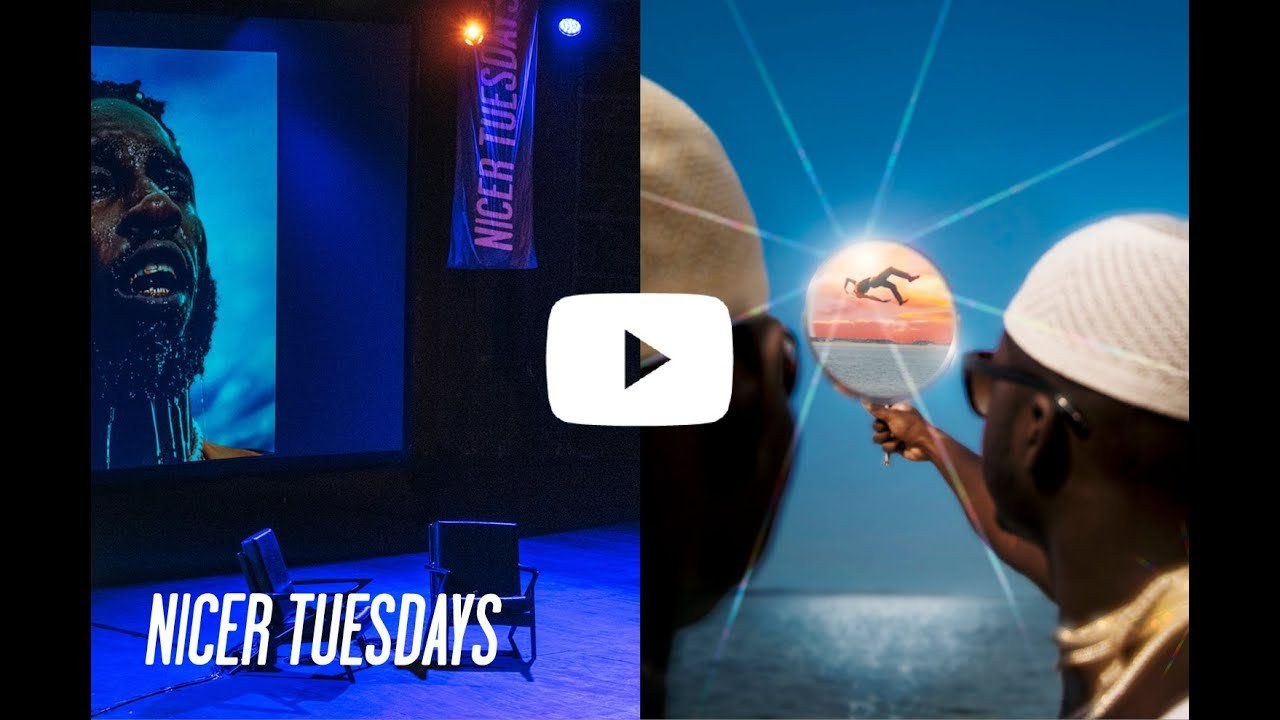
“Your style isn’t just what you create; it’s who you are and how you see the world.”
Transcriptmay contain minor errors or formatting inconsistencies
[Applause]
hello everybody I hope everybody is well I'm happy to be here.
So yeah my name is Nawaka Okparaeke I'm a photographer. And I'm a director I'd say I'm mainly passionate about sharing authentic stories down to earth stories but using surreal and unique elements to emphasize the individuality within each experience I'll tell you today about how I developed the style that I have at the moment and how that style led me to shooting one of my most recent album covers so I mean I can't really talk about where. I am right now without talking about where.
I started which is even before I started doing photography and my style began to develop actually when I was probably like around my Foundation course when I was in ravensport and I did a one-year Foundation course in fashion and textiles back then. I was experimenting with fashion design textiles graphic design styling all kinds of things and Community was such a massive part of that experimental Journey back then I would just meet with people in events meet with people from Ravens born from school from just being out and about.
And we actually were really blessed to have like a really good situation where we would just come up with the craziest ideas that were totally beyond our reach and just working together to see how we could create them and pretty much 100 of the time we never achieved what we were aiming to achieve but in the process we would treat achieve something else that that would be really interesting and really help us I guess just have a safe space to really experiment and understand what it is that we liked what we didn't like everything was very sort of DIY and you know everybody just putting together what they can but that was like a really big part in terms of you know back then you know we would make magazines together and you know do photo shoots together do exhibitions together where we'd you know shoot in whether it's do an exhibition in our uni or whether it's in somebody's house or finding some funding a little bit of funding to do in a space and in that we you know used to Hype each other up and you know make each other super excited about things and a lot of us now have actually you know build our platforms or developed and got into places where we're now. Actually really successful but I don't feel like a lot of us would have been there if we didn't have that space to experiment and just feel safe around each other at the beginning and so yeah obviously I've spoken about experimentation I think that.
This is super key in developing a style I mean for me I was like didn't really have any concepts behind what I was doing I just knew that. There were certain energies that I like to see there were certain things that made me excited so I would you know I might be maybe I'll see something that somebody else does I like it. And I'll be like let me try and recreate it knowing that I don't have the tools to actually recreate it.
But in the process of trying I'll find something new that I like and so yeah I used to do a lot of like collages a lot of layering a lot of you know trying to make outfits and stuff to like style my models and I had a lot of fun with that but eventually I got a bit tired of it. And so I kind of like left that to the side and then moved on to shooting in more like outdoor locations and here at the moment I didn't realize it until actually somebody told me that oh how comes your you gravitate to like blue skies and bright colors and I was like oh do I I didn't realize but it turns out that. Actually Within Myself I was exploring loneliness and I was exploring Desiring Peace and Freedom and this was all very subconscious I was just going out you know with my friends who I've you know Vibes with and just you know just playing around and messing around and seeing what happened but actually this ended up being my subconscious mind talking to me and telling me how much you know. I was just in a space of continual oppression and feeling alone and dark and I just wanted to see brightness and I wanted to see space and I gravitate to things like the sky and the Sea because they feel infinite and they feel like you know so freeing and like nothing can touch me there.
So then at this point I was beginning to realize that photography is a bit deeper to me than me a bit deeper to me than you know just making cool things.
But actually this was a way for me to really explore myself a way to express myself I decided that I wanted to do this photo series based on like visualize and immersion. And in the process of doing that I was like you know what actually wouldn't be cool if I added sound and if I added movement so I thought let me just film it on my camera and video it. So that led me to do my first ever short art film called out loud where I pretty much just did everything myself except from acting it where. I got a model to act in it. And I also got a producer to make the music but everything else was myself and since then I've created a few more short art films and in the process of making them I I learned a bit more and my style develops a bit more it was a bit more restricting like grading film footage is very different to grading you know digital photo so that made me sort of tune into what colors are my priorities what textures are my priorities trying to you know create feelings but not having the budget to go to Crazy locations or create amazing sets like how can I now use VFX to sort of create these same feelings and textures and emotions that these spaces would have given me.
And in the process of doing that I began to sort of revert back to my collagi aesthetic that I sort of started with and combining that with like the emotional elements that were with my work so ultimately I'd say the key part at this point is that I realized that my style comes from within and I think if you are connected with yourself in on some sort of level you have you know you give yourself the freedom to express yourself in an unfiltered way then a style will naturally come out of you because you are an individual person and naturally you will have individual things that only you want to do or only you will like and that will naturally touch other people as well so now. That's led me to pretty much where. I am now where I'm a full-time freelance photographer and film director I work with all kinds of Brands all kinds of people and all kinds of projects and here are just some examples of where you can see where I've sort of used collage and I've used layering and I've used Photoshop and I've used these sort of surreal elements to create works for other people and for clients but I must say that my favorite stuff to do is actually album artwork and personal projects and the reason that is is because that's where the real stories are that's where I can actually connect with somebody and I can understand who they are where they're coming from or connect with myself find out what I want to say and I can use these real stories as I said at the beginning these real stories these authentic experiences these real people and use interesting ways to shine a light on what makes these particular stories very individual to these people. And in the process of doing that I've I ended up working on a the album cover for Koji radical and so I was just going to talk you guys through the process of that. And so initially how I got the job was the creative team reached out to me Koji said that he was interested in working with me or working with some sort of artist who would paint the cover whatever.
So I was just like cool whatever I will like to you know have a conversation with him and understand where he's coming from and if we can connect because for me what's really important when it comes to doing an album cover when it comes to client work like I don't need to connect as long as I you know like the job. And I think that I can deliver it then it's all good but when it comes to album artwork I think because it's a reflection of the artist I want to actually know that I am the best person that can tell this story or one of the best people maybe but yeah.
So me and him we had quite a few conversations where he really sort of broke down to me where he was coming from what this meant to him what this project meant to him. And we were able to develop a concept based off of that.
So this image on the screen right now was the single artwork for his song war outside and at this point he was you know he was telling me how he feels like he sees things that other people don't see and that he's you know dealing with things and figuring out how to balance his sort of emotions and and the wave and contradiction that you know emotions in a human really are so we thought you know how how could we you know create these sort of layers and complexities within the human nature and how can we show all of these things in the next few images that you're going to see and then land on the the purpose of the name behind the album which is reason to smile so yeah we started off with this close-up of his eye and he was saying you know it would be cool if he was like looking at a burning bush because he referenced a Bible story of Moses Sienna burning bush and how Moses was the only person that saw it was the only person that could interact with it. And so we started off with that trying to keep everything kind of dark and like Sombra like you know kind of a bit distressed and then to add the layers onto this story we move on to pulling away from the eye and seeing the rest of his face and it's like within the I guess the distress and attention.
Actually there can be a layer of rebirth there can be realizing something new there can be a change and a shift of energy so this was the next single cover for his other song gangster where he talks about you know nurses in his you know the work of his mother and his family and the and the importance and impact that sort of had on his life and you know begin in a moment of reflection. Basically.
And then we move on to the final album cover which for a reason to smile where we pull out even further. And we begin to see that you know despite all the layers that come before he's able to elevate he's able to grow he's surrounded by the people he loves his mother his son his son's mother. And it was really cool for me to you know be able to sort of go through the process of you know I guess my style you know it started off as something.
That's really personal for me. But I'm able to use that to bring out something.
That's really personal for somebody else and you know for this we actually got to see it on a rooftop his mum was there his son was there everybody in that picture was there doing that thing. And we had him standing on a few boxes looking like he was flying I just edited that bit out.
And we had you know the real London Skyline then. I was able to use you know this compositions you know having him in the center having him flying and free but still you know the people around him being grounded and then also being able to use Carla to reflect his culture where he's from and the vibrancy of the emotion questions so yeah that is how we got there but thank you all for listening [Applause]
Latest Talks
-
Murugiah
Why you should reject the formula and make art about things you love
Watch -
Amber Weaver
How does contemporary type design translate into the wider world?
Watch -
Delali Ayivi
How does photography give us the right to imagine our futures?
Watch -
Will Anderson and Ainslie Henderson
Bringing stop motion sorcery to BBC’s Small Prophets
Watch -
Ollie Babajide Tikare
The importance of not flattening the complexity of observation
Watch -
Marina Willer
Design thrives when you find poetry in the simple things
Watch