
Nina Manandhar is a photographer known for her documentary and portraiture projects that explore themes of identity and community. Her mixed heritage informs her ability to connect with diverse cultural narratives in her work.
Nina Manandhar
Photographing Gurkha sons and the communities of Thamesmead
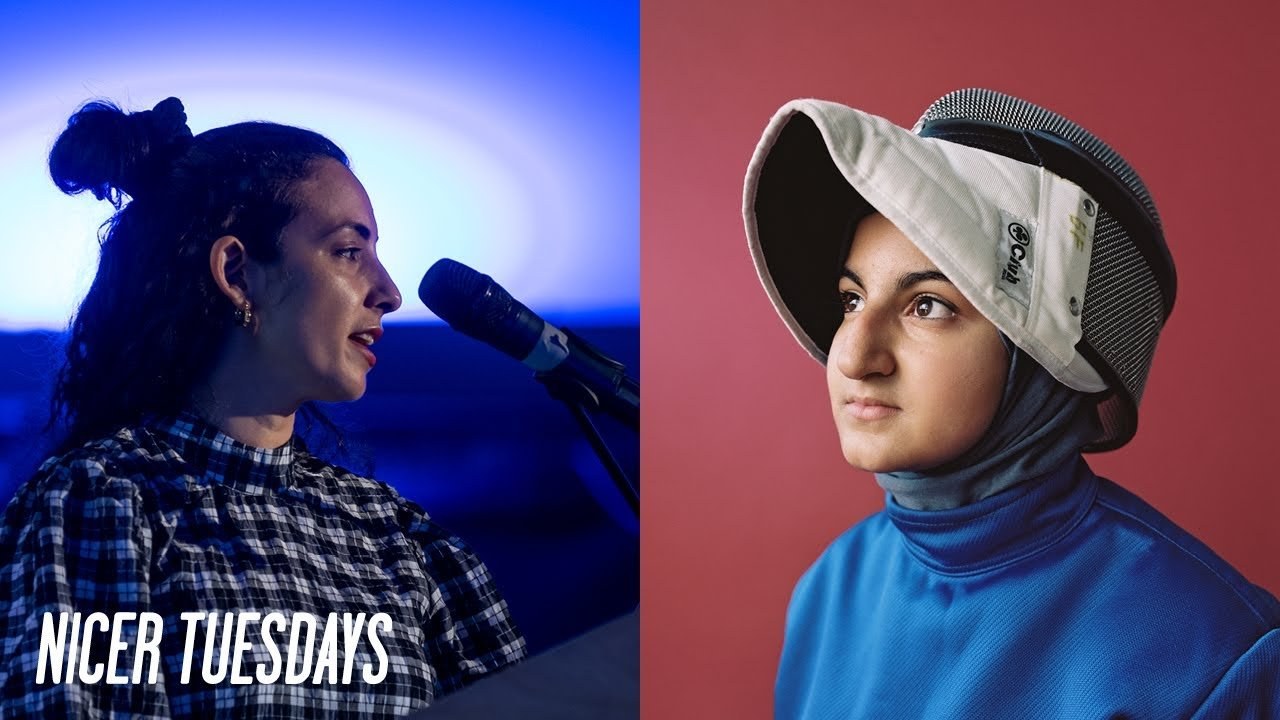
“I can slip into worlds that I don’t usually belong in.”
Transcriptmay contain minor errors or formatting inconsistencies
[Applause]
hi everybody as you may hear I've got a bit of a sore throat and a bit of a cough I don't have covered obviously but I've got the horrible cold that's been going around so if I have a little coughing fit in between I just want to apologize in advance and so yeah people in place so I just want to introduce you to my work in case you haven't seen it I work with archives photography and participation.
And this is my second time here it's great to be back I came here before to talk about what we wore my people's history of british style project is an online community archive and photographic book published by pristel but first a little bit more about me I'm first generation london my mum's from manchester and my dad's from kathmandu they met in a nightclub in ellscourt people never get it but my instagram handle warrior princess refers to the fact that I'm a princess daughter and kazena rhymes with nina I grew up knee-high to a heidelberg print machine it's one for the graphic designers so being in between I think being mixed heritage has informed my work as a photographer I take get difference for granted and I'm unafraid of being around people who are different for me. And I can sort of slip into words I don't belong in easily I've used photography as a tool to understand and explore my own identity not through photographing myself but through documenting others and perhaps looking for what of myself I see in them and being in between worlds is also kind of how I've approached my creative work too so before I'm focusing on being a photographer I spent 10 years working in publishing projects and community arts projects really working across lots of different mediums this is a collaborative scene I printed and that I made when I was 21 which my dad printed so I've been embedded and connected to the community communities I've documented not quite inside them but hovering in the middle so for me photography is a tool to explore recurring themes so I guess the power of style as a cultural and political tool for empowerment particularly for young people negotiating dysphoric identity and more broadly the relationship between people and place so I'm going to take you on a little tour of the places I've been that the camera has taken me I'm going to talk about two projects gurkha suns and thames mead so the first stop on the tour is nepal via aldershot so this is an installation from my project gurkha sons as it's shown in kathmandu photo a biannual photo festival that takes place across the capital so gurkha sons documents a new generation of british nepalese zooming ins on form zooming in on forms of collective cultural expression through style music and sport and the social spaces that these young men inhabit.
So this was shot in older shot in farnham it's close proximity to the army garrison makes it home to the largest nepali diasporic community in the uk since 2004 gurkha families have migrated multi-generational households to nepal to britain under new settlement rights the population of nepalis to the uk has increased from 6 000 to an estimated 100 000 you might have seen in the press recently gurkhas have been striking over military pensions so the project was made in response to the archives of two partners who initiated and exhibited the project in the pal photo circle he'd been working to archive the work of my uncle sherry darmananda this is one of his it was my uncle who gave me my first camera when I was 16 and really inspired me to get into photography and in the uk historic england another england so this is a big project by historic england mapping 100 years of england's history through the perspective of black and asian people telling the story of a country the country's rich multicultural heritage through place so gherkin sons was exhibited alongside this as part of human stories at the now gallery so the subjects I photographed for gurkha's sons call themselves the k boys the k standing for cockrocker the nepali word for frozen stiff it's a reference to how they feel when they go out on their bikes in the cold english weather k-boys organize and promote their own events parties hosted regularly at the empire club a multi-functional space that began its life as a 1930s art deco cinema but now serves as a vital space for the nepalese community I was introduced by my friend pramila van omen who conducted interviews on the day and we spoke to them about what brotherhood meant to them we set up a makeshift studio at the event to do these portraits this is tyson rana he's customized his hat with his grandfather's gurkha medal and this is om takari he's in the british army like his dad he taught himself to tattoo from watching youtube videos a group of the guys run a tattoo studio and a barber's in the town it's interesting to see both british and nepali motifs in the tattoos such defining marks of identity on the body and so these are the famous and buddha eyes which adorns temple in kathmandu I was interested to know what home felt like them felt like to them.
So in the words of musician golly on the right I consider myself both nepali and british nepali born and british bread my music is hip-hop trap nepali folk 90s bashment rhythms and rap we also spoke to them about brotherhood and I guess this kind of came from this idea of like my dad and his brother being across two continents and just this sense of like brotherhood and community so this is a quote about brotherhood brotherhoods are just like those who are just like family even if they aren't related by blood it's almost like blood because they know how you feel and what you've been through I'm in the army since day one you learn about brotherhood and so this is an image from the temple that was on the top floor of the building I thought it was quite poignant with the five pound note in amongst all the temple stuff and this is an image of some of the boys playing carom which is like a popular south asian sport I think I was really interested in the kind of details of the place and again the relationship between people and place and how some things from their part had sort of been supplanted onto the british landscape so a lot of these questions about belonging have come from quite a personal place but they're explored through other people and with photography as a social tool as a way of connecting with others so the camera can take you to far flung places it can take you on a who do you think you are type expedition it can get you into parties get you to meet celebrities or it can just get you into your neighbor's back door back garden without it being weird it's the license to be nosy or curious is a better word so I'm a big believer in finding things close to home rather than being a perpetual tourist sometimes all you need is one of these soon to be travel relics so next up to se2 thames mead a large social social housing project built from the mid-1960s onwards on former marshland on the south south bank of the river thames you might know it through the lens of stanley kubrick in clottawake orange or in misfits it's notorious for its iconic brutal island architecture and is currently undergoing major redevelopment so I got this project I was commissioned by peabody housing to do some portraits of the residents and it was a time when yeah as I said it was going major redevelopment and they really wanted to capture the place before it underwent a large change and the tower blocks were featured in clockwork orange were knocked down.
So this is a portrait of one of the residents siobhan she was a property guardian so this is part of the initial commission. And I also met lots of other residents for quick portraits I found the landscape really really interesting with its large lakes canals and willow trees and I decided I wanted to do some more work there and when I was photographing the initial portraits I kind of got everybody's contact details so in a way it was a weird kind of way of casting people for another project. And I decided that I wanted to do more shoots with them.
So I kind of wanted to work with them to kind of explore how they were making their mark on the landscape through personalization and style beyond the kind of exterior and the brutalist facade and this is neya and ruhi and there are baronyam dancers indian classical dancers there are so many communities that exist side by side in thames mead and this is kind of what I wanted to capture there's a big traveller community there.
So there are horses and ponies kind of wandering around the landscape this is anthony okin who I was introduced to through peabody he's kind of known as the thames mead cowboy he lived there for 30 years and he's in his 80s and he dresses like this every day and so when I worked with a stylist called shaborn lyons and we kind of worked with what he already had in his closet he's a hoarder so we had like literally like hundreds of these cowboy outfits and but we kind of enhanced it a little bit.
And we spent like quite a lot of time meeting and spending time with him to set the shoot up. And we had a really nice day wandering around thames mead listening to like john barry on a mini speaker as he showed us rounds I guess thames mead was his wild west this is kid bucky a musician who I documented at home and these are just some little details and again it's this idea of how people are making places their own and make putting their mark on the landscape I was also given access to like the peabody archive which was kind of mad really it almost some of these images like it made it look like a holiday brochure I think there was a big gap between the utep and visions of the planners and what the place has become this was thames meet in the 1970s so I I kind of like to use research a lot to inform my my shoots and I decided to set up a community portrait studio and we repainted the walls in one of the communal areas red just like the 1970s references so again I wanted to draw out the little details of the place and the people that lived there we met a guy called dave who had eight classic cars he kept in garages all over thames means there was a hint of 1950s americana the hot day revealed elvis tattoos and a girl who owned a pet lizard that she took everywhere.
So I think it was really like trying to get under the skin of a place and that's kind of what I like to do with my photography and my work to sort of locate myself somewhere in that place but I found it really hard to access actually.
And this sort of summarizes that it's kind of going around in circles so the work was exhibited at reba alongside the worker tenure ray jones who shot the area in the 1970s and the red wall that we painted has since been featured in a kfc advert and also an id fashion shoot so I used to love roaming the street with my camera but the last two years since having a bit of time off to have a baby and global lockdown I haven't have had as much of an opportunity before you have a kid you imagine you'll be swanning around the city like vivi and maya but I'm not quite there yet but I guess you can travel the world through other people's photos too it's hard to be free with a buggy in tow here's bobby gillespie looking cool with one and here is junko tabai the first woman to climb everest I like her style she's a bit of an inspiration it made me think can you still be a female explorer with a family but I am getting out and about again so to end I want to just show you a snippet from a recent shoot for paperboy and it's called the laughers it's people laughing again on the streets of london I love shooting people on the streets of london I love shooting people on the street and that kind of engagement and interaction that you can get in a really like sort of five minute photo don't ask me how I made them laugh it wasn't easy it looks easier than it was but after seeing people's people in moss for so long it was so nice to shoot so yeah that's just the end the magazine is out next week look out for paper boi but yeah thanks for having me you
Latest Talks
-
Murugiah
Why you should reject the formula and make art about things you love
Watch -
Amber Weaver
How does contemporary type design translate into the wider world?
Watch -
Delali Ayivi
How does photography give us the right to imagine our futures?
Watch -
Will Anderson and Ainslie Henderson
Bringing stop motion sorcery to BBC’s Small Prophets
Watch -
Ollie Babajide Tikare
The importance of not flattening the complexity of observation
Watch -
Marina Willer
Design thrives when you find poetry in the simple things
Watch