
Nicolas Heller, known as New York Nico, is a director and documentary filmmaker celebrated for capturing the city's most charismatic characters through his widely loved Instagram page and his debut book, New York Nico’s Guide to NYC.
New York Nico
Nicolas Heller on how he became ‘the unofficial talent scout of New York’
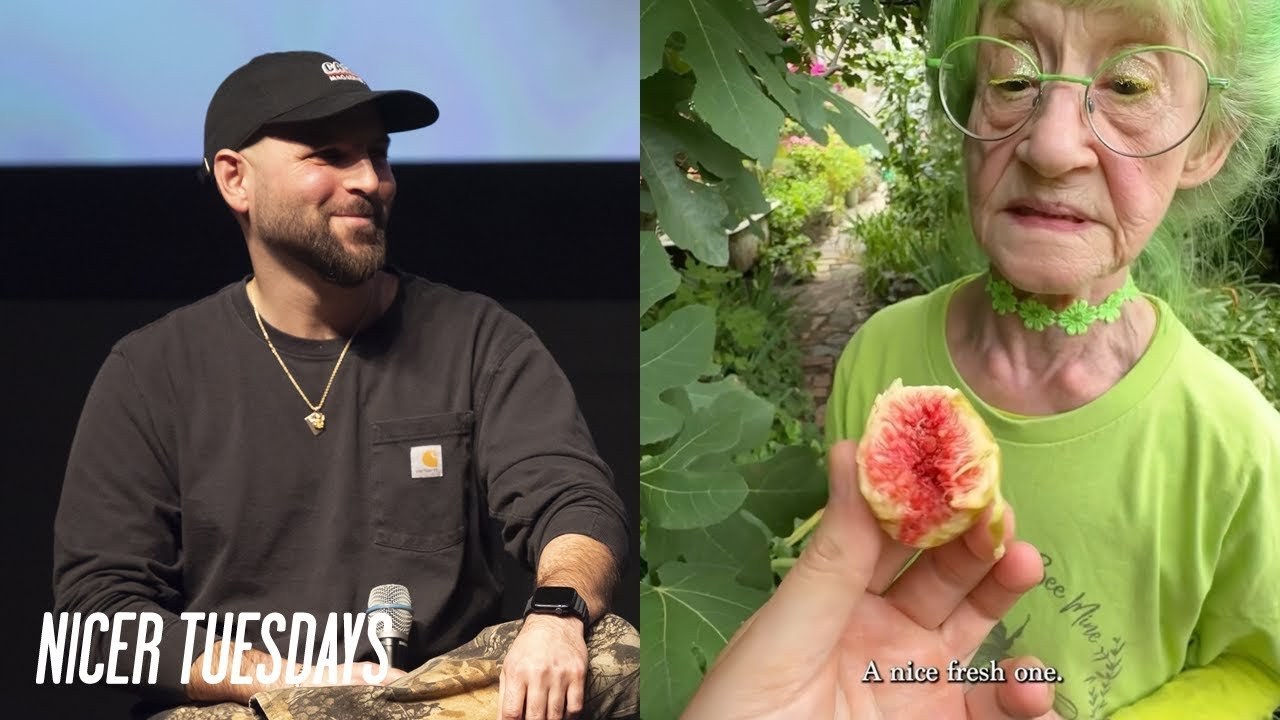
“I realized that capturing the quirks of people was more powerful than any script I could write.”
Transcriptmay contain minor errors or formatting inconsistencies
Thank you so much for being here tonight. Thank you for having me. Mine is on. Right. Yeah. I was telling Nico that like a couple weeks ago I got an email from AIGA saying like, "Hey, Elizabeth, we have this event coming up. We'd love you to host. It's with New York Nico." [Laughter]
And I had to be like, "Actually, I'm already talking to him in 2 weeks." So, if anyone else went to that, you can tell me afterwards that ours was better. , so yeah, just to start, I'd love to hear about sort of the origins.
And then also, I asked your fiance before this. I was like, can I call him Nick? Is it Nico? [Laughter]
How did you end up as New York? How did you end up as New York Nico? So, I was born and raised in New York. What part of New York? Around Union Square, actually. So, not far from here. , and , a year after college, I moved to Los Angeles cuz I was making like, no, bad move.
Big mistake. , I was making like very lowbudget underground rap videos at the time and thought that by moving out to Los Angeles that that would be like the next logical step for me to like, you know, make it as a big-time music video director. And while I was out there, I like failed miserably. I failed my driving test three times. I like had to share a room with somebody I found off of Craigslist. Wasn't booking any work. , so it was like really just in the dumps and LA was just not for me.
So I moved back to New York, was living with my parents, and , you know, just like the the music video thing didn't work out.
So I was trying to figure out what was what was next. , I knew I wanted to do something within film, but I didn't know what that was. , and one day I was just like sitting in Union Square kind of contemplating what I was going to do next. And out of the corner of my eye, I saw this like New York City character who in my eyes was a celebrity because the guy with the cat on his head. [Laughter]
Well, no, that's another guy. But but that's awesome that you threw back to him. [Laughter]
but no, this was a guy who I'd seen all throughout high school. He was a 6'7 white dude with dreadlocks who carried around a 10- lb sign that said, "The 6'7 Jew will freestyle rap for you." And I was always like really curious about this guy, but in my eyes, like I said, he was a Kardashian. He was this huge celebrity cuz everyone knew in New York knew who he was. So, you know, up until this point, I was generally pretty shy.
I would never go up and like just talk to a random stranger. , so I used this low point as an opportunity to talk to him. And we ended up walking around the city together for like 2 hours. And at the end I asked if I could make a documentary on him and I'd never made a documentary before but figured you know it's kind of like music videos like let's see how it goes.
So I made this like slice of life 5minute film that I put up on YouTube about this New York City character and it was good. You know in retrospect it's not that good but at the time it was good and it was a cool story.
So I was like how can I keep going with this? , so I turned it into a series where I profiled amazing New York City characters. , and then by the time I finished 16 episodes of this series, this was, you know, this was 2012 or 13. Okay. So, we're still like early social media. Yeah. Yeah.
So, this was this was around the time that like people were really going hard doing YouTube web series. I don't know if that's still a thing anymore, but ask someone who's under the age of 25 in the audience. So, I put them out on YouTube and not a lot of people were watching them, but everyone who was watching them really really enjoyed it and they're like, "Oh, we want more of this." But I was getting bummed out that like I was in my my eyes were telling these amazing stories about amazing human beings, but no one was recognizing it. So, what could I do to get more people to be exposed to this talent? , it was around the time that Instagram had introduced 60-second video. So, I was like, well, why don't I take the same people from these documentaries and rather than it being like a fully fleshed out 5-minute film, it's just like slice of life moment on my phone, no cuts, just upload it. , and people started gravitating towards that. And that, you know, over the course of 2013, so like 12 years you know, it's kind of like turned into what it is today.
But yeah, so that's that's where that's amazing. Yeah, it's funny. I recently someone asked me, "How do you describe like someone's like, "Oh, who's New York Nico?" And I was like, "It's just Humans of New York, but cool and less mean or [Laughter]
less upsetting." , I mean, I'm sort of curious like how I think there is kind of this tradition of working within like short form content and these kind of , yeah, to your point like real people and what I've really always appreciated about , your work and what I can you can really see it in the videos is you have a real relationship. So, I'm not surprised to hear you went on a 2-hour walk with someone. It's it doesn't ever feel like you're kind of using someone for content, which is what I feel so many of the videos that are kind of about finding like oddballs are. It feels like you are really meeting them where they are and having a a many year relationship in some cases. There's so many people I think of who I didn't know you sort of discovered who now it seems like you have these ongoing things with.
Yeah. I mean I wouldn't be hanging out with them if they weren't friends. Like I I don't there's a you know a business relationship where you're like only shooting content with somebody and I don't know that's just not for me. Like I I genuinely have friendships with these people that exist outside of the Instagram. , and you know, there's so much, you know, people might think that I'm just like filming constantly, but really it's like a very small percentage of the time. , I saw I think in something about your book that came out recently, it just was described as like the New York Nico Orbit, [Laughter]
which I really appreciated that it is kind of like it seems like not only are you present in them, but you've also kind of created these microcosms that of individuals and and a way of approaching New York that kind of extends beyond yourself. Most of these people people that you already knew like the six foot tall man with dreads who you had sort of seen growing up and then used this as that excuse or how often were you finding you know on every given day you would just come across one of these people? Yeah, I mean it's it's a good mix. You know there's some people who I've known for many many years, others that I've known for not so many years. A lot of them are business owners that I got to know really well over the pandemic. , you know, some people were introduced to me by other people. , yeah. I don't know.
It's kind of just how you meet friends, you know. Yeah. I one thing I'm really curious about as well is I for a while was watching this project called Storefronts of New York that was about disappearing storefronts and I think social media is so ephemeral and I also think New York changes very quickly. , I'm sort of curious like how do you think about your work within the cannon of a changing New York? I mean even over the course I'd imagine of 13 years and your lifetime living here like how does this sort of serve as a record? Yeah. Well the actually the reason why I started that series and the series is called know your city and O know your city. It's still on YouTube again. It's like not my best work but it's you know it's good that it's there.
But the reason why I started making these films is because I saw these types of amazing characters leaving New York whether they're being priced out or they're dying or they stop you know doing what they're doing.
So I wanted to like preserve this moment in time. , and you know, this again, this was like 12, 13 years ago, and I would say like only a small handful of the people that I documented are still out there. You know, like Larry the Birdman of Washington Square Park, he's still there. But, you know, Tedon, the 6'7 Jew, he's he's not in New York anymore. He just like got up and left. So, it was really to, you know, preserve a time in New York because the city is ever changing.
But I don't want to be like one of those guys that's like, "Oh, New York sucks now." Like, it's losing all its charm. Because I think there is a lot, you know, of great additions to the city. And I tried to show that in my most recent book, which is a guide to New York City. , you know, it's a hundred of my favorite mom and pop businesses. And most of them are like old school shops that have been around for a very long time.
But then I also, you know, profile newer businesses that I hope will sort of like stand the test of time and be one of those like cool funky mom and pop shops 30 years from now.
Do you feel like there's been a shift now though in like do you find fewer for lack of a better word characters or is it just that the quality of sort of because I think again social media is so strange in that I think it's created a sense of different type of performance when I think about so I grew up in Westchester outside of the city and we used to come into the city and I would see the guy with the cat on his head or I would see you know all these cat's name was Nico really wow [Laughter]
meant to be and and I was him for Halloween like [Laughter]
10 years ago. That feels like logical. I would see these people and it was like this was pre cellphone.
This was they did it because maybe they were seeking connection. Maybe they were expressing themselves but it never well they weren't doing it to be photographed. And for example there's this guy on Instagram who holds up pictures of signs.
Maybe people are familiar with him. And sometimes I things like that and it's like oh this is this is a performance to be documented. And I think I wonder how much in the time you've been doing this like that has to me that's very much shifted that the difference between sort of documentary and virality and seeking virality. Yeah, that that is I still think that there's like a great amount of charm and character in the city.
But that is one thing. It's like there are a lot of people who are doing what they do because they want to go viral on Instagram or Tik Tok. , so I try to look for the people that, you know, don't care as much about that, but then, you know, the the double-edged sword is that once you put them on Instagram, then they really like it.
So then they start being performers. But, you know, I think that that's good cuz it kind of gives them a career, you know, like I come from a commercial background, so I direct a lot of commercials and I'm able to hire a lot of the the people that I find, you know, a lot of my friends and it's kind of like helped, you know, jumpst start a career that they want to have. You know like one of my talent actually her Irma she's like been doing a lot of like commercial acting now and is about probably about to join SAG and it's like so that's cool to me cuz she's just like someone I just met in Williamsburg smoking a cigarette on a corner. Yeah. So no I mean as a deep extrovert who now no longer lives in New York it's like there is something about the fact that like there's this spark for potential significance in all these moments and and if you just are kind of looking for it. Find that really really valuable. , my parents also moved to New York in the 80s and yours have been here for you said so you're are you first, second generation, third generation? , fourth I think fourth generation grandparent. Would that make me third?
I Oh, third generation. My grandparents were born here. And were they always in Union Square? No, they were in the Bronx. Okay. Yeah. , and I feel like I there's no way to ask you about your parents without sounding like a fan girl because I when I first met Nico, I was like, I just finished your dad's book. , but for anyone who doesn't know, , Nico, you you could say is , are you an EPO baby? [Laughter]
That was a crazy photo that you guys put up there. [Laughter]
I must know if you saw it. Oh god, I can't see it. So, don't with a very big mouth. Don't look. [Laughter]
But, , your parents are both sort of graphic designers and creatives. , and actually I've never known how to say your mom's last name. Oh, Luis Fel. Luis Fel. I've always said Fel like a fish. , and then your dad is Steven Heler, which as someone who's into design history, big fan. But, , I'm sort of curious like how much, you know, both coming from New Yorkers and coming from creatives, like how much that has influenced did you always know you wanted to be in something creative? Is that sort of inevitable?
My parents are both so I wouldn't know. Yeah, I think it's inevitable just, you know, being raised by two designers who, you know, their whole life is creating art. , they never tried to like push me into doing design or illustration or anything like that. You know, I took some classes at the Art Students League when I was a kid, but that was like the extent of it. , but at like a very young age, I think 7th grade, I realized that I wanted to get into film and they were like very supportive of that. , so that's kind of just, you know, what I did. And I mean, I think particularly it's interesting with your mom, like she obviously worked with a lot of New York restaurants and and it's kind of interesting to think that those sort of multiple generations that are really entangled with the kind of like visual and creative fabric of New York in particular. So, I don't know if that's something you two ever talk about. , [Laughter]
yeah, definitely. You know, I and I grew up like going to all these amazing restaurants that my mom designed the logos for and I, you know, and hanging out with these famous artists like, you know, Art Spiegelman and Paula Sher, Seymour Quas, , but not understanding their significance within a world. Yeah, exactly.
We have Thanksgiving with them every year. Die if she [Laughter]
, that's amazing. Do you think about like I I think finding this balance between social media which is obviously very ephemeral and very you know what you do in particular is moving image. How did you find transferring that into your book? Also please tell us more about your book. Yeah the book people should buy the book. It's called New York Nico's Guide to NYC. You know it came out like 3 months ago. Worked on it for like 2 and 1/2 years. , and I just thought it was like the next logical step. Like I don't want to just be on Instagram.
I want to make films and, you know, make books and whatever whatever other mediums there are. , so I had the opportunity to do that. And, , I also wanted to like get out of my comfort zone. I'm I'm used to doing projects that are immediate, you know, like that's why I like Instagram cuz I can shoot a video and put it up that day and then it's done.
But this I had to sit on it for two and a half years. , and it really like helped test my my patience. Do you feel like like what's the process of storytelling in terms of it's it's like they're both sequences but a very different you know were you doing more written stuff photographs? I had a a coowwriter. So basically I would go out with a team.
I think we shot for like 30 days total or maybe a little less. Visiting about six businesses every time we went out. And it was me, my producer Jessica, my photographer Jeremy, and my coowriter Jason. And basically we just like got it down to a science where I would interview the shop owner and Jason would take notes and then Jeremy would take the photos. And so it was basically like what I do on my phone except with a me voice memo thing. Yeah. Yeah. Why did you choose to do storefronts particular? I'm sort of curious like as you said you work with a lot of small businesses. Is what do you think is sort of particular about small businesses as a microcosm of New York?
, well, that's like the most frequently asked question I get, you know, is like, "Hey, I'm going to be in New York for 5 days. What where should I check out?" , and then even from locals who are like, you know, asking questions more neighborhood specific. So, I figured it was something that, you know, people would want and could benefit the businesses. , and I just like love these old school mom and pop shops. Like again, it's where I meet a lot of my friends and the third space. Yeah. Yeah. Kind of idea. Like some of my best best friends are shop owners and it's just awesome to be able to like know where they're at at all times. Like if I'm in a bad mood, I go to Village Revival to meet my friend Jamal who works there and he's always going to be there, you know.
So I also notice, of course, like so many of these different stores and people who run these stores have, you know, vastly different focuses. You go to an Army Navy store, you go to a deli. Also, I did you told me you're getting married at Katsis. Yeah. Which I thought was like that's pretty iconic, [Laughter]
personally. But do you like how do you I don't know if you're you're playing it, but I I did an exchange for them cuz the price tag was too crazy. So, they gave me a very generous discount. And I made a commercial for them in exchange, which is and it's like one of my favorite things I've ever made.
I think I've seen it. It's two guys sitting at Well, it's the same guy, but they're playing twins. Okay. Oh, okay. I just assumed it's like Parent Trap. I thought Lindsay Lohan was a twin for years. I'm a twin, so I'm biased. , have you ever been to Twinsfest and Twins? Oh my god, we talked about this earlier. No, I haven't been.
I have a few friends. So, I grew up in, you know, like a Westchester suburb, which means there was a lot of people having kids late. So, there were 12 sets of twins in my year at school. And so, there was just many of us. And in fact, there was another set of twins that had this last name that came right after. So, it was me, my twin brother, and then twin sister and another twin brother. , and I've always wanted to go. It's a festival in Illinois. No, Twinsburg, Ohio. Twinsburg, Ohio, and my mom's from Ohio. And it's just all twins.
But I like that they have like most lookalike twins, least. Wait. So, you're not You also can be Ohio. Nico [Laughter]
doesn't have quite the same ring to it. , did you enjoy? What was it like? I loved it. It was great. I love going to like weird small towns cuz it's like the complete opposite of, you know, this, but in some ways it's like is it is it like I think the thing about New York is there's just more molecules to bump against each other. I mean it's a good question. Like in some ways I live in Rhode Island now and I think I when I moved to Rhode Island I was a little disparaging of it. I was like it's you know New York or nowhere.
But I find that I meet a lot of the same kind of quirky weird you know there's quirky weird people everywhere. There's nice people everywhere. There's everywhere. And I think that said, there is something unique about New York. I'm I'm I wonder if you feel like as you do these other projects, is it partly returning to New York and finding that balance between those two? Like what do you get out of those sort of having a regional practice versus an extended practice? Well, yeah.
I mean, people ask me if they think I could do what I do anywhere else. And I think I can because interesting people exist everywhere. It's just that New York is what I know. Like you know I buil built up 30 plus years of just being here and you know getting to know the people and understanding the culture and whatnot. So it wouldn't be easy for me to just get up and move to Nebraska and be Nebraska Nico, you know. , but I wonder I'm sure the social skills like I I think you in a funny way I find you you described yourself as you know previously shy maybe but I think people who are a little more reserved sometimes you're more of like an empty vessel for people to conversationally relate to. I sense and I think film making and documentary film making any kind of documentary work kind of requires you to be able to both relate but also step back. Yeah.
I think it's important that like I'm not a character myself because I don't want to be like I want the the the focus to be on who I'm filming. I don't want it to be on me. I don't consider myself that interesting. I consider the people I'm filming to be interesting. Yeah.
So, yeah, I think it would be a totally different story if I was like this out of control like New York character with the thick accent. I mean, that's the guys who like I mean, you can't walk through Union Square without having to like beat off three guys with miniature microphones. Like, that's what they want to be. It's one way to say it. Yeah. [Laughter]
Do you do you ever struggle with like people who are I don't know how to phrase this, but like people who are just very different than you, like h finding that way to relate to them and get people to open up. No. Okay, next question. No, I [Laughter]
mean I don't know. I I I try to find like the the the good in everybody and you know it's just it's it's easy for me to sort of be like a chameleon and be able to like you know talk to you know one type of person and I don't know what I'm saying but it's just yeah it's not it's not that hard. Sounds like you're good at your job I think is what you're trying to say.
[laughter and gasps] , yeah, I'd love to hear specifically I just going back to the book for a minute like in terms of the I'm biased as a designer, but you don't have, you know, your your Instagram and your documentary filmm. It's a very specific visual world to be working in. , how do you translate something like that into a graphic design approach, especially as you said, like New York is always changing, so you don't want to go towards, you know, hand painted letters if you're I don't know who included this in the slideshow. [Laughter]
I don't know. They like really must have dug through my stuff. Did you you were supposed to send the images to us, so I think you have yourself to blame on this. [Laughter]
I Yeah, this is up here for a long time. Yeah. [Laughter]
what was your question? I do not know. I was saying how do you like this is a page from the book, you know, like how much do you want to kind of try and mimic things that are happening in design? I mean in the design of New York City, which is say like there's, you know, Basmo subway and and things like that. So obviously coming from two design parents and I'm about to get get married to a designer [Laughter]
like it was very important that it was welldesigned and well illustrated.
So I I tapped a friend of mine Chris Wilson who's a very very talented artist who I've worked with in the past and I sorry is he a New Yorker? He he's actually from Pennsylvania but he lived here. I met him while he was living here and I thought he was it doesn't I mean still he like captures the vibe super well.
So I I knew for the cover I wanted like a where is Waldo but like my version and sort of creating a fictitious neighborhood filled with all my favorite people and places cuz I would wouldn't be able to capture it in one existing neighborhood. And yeah, I mean I definitely got help from Naomi and my parents and that's good. Does it include all five burrows? It does. Yeah. What's the majority? The majority is Manhattan cuz that's where I'm born and raised and it's what I know. Yeah. , I live in Brooklyn now, so Brooklyn was second. , I'm curious, you know, obviously you are doing this personal practice, but I don't, you know, it extends beyond that, but how do you sort of find the balance between your personal work as New York Nico or your book and things like that and some of the more commercial work that you're doing with, you know, Nike, Nicks, etc.? Well, yeah. I mean, this is the NYX commercial. , I've worked with them like four times. , you know, the Knicks is obviously like New York's team.
No offense to Brooklyn, but we know what it is. , and they were like, for this commercial specifically, this was the first one I did for them. They kind of like gave me cart blanch and they let me do whatever I wanted. And obviously they knew what they were getting into. They knew that it was going to be very like character focused. So, actually originally they hit me up because they just wanted me to cast it. They didn't realize that I was a director. , so they hit me up. They're like, "Hey, will you cast this commercial? We wanted to like, you know, focus on the fans." I was like, "Well, I'm not going to cast it for you, but I would direct it and cast it." And they're like, "All right." So, , these are all just like, you know, real New Yorkers that I know and that love the Knicks. And I feel like, you know, half of those people you've already seen on my page. Yeah. , the the the universe. Yeah.
And then this is from another spot that I think you're going to play for an iced tea company. It's like a small iced tea company. I'm friends with the owner, so they gave me cart blanch to do whatever I wanted. And basically, it's just like a love letter to Brooklyn. So, it's getting like the most Brooklyn people I know to just talk about why Brooklyn's the best. The brand is called Brooklyn Best. How do you commission a Muppet to be made?
Oh, that's my friend Aloe. He just has a a Muppet. I sense there's a lot of answers like this. Well, Aloe is a muppet. I'm sorry. Oh, I'm sorry. I actually don't know the name of the person who who owns the Muppet.
I think that's as it should be. The Muppet is the man. Muppet. Yeah. I don't talk. I always wonder about [Laughter]
that reaction. It's like just pretend it's not happening. That's amazing. I've always wanted to I I feel very strongly about the Muppets. With documentary filmm, I mean, you said you started getting into it in seventh grade. Were you What kind of stuff were you shooting? You said that, you know, obviously you're doing rap videos. , yeah. H how did it sort of transition?
Did you always want to have, you know, people as the subject? , narratives, like, you know, fiction? Well, what I was doing in high school was much different from what I'm doing now. I went to like a very progressive art school and you could get away with anything in the name of art. So, as a kind of rebellious kid, I just wanted to make stuff that would scare my teachers. So, I would make movies with very up subject matters just to like get a rise out of them. , and then that developed into that's the cats from the cats's commercial. , then that de that turned into music videos that also had like kind of up subject matter but not as up. , and then that turned into music videos that had less up subject matter and then that turned into documentaries. , but yes, you know, the Know Your City series is kind of what started these profiles on individuals and then the Instagram kind of like took over.
And then back in 2019, I made four short films that kind, you know, I kind of like took it back to my roots and and profiled four individuals who are like, you know, well known on my page, like Tiger Hood, who plays Gulf of Milk containers around the city, and Nelson Molina, who's a sanitation worker, who for 35 years, who created a museum of trash in an active garage. So, these were stories that like I wanted to tell.
I wanted more time to tell these stories, you know, I didn't want to just like not to say waste it, but like, you know, just use it for an Instagram reel or whatever. , so that was in 2019 and then again sort of got sidetracked with other work and now I'm getting back into documentaries.
So I have a a longer film. It's not a feature, but it's like a 50-minute film that's coming out in the summer. , tell us what it's about. , it's it's about this past year's New York City Marathon. And I profiled for runners, for amateur runners. , and it's definitely the, you know, my favorite thing that I've worked on so far. I know you're supposed to say that about No, no.
I think that's I read once this idea called the artist's paradox where it's like the process in the process of making anything, you get better, which means you hate a little bit the thing you just made and you have to do it again and unfortunately it just keeps happening. , I'm wondering like, you know, you were saying you when you first talked to the Nicks, they didn't know you were also a director.
I think there are a lot of people out there. I talked to a lot of young people, you know, who they think this idea of like, oh, having this big Instagram following is like the dream.
But I do wonder if like it if it is ever difficult to try and you're sort of multifaceted in a way that's hard to kind of define and if that can feel constraining at all to try and kind of like carve this multi-pronged path while maintaining this Instagram but also building this other sort of maybe more externally oriented career. Yeah, I mean I I hate when I get called an influencer. I've never considered myself one.
But I get it cuz like the first thing that people are going to see is the the Instagram. But you know, I' I've always wanted to be a director. You know, that's what I went to school for again in high in middle school.
That's what I wanted to do. So, I mean, you know, I I'm I'm taking that more seriously now. But obviously the Instagram is always going to be you know and I'm sure it opens doors in in other ways and and I I think when you look at the history of especially with media photography film making I think I I don't know it makes me think about someone like Nan Golden like photographers who were very self-reflective and that was an art practice that is now in the MoMA but at the time was you know just photos of their friends. Same with, you know, Steven. The way I see like these videos like hanging out with Green Lady on a Sunday afternoon, like I'll put that on Instagram, it'll get a lot of views, but then I feel like people really never talk about it again. I feel like the films, especially the ones that I was telling you about that I made from 2019, like th that's like my proudest work to date because, you know, and people still talk to me about it and email me about it and, you know, those are the I like being able to have more time to tell stories and I feel like those are the things that will stand the test of time, but like you said, who knows? Like maybe these iPhone videos will become something bigger. Yeah. Yeah, I mean it's hard to say cuz I think a lot of it's hard to separate out the delivery mechanism from the videos. Like I think if you went into a I mean it's interesting hearing Lexi talk about putting bread in a gallery space. It's like if you put Instagram videos in a gallery space that changes how they're read. Like I think people have a hard time processing work seen in social media as art sometimes.
On the other hand, I there's the aesthetic of like something shot on an iPhone is going to feel very different than something shot on 35 millimeter. And the way that we kind of like collectively negotiate this work based on where we find it. Yeah, it's funny you say that cuz, you know, I have like a a New York issued press pass so that I can go to like events and stuff and but I never get taken seriously by real press people with like the DSLR cameras. Like they're always shoving me out of the way and I think that's a shame cuz I don't think it's like what you're shooting on, you know? It's not. [snorts] I mean, as I said, I think you I was talking about like Steven Shaw and some of these photographers who were shooting on what at the time was considered to be kind of this, you know, dinky camera. I I read this really great book last year called Good Pictures, a history of popular photography. And it was about how every time there's an advance in technology with film, fine artists go back one more mode into the prior version of photography because it gives it a sense of like value and exclusivity. So like black and white was just everything right until color was invented and then the art photographers only use black and white as a way to show like we're serious about and I think the iPhone is kind of similar. I I suspect there will be a shift in you know how how this is all perceived in the future. I mean I hope but I mean I think you're going to have kids like 30 years from now shooting on the iPhone 7. [Laughter]
I'm just they're just going to go just [gasps] I was going to say also like what you talked about with the green lady, the idea of you know people watch it and never see it again. I mean some of that I think is also the way I mean you know on TikTok like these things are content the difference between content and art and the way that we've decided certain things are kind of disposable. Like do you are you are you surprised ever by what has longevity? Are there other shorter videos that you found do resonate with people or longer ones that don't?
, yeah. I mean, I feel like we go through trends, you know, like especially cuz of Tik Tok, like there's there's a very easy way to go viral if you follow a trend. What is the I was going to say? I don't I don't want to say cuz I feel like I [Laughter]
mean, but everyone you you know, if you go on TikTok, like there's a lot of the same stuff. , and I don't know. I don't What was your question again? Oh, just if you feel like you're ever surprised by what is successful. No, but I mean I I'm guilty of enjoying those videos as well.
So I think you know next year we might have another trend that people follow and you know Yeah. Yeah. [clears throat] No, I mean it is I I I I was curious when Tik Tok like kind of stopped existing for a minute and then came back, but if that was going to change the way people thought about the stuff because I I even think like attention spans have have shortened and it makes me like I think what I do despite what we're saying about the different ways of content being treated differently, I think you are able to make short videos have more resonance because of that connection that you have with people, which is really nice. , I'm curious to hear also a little bit more about like your, as you said, I was talking about whether or not you would ever leave New York. You don't think you'd No.
Leave New York, but if there's anywhere else that you feel like you're drawn to, you know, you've been to Ohio. Are there other cities that you feel like you're excited? I mean, I like going everywhere at least once. , I like going to Tokyo. I'll go to Tokyo more than once. Very similar to New York in the sense that it's like a big city with a lot of interesting people.
But yeah, I don't know. I'm just like I New York is kind of all I know.
So yeah. Yeah. I mean it's funny. I I guess sometimes I think about like as I said I moved and then I came back and I remember especially after co a lot of things closed and I always had this weird feeling if I would be doing a normal routine. I'd walk down the street, I get off the subway and I'd walk to a coffee shop and I'd go and there would be nothing there. , and I think your idea of like how do you represent this changing space?
I I mean I guess like you were going to continue this project for many years. Like even just thinking about the book for example, like if someone picks up your book 50 years from now, like how do you think what will they take away about New York at this moment in time? Yeah. I mean the book is meant to be like a moment in time like the fact of the matter is that a lot of these businesses are not going to be around 50 years from now. , but I feel like this, you know, we're in like this postcoid era where, you know, we New York still has its charm. We still have, you know, the the 200year-old, you know, , nearest Tavern in Wood Haven, Queens and like, you know, you know, the 100-year-old Leon Bonire in the West Village and like these are all spots that we know and love, but who knows where we're going to be in 50 years.
So the book is is, you know, I I I don't know if it sounds, you know, like I'm praising the book, but I I hope I hope it's like an artifact 50 years from now where like people can look at it and be like, "Oh, yeah." Well, I think it's also whether it's now or then, I think it's a call to action a little bit for people to, you know, patronize these places and to realize that like you are part of the system that keeps these things alive. And I think it is I feel bad.
I'm now about to shave my brother, but my brother, we share, my whole family shares an Amazon account. And I saw recently that my brother had like Amazon like a roll of paper towels to himself. I was like, "You live in Brooklyn, [Laughter]
go outside." And I think it's so easy for us to rely on convenience. And you know, sometimes you go to these old cafes, you go to these stores, maybe it's cash only. Maybe they don't always have exactly the thing you wanted, but I think there's a little bit of a like, you know, sweet greenification of New York. And I think often it's like it is kind of, you know, vote with your dollar and and your responsibility if you if you want to live in a city that has this kind of excitement indifference, you have to be there to patronize these places. So often I see these places close and people are like, "Oh, I love that place. I haven't been there in years." And you know, it's too late.
So, okay. If you have to leave people with one underrated spot you think is like if you haven't if you've lived in New York and you have to go there. , I would say Kasa Amado in the Bronx. It's like one of the last Latin music stores and it's owned by U. Mike who's 93 years old and he goes in every day and works and he's an awesome guy. Okay.
I think that's a great recommendation. Thank you so much. That's all the time we have. Please applaud Nation. Thank you. [Applause]
Latest Talks
-
Murugiah
Why you should reject the formula and make art about things you love
Watch -
Amber Weaver
How does contemporary type design translate into the wider world?
Watch -
Delali Ayivi
How does photography give us the right to imagine our futures?
Watch -
Will Anderson and Ainslie Henderson
Bringing stop motion sorcery to BBC’s Small Prophets
Watch -
Ollie Babajide Tikare
The importance of not flattening the complexity of observation
Watch -
Marina Willer
Design thrives when you find poetry in the simple things
Watch