
Neil Griffiths is associated with Arts Emergency, a group focused on supporting emerging creatives in the arts. They are known for advocating for inclusivity and access within the creative industries.
Neil Griffiths
Helping low-income students reach art school when public funding disappears
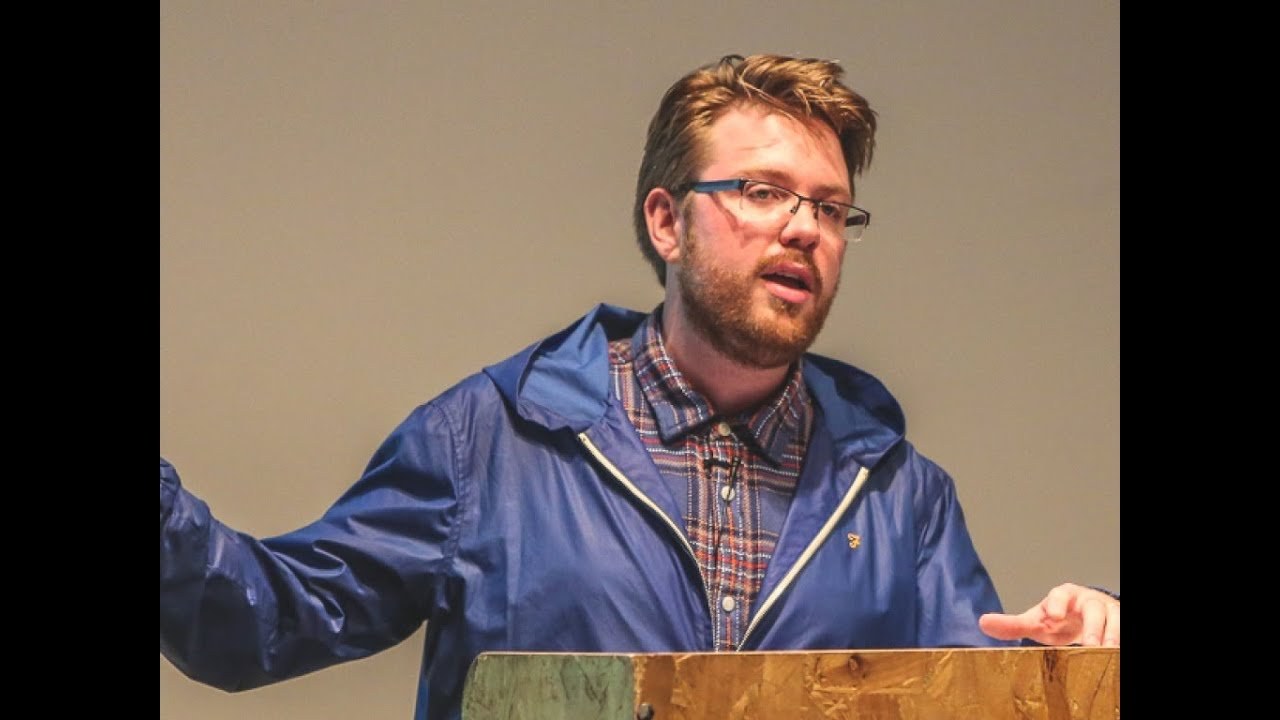
“Creativity isn’t about being perfect; it’s about having the courage to share your vision, even if it’s not fully formed.”
Transcriptmay contain minor errors or formatting inconsistencies
Can you hear me kind of I've seen my presentation though it's not much spoilers okay I'm gonna race through it I get a bit rangy arts emergency is my charity I'm the director I founded it with my friend josie and I just want to talk about why we did it and how we do it I don't think it's necessary to come and defend the value of an arts education to an audience like this.
So I'm just going to talk about the story of how we made something happen so we help low-income students access university and art school there's josie my co-founder right.
Now the hopes and aspirations of poorer students are under attack over the past four years the educational maintenance allowance sure start centers and aim higher programs that supported disadvantaged young people in especially london have been severely cut or abolished in their entirety and just to give you an idea of the context in which we're operating as a cause the first coalition cut in 2010 was the absolute abolition of public funding for the teaching of arts degrees in public universities which was a profound attack on what should be a fundamental value to any civilized society alongside that there's been 20 slash from the budget to teach 18 year olds who now have to take on loans if they want to go into further education.
And we're also seeing redundancies and course closures in that sector nearly 27 of pupils on free school meals and 14 from low income families are choosing not to study art and photography because of the costs involved now. And that's not our statistic that's from an oxford university study last year.
So we've got a toxic situation where we're effectively trying to do something very pragmatic and very positive what I suggest we're witnessing is a deliberate reversal of decades of social access to the arts and by association of possible disappearance of whole strands of discourse from diverse voices I can't remember what that one was about. So we'll just deal with that.
So we weren't the only ones that were upset about it we were both involved in the student demonstrations in 2010 not integrally we were just kind of like the old people willing them on and safely but so we're not the only ones but we wanted to do something very pragmatic at that time and the concept of arts emergency as an organization began to formulate between the student demos and the london riots in mid-2011 we both happen to be influenced in different ways by the work of kurt vonnegut I presume loads of people love because he's excellent at the time josie came to my office wanting to do something I was reading slapstick which is a semi-autobiographical novella in short set in a post-apocalyptic america where the lead character the president of the united states assigns every citizen an arbitrary middle name.
So I'd give you the middle name daffodil and I'd give someone over here eusa and a blue shirt you'd have a middle name daffodil and arbitrarily you'd have to help each other out whenever you needed something which I really liked it's very simple as a proposition. And it really applied to the kind of outcomes I wanted to achieve setting this charity up.
So we had some good role models to base this service on I don't I mean grace and perry said everything. And we're actually doing this at the moment we got a load of people together in the basement of a radical bookshop in kings cross where my then campaign office was for another campaign I set up there's about 20 of us.
And we spent around three hours listing out and categorising all the benefits the people that have these kind of influential networks accrue over a lifetime when we had that list I went away and set up a way of delivering those benefits to young people. And I first of all was lucky enough to get lots of high profile support all of these people have worked with our students and are integral to the service we're delivering but we do also use them to get the campaign message out in mainstream media that the arts are not a luxury jake chapman is our patron and he surmises very efficiently what we do creating privilege for people without privilege that people with privilege can't have which I think only jake could say it like that it sounds kind of grumpy but also it's very accurate we registered as a charity in june last year after about two years of feasibility research on my part I quit my job at that point and we launched with a big gig at the hackney empire and since then from an initial two of us sharing our contacts to an initial 10 of our friends to 20 over that year we now have a thousand members in our network everyone's an arts graduate and everyone's giving any help that a student requires throughout their year with us we've already handled requests for free help and advice from young people at 52 schools colleges and universities across the country and that's everything from ucl and british schools to the smallest state funded sixth form in south wales and the south west in responding to these requests I've started to take things off of my list of benefits we have sourced free tuition paid employment counselling work experience backstage passes equipment vocal coaching for auditions ucas advice materials instruments computers accommodation and legal advice for 600 disadvantaged young people across the country at the heart thank you cheers that's kind of like the cheeky bonus because the real element of work we do is one-to-one mentoring in initially in the london borough of hackney where we launched a pilot in 2012 and that particular project takes up most of my time day to day and the initial pilot ran for a year with 16 students from that borough are complete in the year all of whom made it to university and all of whom are still coming back and using that network we've built around nine months after they've graduated which indicates that I think we might be on the road to actually recreating that privilege genuinely and they can come back to us when they graduate whatever questions work experience that kind of thing this month has been a very busy month hence the rangy nature of this talk I wrote last night we opened the mentoring service to teenagers in greenwich newham wandsworth and salford in manchester we'll be mentoring about 200 mentors and student pairs by christmas at the current rate and our estimated demand for this mentoring service is intensive one-to-one support is around 2000 in london alone there's another 69 regions that I've indicated have a kind of toxic correlation between disadvantage and lack of participation in higher education as well it's important to note that it is not our mentor's job to prescribe behavior to open doors for the student they're there to empower that young person to feel just as entitled as a lot of us do when we walk into a room or when we email someone to ask for something very simple things that a lot of people don't take for granted I think because we operate like that and because those mentoring relationships are supported by 1 000 very generous talented people they tend to be quite unique in the sector so any comparable project I've looked at is not long term and we are long term but we fully expect that maybe within 10 years we'll have built in obsolescence with this network we're building we can disappear and that will still retain its usefulness for people that are eligible and so this is a cause that's born of a lot of passion a lot of anger injustice because a lot of you are my kind of age so we all had to pay fees as well. And I know having quit my job and being a freelancer there is quite prohibitive in many ways and I found it difficult as a working-class person to study english literature and I had to make a lot of justifications that peers at university didn't have to make but this is also born of hours months and years of conversation with like-minded people.
So I used to be one of the 50 most influential fundraisers in the country but I've now spent about two and a half years being an uncle slash agitator slash administrator and it's all been worth it I think we're getting a lot of good results quantitative and qualitative analysis on the service although small samples does show that it's having a real impact we're also turning over only about 20 grand a year as well.
So we're kind of putting two fingers up to some of the larger diversity drives at big organizations so when I read this stuff out it does kind of sound like we're really big but we're not this is the network itself that was the initial 200 people to join and we commissioned an artist well he did it for free but commissioning makes it sound better to paint everybody so now if someone donates and joins the network we're only funded by about 200 people around a fiver a month which is difficult to run a quality service and we still give a lot of our time over and above allocated hours but it's all about offering human contact and real tangible benefits for the young people so people that join now can pay two quid a month to get those made for them. And it helps us run the mentoring that's some of our students I haven't got time to tell you some of the stories and I don't tend to put them out in a public realm we're not big enough to ensure anonymity at this moment in time.
But in a year's time I will have a compilation of really outstanding case studies to share publicly as well which I'm looking forward to yeah this is a kind of a visual metaphor I'm not great at presentations these represent things that we want to do not actually smashing things but breaking down walls ram raiding infiltrating and pulling a ladder down all these visual metaphors are what we're trying to do which having talked about the quality of what we do seems a bit gauche now I'm sorry about that there's our office I took that before I left josie refused to come with me and talk and say make of that what you will but yeah that's our office in dalston I suppose my closing message to I've actually done it right on time I think my closing message is on that badge and this is what we give everyone that donates all the students that sign up. And I think as artists and activists and thinkers we have a unique responsibility to make life better quality of life is an important thing. And if you want a better future we have to make it ourselves so thank you you
Latest Talks
-
Murugiah
Why you should reject the formula and make art about things you love
Watch -
Amber Weaver
How does contemporary type design translate into the wider world?
Watch -
Delali Ayivi
How does photography give us the right to imagine our futures?
Watch -
Will Anderson and Ainslie Henderson
Bringing stop motion sorcery to BBC’s Small Prophets
Watch -
Ollie Babajide Tikare
The importance of not flattening the complexity of observation
Watch -
Marina Willer
Design thrives when you find poetry in the simple things
Watch