Mr Bingo is known for his humorous and distinctive artwork, including an advent calendar that features nude models covered with scratch-off clothes, showcasing a playful and provocative approach to illustration.
Mr Bingo
The perks and pitfalls of the internet
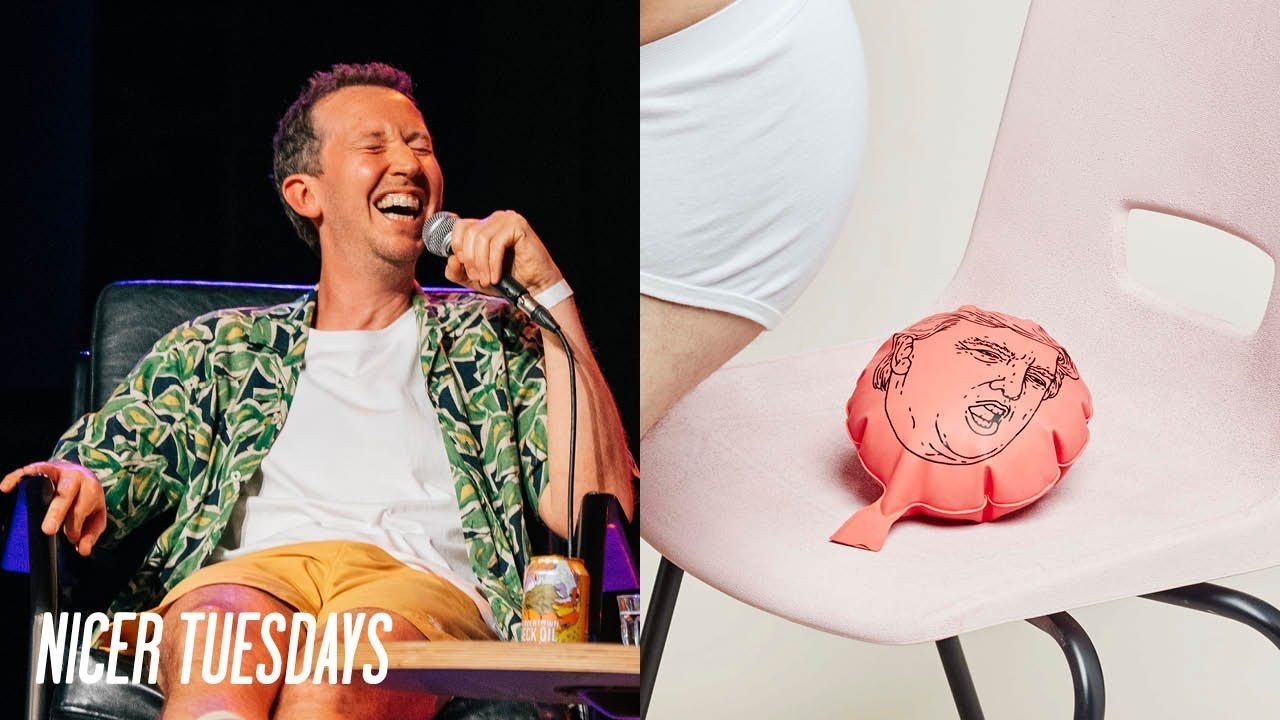
“The internet lets you find your people, but it also exposes you to the trolls lurking in the shadows.”
Transcriptmay contain minor errors or formatting inconsistencies
[Applause]
very good thank you how are you I'm not too bad thanks what do you mean how am I right now or what's my general mental health well let's stick with right now maybe just for yeah just I feel good I feel good I feel slightly nervous doing this it's a very strange thing for me to do like did anyone here think I was doing a talk tonight yeah it's not a talk I'm I'm really good at talks and this is not I'm not good at this.
This is this.
So yeah we'll see how it goes just to forewarn everyone yeah no I'm very excited I think it's going to be wonderful but welcome to nice Tuesday thank you very much for being here thank you for having me we do have a lot to cover so I think let's let's get into it could you first of all maybe just start by talking us through this might happen quite a lot yeah Talk us through how you started Life as a kind of commercial illustrator CU that's where your your kind of creative career began right.
So studied art at B in from 98 to 2001 graduated in 2001 moved to London because I thought it would be a place where you kind of make it as a creative person worked in sort of normal jobs for about a few years then eventually became a freelance illustrator what was the question again like what that's it yeah how did you start your career as a kind of commercial illustrator yeah yeah that's a very quick answer yeah yeah I love it what did you enjoy about that work because I guess you know lots of people like enjoy the fastpac of being an illustrator did you find that interesting or was it challenging love it I mean I couldn't believe it it's like a dream job being an illustrator it's what I'd always wanted to be so I I couldn't actually believe that I got to do it as a job. And I enjoyed the fact that you draw a picture and then it ends up a few months later in a magazine and it's printed thousands of times and lots of people get to see it it's kind of thrilling yeah what about the pace of it because I guess like that's the one thing that I you know when I talk to people who work lot with yeah editorial illustration in Publications it's very fast-paced and then you're on to the next thing and you've maybe only got two days or a day to do your kind of I think that's good you get it done get it out you know you don't have too much time to procrastinate or worry about whether it's good or not you just have a deadline and then it's done and you move on it's good fair enough okay well we're going to come on to your art practice and see what that yeah I do feel like there'll be lots of laughs as things come up behind us in my introduction I mentioned that project hate mail which I think it guess it seems like it almost started that shift away from commercial illustration towards I guess more of more of an artistic practice talk about how that project came about I know you've talked about this a lot but for anyone who doesn't know that project I think it's it's such a wonderful one to start with okay.
So I was bored one evening in 2011 I collect vintage postcards and I was sitting in my studio and I thought I want to send a postcard to someone couldn't think of anyone to send one to which is kind of sad and I did what I always do when I kind of want attention. And I went on social media I was a big big Twitter user and I went on Twitter and I said I will send an offensive postcard to the first person who replies to this and about 100 people replied in the first minute and the winner was called Jonathan h Hopkins and he replied in about 0.2 seconds and he said well he didn't say anything just like I mean basically lots of people were saying please please send me a postcard I really want to be offended by a postcard and he won. And I sent him one it said dear Jonathan you and your legs and it's drawing of some drawing of some legs basically and people really liked it.
And it got talked about a lot it got it got it got featured on a Blog called it's nice that I don't of you know that it's nice that and yeah basically got picked up a lot and people already enjoyed it. And then. I decided to start selling them as a joke and it ended up kind of turning into a few years of my life I mean it kind of became a bit of a like a badge of honor right if someone had some hate mail from you yeah.
I think it's a bit like getting heckled by a comedian you know people enjoy being slagged off by someone that they like that's very true but I never really understood I never understood why it did so well or why people liked it so much.
But then also to contradict that if someone was selling hate mail and it wasn't me I would definitely buy it.
So I do get it in a way I think there's not enough hate on the internet that's probably what people were thinking I can't find any at the time yeah. So maybe it was just it was just unusual wasn't it yeah yeah yeah I guess I mean I do want to kind of touch on this you that kind of felt like it did start this kind of drift away or like conscious drift away from from commercial illustration What was that feeling like of of having this project do so well did it kind of make you think okay I can actually make it as an artist and and not work for clients anymore yeah it did but it wasn't actually doing that project it was doing a Kickstarter so I did a Kickstarter in 2015 if anyone doesn't know what that is it's basically a crowdfunding platform so you come up with an idea for a project that you can't fund yourself or you don't want to fund yourself and you get the public to pledge to make the thing happen or not if it doesn't get funded and I did one for a book about the hate mail postcards and it did really well. And it gave me the confidence to go I'm going to stop working for clients now and see if I can do this first in my life.
And so that was 9 years ago. And it's it's worked so far it's amazing and I do was that one clap maybe someone just like no no I didn't no it didn't it didn't deserve a clap I just thought one person did One Clap and thank you it always takes what you know you take one person someone's got to be that first clap definitely let's talk about social media because we kind of touched on it already there but you you have built up this loyal following on on on social media I guess mainly on Instagram although you talked about Twitter there there's obviously lots of very valid reasons to dislike social media platforms but for you it's kind of been a place where you've built an audience that has allowed you to have this kind of artistic practice in a way yeah how have you managed to build such a kind of loyal audience and a loyal Community online I basically try really hard and I'm desperate to be liked I'm desperate for attention I want everyone to like me. And social media if you want all of that social media is a really good place for you.
So yeah that. That's probably the main thing. That's worked I think yeah just work really hard and but I like talking to people as well I like my audience a lot of artists don't like people. And I like talking to all the people that like my work I really appreciate them they send me lots of funny messages we have funny conversations publicly on the internet and privately in DMS and stuff and yeah that really kind of fuels a lot of my work. And it and it it kind of encourages me to keep going as well one thing.
That's kind of particular to you I think is that lots of your work ends up as tattoos like people get tattoos of your work on their bodies that must be amazing but also kind of surreal I imagine yeah.
I think as an artist it's the biggest compliment you can ever get if someone wants to get their your work Inked on their body forever you know if someone buys a print of your work.
That's really lovely and put it on their wall.
That's great but if someone actually gets it permanently Inked on their body forever. That's mindblowing you know I don't have any tattoos but when people get tattoos of my work I'm like what is wrong with you but thanks and they're like they're like a walking advert you know yeah yeah because I mean that does happen a lot right you get asked a lot where like what's that tattoo whose work is that and yeah that's just yeah free free billboard like people have some really weird stuff as well and they have it on their neck and you know like it's yeah some of the choices they go for is quite shocking I don't want to name any examples because I'm grateful for it but quite surprised grateful but surprised yeah you've also experienced some of the downsides of social media I guess I'm particularly thinking of a tea towel that you made which related to brexit that was then by certain Nigel me through that and guess it flashed up on the slides don't know.
Anyway I made a tea towel it will flash up at some point and it's got a drawing of 76 old white people laughing and it says at the top people who voted for brexit who are now dead and people enjoyed it.
And it was like a fun tea tow I still sell it it does really well but a couple of years after I released it Nigro farage found a photo of it and he put it on the internet and just wrote Charming he tweeted it and wrote charming and then a picture of the Tew and I got loads of death threats and it was really weird because it was the first time in my life my work had gone from kind of being in this safe audience I'd created and you know that is like hundreds of thousands of people.
But there are people that aren't surprised by jokes like that and suddenly it went to 1.4 million nidr frage people and they really hated it not surprisingly and I got loads of death threats like really weird stuff all by email I got emails saying things like you bet you're going to get a baseball bat smash for you skull you pedophile a pedophile like I didn't mind the first bit but like there's no evidence but anyway the good news is right if you ever become a public hate figure by mistake like I did the stuff oh there it is perfect that stuff dies after about a week so it it kind of disappeared and I could leave my house again and just carry on so you did take them serious I mean you were kind of yeah a little bit I think the thing I was scared about was if you get loads of death threats you have to be careful your address isn't on the internet and normally your address is on the internet because you've registered your url of your you know your website or like a limited company or something and luckily you couldn't find Myro address on the internet so I was safe and I didn't die we we've talked about it.
And we've seen it a lot on on screen as well your work is often you know laugh out loud funny it's a rare gift and something that lots of people try but not many people succeed at does that humor come naturally to you or is it like any other skill you have to work at it you have to like hone your craft or yeah is it something you've just found that's a really difficult question were you born funny or have you learned to be funny I don't think I've tried yeah.
I think I think I think I think I am just funny maybe the thing I try hard at is making making the actual work turning it into things yeah yeah but yeah may maybe you do learn to make better jokes as you get older I'm sure you do yeah I guess less less the you know in speech which you are clearly very funny but like turning it into a visual gag or something.
That's yeah I guess more creative visually that that seems like a real skill but maybe because I'm trained as a freelance illustrator helps because you're used to solving problems quickly and trying to turn ideas into pictures and visual things.
So I think that's the skill maybe it's thinking of a funny joke and then presenting it in a in a kind of accessible and pretty way. And something that someone maybe wants to put on their wall yeah that leads me on to a question about your creative process and I mean this as a compliment but I can see you very much being either one of two things which is constantly sketching and doodling and trying things or sitting for like two hours not saying anything.
And then just doing a very quick like finished artwork which one are you or are you somewhere in between I'm I'm 100% the second one and it's longer than two hours so I spend most of my time thinking and very little time drawing and making art do you want more than that I would love a little bit more Yeah.
So basically a lot of artists their craft is to draw all the time paint make make make and they'll do hundreds of pictures and then one of them will be the one I think and think and think in my head and then I make it. And it normally looks like I want it to sometimes it doesn't and I just throw it away but mostly I've done all the work internally before I put pen to paper that's amazing yeah.
So the kind of yeah the idea is so so important that.
That's clear everything yeah yeah I'm not I'm not actually that interested in drawing which is something I learned last year which I think you were maybe going to ask me about in a bit so should I save that no we'll save that we'll save we're coming on to it don't worry I did want to touch on this because on your on your website you have this FAQ section which is very funny and it does have the question do you know what the saddest thing about that is it's not even a frequently asked questions it's me interviewing myself it is that it it's worse than this because this one is one of the things you put on. There is we want to collaborate with you are you interested and your answer and I do have to read it out in full yeah it's always worth asking but it's pretty unlikely I'm afraid I have a constantly growing list of ideas that I don't have enough time to complete before I die so any new offers unless incredible go to the bottom of a list that will never be reached which is amazing I think and yeah I don't you don't read that very often but how hard is it I guess in practice to maintain that discipline of saying no to I'm sure you get some incredible offers into that inbox like how really but how hard is it to say no to stuff that you know because you you want to stick to your principle of this firstly I just want to address the bit about how much time you've got left before you die I didn't used to think that.
So I used to worry all the time when I was younger especially in my 20s that like life's really long I'm going to run out of ideas when am I going to when am I going to end you know when is this going to finish and now I'm 45 I can kind of I'm halfway through my life. And I can see the end and I think oh this.
Actually the hardest part is that you haven't got much time left and I've got way too many ideas for the amount of time I've got left and that's why it's you don't want to waste a minute you know you don't want to waste any time working with companies you don't want to work with or doing that stuff but that wasn't the answer to the question that was just a little extra that was a bonus yeah a little bonus no so oh yeah how easy is it to say no very really I guess with that with that mindset I'm in a very very lucky and privileged place where I've managed to design a job which I really enjoy and I get to draw anything I like people buy it dogging and it's really nice it's per it's the perfect it is it does feel like the perfect job right. And so it's really hard for a company to offer me something better than that even if they offer you loads of money it doesn't make any difference you're going to it's very very very difficult to work for a company without any compromise so and if you do see me do any collaborations in the future because I am just about to do one it's because I approach them okay interesting has to be that way around right that dogging comment is not going to make any sense in the audio version oh they won't have the oh okay yeah yeah sorry just for anyone listening to the audio I just saw someone in the audience who I recognized from some dogging that I went to the other [Applause]
night you have you've mentioned this already let's let's let's talk about it this year off for making work.
So I think in December yeah December 31st 2022 you booked a one-way flight to Sri Lanka yeah and you spent the next 363 days traveling and as you describe it making decisions based on conversations with strangers I guess first of all what what motivated that decision to take this time off and and and travel so the main thing was I was kind of bored which sounds stupid right I'd been living in London for 20 years I was getting a little bit bored in my life. And I just thought I need to do something to shake things up. And I had this fear of getting old and S of being too old to move and looking back at my life and going all you did was make 10,000 bits of Art.
And that's a really good life okay that most people appreciate that's a really good life but maybe you should have done something else and I basically just worked every day for 20 years. And I'm totally addicted to my job slightly in an unhealthy way I think and I don't have any hobbies and I was like I I need to take some time off and work out what else is going on in the world just so if I die in a year constantly talking about death if I die in a year's time at least I can say I did something else with my life I didn't just make art and that was the main reason I wanted to do it. And I also wanted to untrain myself to be so addicted to work.
So yeah interesting did you did you find it hard to to stop working and that's why I had liter had to leave so I put my studio in storage closed it put everything in storage and had to like fly out of the country and this sounds like some kind of like some of my friends like oh you having a breakdown like I said I said on the internet I'm going to go away for a year and one of the comments from a stranger was are you escaping from your problems and I said no I'm going to take them with me you then when you since you came back you you've kind of published these lessons you know on on Instagram these L when you say published you mean I put something on social media I mean I don't is that publishing I suppose it is it's all publishing it's not not a book.
But yeah that's true yeah maybe clarifying that I guess what are some of the biggest lessons you know particularly for you our audiences you know generally practicing creatives are there any lessons that kind of yeah I guess relate to creativity or building a creative career that that really stood out from that year I can't remember just read the list no for me personally one of the biggest things I learned which I touched on earlier was that I'm not interested in drawing I thought in a kind of cliche way I'm an artist so what I'm going to do is take ear off work I'm not going to do any work I'm not going to do anything with the kind of goal of trying to make money or have people like me I'm just going to probably draw all the time because that's what artists do and I'll probably draw like 20 sketchbooks of all these interesting travel things.
And then post them home.
And then have this big part of drawings at the end of it what it turned out is that when you go away on your own for a year you're not with anyone so you're 100% honest all the time and every decision you make is completely based selfishly in a way with no compromise or anyone else around you based on what you.
Actually really really want to do with your life. And I didn't do a single drawing so I learned that I'm not that interested in drawing and the biggest thing that excites me is funny ideas and comedy and I just use drawing as a vehicle to get that stuff across that's amazing and like you've obviously returned back to London you're here now how have you found settling back into you know your life as an artist in London do you feel like a changed man or do you feel like you know some of the same things as before how have you changed do you think I do actually.
So I got back. And I was immediately depressed for about 3 weeks or so because it was like I don't know if anyone if any of you have been away for a long period of time it's really hard to kind of come back into what you had before I had this really stupid like subconscious thoughts that maybe when I come back to my life I'd have a new life but of course it's not it Just everything's exactly the same it's where you left it.
And I was depressed for the first few weeks because I wasn't traveling and I wasn't on this adventure anymore and also I didn't have anything to look forward to in life. And I didn't have anything new to do and so then what happened suddenly I became happy I'm not sure how this happened but there was a weird like I don't know what happened but based on going away for that year I can now say that I'm categorically happier more content and really really grateful for my life and my job. And I know I sound like a bit of a cliche wanker I sound a bit like someone who's like had a near-death experience and I'm like and now I just live every day for you know.
But it does feel a bit like that I'm much more appreciative of life. That's amazing yeah and I'm also not saying to people go away for a year because who the can go away for a year right I'm such a privileged bastard for being able to do that in the first I mean I worked hard for it but still you know it's not like quite a lot of people said can you can you do a talk about your year off. And I thought a talk about a white man who could afford to go traveling for a year it's not really a not really a talk is it in 2024 I guess I I'm going to come on to a few other things.
But we we're going to go on to some audience questions because we had some great audience questions come through so the first one is from from Lauren what advice would you give to someone who's trying to get out of the corporate world.
And into selling art oh it's a good question and a really difficult one it's a really long one I think but I'll try and answer as quickly as possible I think if you want to quit your day job and try and become an artist or or make a living as a self-employed creative person you have to be prepared to probably work twice as hard and that's the kind of payoff right you have to do probably twice as many hours it's much harder but the the rewards are much greater you know.
I think I personally think it's worth it you have to really really want it you have to really care about it it's like probably doing anything you know to any artistic kind of endeavor like being a filmmaker or a musician or a artist you have to really really want that job and not be motivated by money as the first Factor as well I'll be motivated by exciting you and wanting to make work that people love and then the money will follow this question is from from giz I believe how much do you hold back when you're sending out your your classic postcards how much are you holding back okay.
So I don't actually do the postcards anymore but when I did do them holding back a little bit probably as in being afraid of it being too offensive yeah.
I think that's what is yeah getting out I think there were like there was like a few things I never touched and that was racism sorry race religion and disability those are kind of no NOS like to me. That's not funny it's hard to make jokes about those stuff everything else pretty kind of much went but but times have changed so quickly that the book that I released nine years ago there's probably stuff in there that I' be canceled for now kind of fat shaming slightly misogynist stuff it was funny at the time apparently and now like 9 years later there's 10,000 of those books out there.
And it's not for sale anymore and it's never being reprinted and I hope hope no one ever sees them is that is that how you feel about it now just sorry little bit yeah slightly It's Tricky It's tricky because time moves so you know well stuff moves so quickly especially in someone like London and anyone that does art or comedy you've got this trail of stuff behind you that you can be cancelled for Joe asks was there a moment or were there moments when you began to believe you were an artist or or feel like an artist great question yes that is a good question it's really difficult to call yourself an artist I really struggled with it because I studied illustration at University and to me being an artist is something quite stuffy and it's something quite kind of pretentious and very serious. And it's it seems ridiculous to suddenly say I am an artist especially when you've worked as a commercial illustrator for years.
But I think there's a really obvious difference between an illustrator and an artist and that's good that one do you know what that. That's actually the Apple vision Pro and two people from Apple bought that who worked on the product how weird is that like people.
This is what I love about my audience they love it when the having the piss taken out of them you know they're just like oh yeah I worked on that. So I'm going to buy that. Anyway yeah.
So I think the difference between an artist and an illustrator is an illustrator works for a reason and they make stuff for clients and they're solving a problem or they're decorating something or their you know. There is a there is a brief to be fulfilled an artist makes stuff for no reason whatsoever no one asked for it the world didn't need it and they just decided they wanted to do it and they had to do it but yes in answer to Joe's question I guess I started to feel like I was an artist when I stopped working for clients nine years ago.
And I started making a living out of selling prints but it took a really long time. And I was always called an illustrator and I still get called an illustrator but now I'm I'm very kind of happy to call myself an artist because I think simply it's like literally if you make stuff and you sell it to people you're an artist anyone can be anst artist you don't need to train to be an artist and you don't have to be in Galleries and you don't have to have an agent or anything you just have to make something 100% love that this question no name attached to this one but why are you called Mr Bingo it's not the rapper no name is it maybe actually I'm not sure he's a follower of iniz that but you never know sorry what was the question why you call Mr why you called Mr Bingo and not Mr Monopoly is actually the because in 1998 I played bingo at Gala Bingo in maone in Kent and I won 1401 27p and I didn't play Monopoly fair enough okay that's a self-portrait Jenny asks do you ever worry that you've gone too far which is maybe we've maybe covered that already I think I said it earlier so I mean generally when I come up with new ideas for stuff I've got a I've got a solid group of friends and comedians who I test it with and I'll send them things and be like what do you think of this is this okay and sometimes they're like yeah and sometimes they say no that's or some just say that's you know.
But yeah no I think it's okay you'll know if you've gone too far the internet will tell you cu the internet's very vocal it likes it's got many opinions that's for sure yeah Olivia asks if you weren't doing this what would you be doing hi Olivia I don't know what I'd be do I don't think I'm very employable I think I'd be I like hiking that's the main thing I like that's what I learned last year I like hiking that's my hobby so if I wasn't doing this does it have to be a career or can it just I professional hiker yeah it'd be basically turning walking into some kind of job that.
That's the only other thing I can do that sounds great and then a final question from Seth which design of yours would you most like to see on the moon great great question.
That's really hard like the first thing that Springs to mind is that don't forget to have fun concrete gravestone because it's a physical thing and that would look nice on the moon. And it would remind the astronauts you know you're here it's very serious being on the moon so don't forget to enjoy this like sometimes they do they played golf once on it didn't they yeah but I wouldn't mind putting a flag in the moon as well because they they always put the flag in don't they so a flag with something on don't know what that would be great yeah finally look there it is so weird I told you sometimes it does happen again for the audio a slide popped up with something we were talking about.
That's it thank you thank you for that one very last question for me what are you most exciting about excited about. That's coming up in the next few months you know I obviously mentioned that kind of space that you've got done hack never believe yeah what are you to be a secret that oh oops no it's fine I'm excited to go for a drink with you after this in half an hour I'm excited to sell my last few tote bags after this in the bar I am excited about the future yeah. So so I'm getting a shop basically it's a studio and it's in Amwell Street in clarenell you can already find it on Google Maps and I'm going to open in August there'll be an opening party you're all invited and I'm going to open every Friday so I'm going to be working in there doing my stuff and you can look through the window which is a bit weird but yeah on it's going to be open every Friday amazing to punters I think we I could literally talk to you for hours but I think we have run out of time so Mr Bingo thank you so so much for joining us please a round of applause for Mr Bingo
Latest Talks
-
Murugiah
Why you should reject the formula and make art about things you love
Watch -
Amber Weaver
How does contemporary type design translate into the wider world?
Watch -
Delali Ayivi
How does photography give us the right to imagine our futures?
Watch -
Will Anderson and Ainslie Henderson
Bringing stop motion sorcery to BBC’s Small Prophets
Watch -
Ollie Babajide Tikare
The importance of not flattening the complexity of observation
Watch -
Marina Willer
Design thrives when you find poetry in the simple things
Watch