
Michael Bierut
A career retrospective with a graphic design legend, educator and role model
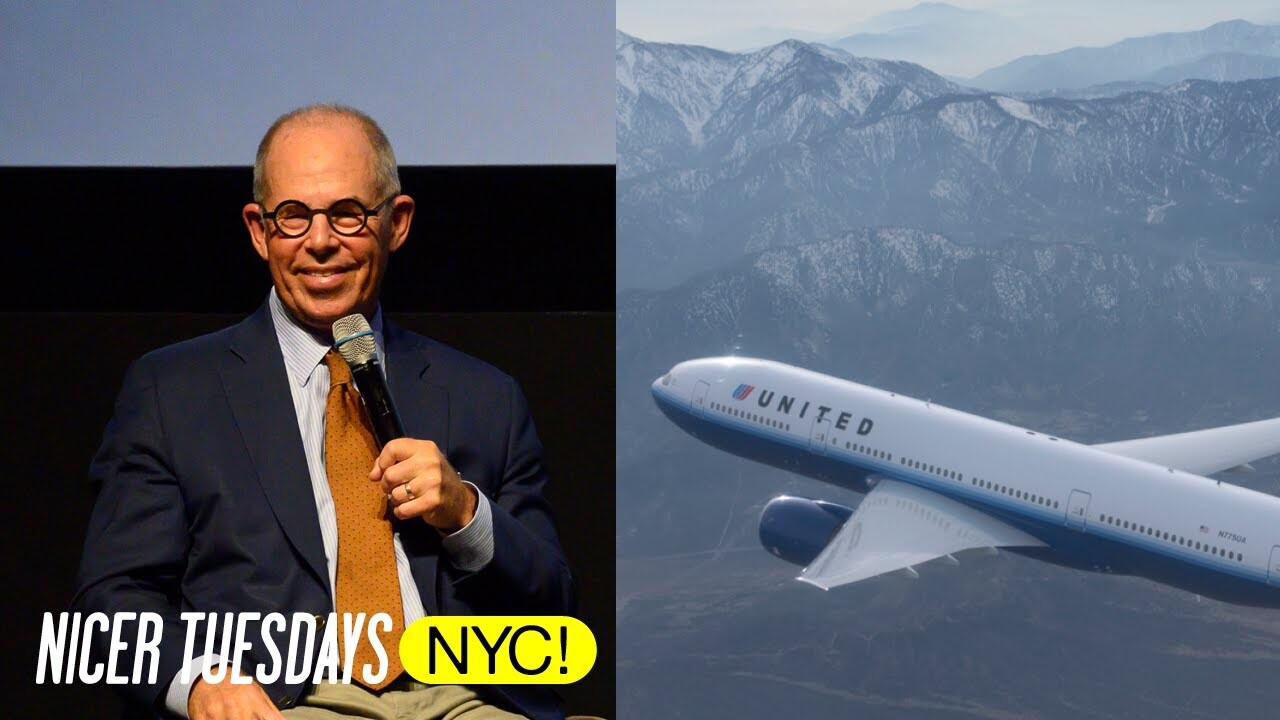
“You don't learn anything by talking. The only way you learn is by listening. You're absorbing information and it coincidentally is a way of ameliorating most clients' worst fear – that you're not listening to them.”
[applause] I pointed out that I always feel very um like unprofessional with a piece of paper and Michael being the core professional he is like, "Oh, you need to get a branded clipboard." And I was like, "That's marketing, baby." [laughter] Um, thank you so much for being here. It's my pleasure and honor and thank you all for coming and to uh follow uh uh Tina and Maddie and Andrew. That was just so inspiring seeing that work. Uh it reminds me why, you know, why one do this for this many decades. That's why. Yeah. Amazing. Yeah. I mean, really truly, as I said, we do these all the time and they're always great, but this one definitely extra special. Um, so it's kind of uh funny to know where to
start with you because there's so much to talk about. So, I I asked you beforehand if there was anything you wanted to focus on and you said no. So, I'm asking Michael primarily what I'm interested in hearing from him. Um, and speaking of the clipboard, as I said, one of the first things I think you're kind of known for is being a client whisperer. Um, and something I a sentiment I hear a lot about in graphic design is sort of the villainization of the client. Uh, and the client as sort of something that you're fighting. Um, and and I remember in, you know, your in my internship with you, you would go into these meetings and you would know
the client's name, you'd know their where their kids were going to school. some I but um I'd be curious to hear you talk about sort of where that skill developed and why you think it's sort of important. Um it was it took that was a skill that took me a long time to actually develop. Um because as you said I think it's easy for people that do creative work to sort of see everything as a challenge as an obstacle and to see other people as potential enemies that stand in your way of achieving whatever personal vision that you have. And um you know if you're a designer you know if you're fine artist I imagine the equation a little bit different but I think once you're
working with clients solving problems that are not your problems but problems they've asked you to solve you know inherently you're going to be involved in some sort of relationship and I way back when I started I you know I went to design school for five years and I thought I really know what I'm doing and I sort of assumed that I would simply show people, you know, you asked me to design something, voila, here it is. And their only question would be, "How can I thank you?" [laughter] You know, and and in like cuz I just assumed that they could tell that it was good because um because I thought it was good. And um and then but then you realize that it's
that isn't how it works. You know, people will react in all sorts of different ways. Some people will say, "How can I thank you?" Some people will more often say, "What else you got?" Uh some other people would say, "Are you crazy?" You know, people will have like lots of different possible answers. And um I was um always like a fast talker and like to argue with people. Um and at first I thought, well, this is, you know, they often, are you crazy? And I say, I'm not crazy and let me explain why. And then I would like really try to like talk them into accepting the design. And I just would talk and talk
and talk and talk and um and I did I did that a lot actually. Too relatable for me. Yeah. [laughter] And um and then and then you real then I can't remember what actually turned the corner for me but I realized that if you just that most here's a tip for all of you and at least in my experience what most clients are really afraid of is they can't really tell whether what you've done is good or bad or right or wrong but they're afraid that they're going to make the wrong decision. They're afraid that you haven't been listening to them and you've somehow done something that now they're going to be tricked into
accepting and then they'll show it to people and they'll say that's ridiculous. What in the hell? You know, and they'll be embarrassed and they and they'll have no way of backing out and some, you know, and and in fact, I was reinforcing that with all my argumentative supposed persuasion. and instead um what I start maybe it's because I'm I'm married to a woman who's a psychotherapist but um uh but I actually learned just if you if any of you if any of you go to a therapist if you ask your therapist a question he or she will always say um well what do you think about that how does that make you feel you know and and so if they say are you crazy I would say
you know what is it about what's what is about this design that actually would make you ask that. I'm just like expand on that and like uh and and I just started realizing you don't learn anything by talking. The only way you learn is by listening, right? That's like you're absorbing information and it it coincidentally is a way of ameliorating most clients worst fear is that you're not listening to them. That somehow the thing you're trying to force down their throats because you're an expert and because you're such a fast talker is something that they that they don't want, but it's something you want. I'm going to make you do what I want. And so I just I mean like and then once
I sort of got into that, I got sort of addicted to it. And so I sort of just realized that they'll tell you all you have to do is kind of ask the right questions and they'll tell you everything you need to know. And I started doing that. You know, here's some other tricks. You're welcome. I don't really need these tricks anymore because as Elizabeth implied, I'm sort of semi-retired now. I would like if someone says um we want to change our logo. I would like not I just would say well the one you've got now looks pretty decent. It's gotten you so far. What's what do you think is wrong with it? Then
they'll tell you everything they think is wrong with the logo and they'll basically tell you why you know they'll give it all away. And you know more you ask these questions they'll sort of like they'll give you the route to doing to be I think to being a better designer. And so I think in a kind way some people would say this is empathy or something [laughter] but but to me it was sort of like and and it's not really a manipulative cynical technique as much as it sounds like it when I'm describing it to you but um but it actually is just I mean to me I like I forget oh um there's a biography of Lauren Michaels the the guy who runs Saturday Night Live and he says he ran out of all of his
comedy ideas like 45 years ago and that's why he hires all these people because they have the new comedy ideas at SNL. And I have the same way like I don't have new ideas about design work that I want to do. I sort of really need to be stimulated in a conversation with someone else who's had an interesting problem needs to be solved in a specific way. Well, I think though to use another psychology term, I think that does require a certain level of sort of ego death [laughter] because I think that requires you to be malleable enough to respond to those. And I think something that often happens is that I've experienced in design studios is they'll have very rigid
processes and then when they encounter a client who for example responds better to printed work rather than digital work. They aren't able to see through it in order to change their own process. Yeah. And then I think also everyone makes decisions their own way. Some people if if any of you have clients, you'll learn you learn that some of them it's like Christmas morning and you're about to show them things and they're all just, "Wow, you made this just for me." and they're really thrilled. Some people are always like thinking that they absolutely have a they have to have a choice and they the more they think
the more choices the better. And some people like to decide things really fast. Some people hate to decide things and like want to just think about it and think about it and think about it and and it just is sort of like what you know it's because people are different and you're basically the same and so they're coming to you for a reason but your response has to end up being sensitive to the way people make decisions about these things and these are weird things we're asking them to make decisions about. I mean, there's like if if they go to their accountant and their accountant says, um, I've added up all these numbers and you owe this much in taxes, you can sort of say,
I hate that or, you know, please make it be less, but the numbers are the numbers, right? But like if you show them like, you know, here's a here's something that I thought it should be like bubbly and blue because that's right for you. They're like, okay. You know, that's like, you know, you're like putting a hat on them and saying, I think you'd look good with this hat. What do you think? They're like and so I think you know so I think it's it's really a different kind of process and and I think people who are talented need people who are talented who are going to enter into a compact with other people
in society need to master that degree of um of empathy or ego death or whatever you want to call it. And then also minding the fact that whatever it is we're doing is going out to a larger public who then will see it and have their own reactions to it. When I when Tina was talking, I was so moved when she described um uh seeing uh uh Rookie, which I remember when it came out and this remarkable vunder kid Tabby Gavinson who had done it. You know, the idea that they were just putting things out into the world and they weren't imagining that Tina would be seeing it.
You know, they just were putting it out there. But that's the other thing that happens. It's not just you and the client. It's you and all the people who are going to be exposed to the work that you're doing who are each going to react in their own way. Absolutely. I mean I've heard um it's like second question I'm already mentioning AI but I've I've heard some rumors recently about studios who have had clients who will run the work through AI to ask it which of these is the best option um and and that sort of makes me think about I feel that the general public has become more aware of graphic design um and at the same time
we've also had I think less exposure to certain types of taste and cultural breadth and those two sort of things coming together create a very weird powder keg when it comes to clients assessing work. I don't know is that something that's my own opinion. I'd be curious if you have seen sort of the way that the public feels about design change. Well, um you know, when I was when I started out way back when in the um in the 80s, you know, I people would say, "What do you do?" And I'd say, "I'm a graphic designer." And they say, "What does that mean?" And then I'd say, well, you know, I design sometimes I'd sort of try to figure out if they were kind of a
a literary type person. I said I'd do book covers if they were but then like if I'd say for instance I design logos a lot of times people would like what what does that mean? What is what is that like literally I'm not kidding. And like or the idea that someone like would design a lo they show like I mean like I I designed the Mastercard logo for instance. Well, that means that somehow I helped people decide that the two circles overlapping, one yellow, one red, would be good to represent this global financial institution. And like they don't people just don't understand even now they wouldn't understand what that was. But certainly way back when they sort of would think they would tune
out, you know, a few words into that paragraph, right? And now I think people are a little bit too interested in logos. Uh, and I sort of like missed the days where people were bored or tended to ignore logos, you know? I mean, there's like I'm not I'm not going to utter certain names of barrels, you know, whatever. But I mean like you just like don't want like it's like not that's not what graphic design is for. And it's actually making it I think it's important, but it's not important that people should be that people in power should have opinions about it that they put on truth. social or wherever they
put their opinions, you know? I mean, I just I mean, to me, I think that's like not right. Hey, um uh Elizabeth Goodspeed's work behind you there. [laughter] [applause] So, I just said, talk about how AI works. I gave Elizabeth Goodspeed a prompt and I said, "Okay, poetry. The idea is we're going to have those six letters on the cover of every issue of the magazine, uh arrayed two by three, and how many different ways could you do it?" And then Elizabeth went away and came up with that. Promise when you're an intern they'd give you too much time and at some point you end up under your desk kissing a piece of paper in order to make the letter P. Um but you know
it's up there. Yeah. [laughter] And Jesse Reid is here somewhere. That was uh also a favorite his uh brilliant stuff. So I've been lucky I've had the other trick is just have really good people you work with. Um, in terms of those shifts, obviously again like uh looking at this long span of time, do you feel like there's anything sort of missing from the Vignelli era that you would like to wish was more present in modern approaches to design? Um, the thing that people sort of miss about Masimo Vignelli specifically, and I think partly that era in general was that Masmo was really motivated by the desire to make the
world a better place, you know, and you can go online and find a find interviews with him where he says, you know, the the mission of a designer is to fight against the ugliness. And he sort of thought ugliness wasn't like an enemy. Well, it was an enemy, but it was represented by this sort of just entropic carelessness that just leads to the messiness of no one kind of taking the time to figure out the right way to do something. And and he was personally sort of offended by that and moreover thought that if you could remedy those things, all of society would benefit. And I think um if there's one thing
that's missing as things get more and more kind of atomized in society as we each become individual players I think that idea that somehow we're all making contribution to a world that like it or not we all share and that somehow each of those contributions if it were thoughtful and representing different perhaps diverse ideas of beauty would actually make the world a better place as Benignelli and many of his colleagues at that time thought. Um and I still and I think we don't you know that that that kind of I think that kind of uh um attitude is thought to be um perhaps kind of um uh uh presumptuous or something. You know, who am I to decide what the world should look like? Well, I
mean that's called responsibility. You know, I mean that's you you have a job you're doing in the world and it's your responsibility to do it to the best of your ability. not just for yourself and your own greater glory, but as a gift to your fellow citizens in the world. Yeah. I I mean, I think that's a very modernist way of thinking about it, which I appreciate. I think it's also hard at speaking as a you know, middle age millennial. Um that, you know, I I think about I remember working at the office the day after Trump got elected and seeing, you know, all this work for Hillary. [laughter] you know, you know, in some ways that sort of um that presumptuous the naive of of thinking,
you know, yeah, Futura started as a type face made for a radical commune and now it's used to sell guns, you know. So, I think it's it's sort of funny to try and I think a lot of design and a lot of being a creative is having to hold those contradictions at once of of changing the world and also sort of accepting the world. Yeah. I mean I think it's it's interesting because I think as designers we put an enormous amount of u value on the end product of what we're creating.
All the things that you saw, you know, in the first half of the talk that uh uh that, you know, represent sort of all these different attitudes about what design, you can't deny that each one of them, everything you saw was kind of representing personal passion and people executing at the highest level of their ability. um whether or not those things are all interpreted exa whether it's possible to interpret all those things the same way whether we can control what those visual languages are once they're put out in the world I think there's a limit to that but that doesn't mean you can you you abdicate your responsibility
in terms of what you're putting out there you just have to continue to fight the good fight as best you can well I think the rookie example is great and that it shows the power of you know connection across time and space between just two people can sometimes you know be powerful enough Yeah, exactly. Yeah.
Um, pivoting a little bit, this is sort of um, just watching you walk around the the room today. It's I I guess I was sort of curious to ask you a little bit about um you may be graphic design sort of only celebrity and no but I mean I I'm I'm curious if um you know besides just developing into your um career if if that's changed your relationship with design at all having to sort of be this spokesperson for design as a field and and sort of this role model to so many people if that's sort of changed your personal relationship with it. I know you bulk at it, but it is unfortunately true. Whether you accept the statement entitled or not.
Well, I mean, I do sit a few feet away from Paula Sher, who I would say the same thing too if she were up here, but she would not maybe take it the same way. Uh [laughter] but um but but but I but but I and then there's a famous Stephan Sagmeister quote to the effect of you know being a famous graphic designer is like being a famous dentist you know you know like maybe like all the other dentists sort of think wow that guy that woman is a great great dentist you know but like you know um so so I I mean and I think you know I mean I do think um you know I married my high school sweetheart who's not a designer I have
three kids none of whom are designers um and that just reminds me that like, you know, they they will just as soon roll their eyes about something I'll get excited about, you know, like, "Dad, why are you taking a picture of that sign, you know, or that that old package, you know, and, you know, they just think I'm nuts, you know, and um so I I'm not a I'm I try to be good dad, good husband to them, but I'm not really my quote unquote celebrity doesn't really count for much with them, but it is, you know, and I do, you know, I had on the other hand, for sure, I had um I had my own heroes when I was studying in school. I, you
know, um, and again, back, you know, I'm I'm a baby I'm a young I'm a younish baby boomer, I think, uh, but, uh, I'm still pretty old. And um uh but I remember you know uh pre- internet I would find images and books with names next to them that could be you know uh you know you know that include up to including you know Milton Glazer, Paul Ran, Masimo Vignelli you know and then I found myself you know um uh less than a month after graduating from college being the lowest level designer in Masmo Vignelli's office and you know and I and he he when he walked in the room you knew he was is a celebrity. You know, I think I'm sort of
like, you know, I I believe me, I sat next to people in the subway and they had no idea this morning who they were sitting next to. And nor nor had they learned would they give a But uh um but but I think um uh you know, when someone like Vignelli walked in the room, silver hair, fantastic accent, impeccably tailored clothes, he was amazing. He sort of really exuded this sort of charisma and sort of and he used that in order to persuade people to to his way of thinking. He was a user of Midwestern roots. Yeah. And I just use my all shucks midwestern roots in contrast. Yeah. Yeah. No, and I I hear you. I think maybe I was thinking more as it relates to your relationship to the design field
in in sort of even risk-taking or but maybe that as you said you sort of seeding that to so many of the sort of other people on your past teams that it absolves you sort of of that having to well I mean I I mean again you sort of have to take responsibility for the work that you're doing and so I try to like you know I I um you know what's funny I I I believe people work for me would back me up on this that uh I can I can [laughter] I can say it that I sort of am like if if if people are praising the work I like to share the credit but if they don't like it I take all the blame you know I just assume that I you know if if if if
something's gone wrong it's because I sort of took my hands off the steering wheel or turned the map upside down or I just kind of screwed up in some way or another. And I think that's sort of that's basically what management, good management and good leadership in my experience is all about. And I, you know, and Vinoli was the same way [snorts] when I worked for him. I I I had great mentors and great, you know, I have great mentors who worked alongside me at Pentagram. And I've learned a lot from everyone that uh who who's worked for me through the years.
Um, you mentioned obviously like your family not being graphic design. Um, something I've always also admired about you is your range of interests outside of design, one of which includes musical theater, which I promise not to talk about tonight. Um, you're like, I don't think this is the right audience. So, I don't know if there are other musical theater enthusiasts here. [laughter] Um, I would be curious something. I think in the sort of like grind set culture that we have right now towards design, I think there are a lot of young designers who design is sort of their whole life. Can you talk a little bit
about why you know these how these other sort of interests and hobbies have enriched your practice? Um, I mean I I would say that design has been my whole life, but I know exactly the feeling that made me want to go into graphic design. I was good at art. I like drawing. I could do realistic drawing, which when people talk about art, that's really what they're talking about. I mean, like if you were if you painted like Jackson Pollock in the uh in the 11th grade, people would be like, "Don't get that stuff on me, please."
You know, but like [snorts] if you could draw like a really good like picture of a car or a horse or something, people were like, "Wow, did you draw that freehand?" Uh, you know, and so like and and like I I had a I had bad acne. I was kind of a nebish, you I think I you know I was I had a very punch I may still have a very punchable face as far as I know but um but like you know having this magic god-given talent as the nuns called it when I was at St. Teresa's um uh you know sort of like put you know I sort of realized I had this connection to some greater thing right and you know and so I sort of thought but then I realized that you could actually use this as a way to enter into other
worlds. So, speaking of musical theater, I really liked the um the theater kids in high school, I but I wasn't really a particularly good actor and I couldn't I didn't have enough confidence to sing and I I to this day I can't really dance at all. So, I can't do anything that that a theater person is expected to do. But I sort of would say, "Hey, can I design a poster for that show?" And then you you were with the theater kids, you know, and that meant you got to go to the cast party. you got to be with these charismatic funny people who could sing, dance, act and perform. And I just realized, you know, just by the fact
that I could do that, I could discharge this function, I could like learn about that world. And then, you know, as I went through life, I realized that every single project you did was a chance to learn about something that you might not know about. And so, this is not to take away from any specialists out there for fashion, people who just work exclusively within the world of fashion, and that's their passion. and all their clients and all their projects have to do with fashion, that's fine. But I've always been like, I don't know anything, you know, I don't know anything about that subject and I get to design something for it and they're going to give me a tour of the factory. They're going to let me go into the locker room
of a uh of an NFL football team. I get to sit in a meeting at the New York Times. I get to present in front of, you know, a former president and a former uh first lady. you know, the these were all things that I just was there because I've sort of like had this god-given talent and I knew how to draw way back when. And so I don't even see those things so much as like outside hobbies that I'm interested in, but it's just sort of like, you know, I mean, type faces and colors, they're interesting and all, but you know, it only goes so far. Then everything else is what do the words say? What do the colors make you feel? How does it all add up to something that again lets you
participate in the larger world of things that you don't know about with people who are unlike you who don't share whatever quirks made you find your own field and instead they're they're compelled by by passions that are different and interesting. Yeah. Again, I think that goes back to sort of having that attitude makes it a lot easier to be charitable towards clients because it's a learning opportunity. Um, I'd be curious to ask you a little bit about Pentagram specifically, obviously. Um, especially as you, you know, transition to this role. Is it It's over 50 years now that Pentagram has been Yeah, it was founded in 1972, so that makes it 53 years or so. Okay. I think I remember that some
celebration for 50th. um sort of be curious how you think the um organization has been able to maintain its relevance and specifically I think it's sort of developed into almost like a tentpole um kind of studio similar to almost a movie film studio and in that way sets the standards for a lot of the industry um how do you sort of navigate that from the inside? Um well I think it's um I mean so when Pentagram was founded in 1972 I was in the ninth grade so I had had nothing to do with the idea of Pentagram the name of Pentagram. I didn't had never even heard of it. Although by the time I was in college I
did hear about it. I learned about you know um the five founding designers of Pentagram. Um conference rooms at Pentagram are named after them. So anyone who's ever worked at Pentagram can probably tell you. I always wondered why Forbes had the biggest one though. Yep. because he was he sort of was the Colin Forbes was the one who sort of had the idea and was like the man. Yeah. First among equals. Colin Forbes, Alan Fletcher, Mvin Kolinsky, Kenneth Grae, Theo Crosby, those five white English guys all formed this thing called Pentagram, right? And I think um they named it Pentagram because there were
too many names, but then they realized that it was an additive scalable thing and a sixth person could join, a seventh person could join, eighth person can join. one of the original five could move someplace else like say New York from London and start the whole thing over there. And so it ended then then some of the original five guys could retire, some of them could actually die and new ones would come in. And so you know just this month we announced a new partner Hugh Miller as a partner our London office and each one of those that come I used to be the newest partner. I used to be the one of the youngest partners and now I'm like this I'm one
of the oldest partners and only one partner's been there longer than me and I've so the whole place has changed completely. It's like what's that boat? The that ship Argo. No, it's that boat where you sh like Oh, the thesis ship. The ship. Yeah, that's the idea where like um replace all the boards.
Imagine there's a boat and imagine that like one of the parts of the boat like one of the planks in the boat gets worn out and you replace it. Then imagine you replace another one, another one, and imagine eventually you replace every single part of the boat. Is it the same boat? And you know there's a that's a philosophical quandry that people have contemplated over the years. That's something to think about as you go home tonight. Uh but um but basically pen and and some people simplify it. So I remember I used to always define it in terms of baseball teams. You know the Yankees have been around for a long time. The fact that Babe Ruth has been dead for a long time doesn't mean the
Yankees don't exist. It means that there are other people who over you know there are people that overlap with overlap with overlap with going all the way back to Joe Masagio Babe Ruth whoever. uh Emily Overberman who you uh my other boss your other boss at Pentagram she's worked with Saturday Night Live for years who I mentioned already and she'll say it's like the cast of SNL you know it started with these people back in 1974 and um but now you know they just announced some people are staying some new people are some people are leaving some new people come in and that sort of thing consistently reinvigorates it and and and and one of the re and so as
Elizabeth mentioned one of the things that I decided to do a year ago go was step back and not manage a design team but sort of be a free floating consultant and I'm just supporting my partners now who are managing the client relationships and are uh and have their own design teams that they're managing and I kind of am there to help them and uh one of the reasons I wanted to do that was I remember how liberating it was for me young me young Paulair young Michael Gerakei young James Bieber when we were all 30somes back in the early 90s 30omes, 40omes, and those original partners step back and gave us room to
kind of redefine the firm as we wanted to. So, I think it's really exciting when some someone changes, someone new comes in. And I think, you know, I mean, I've told people candidly this very evening, you know, I can remember uh seeing Matt Willy's portfolio and thinking, you know, my time is coming to an end.
you know, he does I I envy every single thing in this portfolio and I'm not sure I could do it this well anymore. I just don't, you know, you just can't keep kind of like coming up to use a sports analogy. You kind of like you lose some steps. You can't quite hit it your you can't spot the ball as cruy. You can't kind of land those three-pointers over and over again. I really don't care about sports, by the way. [laughter] I became a designer, so I didn't have to care about sports. Um uh but um uh but still you sort of think, you know, stand back and let someone else take a shot, you know. So that that sort of is that's what I like about Pentagram. It keeps
going whether or not, you know, ultimately whether I'm there or not. Um as you're bringing those new people in, obviously I've always been sort of curious, especially as someone who worked there, how the sort of hierarchy of choice works in terms of new partners or projects or things like that. um you know how do you mediate sort of such a wide range of opinions, personalities and tastes? Um well I mean um I I don't have to do any I won't project an org chart of pentagram but basically if you imagine that uh there's about two dozen partners around the world New York and London and then Austin and Berlin and um
those 24 or so people each kind of are their own little studio and they work as part of a confederation with other partners and we call that pentagram but each of them is really given authority to kind of hire who they want to hire do the work that they want to do. They're expected to kind of like do it in a way that is sound from a business point of view and conducted at a at a level of excellence that everyone can be proud of, but there's no review, you know, there's no it's not like there's a creative review board that kind of like, you know, just there's no leader pentagram leaderboard. Yeah. No, but but on the other hand, we
don't have private offices, so it's all just out there to see basically and we know what's going on. And so I think um uh a lot of the decisions just end up being made in the aggregate through a kind of loose consensus which is usually in my experience it's been say there's 10 partners you know three of them really really are enthusiastic about something. Three of them are more than okay with it. Two of them are sort of don't care one way or the other. Then the remaining two sort of like this really isn't my thing, but I'm going to let this go and get my way on the next one, you know, and then then one of those two is usually wasn't paying attention to any of it and have
no idea what you're talking about if you ask them their opinion about it. And so like it's, you know, just like um if you go home for Thanksgiving, you'll be sitting at a table of a bunch of people who you're related to who might have a similar kind of dynamic happening. you know, someone who someone who has a big mouth and makes everyone mad, someone who's like trying to make the piece, some other people who just like want to know when the game starts. Again, with the game, who cares? Uh, but I mean, it's like it's like any bunch of people who are trying to like live together uh in a society, small or large. Yeah. I mean I was thinking of it as I
said in relation to this sort of idea of like the tent pole and how you know I think there's studios like not quite like Pentagram nothing's like pentagram but you know the oglev's of the world and you know for example that Pentagram has you know used AI but has also recently done work for a Palestinian benefit concert and sort of seeing the range at which how a big organization like this is able to kind of set standards for um the rest of the what time is it Dorothy's call my wife is forgot that I [laughter] was doing this. Sorry.
Do you have any questions for Dorothy? I'll pass them on and she'll help. Um, but but yeah, just the way that I think there's a lot of power in that, that's that's wonderful, but also um can be a little intimidating, I'm sure, to have to sort of if Pentagram uses AI, that that makes it a lot easier for other studios clients maybe to say, "Oh, well, if Pentagram is willing to use it, or you know, on the on the plus side, if Pentagram, you know, sticks its neck out for a good cause, it also makes it more acceptable for other designers." So I'm just sort of always interested in hearing how how that's navigated.
Um well I mean again it's um in both those cases uh um you know the the example of us using AI on a project that was got us the most notoriety that was one you know one partner did a project where she thought that was the best way to kind of get the work done and it can actually be quite articulate and provocative in the way she sort of defends that position. Absolutely. It's and I think in that sense it was a very Paulo way to approach it which is kind of wonderful.
Yeah. And uh and then again um uh the recent work we're doing in support of a big rally for uh Palestine in Wembley Stadium in London. That's the passion of um one of our partners there in London. And um uh and I think you know the ethos is is that um uh I mean sometimes if one of us has a qualum about something you know I mean like and it's happened very often you know we'll get an inquiry from a client and someone says what do you know about you know I got this call and it seemed sort of benign but then I dug a little bit deeper and uh I you know it seemed a little troubling. What do you guys think? And then the great thing is is that what people will always hear is
you shouldn't do it if you feel uncomfortable with it. we should just turn it down. I've never ever in my 35 years there heard anyone say, "We really need the money. Now is not the time to stand on principle. Go ahead and take that job and make that money." [snorts] It's never ever ever ever ever happened.
Ever. Uh and um and and no matter how bad we needed it, it wouldn't happen. It's amazing. Like I mean I people have said, you know, I'm really not happy with this project's going. I want to just walk away from it. We might lose some money if we do it. and then people say go ahead and do it. You know, it's sort of like people really are encouraged to kind of like individually act on their own conscience, their own business sense, their own design sense. And I think that's one of the thrilling things about one of the best things about being there. Yeah. No, I I mean I love to hear that and I think from from the inside you do see a bit of that. You see from the inside and what's
curious is that like you know Pentagram doesn't you know it's funny is that um your question was a little bit different though. It had to do with people looking at this this entity called Pentagram as something that could set an example. And you know it sort of isn't designed to do that. you know it's designed to sort of be a microcosm of the the the diversity of the world and the opinions of people in that world in a way and we try to make it as you know I think if you know moving away from 1972 where there is a certain sameness in the five founders although they themselves would describe themselves as dazzlingly diverse uh
you know they were very different kinds of white guys but [laughter] uh and they were actually God bless them they were um but um uh you know I think We've deliberately since then tried to, you know, we tried not to replicate the current partners with new partners that come in, but instead try to reach out and try to bring in as many different people as we can.
Yeah. Um, I wanted to also just briefly there's usually a timekeeper who's like yelling at me and they're not yelling at me yet. So, Jeff, [laughter] um, I know I was like, my boss is calling you. Um, I would love to talk to you a little bit about your writing and this one is super selfish as someone who also writes about design. Um, but I'm hugely inspired by your your writing as a cultural critic. Um, and I'm sort of curious h if you think how you think most designers should approach writing, if it's something you you encourage folks to do, if it's what's what's been valuable about it to you? Um, well, I mean, I've found that writing something
down, and this could be an email to a client or it could be a 2,000word essay, but writing something down helps me kind of clarify my own thinking about my point of view about something. I'm able to kind of take the ideas and the predicates of those ideas and sort of like figure out what the logical way of playing them out is. And um, I I find that really useful. Personally, I think there are people who don't actually for whatever reason, they just don't fi they find it too painful or sort of what's like like artificial or un it's a foreign way of actually approaching something. And you know, I've never um used AI to generate anything I've
written or even refle I I like I sort of been vague about how you would actually do that, although I understand it's like really easy, I guess. uh uh but um I' like so any argument about AI sort of like I'm really unqualified to talk about. But one of the things that I find discouraging about things that I've been shown are kind of related to uh uh AI is that it sort of is a kind of boring writing that no one likes to write or read. And it's sort of it just reminded me if you're going to write something try to make it interesting or unique or have a point of view that would actually enlighten people and not just play back to them what they already know. Yeah. Yeah. You said in the lobby earlier that a piece of writing advice
was to remove the things that you know most people aren't going to read anyways. Yeah. Yeah. That's uh there's a writer named Elmore Letter who's Elmore Leonard who's a great writer of crime thrillers and he has this I encourage you to look up his 10 rules for writers because they apply to design too. And one of them is leave out the parts that readers tend to skip and it's like it applies to design too. You know, uh, so much I think so much of writing is about reducing, reducing, reducing, reducing until you're sort of shocked by what's left. Yeah, exactly. It makes you a little uncomfortable,
[laughter] right? You're getting uh Okay, I am getting the time. Um, okay. Well, I mean, I I'm sure everyone could talk and listen to you for another hour. It make my job very easy. Um, thank you so much for your time, Elizabeth. Thank you. Thank all of you for coming. Thanks our speakers earlier, too. [applause]
Latest Talks
-
Murugiah
Why you should reject the formula and make art about things you love
Watch -
Amber Weaver
How does contemporary type design translate into the wider world?
Watch -
Delali Ayivi
How does photography give us the right to imagine our futures?
Watch -
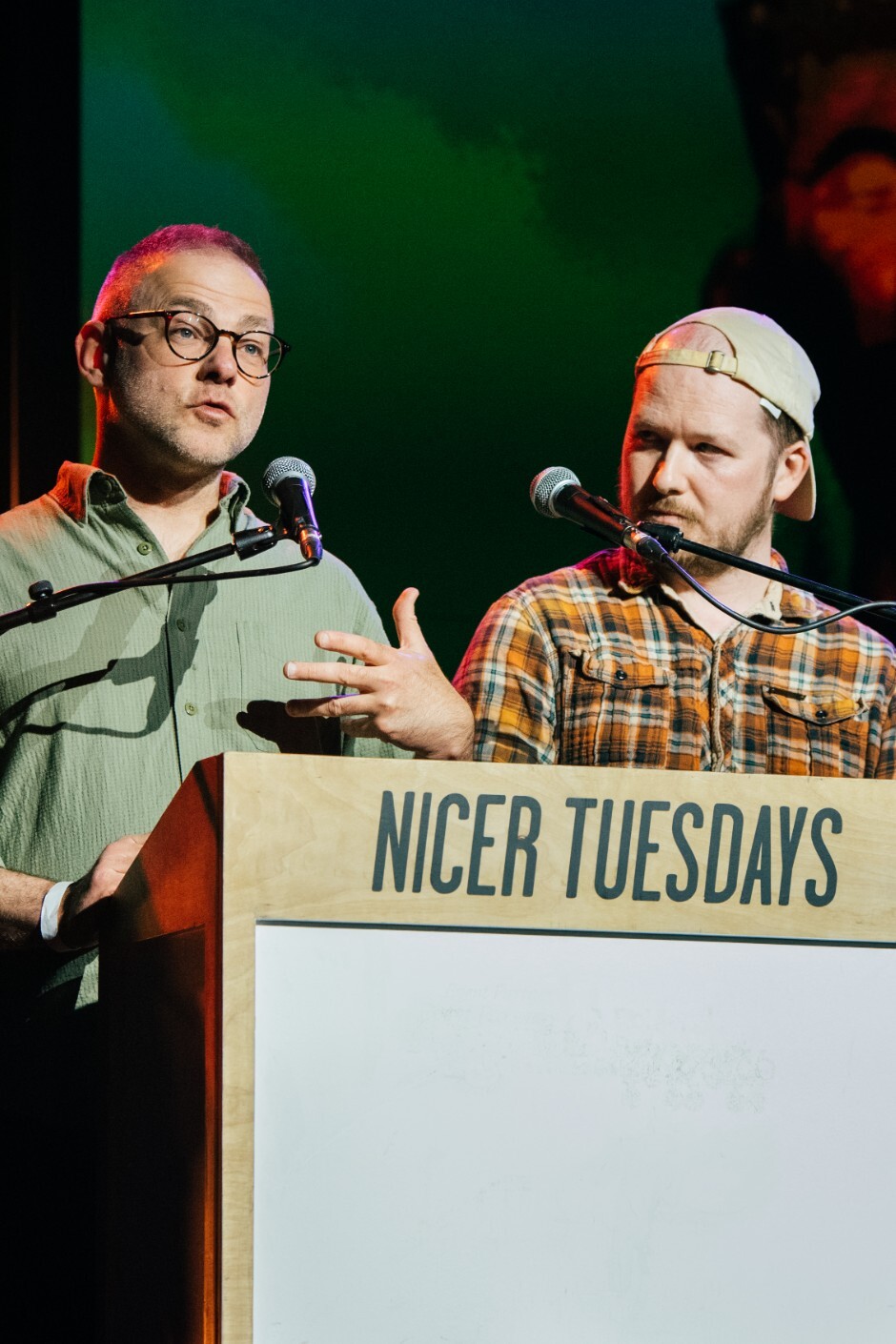
Will Anderson and Ainslie Henderson
Bringing stop motion sorcery to BBC’s Small Prophets
Watch -
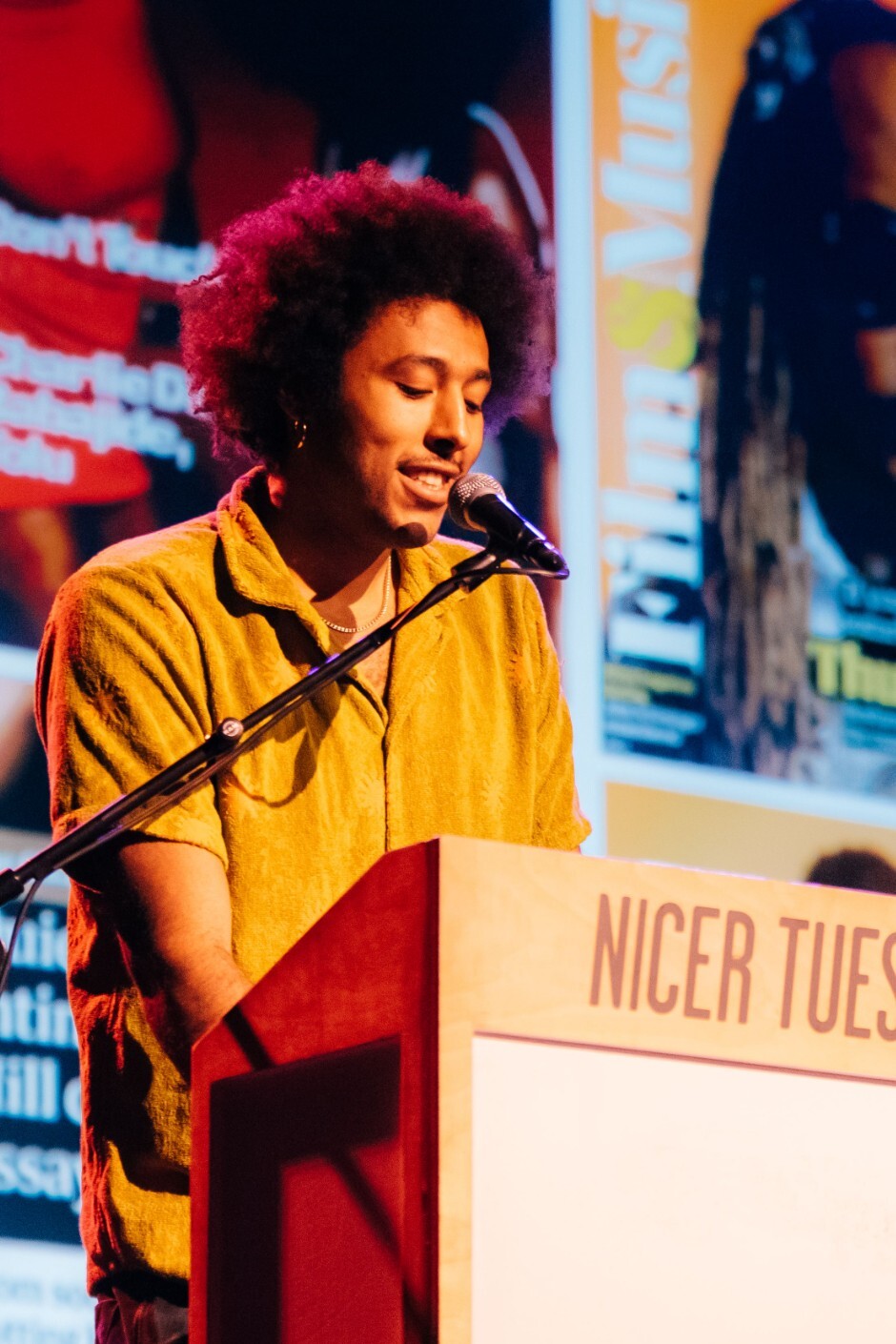
Ollie Babajide Tikare
The importance of not flattening the complexity of observation
Watch -
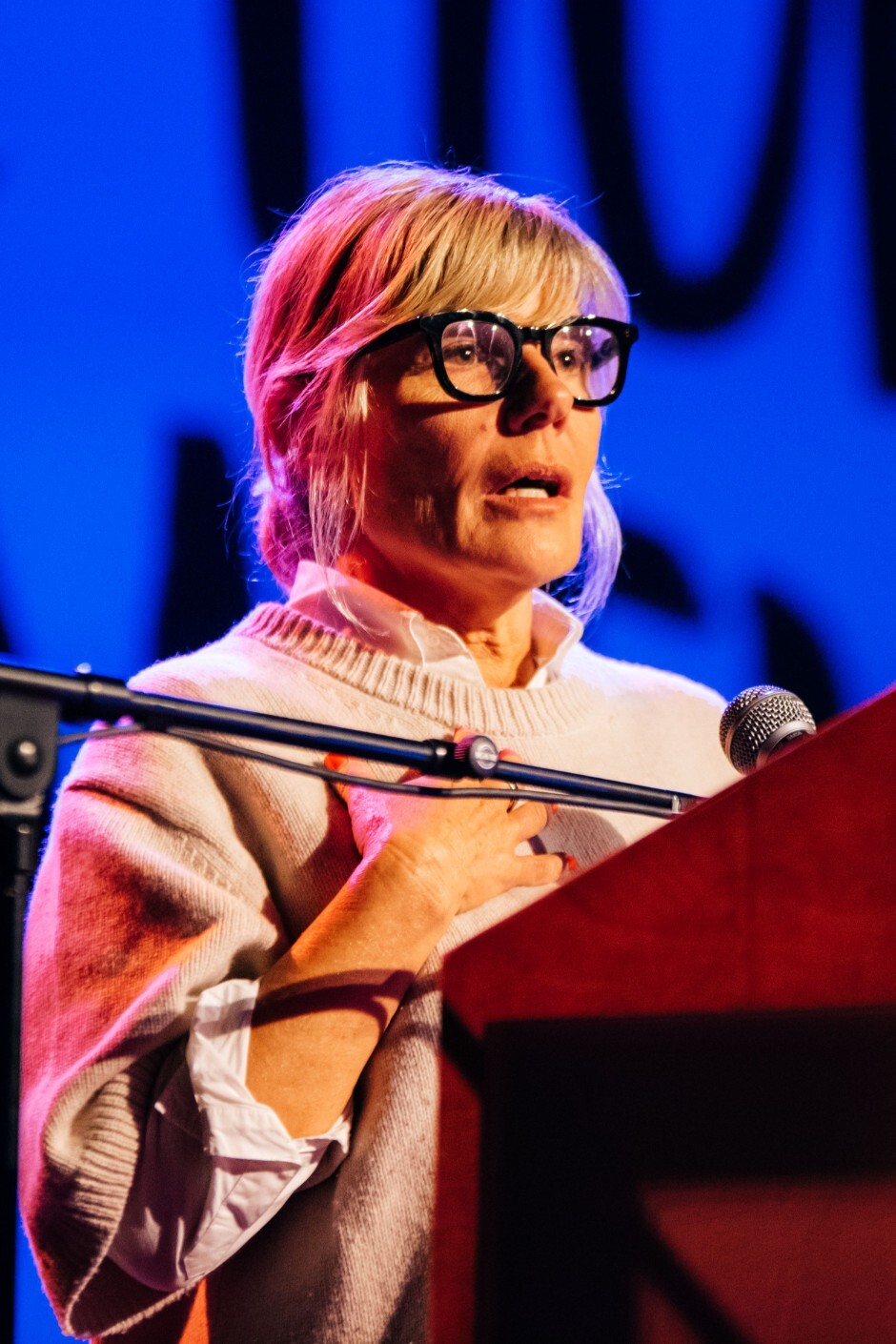
Marina Willer
Design thrives when you find poetry in the simple things
Watch