
Made Thought is a London-based design agency known for its focus on sustainability and creating meaningful change through design. They emphasize the importance of humanizing brands and addressing environmental issues in their projects.
Made Thought
How to add meaning and make “genuine” change through design
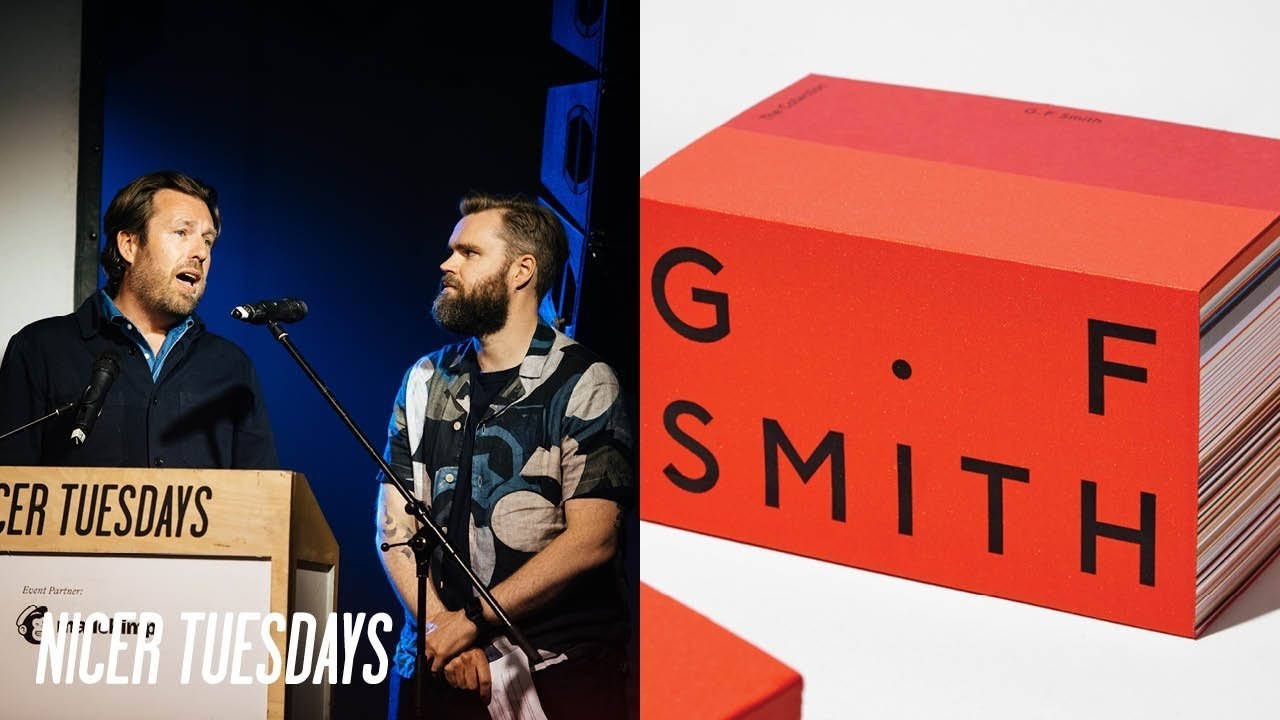
“How do we make people understand, how do we make people listen, how do we make people care?”
Transcriptmay contain minor errors or formatting inconsistencies
We've been given 10 minutes, which is actually a really short amount of time, and as people from my team will agree, I can talk for ages.
So I'm going to try and keep it brief. It's great to see so many people here together once again in person. So thank you all for coming, and thank you for making me literally feel like the oldest person in the room. You're all half my age, but anyway. No, it's great to be here.
So anyway, I thought before we get into talking about our work and what we do, I thought actually it'd be really good to start out all with a bit of positivity. I mean, we've been bombarded over the last few years with a steady flow of shit news really, from Brexit to COVID to the climate crisis, and obviously all the terrible things that are happening in Ukraine at the moment.
So I thought, you know, what we do as a group of people, regardless of our discipline, I genuinely believe that there genuinely hasn't ever been a better time to be a creative. And I think our view here is that right now, the opportunities that face us all are huge.
The first thing that we look at is under scrutiny, looking at just this board, how we travel, where we work, how brands speak to the world, how we package things, the materials we use, how we bank our money, the textiles that we make our clothes from, and even where we choose to socialise. So as a creative industry, all that really leaves us with is huge opportunity.
So I think what we're talking about here is creativity, and there's this kind of a saying that I've heard a few times that, you know, that, I'm going to read it because I'm going to forget it, that creativity is the last legal competitive advantage that brands and businesses have at their disposal. It's the way that companies and brands actually use creativity to stand out and to actually be different and to inspire people.
So we sort of talk at May Thought that actually we feel that we're in the middle of, call it a new or the next creative revolution, where creativity is something that actually creates huge change, has the opportunity to make big differences within the world, not just from a planet perspective, but just, you know, it touches all different parts of our lives. So, you know, our sort of approach at May Thought is really that we are actually, you know, right in the middle of something really quite exciting, you know, that all of the rules have been rewritten. As I said on that slide, you know, everything is being re-looked at. So how we sort of talk about it within the studio, and I'm going to hand over to Alastair in a sec, is, you know, we kind of have these sort of 10 principles that we work within the studio, and I'll go through them. They're on our website. There's lots written there, but, you know, essentially, you know, there are 10 things that we kind of encourage our team to think about, their approach to the work, how they, how they, you know, work on the projects they do, you know. Number one, be excited, be optimistic, be really positive about what we do. We all have a really, really lucky place in the world to be doing something that we love. You know, as creatives, it's our responsibility to sort of dismiss the reasons why something can't be something. We talk about creating movements. I mean, a lot of people talk about creating purpose for brands. Personally, I think we need to go further. Simplicity is a really big thing for us, how we work. You know, I'm forever trying to cut things back, pair things down, say less, not verbally.
But, you know, just really kind of, you know, less is more. Trying to encourage the guys, you know, and everyone here in the creative world to look elsewhere for inspiration and answers. I mean, we're all very guilty of finding the same reference images and the same mood images to make a point. Beauty is obviously important, but so is something being useful and also something being durable. Things that actually last, longevity. We can't be making things that are just for now. Embrace the imperfect today because you'll never actually reach perfect. So actually, you know, as creators moving forward with momentum and actually that, you know, thinking, you know, this is, you know, it may not be perfect, but it's going to move things along. As I said, designed with forever in mind. I mean, this is something that's pressing on all of us that actually we shouldn't be making the instant throwaway things that we've been so guilty of over the years. Creatively join the dots. So when we're working with brands, obviously, you know, regardless of the touch points and, and, you know, all the different facets that, you know, that, that brands of today have to deal with, you know, used to be a logo and a carrier bag. Now it's, you know, it's a smell. It's an experience. It's, you know, it's a place.
And then the last thing as a group, and like this is brilliant because, you know, this is exactly what we're talking about. You know, we're all in one big sort of creative ecosystem. So to, you know, to connect and contribute with to each other and actually, you know, collaborate across different disciplines is something that we're really sort of like pushing that made thought.
So anyway, as the, as obviously the oldest employee of May thought, I'd like to introduce Alistair, who's one of the newer members of the team that's going to talk about one of our most recent and unseen so far projects. Hello.
So I'm Alistair. I'm a design leader. May thought I've been here about a year, relatively new. But what I kind of want to talk about is, you know, taking these principles, taking this kind of creative mindset and applying them to real life projects. So as Paul said, unreleased, it's coming out next month, but we wanted to share a little bit of the work that we're working on behind the scenes.
So this is Xeros and they are a technology company and they're solving some of the biggest issues facing the planet today. Number one, the most evil one, which is microplastic pollution. And the second is water conservation through the washing and manufacturing of our clothing.
70% of our clothing is made from plastic, which is pretty terrifying. The main technology is a filter which goes into your washing machine and it captures these microplastics that are released in every single wash, which I didn't even realize. I don't know if you guys realize, but you're emitting plastic every time you wash your clothes.
So the brief was all about how do we articulate this problem? How do we make people understand? How do we make people listen and how do we make people care?
And then ultimately, how do we make it feel like a 21st century brand? So going back to one of the principles, we approached this project from a completely new perspective. This idea of looking elsewhere for answers. One of the best pieces of advice I got many years ago at university was look outside of design for your design work. Don't reference what everybody else's reference. Look in more unusual places. And what we wanted to do here is show the hidden and invisible world of microfiber pollution, looking deeper, making it visible and making it tangible, making it too big to ignore.
So we needed to find someone with a microscope.
So we found a guy called Steve, who is a scientist and has been photographing blood cells and really crazy things for the past 20 years. And he is the world's leading electron microscopist.
So these look like CG images, but these are real microfibers.
So we've got cotton strands, we've got polyester. And you can tell that the plastic, the indestructible plastic, which we're putting into our oceans and putting into our waterways. The last image at the bottom right is probably the most interesting.
So this is the Xerox filter actually capturing the plastics on its surface. So digging into the rest of the brand, this is just a quick snapshot.
But the first thing we wanted to do is bring this idea of the environment and these landscapes, bringing in the places where our technology is having most of its impact and protecting.
So the waterways, the rivers, the oceans, and we create this portal into this world with this framing device. A fun fact, NASA images are completely open source. So the client loved us for this.
So that's really interesting because they're free. And we also created a tool. We wanted to create a code generator to show the technology in really engaging ways, looking beyond the surface of the filter.
So this on the bottom left is actually one of their main filtration devices.
And then the symbol, the logo, the logo at the core of the brand was this formation of an X, which kind of reinforces the idea of magnification and multiplication.
So I think just to wrap up quickly on this project, I think, you know, the opportunities come from those most unexpected places. The briefs that on the surface don't really look that glamorous. Wash machines, none of us thought it was going to be that exciting, but they sometimes have the biggest potential. And I think Xeros as a company is just doing really amazing, important things. And they needed a brand to look at, look the part to drive the change in this industry. And finally, look elsewhere for inspiration.
Look in those unexpected, unusual and weird places. Talking of inspiration, I'm going to pass over to Paul to talk about Pinterest, the home of inspiration. Very, very slick segue. So, yeah, so Pinterest, you might have seen this project, but I think it's always interesting to kind of get the backstory. So Pinterest came to us just before COVID pandemic with a very sort of simple request. In their eyes, they had a very functional tool. You know, it was a it was a platform that people used but didn't love.
So they asked us to how do we how do we turn that into actually a brand with sort of personality and purpose and and create something that they, you know, that people sort of you win their hearts. Obviously, the unknown aim at the time was they're about to IPO.
So that's why they wanted to be more interesting. But so actually, we identified that actually there was one word that really captured what Pinterest stood for.
And that was inspiration, as Alastair said, you know, regardless of who you were and how you use Pinterest, I'm sure everyone in this room has used it. You know, but so as, you know, people that are just looking how to decorate their kids' bedrooms or make a birthday cake or, you know, everyone uses it to be inspired. And so we thought, well, that was a really nice way in to actually creating a sort of a richer, more sort of compelling brand.
So the first task was to sort of somehow visualize what inspiration looked like. So. So. Really, where we came out with the project was actually, you know, trying to avoid that kind of what I would call the sort of expected sort of San Francisco tech firm style where it's, you know, very vectorized. Lots of, you know, that's a very clean line.
The aim really was to make it a little bit more like a sort of a human the way we all think, the way we get inspired. That sort of mental scrapbook that goes on in your head, how you pin things up, how you how you actually sort of create your own little world of inspiration. So it just allowed us to create a really rich, vivid, sort of human identity that actually spoke to everyone, regardless of, you know, where they were from, what their interests were, just simply looking to be to be inspired. So it's an ongoing project for us. We've just we've just done their latest sort of trend forecasting program, which is Pinterest predicts, which I think has just gone on to our website.
So they're brilliant. They're great fun to work with. They're a brilliant bunch of people and they're carrying on doing some really interesting things.
So that's Pinterest. And the last project that we want to talk about tonight and it kind of comes back to our principles is this idea of creating a movement.
I think you might even be drinking it tonight, actually. Brew Dog came to us a little while ago. With a design request, can we smart on up their can design slightly, make them more consistent? These guys have the most unbelievably kind of crazy output of new beers, new brews. You know, they're like a steam train moving forwards.
So they said, look, can you come and sort the design out and make it a little bit more, you know, professional or smart, whatever you want to call it, which was nice, but not very interesting for us. And we actually felt, you know, as a company that has such a big reach, it was quite important to bring slightly more to it.
So we we actually said to them, look, you know, from a positioning point of view and as a brand purpose, actually, you should have some real ambitions, a real mission and actually, you know, the desire to change things.
So we set on making them actually the first carbon negative brewer. You know, the whole brand led into a planet first sort of position. We wrote a very articulate and well written manifesto for them, which laid out in very intelligent terms, why we're doing what we're doing and why it was an important thing. And we also articulated it in a slightly more direct way as an advertising campaign. You know, I, you know, Brudog have been in the press a lot of late.
Genuinely, you know, under the under the hood, there's a real desire to see all of this through and really actually make it make it more than just marketing. And they they genuinely are doing it. We've just, you know, as a studio, as well as being, you know, a design agency or design studio, a lot of our work is actually, you know, working with our clients to, you know, really sort of help move their brands in the correct direction and give them a lot of inspiration and ideas. So Brudog's, you know, all of this initiative has come from made thought and really, you know, and James, who owns Brudog, has been really receptive and really energetic to sort of make it happen. You know, for instance, when when COP 26 was cancelled due to Covid, which we all kind of knew was a little bit of a cop out.
So we actually printed it on a massive balloon and flew it over Glasgow and then held something called Ork Cop, where we actually, you know, held some amazing online sort of interviews with some, you know, some really powerful and influential sort of sustainability and environmental experts to carry on that conversation. So it became it kind of moved away from being advertising and actually marketing and actually being far more sort of meaningful.
We just carry on doing interesting initiatives with them. You know, this was the buy one, get one tree campaign for every for every, I think, four pack that was sold. One tree was planted and they bought a whole swathe of land.
I think the size of Manhattan up in Scotland and they're slowly reforestation it, you know, as you know, and it literally is, you know, every time they sell one of those four packs, another tree gets paid for. So, you know, over these things take time, but, you know, over time, you know, hopefully it will genuinely create change.
And then just to end our little stint, you know, we're doing some really fun nut stuff as well.
This was an idea of kind of a drinks brand be or kind of new drinks sort of label actually be completely nonprofit making and still work as a business. So actually, they kind of devise this business model that can be that can actually be such a sort of open source. You can actually take this business model, how to run a business and give all the profits back to the planet and by doing certain things.
And still bring some very delicious soda to the world. So, you know, we get the chance to do not quite as cool CGI work as some of the earlier stuff we've seen today, but, you know, fun, energetic and really kind of, I think, unexpected for somebody like Broodog. So, I mean, you know, that really sort of summarizes I think our approach where it's really important that we carry on creating beautiful things.
But I think it's also just as important that we can make genuine change and really kind of, you know, actually enjoy and make the most of all the opportunities that we set out at the start of our talk. So thank you very much. Thanks, guys.
Latest Talks
-
Murugiah
Why you should reject the formula and make art about things you love
Watch -
Amber Weaver
How does contemporary type design translate into the wider world?
Watch -
Delali Ayivi
How does photography give us the right to imagine our futures?
Watch -
Will Anderson and Ainslie Henderson
Bringing stop motion sorcery to BBC’s Small Prophets
Watch -
Ollie Babajide Tikare
The importance of not flattening the complexity of observation
Watch -
Marina Willer
Design thrives when you find poetry in the simple things
Watch