
Luke Evans is a photographer known for his sculpture-based work that often combines complex emotional themes with innovative visual storytelling.
Luke Evans
Travelling the world from a kitchen table – using flour, salt and a tilt-shift lens
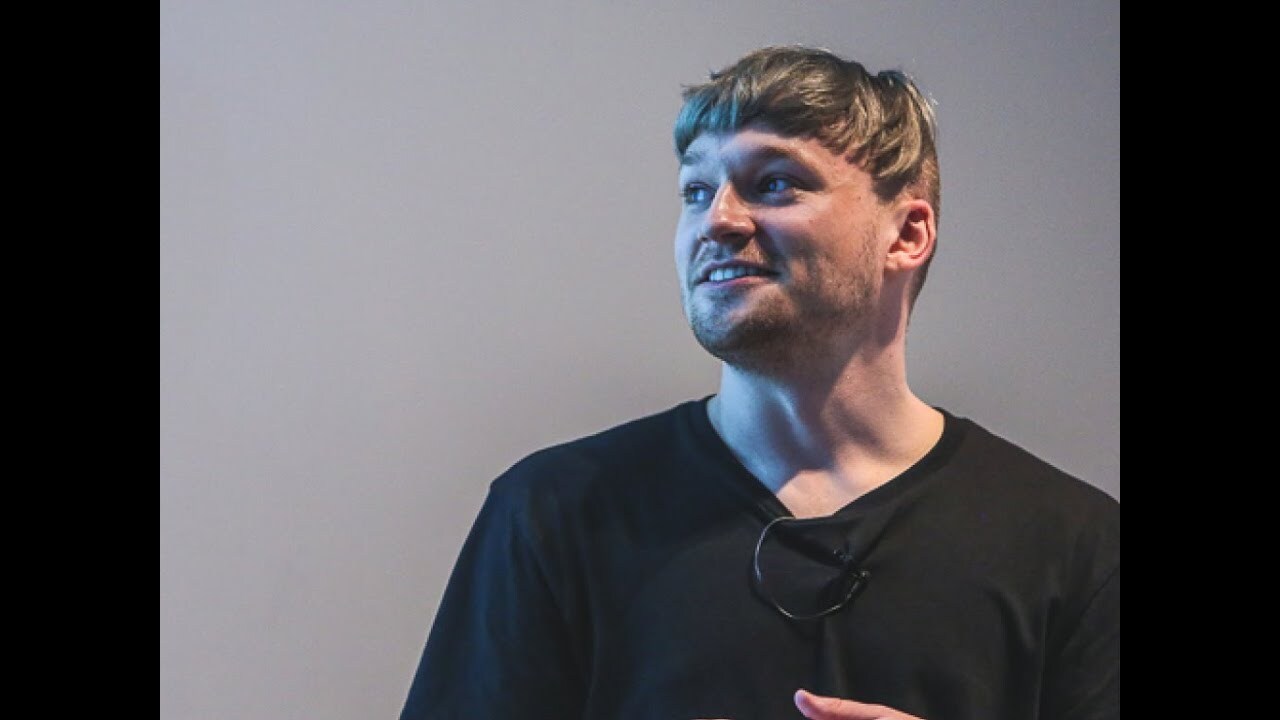
“I thought it'd be a really interesting exercise in making something from nothing.”
Transcriptmay contain minor errors or formatting inconsistencies
hello my voice is so nasally sorry i think it's quite good going after a break i hope you're all sufficiently bearded up so if i mess this up you won't even know um so like i said i've just graduated from kingston i did graphic design and photography and it was touched on earlier i think it's a really interesting mix of the kind of disciplines of design but with the sort of freedom of photography in the art world so my work i'm very much centered around the experimental side of photography um and i think it's worth mentioning that before all of this i thought was gonna be a scientist um growing up this guy was kind of my hero if you don't know who he is he's dexter and he has a lab in his room and he
conducts all these weird and wonderful experiments so tonight i'm gonna talk about three of my own uh the first one's called inside out where me and my friend josh lake ate 35 millimeter film um the second one's called forge where i kind of wanted to travel the world from my kitchen table and the third one's called zero and i used like half a million volts of electricity to print with so first it's inside out so right at the very end of our first Chapter 2: Inside Out year me and my best friend josh lake we sat down and we were given the brief outdoor and so within about five minutes um we were really sort of fixed upon the idea of taking something from the inside of our bodies and bringing it out and as photographers naturally the best way we
thought of doing this was with film so our idea was is that the emulsion on film is made up of gelatin and suspended silver crystals and we thought if we ate it the gelatin would sort of be dissolved away by our bodies and leave an impression of our insides so we kind of research all the dangers that could come of this um and surprisingly it's got nothing to do with the chemicals that are in film the biggest danger is the shape the size the fact that it's razor sharp like if anyone's handled negatives you'll know how sharp they are um so once we knew all that we went into town and we decided to pick a film and it seemed really bizarre
to pick a film on its potential flavor and we ended up choosing a really bog standard fuji superior color film and we brought it back into the studio and the way that we got around all the dangers of eating it was we cut off one single slide each of 35 millimeter film and then we cut the corners off and then we rolled it up and then this roll was placed inside a little plastic band to stop it from like opening out and cutting our insides up so i rang my mum just as before we were about to do this um bearing in mind she's a nurse and uh i was like oh my am i gonna do this project she was like are you stupid
like what's this got to do with graphic design um i mean she had a point but we did it anyway um so we were in the studio and we both had our film and we were sat opposite each other and we just took it in turns we had a pack of walkers on the side and a cup of water um and i remember the instant like literally the instant that it was on the back of my throat like from the point of no return that it was probably the most ridiculous thing i've ever done in my entire life um but there was no going back so after that we just waited and we kind of waited and it's in this moment that your mind plays so many weird tricks on you because you you pay such a cute attention to just
anything that's going on in your body um any rumblings that would probably happen anywhere you think oh it's exploded and my insides are going to be spilling out which kind of leads me on to the biggest question we always get about this project is what do you what how do you get it back um there's no way to kind of brush over this so what we had to do is we had to every time we needed to go to the toilet we had to um poo in a bag and like wear some like big like kind of marigold rubber gloves and you know just feel through it and the reason why the band that we put it in to hold it was so brightly colored is just so we could see it um so a couple of days after doing that
um we both got our film and then it was just a case of you know how do we make these into images um so we got them properly cleaned to get rid of anything that kind of shouldn't be on there um and we looked at them and we couldn't quite believe what they look like they had bubbles all over the surface they were they were creased and then we decided well how are we gonna you know how we're gonna show these images and because this project became much more about the surface texture of film not using it in a traditional sense we ended up getting hold of one of these like two million pound electron microscopes i don't know who this guy is i just got this image from google um
and and here they are inside the chamber there are the three images that we got um on the fourth of may 2012 seven minutes past midday and what this allowed us to do was take lots of images over the whole surface of the film to then stitch together and blow up to the ridiculous size that we needed them to be and we got these and here's a couple of details i always think it's maybe it's just me but i always think these are like galloping horses i think they look like horses i can't not see horses and yeah uh so here's another one just a detail from the first one and here's where you can see kind of all the layers that have been eaten away
and there's some like twists going on and here they are printed there's josh um i mean i won't get into printing it's possibly the most difficult part about photography i find um who's a photographer in here by the way i really want to know is anyone a photographer raise your hand if you're a photographer okay so not many um great um so when we finished this project we sent them out we never done anything like this before so we put them online and we kind of just waited and it was a kind of a silly project and then within 24 hours later this happened well it was certainly an original idea for a project as part of a graphic design and photography course two first-year students at kingston
university decided to record how the insides of their bodies alter materials by eating 35 millimeter film and letting their internal organs do the rest so that was really really really bizarre and like my entire family were watching this and they still have no idea what i do so i mean this is a point a massive point um for me and josh where we realized that just the power of showing your work and being really outward facing um but we found it works in both ways this image found its way online it was part of our sort of internal research that we were putting together to sort of explain the idea to our tutors one way or another this got online and uh we got this email
it says you've got a foreign body i presume a piece of film in the lower left lobe of your lung that piece uh that piece is not in your esophagus it's in your airway that potentially is not good news are you coughing thanks please let me know alan radiologist chicago thanks alan um i'm fine um yeah so now i think we're a little more uh like adapt to making something a bit more bulletproof before we send it out so that's inside out so the next project is called forge Chapter 3: Forge and this project really differs from inside out in a sense that it's stemmed just from an observation um i keep an instagram of sort of things
that look like other things be it ice cubes that kind of look like a galaxy or rising bread that looks like the moon as a matter of fact i'm a massive baker so like i'm really used to handling flour and where this project really started with um was i was making pizza i think where i had it all out on the surface and it really looked like a kind of alien landscape so i took it off wiped on the kitchen table grabbed a light grabbed camera and took a picture and i got this and i couldn't quite believe like the amount of depth you can get out of something that's so small i mean the trick to making small things
look really big is i ended up using a tilt shift lens which allows me to essentially get everything from the front right to the back in focus so after i did that one uh i made these like really tiny crappy drawings of other ones that i might do but i found that if you draw something really small and then blow it up the kind of composition is really strong um so here's another one i mean it's very difficult to see on the very bright projector but there is a splash of water there um so this one is is made with just a rock that i just found around the house i mean my house is falling apart um and then there's sort of salt and in the background you can't really see it but
there's shaving foam in there and cling film and i mean this is super super super low budget stuff i mean i'm not the first person to do something like this um you know model makers film people do this all the time but i thought it'd be a really interesting exercise in making something from nothing so here's the last one i'm going to show i've got to kind of speed through this so i wanted these kind of sand dunes and it's funny with this one something kind of funny happened is i've got one of those spider plants and as you know the ends of them just die and it fell on and it made this like tiny little sort of figure and i thought it gave it this really lovely sense of scale that i didn't notice until i
looked on the computer afterwards uh so here's here's that one um it's just a piece of card and scrolled down the middle and put up in the middle and it's funny with this one i'm kind of like as you can see in the picture i'm kind of like i'm like kind of blowing up the side of the thing and pressing the camera button at the same time i didn't have the luxury of an assistant and here they are again printed um i mean they're about i think they're six foot tall on the larger side and with this project again i you know i sent it out i had a bit more work at that point um and i didn't really know what to expect and then within a week i got an email from the psychic gallery of all places and i rang my mum up and i was like oh
mum um again i was like oh i've gone to the society gallery and she was like oh amazing um can you steal me a handbag i'll say what do you mean and she was like you know handbags watches versace make those right and uh still to this day like still doesn't know what i do but um she's she's getting there um so that was forged um and this is the last project i'm gonna show you this is called zero and zero was something i did in my third year and this goes right back to my sort Chapter 4: Zero of physics roots um and i'm like obsessed with electricity and energy and how that can be visualized and here's lightning slowed down to the point where you can see all those tiny branches that only exist for a split second i was really kind of captivated by this
and figured like how can i use this how can i sort of display this can i print with it and turns out that's what these do just laser copiers they print with electricity and i found this like absolutely incredible um i mean i won't go into too much detail and bore you about how these work but essentially they charge the image to be printed on a roller and then the toner powder you know sticks to that electricity that static electricity and then gets printed off and heat sealed and it's quite so warm when it kind of comes out so i thought it'd be really interesting to copy that process to try and figure out if i could show just what electricity looked like what does static
electricity look like so after like tons and tons of failures like making ecstatic generators out of like copper bird cans and mugs and batteries and stuff i ended up with a working method um that took about two months to put together so what i ended up doing this is the first experiment i ever did was i had a big piece of acrylic and use this half a million volt generator to zap this thing i mean this is also super low budget in the sense that i've got this plastic pvc pipe which is the only thing between me and this um without shocking me and then once that made the static electricity on the top is a little close-up it was then a case of dusting with toner
powder and i couldn't believe that like this just showed up like this image of nothing just showed up um and it was a case of printing this just putting paper on the top and lifting it off and it ended up getting these this is what electricity looks like and what's funny doing this project is that none of these are the same no one like no two can ever be alike because when i print them the static field just disappears um so you get all these different shapes and sizes which funnily enough uh determined by the weather of all things i found that in january when it was raining if it was raining i couldn't get an image at all and here's a little close up
so i made hundreds of these different ones it was a case of just making as many as i could and then just editing just like any any photograph and then i mean it's difficult to see there but i made these really really really large ones um that's you know three four meters long and here they are at the end of my degree show so those have been the past three years of my uni experience and uh i think making this was really strange for me because i never thought about like why why did i do this um and i will always come back to two words that were said to me in the beginning of the first year if i was stuck with a project or didn't know if something was right or something was wrong my first year tutor zelda milan who i owe everything to
um just said just forget everything else just wow me and if i'm alive at the end of the projects i'm working on now i really can't wait to show you thank you
Latest Talks
-
Murugiah
Why you should reject the formula and make art about things you love
Watch -
Amber Weaver
How does contemporary type design translate into the wider world?
Watch -
Delali Ayivi
How does photography give us the right to imagine our futures?
Watch -
Will Anderson and Ainslie Henderson
Bringing stop motion sorcery to BBC’s Small Prophets
Watch -
Ollie Babajide Tikare
The importance of not flattening the complexity of observation
Watch -
Marina Willer
Design thrives when you find poetry in the simple things
Watch