
Kris Andrew Small is a graphic designer-stroke-artist known for his vibrant and accessible work, which encompasses a broad portfolio from posters to campaigns. He emphasizes the significance of typography and the concept of manifestation in his creative journey.
Kris Andrew Small
The vibrant accessible work behind a typographic artist's process
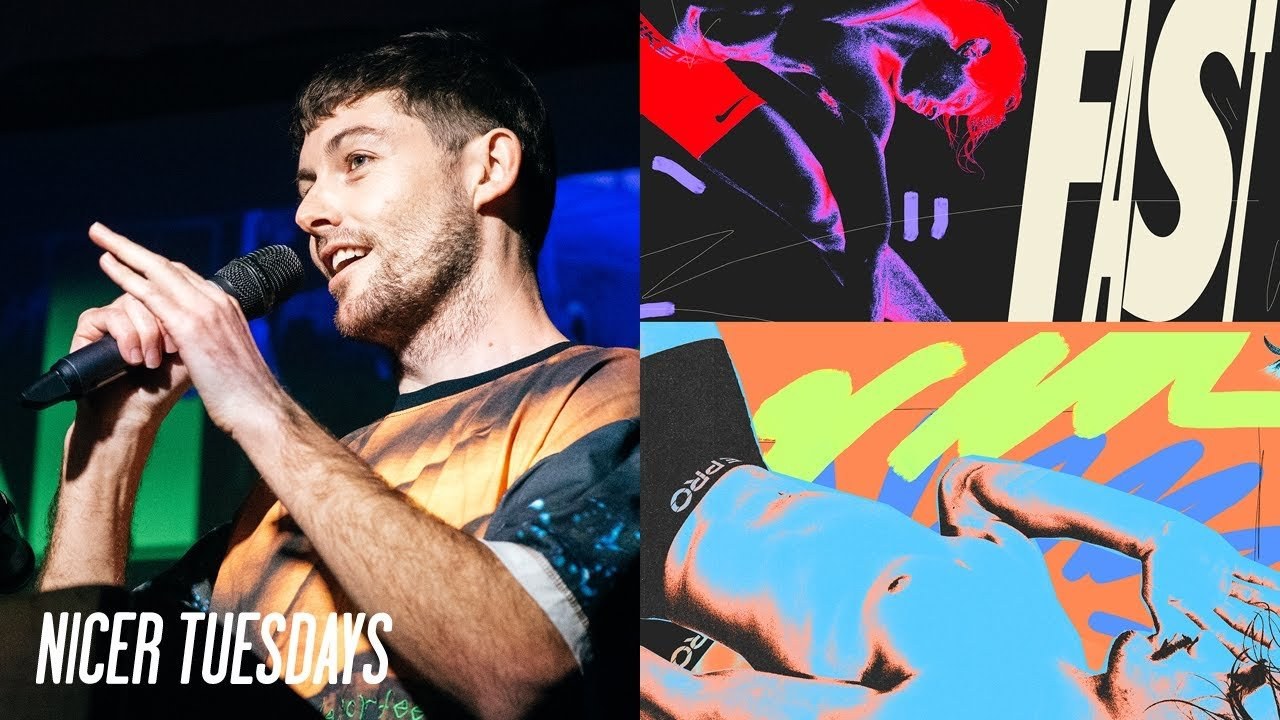
“A lot of the time with creatives, we see the end thing and we’re like, ‘wow that’s amazing, they got there really fast’. We rarely see the 10-year journey that it takes.”
Transcriptmay contain minor errors or formatting inconsistencies
Hello ♪
hello everyone thank you first of all so you literally can't see up here thank you so much to scissors for having me I watched a bunch of nicer tuesdays kind of in preparation for this. And I realized how many amazing people have spoken here.
So I'm very grateful to be to be part of that so oh look at that.
So yeah for those of you who don't know me those of you who do know me and have just forgotten my name my name is chris andrew small.
And I'm an artist slash designer I say the slash because I always think I'm technically the worst graphic designer on the planet so if I can kind of like say that I'm an artist well as well then it kind of like gets me out of a bunch of but um my I also kind of always think that I'm an artist that trained as a graphic designer and I kind of just made my bed and now I have to lie in it but so I work a lot with typography a lot with collage a lot with kind of textural works and then I kind of have like another style where. I just like blend it all together.
But yeah I'm just going to take you a bit through my kind of journey I hate that word journey kind of from starting off as a creative to kind of where I'm at now because there's a bunch of different things.
And then I'll show you some projects kind of forgot I was going to say that.
So I think the first thing I want to talk about also I'm sorry for my accent I hate the australian accent so sorry to subject you all to it it's only 15 minutes you'll be fine promise um but I think this a question people always ask me. And I'd never really know how to answer it.
So I've kind of just avoided it. And I say something else but people always ask me what my process is and I don't really feel like I actually have a process but I kind of have like a purpose or like a reason for making work.
And that's kind of split into two categories and they've kind of come at different points in my career so the first one is to make which I think this is probably something I'm assuming a lot of you are creatives it's probably a lot is something people can really relate to is kind of having that need to make work or that kind of like fire I guess inside you of of wanting to make kind of content and to make things. And I was really in school I sucked at sport but I I really liked making things I love playing with lego we grew up near a bunch of building sites and I used to sneak onto them and build like these little sculptures out of like nails and things my parents like don't know where they were but it's just like chris playing with nails again but but I just I just kind of always had that need to make things. And I still have that now and that that really drives me a lot of the time.
So yeah this is fun so I started out. And I studied graphic design at tafe which is a I don't know how to translate it. But it's the version of university basically.
But I studied graphic design and I I originally had wanted to study film. And I just didn't get into the course.
So I studied graphic design and I remember when we first started learning they were showing us photoshop and they were like so do you want to design this logo for a cafe and I was like you know what I'd probably much rather make a bunch of gifts so I was just kind of like this is me very young just learning photoshop learning kind of like what I liked what I wanted to make I actually had to I couldn't find any of these so I found one of my old blog spots and I just basically rated it and found all these old gifts that I made but at this at this point in my career I was I was definitely not thinking about the work I was just making collages of I love justin timberlake but I was just making you know work that that I thought was cool and and interesting and this I like a lot I had I had a brand with my best friend when I was like 18 19. And we just made these ridiculous clothes and we sold in japan and we did quite well it's just we were 18 and had no idea how to run a business but it was just me kind of like always wanting to make and then when I was around 20 I moved to the uk and I lived in london for about six or seven years. And I worked in advertising that whole time. And I'm very aware that probably a lot of you work in advertising so I'll be very careful about what I say but I I'm very harsh on advertising and it in the at the end of the day it just wasn't for me but at the same time I learned so much in it because I really learned how to make my work really accessible and really really consider the person at the other end that would have to digest digest the work so while in the end it wasn't really for me I did get a lot of out of it.
And I mean you saw those gifts before like I wasn't thinking about the the end like the person that was going to see it at the end I was just making for myself so so I worked in advertising I was gonna have a quick sip this is hectic by the way. That's much better so yeah. I was working advertising for about six or seven years then I moved around europe for a little bit and eventually I moved back to oh australia and this is a question I feel like I get asked all the time they're like why do you use so much color in your work. And this is a photo of my hometown in 1988 which was when the world expo was which is also my birth year which makes me 25 give or take but when I look at this photo it kind of just sums up my childhood and I feel like I grew up in this place that was like super colorful super contrasty it was always sunny there was all these like amazing tropical plants and so for me it's like I it's just really natural to kind of default to these colors I kind of don't understand why you'd use monochrome no offense to it. But in my head it just makes a lot of sense to kind of kind of make color so around this time I'd moved back to australia I didn't really want to work in advertising anymore I think I'd finally kind of accepted that I was gay I think with queer people a lot of the time I'd come out sorry didn't set up the scene I'd come out years before this.
But I think a lot of the time with queer people we come out.
And then we're supposed to be like a-okay perfectly straight away. And I think normally you come out.
And then there's years of trauma that you've got to deal with or you've kind of invented this persona for yourself that you then need to get rid of and kind of learn how to be a person.
So I was really going through that. And I was basically just searching for meaning in my life and kind of in my work.
So I started making all of this work that was really kind of a bit like activist-y a bit kind of like anti-toxic masculinity like super like super kind of like pro queer and it was just kind of me dealing with like my personal situation and like finally putting it in my work.
And I'm really grateful for advertising because it kind of gave me the like the brain power to be able to to kind of make work that could be accessible I started making these textures I was still working advertising while I made these and these are vodafone ads that I was angry with so I I went back to basics and went home and just messed around with them in I was going to say facebook in photoshop and kind of made these textures and it really like gave me a new way of making work.
So yeah around this time I was just making a bunch of of that work I then quit advertising quite dramatically and around that time I'd applied to have a first exhibition.
This is a photo of me at my first exhibition about three ish years ago give or take and I remember in this photo I felt so satisfied because I felt like up until this point I was really confusing to myself and to other people and finally when I had this show people were like oh kind of chris makes sense now. And I could kind of have all my ideas on the planet on myself and they were kind of surrounding me.
And it made a lot of sense so it was like a really liberating moment and it kind of basically led to the start of my career and from that moment I started getting kind of a lot of commissions this is a photo taken roughly a year later and it's in the reebok headquarters in boston in america and it was just like a really crazy year for me because I'd gone from having my first show to like being an american kind of like having of all these opportunities like in that first year of being a creative and while it was really exciting like it seems really quick that I went from being like first exhibition to kind of getting a lot of good opportunities for me I'd been like slogging away for seven years. And it kind of it it only felt for me it felt like it was really really slow and I think a lot of time with creatives we see the end thing. And we're like wow that's amazing they got there really fast and you rarely see the kind of like 10-year journey that it takes to get there.
So yeah this is a project I did a the campaign for this trainer and as part of that they flew me to the states and they were like can you make this kind of like sculptural here's me pretending to install.
But it was it was a really really fun project. And I had a great time. And it was just a lot happens in that year. And it was really crazy so now I want to talk I feel like I've got so many kind of different parts of my work.
But I think typography is probably my favorite my favorite one and I I mean I have a lot of things to say and it's really easy to say them with typography and I guess I've always kind of treated typography like a little bit differently I kind of see it as a bunch of shapes you just have to arrange on a page I don't see it as letters I still have to google the difference between leading and kerning I still don't know but because I just I I just see them as shapes and I think a lot of the time I get in trouble about things not being very legible and I think there's kind of beauty in something not being instantly recognizable it's nice when someone has to look you know a little bit deeper and kind of try to read your work as opposed to just kind of like quickly flick through it I've recently started animating recently it's been like two years but but I I I'm very impatient and impatient and restless so animation is a real challenge for me because it takes a lot of time.
And I'm not used to that.
But I I genuinely am really really enjoying it so through my terrific typographical work I've had like a bunch of different things.
But I wanted to talk to you about this one project that I did at the end of the of of last year here in the uk and it was for gay times and I think some of them are here tonight but it was funny because just before this I'd had a conversation with my agent and I was like I really want to be doing larger installation work like I'm kind of sick of just making things for instagram and I really want to make work. That's a bit more kind of large scale and then this project kind of landed in my lap so it was just like really really good timing but I feel like we'd be kind of manifesting it. And we'd been like putting feelers out and kind of trying to get a large installation project for a while so it was really satisfying and it was just really like nice for me to be hired by gay times and kind of go back to my beginnings of making these really like statementy kind of like pro queer pieces of work.
And it was really fun I went with a bunch of my friends and we went to the event and it was just like an incredibly amazing evening and I have a few of them hanging in my studio now which is great but the point of that is manifestation is such an important thing I think a lot of the time we kind of sit back and wait for things to come to us. And I think it's really important to always just be like putting yourself out there and putting your work out there and being like this is kind of what I'm aiming for how can I get there and what can I do to kind of make that a reality promise we're getting towards the end oh my god I've gone so over or maybe this clock trunk I'll pretend it is this is another project I did for adidas orlando that I almost said no to not because I didn't want to work for the client but I just felt like it was two brands and I thought it would just be too many cooks and it would be really difficult and in the end it's one of my favorite projects I've ever done because I just felt like it kind of summed up like my work at that point and I just said before I don't really love sport but I I love staying fit and being active so I felt like this was kind of combining a bunch of my styles together. And I was just really happy it was in the second lockdown in germany I think and loads of people were sending me videos like this being like hey like I saw your work kind of cheered me up and that was just really nice and I was stuck in australia and it felt like at least my work was getting out in the world. So that there that was that was one of my favorite projects I've done to date so now I don't know if you call this an epiphany an analogy or a metaphor or just a lesson I actually know.
But I just you have to human me for a little bit because it's a little weird but I kind of had an epiphany a few months ago. And I'll explain you how so firstly sorry about the photo of my hairy arms but these are my forearms with obviously you can see some small tattoos this is my my childhood home that I grew up in and I forgot where.
I was going with it yeah it it was my favorite house on the block because we had a triangle window and a circular window and I just thought that that was really cool and years later it dawned on me my parents don't live there anymore but I went back to see the house and I realized that I literally tattooed those two windows on my forearms completely subconsciously not knowing and it just made me really realize that like we are our work. And I'm a product of all of the things that have happened in my life.
So I use color because I grew up somewhere tropical that was colorful I make work about being queer because I am queer and I think that's really important I think often as as creatives we kind of fall into this like whole of like looking at pinterest from inspiration. And we forget that like every creative has like a story or every person on the planet really has like a country they come from or like a sexuality or a gender or whatever and or like a favorite color like I I love the color yellow because I had yellow curtains in my bedroom you know and while that seems to lead to me.
That's kind of unique to me and everyone has kind of a similar thing sounds a bit cheesy but I'm just trying to say like every time you start a new project it's really easy to fall down the influence kind of like trying to find influence and we forget to look inside ourselves and see what's possible from from everything in our life up until that point because that's a that's an incredibly great source of inspiration. And that's kind of it for me you can follow me on instagram chris andrewsmall and thank you so much chris nice that and for coming
Latest Talks
-
Murugiah
Why you should reject the formula and make art about things you love
Watch -
Amber Weaver
How does contemporary type design translate into the wider world?
Watch -
Delali Ayivi
How does photography give us the right to imagine our futures?
Watch -
Will Anderson and Ainslie Henderson
Bringing stop motion sorcery to BBC’s Small Prophets
Watch -
Ollie Babajide Tikare
The importance of not flattening the complexity of observation
Watch -
Marina Willer
Design thrives when you find poetry in the simple things
Watch