
Ken Kirton is known for his work at Hato Press, where he pushes the boundaries of traditional cookbooks by presenting cinematic takes on cooking through visual storytelling.
Ken Kirton
Designing a cookbook where every recipe is told through film subtitles
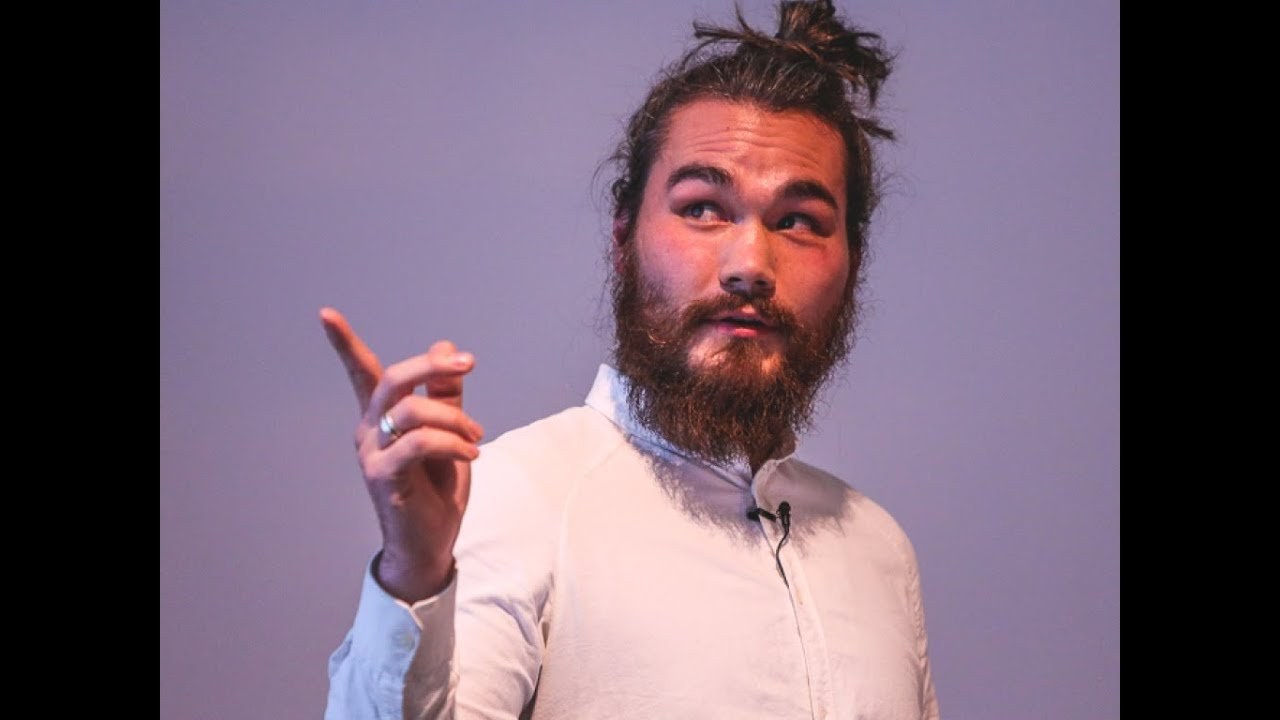
“Instead of recipes, we get stills from food-focussed films that encourage readers to look at cooking through a different, more cinematic lens.”
Transcriptmay contain minor errors or formatting inconsistencies
You can't wait to see what happens. Hello. Good evening. Feedback. My name is Ken Kersen, one of the co-founders of how to press. Today we're going to talk about clicking with Scorsese, a new publication that we've released this year. Maybe quickly I want to say that it has nothing to do with this man here, and his physical working.
And all the screenshots fit within the copyright laws of fair usage of film stills. So essentially, Cooking with Scorsese, it's a publication that is a movie cookbook. And all the recipes are actually told through screenshots from movies and their subtitles. The book even, it came about as a really great excuse to watch a lot of movies that we hadn't seen in a long time and use that into our practice. And in here you can see a page of the spread from the design called The God of Cookery. And I've been asked to call James my beautiful assistant. He's going to hand out some books as references.
I didn't realize there was going to be so many people, so I only brought five books. So you have to maybe make a flick book out of it and pass it along very quickly.
So the book has a range of movies from it. It even has titles such as The Pretty Woman and the criteria of each of these pieces is that someone, is that something, you learn something from it. So it's not necessarily a step-by-step ingredient list. So in here the character Julia Roberts plays, learns about how table etiquette is used and not to put her elbows on the table and not to slouch and so on. Maybe I'm going too quick, sorry. Can everyone see the subtitles? At the back. Okay.
And then we're going to go back to The God of Cookery. I don't know if anyone's seen the movie, but it's directed by Stephen Chow and he's one of the main characters as long with this crazy looking lady here called Turkey. And The God of Cookery sort of is a fusion movie of kung fu and food.
And in here they sort of realize that they're going to make a lot of money by making this explosive pissing beef bowl. Essentially the beef is minced with Turkey, this lady here who has really good kung fu skills and her skills are particularly very good at mincing beef. So here's a very slow gif of Turkey.
So we're going to leave Turkey for now, but she'll come back in a second.
But I wanted to talk about how to press and what it is, as I'm aware some people may not know. But as Julian had already said, has to press is an autonomous support structure, but it runs on these printing presses called Resographs, which up here we have Raphael on the left, Donatello in the middle, and Leonardo on the right, all dressed up for tonight. And who's set up as an affordable means of production, but the Resograph is essentially a screen printing process and it's an automatic screen printer.
So the drums rotate, these each print two colors at the same time, and it prints on uncoated papers with soil based inks. And generally all of the papers that we stock are recycled based or FSC sourced. So here's some more images of the studio space, which as you can see is as a colorful mess.
And then also a wall filled with some prints that we printed. So one thing that's super important to our studio is the social element to it.
So the presses are very hands on based production technique, and we enjoy working with a lot of the people that we print with and making projects and publications with them. But at lunchtime it's sort of a time and moment for us all to down our tools and sit down and sort of share stories and gossip about Jay-Z and Stelange and Beyoncé or talk about more intellectual design things. So I thought I would show you what we had today.
So these are ingredients from today. So every day someone from the printing press or the design studio will cook lunch.
And then this is a kind of a blurry shot of what we had, which is a miso soup with shiitake mushrooms and rice and kimchi.
So this social aspect of lunchtime was really important to starting our practice. And in some ways it really informed these books called the Studio Cookbook. And it kind of came from this anti-internships when I kind of felt that when Jax and I, when we first had these internships, the lunchtime was sort of like the worst point of moment in our day. I mean we're quite happy working and really loved working on these live projects. But just having a Tesco sandwich and sitting in front of a computer desk, the iMac and eating that on your own was quite a down point.
So we collected these recipes from various designers and artists to sort of inspire a more social lunch space.
So they're kind of seen as a catalyst for to kind of cook lunch and have lunch together. So on the left is a beetroot and orange zest recipe from our ex-tutor's Albaque, who are a small graphic design collective.
And then we have some bread-sharing breadlets, which is from a baker called Alex, well actually a designer, Alex Bettler, but he's now turned a full-time baker.
And then some childhood cooking recipes from Sarah DeVont on how to make eggs. But from this first Studio Cookbook, my favorite recipes are slightly cropped because of our photo, but it's from the Cullin Skink Soup, which is also McWilliams. There's a screen printer in Scotland.
And then also ginger pasta asciutto, which is from this product designer who recently over the past few years has been making ginger, a very popular recipe named Artino Gamper. So with each of these lunches, there's a, we have quite a large event where we invite all the participants and friends and family to just come down and sort of celebrate the book and have a very big social lunch. So all the participants are invited to bring their own dishes and sort of share it with one another.
So we're going to go back to Turkey and the God of Cookery.
So yeah, I guess the design considerations were quite important for this book because it wasn't such a standard cookbook. And the first consideration was to not list out the ingredients and not to have a step-by-step ingredient list. It was all set through screenshots and the subtitles, which didn't mean watching a lot of movies and going through a lot of editing, but I think it was something that was one of our aims for the publication itself.
And then I guess because of the such the loose edits of the content in terms of the ingredients, we still kind of wanted to balance that out in designing this typeface.
So this is a Badoni typeface, which is a part of the D'odne family. And it's quite a traditional typeface used on a lot of cookbooks and more specific Italian cookbooks.
But this is our own version, which has some quirky elements to it, which wouldn't really usually sit in a D'odne. And this is called Leo. Leo is based on Leo the lion from MGM, who's the longest serving lion from Metro Golden in the Mirror.
And this typeface, we use it as a title page. But each of these title pages come from the screenshots themselves. And I thought it would be nice to just show one of the scenes that was a very big inspiration to the actual publication itself, which is I'm sure you'll be very familiar with it is Martin Scorsese's Goodfellas, where they use a very small razor blade to cut the garlic. So again, we're going to do a read along to yourselves.
So yeah, I guess you can begin to see that the book isn't not just focused on recipes, but also photography and film direction.
But then some of you may have realized that the publications that we've handed out, they're all printed in black and white and reso printed, whilst all these are in full color.
So I guess what's really lovely about owning our own printing press and having our own production is that we can sort of test out these books and see how well they're received and how well they sell.
So we sort of estimated that if we were to produce 500 of the current cooking with Scorsese, which is the trailer edition, that we would then be able to print a full color edition, which would be around 400 pages in length.
So I guess this owning your own tool production is sort of a way that we can then support our studio, but also see what does actually work in the markets and whether it's something that we want to go on and produce. Because I think we've learned over the past four or five years that there's a lot of books that we think are really amazing and beautifully designed in the content and they never sell. And a lot of books that we think are really shit do much better than those ones that we make ourselves.
So then another thing that as this publishing house venture kind of grows is doing events.
So the Scorsese book is going to have a large series of events. And this is the first one that we did at the V&A and it's printing with Scorsese and Hasso Press. So if you look at the top, you can maybe just see some sort of screen. So it's actually what is it? It's a garlic vegetable piss beef bowl dish. And it's a combination of good fellows and Eat, Drink, Man, Woman by Ang Lee, where they're frying vegetables with fat to make it look shinier.
And then back to the god of cookery to making these beef bowls.
So we invited people to create their own recipes but using the screenshots directly from the book. And these were then printed on site with...
So this is actually Michelangelo, the fourth printer. And he's only... He can only print one color at one time, but he's... It does mean he's a lot lighter and we can move him around to different events.
And then the final part of the talk is something which we're going to be working on in the early next year.
So the next year is actually the official launch of this publication, the third cookbook. And it's Cooking with Scorsese and this is an example of Anne-Bennie in June, which is as modeled by Johnny Depp here, is going to be a sort of event with a lot of food. And one of the dishes will be gourmet ham and cheese toasties.
But we're actually going to get toasties that you can steam through them, sorry, irons that you can steam through them and sort of infuse the flavors through steam.
So we'll have pickled ham and cheese toasties and honey ones and various flavors.
So yeah, that's the end of the talk. Thank you very much.
Latest Talks
-
Murugiah
Why you should reject the formula and make art about things you love
Watch -
Amber Weaver
How does contemporary type design translate into the wider world?
Watch -
Delali Ayivi
How does photography give us the right to imagine our futures?
Watch -
Will Anderson and Ainslie Henderson
Bringing stop motion sorcery to BBC’s Small Prophets
Watch -
Ollie Babajide Tikare
The importance of not flattening the complexity of observation
Watch -
Marina Willer
Design thrives when you find poetry in the simple things
Watch