
Keerthana Kunnath is a photographer known for her ongoing series, Naadu, where she explores themes of womanhood, societal norms, and sexuality in the context of small-town traditions.
Keerthana Kunnath
Inspiring conversations around womanhood, societal norms and sexuality
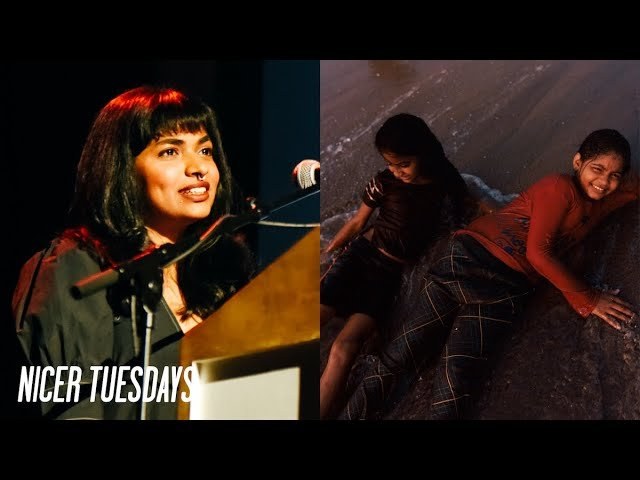
“In small towns, tradition can feel like a shackle, but art has the power to break those chains and set your voice free.”
Transcriptmay contain minor errors or formatting inconsistencies
Hi. Thank you for such a nice introduction and thank you all for coming tonight. So my name is Keev Sanakundit. I am a photographer and visual artist. I am born and raised in South India. My work is mostly focused around the South Asian community and the complexities within that from a female queer point of view. It's a lot of portraiture, semi-documentary work and they are often very intimate.
So the aspect of intimacy and vulnerability is very important for me. A bit above my background, I went to a design school in India right after my schooling in Kerala and right after that I somehow fell into photography. It was only moving to London two and a half years ago, I started exploring personal themes through my photography and I found it very liberating and I have been trying to do that since then.
So yeah, a bit about my practice. So through my practice I address themes such as sexuality, queer, womenhood and mental health, all of which are topics that are often overlooked in my homeland of South India and also South Asian community at large. Like I mentioned, I work around intimacy because the discourse around sexuality and queerness come with a lot of negative connotations and are quite stigmatized.
So these are not the kind of stories you'll ever hear in conversations with your family or even in the mainstream media. Coming from India where cinema is so big, the Bollywood was always about the male gays and the hypersexualized freed couples where I felt there was never a proper representation for real women or the queer people. So through my work I started photographing people and friends through a very queer lens, mostly to be vocal about the community and the purity of those relationships as well as the struggles.
So it was an effort to destabilitize the discourse around same-sex relationships. So growing up in South Asia we were always told how to behave and how to sit like a girl, dress like a girl, talk like a girl. You're not supposed to go out in the sun because you're going to get tanned.
So these are the kind of things you hear constantly from your family and relatives. They feel like it's just normal to pass on comments like this. And somehow people are conditioned to believe that that's the way. So anything outside of that were not really appreciated or accepted. So for me that was very limiting to be comfortable in my own skin and there were often times where I was made to feel like an outcast because I didn't fit into that box.
So I found my work to be a medium to destabilitize the ideal beauty and gender standards which was coming from a very patriarchal point of view.
I also felt that mainstream media along with these norms have a huge impact on the youth of the society or the people growing up there because I was one of them. It would have been a very different impact if I had seen more liberating content or media when I was growing up about the world of women.
So the more I started engaging and speaking about these themes I came across a lot more people who kind of had similar experiences growing up in the community be it here in the UK or back at home as well. So after moving here I somehow felt comfortable to slowly address these issues one by one and when I started unpacking these themes I understood that a lot of them were stemming from my childhood back in Beipur. So here's a little clip of my hometown just to get an idea of it.
So yeah when I went back to visit my home after my master's where I had finally started being comfortable to confront these norms. When I went back this time I felt like I was neither an insider nor an outsider.
I started observing the place and the mundanity of the everyday life and the landscape had a lot of importance to the story. Growing up I always wanted to escape the hometown reality for an exciting inspiring life away from the family and these customs and norms to the small town life.
So I went around the places I spent time as a teenager or a child and somehow those feelings stuck around. I could exactly recall how I felt in that space 15 years ago. It always bothered me and it was still bothering me to that day and age.
So this project encapsulates the paradoxes of belonging yet feeling out of place. I was trying to explore the entrance stereotypes and norms that limit women's choices and aspiration in an Indian small town space. Growing up in Beipur I felt like my curiosity was limited by the town's customs and norms and it was a mundane routine of daily life steeped in tradition. Like I mentioned before a lot of women and girls from a traditional household were fitting in those boxes of a good girl or a family woman. Somehow made me realize that these things haven't changed much in the past two decades. People were still having to hide their relationships from their family if they were not married, they were still scared to be seen in public or even express any kind of forms of affection. Very much reminded me of those teenage years I spent there. I had to be very cautious about some relative going and telling my father that they saw me outside of school with some guys.
The modesty of dressing was still being followed to an extent. The way they dress or the body language somehow confirmed that these norms were still being followed very blindly. It felt like they didn't really know that they have an option outside of the life which was prescribed to them. It just was a very young age. You see the women in your family or the society being in a certain way, dressing in a certain way, talking in a polite way to their male counterpart and you are made to believe that this is the right way of being a woman. It was only after I moved to the UK I approached my practice from a refresh lens and I could fully understand how the upbringing since surroundings had shaped my world view. So returning to Bapur this time I was observing the younger generation of girls and women who kind of remain unaware of their potential shackled by these societal expectations. That urge me to create a work that not only draws attention to these issues but also educates and empowers women to challenge these norms.
I started having conversations with the women in my family and also outside of it and kind of realized that they don't understand why they have followed or stuck to these norms. All they have heard is like this is how it is. A lot of women now agrees that being educated and having a job definitely bring more value to them but also kind of find it difficult to accept that certain gender duties can be changed.
For some they are not ready to actually question the responsibilities which come with the womenhood. For example I still get asked why I'm not married yet or you know why I'm not having a child or having a family. For them that is the default.
So the more I think about it I am now being able to understand that they don't really know any better or they haven't exposed to anything better or haven't had a space to actually criticize those customs and norms. So through my interactions with these people especially with young women and young girls I became aware of the urgency to question these norms around gender roles and self-expression.
So this project has become a way to spark dialogue and cultivate seeds of thought about the potential of opportunities beyond their family or surroundings.
I want to encourage people to actually change those patterns and cycles that are that the place is so accustomed to.
So I went back to India at Thrice last year to photograph more and to evolve more and this project has actually evolved a lot from the first time I started you know working on. It's a lot of learning and unlearning. Ultimately I hope the series to contribute to a larger moment of change progress for women in India and beyond.
I want to take a moment to reflect and challenge these patriarchal systems that have persisted for generations and continue to shape our daily lives. I hope to inspire the conversations which kind of lacked in my childhood. So yeah that's me. Thank you all for listening.
Latest Talks
-
Murugiah
Why you should reject the formula and make art about things you love
Watch -
Amber Weaver
How does contemporary type design translate into the wider world?
Watch -
Delali Ayivi
How does photography give us the right to imagine our futures?
Watch -
Will Anderson and Ainslie Henderson
Bringing stop motion sorcery to BBC’s Small Prophets
Watch -
Ollie Babajide Tikare
The importance of not flattening the complexity of observation
Watch -
Marina Willer
Design thrives when you find poetry in the simple things
Watch