
Karlotta Freier is an illustrator known for directing and animating her first campaign for the fashion brand Hermès, where she creates beautiful films inspired by personal experiences.
Karlotta Freier
How to overcome nerves when completing a project for Hermès
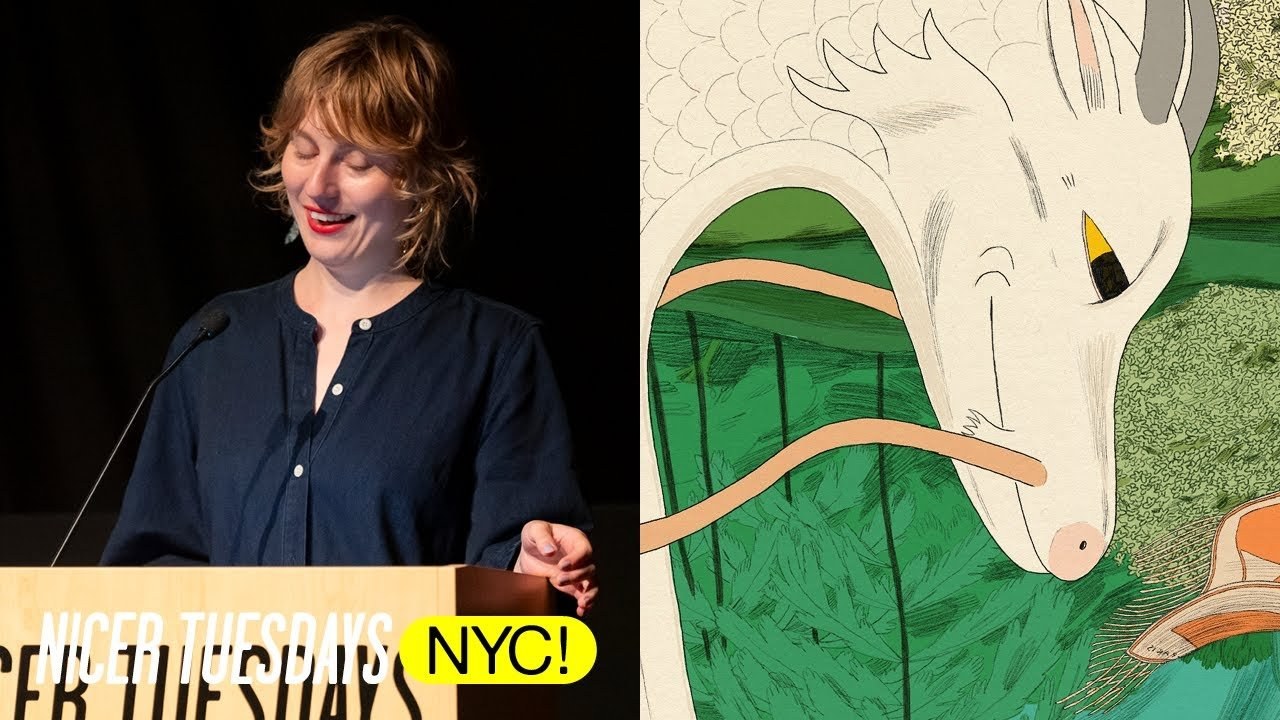
“Learning new programs felt like trying to read a book in a language I didn’t know yet, but every word I learned made me a better storyteller.”
Transcriptmay contain minor errors or formatting inconsistencies
I have to adjust this again. Hi, my name is Carlotta and I'm an illustrator and animator here in New York and I got invited to tell you a bit about this project I did with MS. This project contains a 30 second animation, two 15 second animations, some smaller cut downs of those and different compositions, illustrations and in-store installations.
So it was quite a big project, certainly the biggest one I had done so far. And because I did so much of this for the first time, it was my first time animating anything more than a wonky little gift, my first time directing, my first time overseeing such a large project. I got quite nervous as I started preparing for this talk.
I didn't quite know what I should tell you about, should I tell you about how I had to learn programs to make this project work or what my process was for cell animation. But maybe I should tell you about how I approach character design, which is a very short story of how my dad's dog looks like a dragon.
And none of this felt quite good enough and I really wanted to do well and I got so nervous. And I have this tendency when I get a new task and it feels big and new to want to disregard everything I know and that comes naturally to me and want to find some sort of better version that feels worthy of that new task. But in the past, the solution has always been to trust that what I have to offer is already good enough as a starting point.
So I'll try to tell you honestly about how I think this project happened and how I experienced it. I was always drawing and I took my sketchbook with me wherever I went and when I left school I knew I wanted to do something with it, but I didn't quite know what. And I tried things adjacent to drawing like working in the tattoo studio and in the costume department of a theater and then I enrolled in school for graphic design.
I didn't even know that illustration existed, but I found classes within that same university and enrolled in them and then switched to illustration. And I was still drawing in my sketchbooks, but I didn't really regard that finished work. And while I was still drawing in my sketchbooks all the time, I was simultaneously trying to find some sort of professional style and that ended up feeling quite uninspiring and stifling. And one day a professor saw my sketchbooks and told me, this is your strongest work.
This is what you should be doing. And somehow I had assumed that what I do effortlessly is just not good enough and only something that I can achieve through a lot of searching, I guess, could eventually one day be good enough and this freed me up so much, not only in a way where I was now able to use a ballpoint pen for professional work and watercolor is the same way I did in my sketchbooks, but also he gave me permission to approach my professional work with the same kind of mindset. And when I got my first editorial jobs, I allowed myself to use the same materials, but also to get excited about mark making and shapes the same way I got excited for those things in my sketchbooks. And I tried to explore the themes that I was given in the articles I was illustrating with curiosity instead of obsessing over having to be smart or innovative to be worthy of doing these things. And I started to get more work and some positive feedback, especially for working analog and for drawing landscapes. And without realizing, I started to feel like I'm not allowed to evolve away from that. I assumed that my work is only good or only resonates with people because it's analog and because of those landscapes. And that again started to feel a little bit stifling and uninspiring. And I was starting to be busy and working a lot and when a little store in the UK called the Family Store in Brighton reached out to collaborate on a re-suprint, I ended up having to push back working on it until the last night. And having only a night to come up with something, this lack of time made it so that somehow I didn't have enough time to overthink it. And I ended up making a drawing that centered characters way more and had bolder shapes and bolder colors. And I was really excited about it, but I also remember being really nervous submitting it the next day because it was so different from everything I had done before, so different from what they had seen on my website and what they were commissioning before. They were happy and it was successful.
It sold out quickly and people on Instagram liked it and I thought, okay, maybe those rules I have in my mind of what I'm allowed to do aren't really true and I'm allowed to experiment and evolve. And it was this piece that I must reference when they reached out to me for the first time for a job, a single drawing for their store opening on Madison Avenue in New York. And it was so exciting to immediately be able to apply this new language to a commercial work and I felt encouraged to play with it more and to experiment with it, try new compositions and shapes and my work started changing and no one held it against me. And I mean, I can't control if people are drawn to my work anyways, but I can invest into not losing interest myself by allowing myself to be curious and evolve through it. But since I was now working more and more digital, I started to experiment with animation and I had this weekly column in the LA Times at the time that didn't need animation necessarily, but I could animate if I wanted to and I always did because it was so exciting to see things move. And the art director I was working with, we built a very trusting relationship working with each other every week and it felt like I could let him know if I'm unsure about something or I don't quite know the solution going in and us's opinion. And therefore this column became a playground for me to try new things and I was still sketching and doodling in my free time and I'm showing you these explorations and animation because I think it was these two projects that led I must believe that I was a good fit for the Year of the Dragon campaign. And as I said, I had never really animated before. I had never directed before. I had never been responsible for a whole campaign and I was so nervous and so excited and I really wanted to give my best. And even more this job came in the first day of my first vacation since I had moved to New York. And these first years in New York, I had studied, I had graduated in a pandemic. I had spent this pandemic in a tiny studio apartment in a basement that was so dark that my husband and I carried our houseplants to the park so they would get sunlight.
So I was really ready for a vacation and I wasn't going to give all that up for a job even though it was the most exciting job I had done so far. And so what I did over these two weeks is I woke up at six every morning and I made myself a tea and I worked on this until like nine or ten when everyone else woke up and then I had my vacation with my family. And these three hours or four hours every morning became a space where I could be curious and explore the themes of this campaign with the joy of my sketchbooks and sometimes of course I got uncomfortable and had bad ideas and got anxious.
But then these three hours would be there for me again the next day and it helped me accept that this is just my process and that I have to give a time and being anxious about things and not knowing the solution is as much as my process as doing sketches or drawing backgrounds or animating or anything like that. And I do still sometimes use that when I'm really busy and I think I don't have time to experiment and I have to find a solution right away. I set my alarm to six and I have these few stolen hours in the morning that I don't have to use to be smarter than I am but just to be curious.
I feel like there's so little we can control in these creative jobs. We cannot decide that inspiration will come to us or that we will come up with something beautiful or smart and even less we can make sure that people like our work. And the only thing that is really in our hands is to create the best circumstances to feel safe enough to play and be curious. Now before showing you a snippet of that film I would like to highlight a few people without whom this project would not have been the same because I had a great team at MS that made this a true collaboration and I had just joined my agent, Agent Packer and Petra and Caroline who worked with me on this, were wonderful guidance and had my back throughout the whole process.
And then eventually time got tight and I hired animators and saw my idea transform through their hands and Pauline Giertan and Martin Rovic animated what I think is the most beautiful scene of the film.
And then there was this beautiful moment a couple of months into the project. I had animated most of the film and having looked at my own work for months, having drawn the backgrounds and the dragon over and over and over again, I wasn't quite sure if it's any good and I had planned out all the scenes, I put them in the order and I could look at it for the first time and I got really scared.
And then the music and sound design came in through Mario Schöning and the scenes connected to a narrative with emotional tangibility and all of a sudden the dragon felt like it had a body moving through air and I thought maybe this will all be okay. Thank you.
Latest Talks
-
Murugiah
Why you should reject the formula and make art about things you love
Watch -
Amber Weaver
How does contemporary type design translate into the wider world?
Watch -
Delali Ayivi
How does photography give us the right to imagine our futures?
Watch -
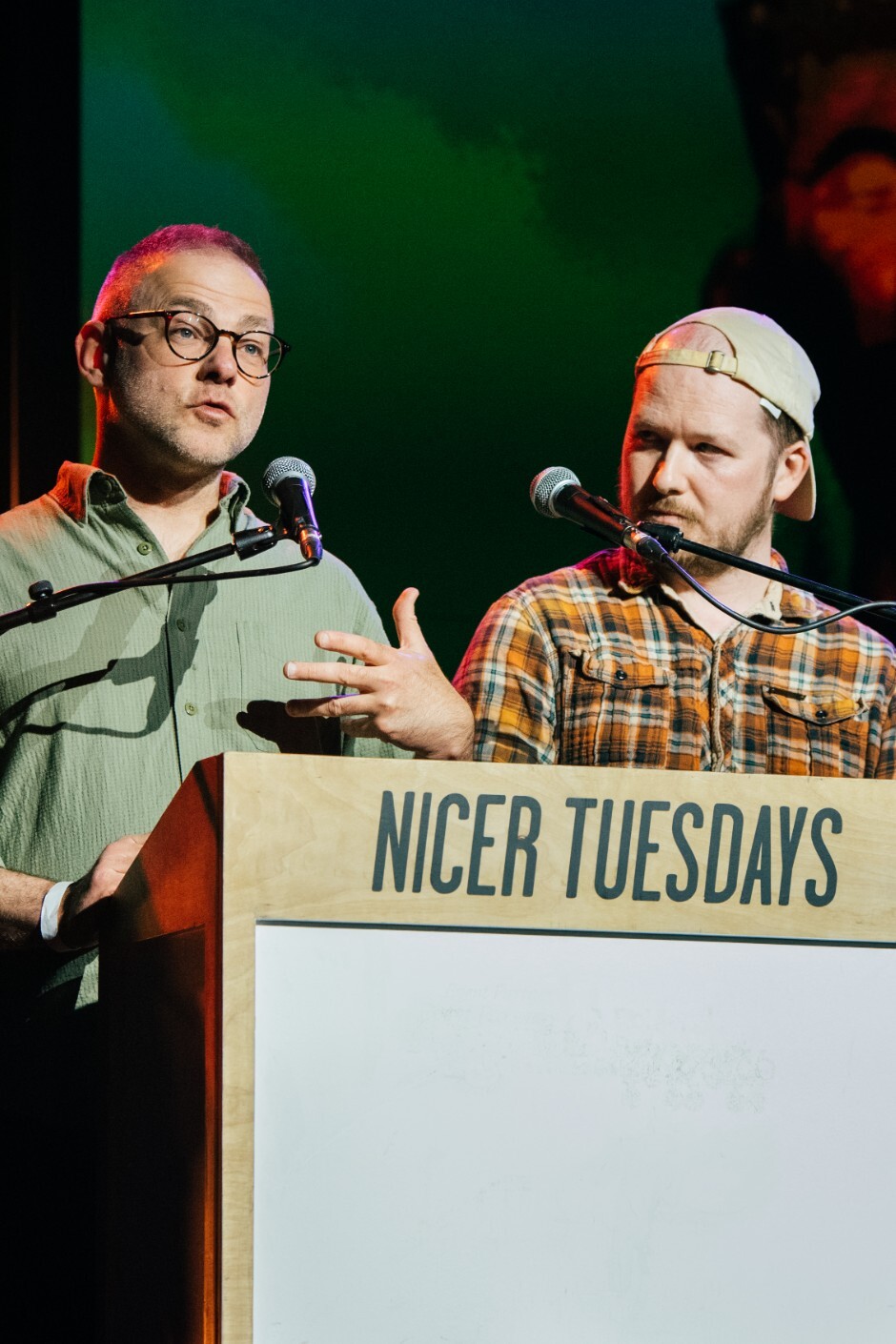
Will Anderson and Ainslie Henderson
Bringing stop motion sorcery to BBC’s Small Prophets
Watch -
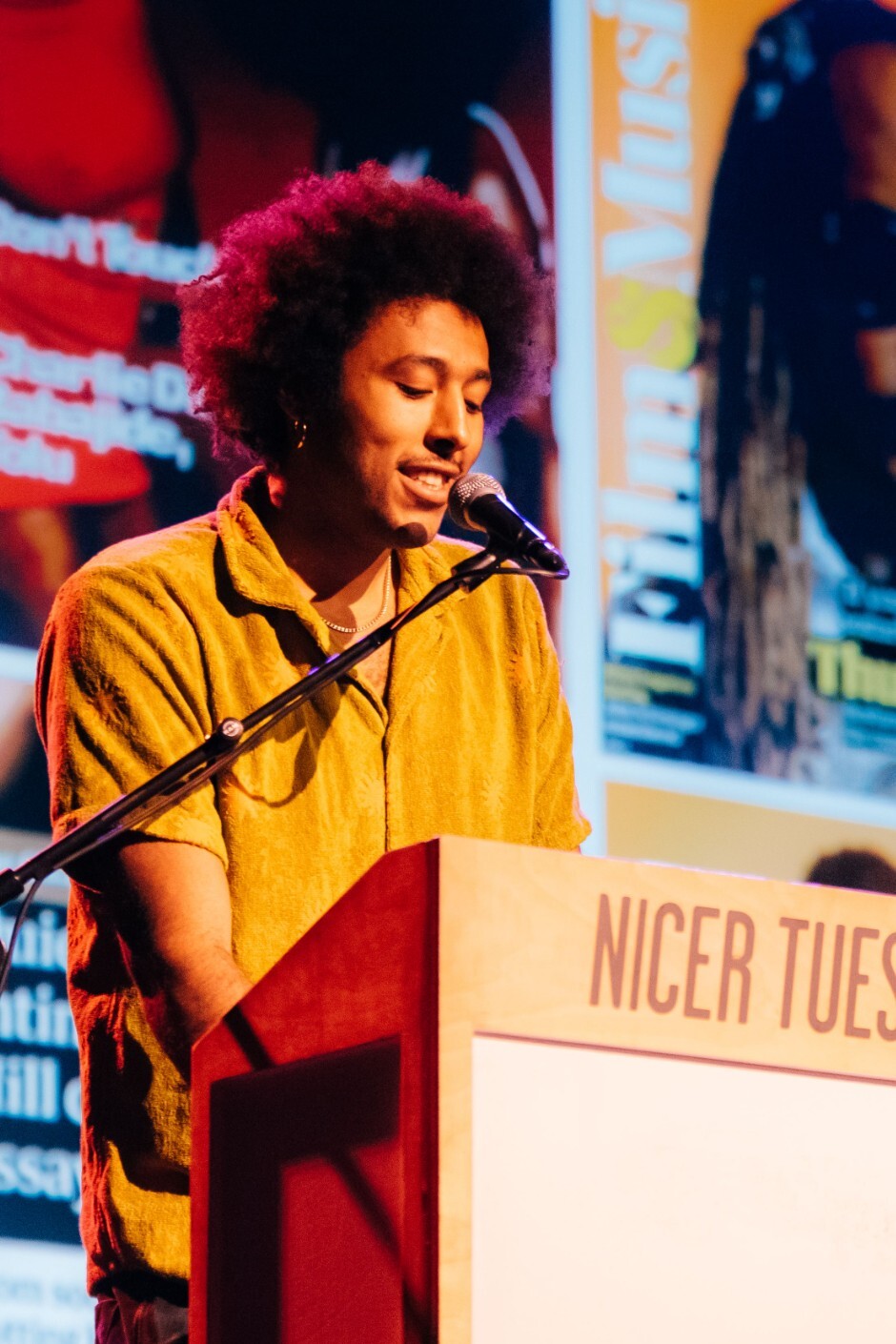
Ollie Babajide Tikare
The importance of not flattening the complexity of observation
Watch -
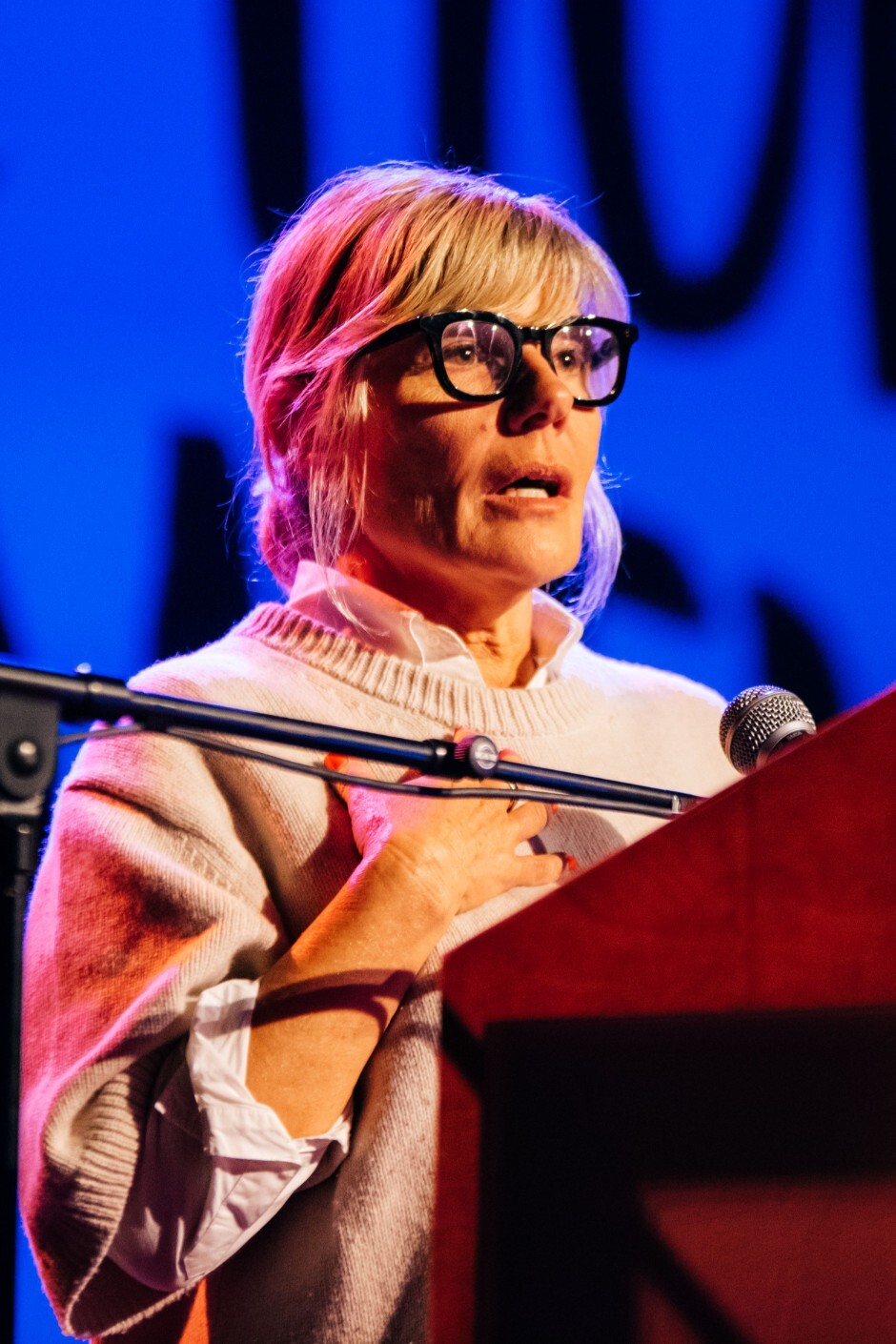
Marina Willer
Design thrives when you find poetry in the simple things
Watch