
Jennie Baptiste
Rhythm, roots and revolution: Capturing Black culture through photography
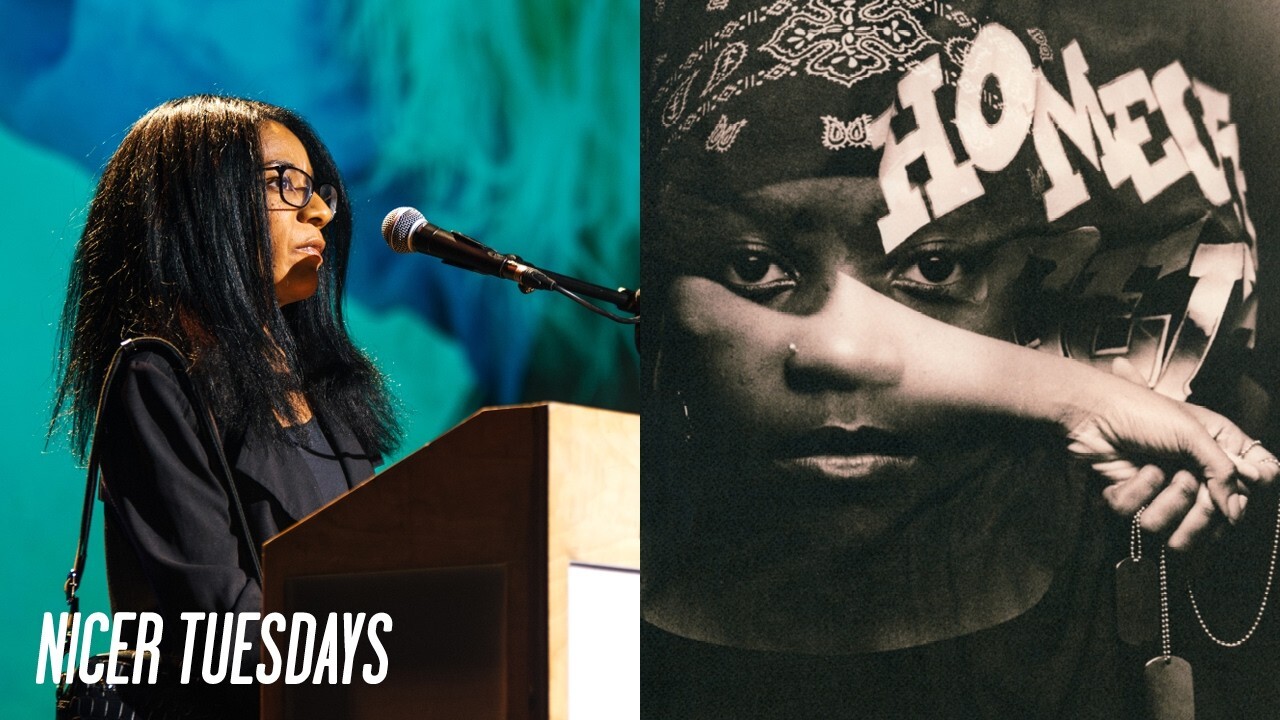
“I see the importance of photography for me to amplify the community in ways in which sometimes we don't see it in the media.”
[applause] Hi, good evening everybody. Um, nice to see you all and thanks to all the other speakers as well that have presented already. Um, so I'm going to give you a bit of an overview of my journey as a photographer and I'm going to take it back um to my teen years uh when I discovered photography.
So when I was at school in the 80s, um me and a few of my friends came across a room and we walked into this room and we discovered um a dark room and we discovered a studio and we discovered a kitchen uh which we didn't really know why it was there. and we talked amongst ourselves and said, "Okay, let's let's find out who uses this room." And we went to our head of year and they told us it was for adult learning education for photography.
And I was always into art as a as a as a young child. Um it was one of my hobbies um you know, drawing and painting. And so finding this photography studio with my friends opened up a whole new world really for me in the sense that it gave me the opportunity to explore creativity on a different level. Um I incorporated some of my art within that during this period of time. Um, looking back probably between the age of 17 to 19 years old, um, I then did an art foundation and started an undergrad degree in photography. And for me, it was pretty obvious that, you know, what I was going to talk about within my imagery was going to be in relation to who I am and my identity. My parents
came from St. Lucia in the 60s and I was born in London. Um so you know being black British of AfroCaribbean heritage growing up in northwest London. Um you know my childhood in the 70s um it was very very mixed multicultural Irish families African families Asian families it the whole influence of of multiculturalism.
Um the image that is on the screen at the moment um is a commercial part part of a commercial shoot that um I did a fashion shoot. And one of the things I wanted to talk about was for me um especially coming up in the '9s I didn't always see imagery that reflected my identity and many other people's identities over here. And so personal projects gave me that opportunity to explore and research whilst commercial work um was a bit more obvious I guess in terms of the type of imagery um that I would do.
music, youth culture, identity, heritage um is a huge influence in terms of my work and of interest. You know, growing up as a child, um I had three older sisters and and like many people, um my mom played a lot of music at the weekends and so, you know, going to Notting Hill Carnival annually was was something that I also absorbed and sound system culture So when when I was around 20 uh or 20 maybe 21 actually um my work got published um as a second year student um I had done a series on Raga um which was was called Raga before it was called dance hall and during that time I worked for a number
of publications s throughout the 90s, one of them being Fat Boss magazine. And I was really fortunate because the editor that I worked for at the time gave me the creative freedom to do whatever I wanted. Um, so there were no constraints, so to speak. And one of the things that I delved into was um mental health um within the black male community. Um, and this is one of the images that you currently see on the screen.
Dance move dance and movement um has always been something that I've been interested in. I think because my my own upbringing, I was very much into uh dance, performing arts and so I think that influence has crossed over into my work and into the subjects of how I explore them and their identity and their persona, whether they're famous people or um you know, people from within the community.
Black women in hair is a particular subject that I've explored over the years and is a subject that means quite a lot to me and and many other people as well and it can be quite a sensitive subject within the community. Um, I've explored it from I I guess really a creative level, but also to show that, you know, doesn't matter whether your hair is natural, whether it's weave, whether you know you're wearing a wig, it it doesn't affect your identity as long as you know who you are within. That's the most important thing.
Um and one of the other things is that you know I like to break boundaries in terms of the imagy imagery that I end up with the end result um the artistic methods that I use in printing um and I'm talking analog here dark room techniques um sepia tonin selenium tonin experiment orientation with chemicals is something that I like to explore. Um even though we're now in the digital age, a lot of my work um dating back explored with chemicals to try and get an aesthetic that people hadn't seen before.
The fashion work that I first started doing very much um in the early 90s I worked with the fashion designer Wle Adm. Now while I came across through my own networking um everyone was coming up at the same time in the '9s and so we were really fortunate because it was almost like a tradeoff of creative talent. You would just meet other people and say you know well I would I would just say hi I'm a photographer. Do you need any pictures?
Especially if they were a musician. I just wanted to create and explore and and see what I could get out of talking to them. Um, from using my imagination, from listening to their music, stuff like that would really always inspire me. This particular shoot is is called the playground, and it's taken it back to school days. Um, and it was one of the first shoots that I had done after I graduated. Um, and I actually took it back to the high school where where I went to school and and where I actually learned photography back in the day. So, it's quite a personal project, but at the same time, it was a commercial
project because I did it for um the designer W. [snorts] The shoot itself, I I wanted to show the importance of kind of love and unity. Um, and the innocence really of kind of, you know, when we're growing up and we're not necessarily influenced by outside forces too much in the purity of the teenage years.
Music has always been an inspiration. um from the early days from my teenage years where I would spend a lot of my pocket money would go on music magazines and it would also go on actual vinyl records themselves. Um and that again, you know, I was influenced by my sisters because they had a record player and and they would play music and I would shared the bedroom with them. So music um is something that I'm really quite passionate about. And whenever I work with music artists, for me, I love the process of listening to their music and just letting my imagination run to decide on the kind of imagery that I
want to do and and stuff like that. So it's something that always inspires me. This is a photograph of Blue Lab Beats. Um, the photograph itself is currently showing in my exhibition, Rhythm and Roots. The following image is a series that I've done as a huge contact strip film and you're just seeing a sample of it.
And now if we think about music, especially within hip-hop, tracks are sampled all the time. And so I wanted to use that and and bring it into the image format that you see here. And so within this music wall contact sheet collage, I have various people from either behind the scenes of the industry as creatives or people that are in the front who you may recognize.
Some of the images The first image at the front is someone dancing. Um, second image is of a multimedia artist called Derek Adams. On the on the third um image on the second strip is Tai, a hip-hop artist who has sadly now passed away. [snorts] And after that photograph, it's most deaf looking through the glass door window.
The following images are currently on show as part of a survey of my work which is showing at Somerset House. The reason I decided to kind of bring it together in the format like this is because I wanted to fuse all the different elements of people either behind the scenes like photographers, stylists or people in front of the scene basically like the actual music artists themselves because every person is important and a lot of the time sometimes we only when we go to exhibitions we only end up seeing people who are famous. Um, but for me the influences comes from youth culture. It comes from the community. Um, and my
work exploration gives me that opportunity to showcase that. And I see the importance of photography for me to amplify the community in ways in which sometimes we don't see it in the media. The photograph here is taken from a series that I did entitled Revolutions at 33 and A3 RPM. And here again is the musical influence in just the title alone.
So every time a record spins around a turntable, it performs a revolution. Back in the day, 12 in were the thing which are 33 and a3 RPM. Revolutions at 33 and a3 RPM was a body of work that I did on London hip-hop DJs and it celebrated the contribution that they made to the scene. I decided to focus on the DJs rather than artists because at that point I felt that they weren't getting the recognition that they deserved and also no one had done it before. And for me as a photographer, I'm always looking to break boundaries or do something that somebody else hasn't done.
And so it was really important because during that time I had already shot quite a few hip-hop artists from Nars to Most Deaf to Mary J. Blige to Jay-Z. And you know, when you meet a hip-hop artist, you also meet the DJs. And the DJs are the ones that make the beats and the sounds. And so that body of work gave me the chance to celebrate their contribution within that landscape. And I focused on radio DJs, club DJs, and turntableists.
What you're seeing on the screen now, I've remixed this body of work to incorporate it in my current exhibition, Rhythm and Roots. How I've remixed it is that the images are not shown one-dimensional as a photograph, but instead they're displayed in light boxes right around the room. And each light box, well, nine out of the 11 light box boxes have a listening station.
Back in the day when I was a teenager, HMV used to have listening stations or you could just go to a record store and ask them to put a record on the turntable and you'll be able to listen to it on headphones. I wanted to bring that experience to this generation now because it's so much more different with streaming and digital.
It was important to me that it was an immersive experience. Um, like I mentioned earlier, you know, I like to think of different ways of exploring the medium of photography and and so to show it in this format was something that was totally different that I'd ever done before. The DJs each curated a Pacific year between 1989 right up until 2002. So underneath each light box there's a pair of headphones and you can immerse yourself either back in time or listen to something that you haven't listened to ex before and explore that period.
Lastly, I'm just going to show you a little flavor of what Rhythm and Roots is. Um, the first room is on display that you can see up on the screen and it incorporates black women and hair and fashion as well as dance and dance hall in particular. A wider shot here of room one. So you've got black women in here, but then in the center I've als I'm also showing a lot of the work that I did with Wadma.
Um and also on the back you can see a commercial shoot that I did on dance hall which is very much more different than the kind of personal work that I did by myself. Lastly, I'm just going to end it here and say thank you very much. Um, and feel free to come down to Rhythm and Roots if you want to find out a bit more about me. Show's currently on until January and it's free.
[applause]
Latest Talks
-
Murugiah
Why you should reject the formula and make art about things you love
Watch -
Amber Weaver
How does contemporary type design translate into the wider world?
Watch -
Delali Ayivi
How does photography give us the right to imagine our futures?
Watch -
Will Anderson and Ainslie Henderson
Bringing stop motion sorcery to BBC’s Small Prophets
Watch -
Ollie Babajide Tikare
The importance of not flattening the complexity of observation
Watch -
Marina Willer
Design thrives when you find poetry in the simple things
Watch