Jean Jullien is a celebrated illustrator and artist known for his graphic musings that explore a wide range of subjects, blending humor and sincerity. His work often engages with social efforts and charitable initiatives, reflecting his distinctive approach to creativity during challenging times.
Jean Jullien
How Jean Jullien makes light of negative news in his practice
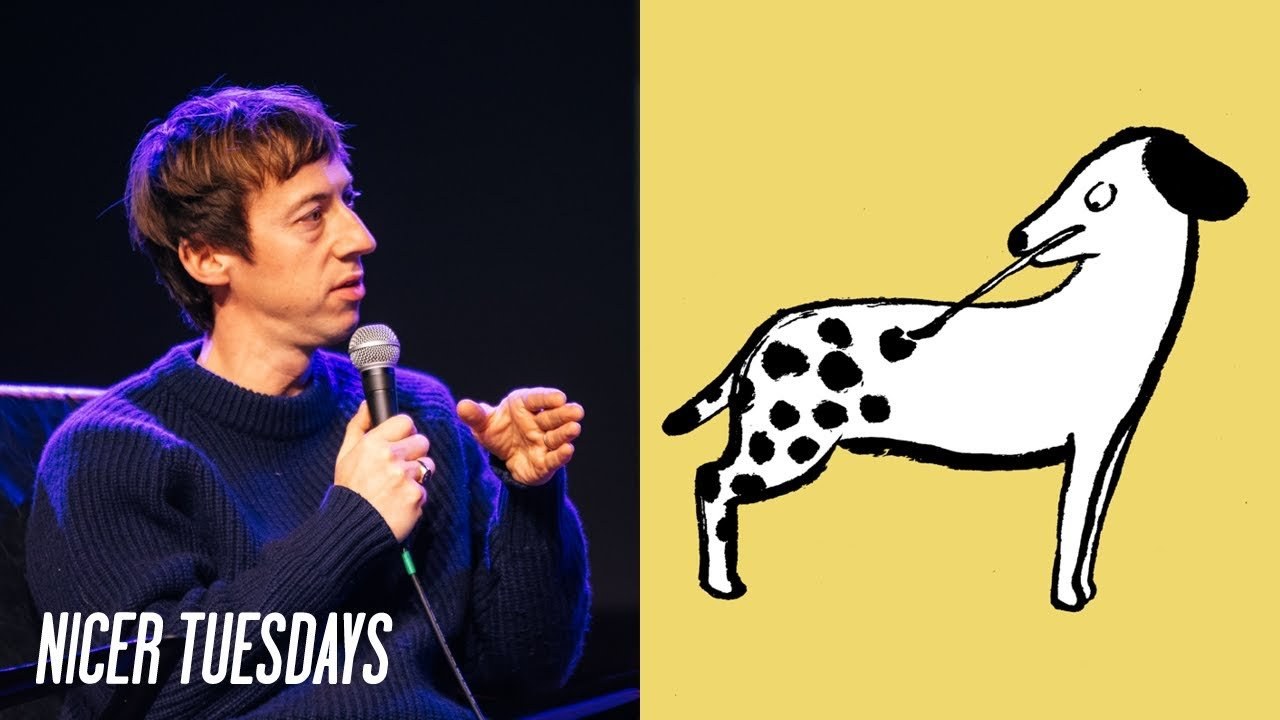
“In a world flooded with negative news, humor is my way of taking the weight off our shoulders.”
Transcriptmay contain minor errors or formatting inconsistencies
Hi Jean, thank you very much for joining us how are you I'm good thank you very much for having me and everyone for coming you're in in the bright lights now yeah yeah I know well yeah thank you very much for joining us at Nic of Tuesdays I thought we would start from the very beginning if that's all right your your upbringing because I know your your brother younger brother Nikolai is also an artist and a musician he's a sculptor I think as well so how much were you encouraged to be really creative when you were when you were growing up was it a big part of your life kind of being creative in art I don't think we're encouraged but we were not discouraged okay my my dad was like really into pop culture so there was a lot of like comic books and music and movies lying around and my mom was working as architect and curator so she would take us to some shows she was curating and so we got we got like a fair mix of high brow and low brow which was nice and but I wasn't really pushed on us it was just sort of like part of the culture and I come from a city called not which is in France at least known for a lot of Street culture not like graph and stuff but more like Street Theater and now there's this thing called Voyage not which organize a lot of events in the streets all around we had this company called royal Deluxe which used to organize like you would have Giants walking through the city you would have like a giant book opening with the story of friends being narrated by actors and this kind of stuff so there was a a nice eclectic mix of creative outputs throughout my childhood yeah oh interesting I know there's a there's a contingent from non in in the studio in the audience tonight so and I guess I mean you you mentioned there like high brow and low brow which I think is something really interesting we'll probably come on to that in a little bit but you you studied graphic design you went on to study graphic design at Central St Martins here in London you're obviously now known more as an artist and illustrator but how much do you think graphic design that kind of background and that grounding in graphic design kind of plays into your work now a lot I think I think that sort of yeah it's always been there I studied in a very more old school pragmatic course in France for three years before coming to St Martin and to learn like the basis of typography composition color and all of that and and when I came to St Martin it the the way of teaching was quite different it very playful and we're encouraged to try video advertising illustration book making everything.
But I think even now when I do paintings like surf paintings and things like that just the the way to compose the painting is the same way I would compose a poster and you know the way I would do the trees in a in an almost turning them as icon in their own sort of like visual alphabet is the same I would compose poster with typography so I think it's it's sort of like the the backbone of everything that I do no matter the medium and what I guess at what point did you realize that you didn't want to be a graphic designer I guess that was at one point the the dream but when did you realize I was just not very good at it no but also I I I don't know and you know I never wanted to to be an illustrator or or a painter I I don't think I ever wanted to be maybe comic book and animation when I was younger cuz that's the stuff that I used to to obsess over but when I was in St Martin's I didn't decide on a on a path and that was super exciting I just wanted to keep that freedom to be able to not have to decide okay and the next I guess the next step for you was you went on to the Royal College of Art for your ma in in visual communication I I found this statement on on line which is something that you wrote about your your final project. And it is a bit long but I thought I'd read it in full cuz it is it's also fascinating I'm sorry I'm sorry no but it's genuinely fascinating and it kind of it speaks to your work now even but you might find this a little bit embarrassing I'm sorry but you said for my degree I've worked on a series of minimal and practical images that are aimed at a mass audience rather than produced solely for a crowd of Visual Arts connoisseurs to be viewed only in specialized spaces and Publications I try to use the commercial and public domain to create a visual language that aims to make people laugh and think visually based in the continuity of a certain tradition of poster art I've bent this communication tool used mainly for commercial purposes to provoke a dialogue on contemporary matters that people can relate to which I think is just like a lovely way of that sounds very pompus how much of that do you still kind of agree with or do I think the I I totally don't acknowledge I'm very embarrassed by it but know I I I I I know what I was trying to say and and and for sure like I still still have a very strong appetite for a fair divide between High BR and low BR social media or Museum versus gallery or client work I don't want to choose One Direction.
And that's why I enjoy the practice that I'm in at the moment is that I I get to do a bit of everything I touched the bit in the gallery work. And it's very good because it pays the rent but then museum is open to all and and super important socially I think and you don't actually you don't say the same thing based on the platform so if you have many things to say or if you're unsure but certain things then there's a platform for that and and diversity helps you to be able to express different ideas for different people and how did people respond to that work I guess you know you talked about it being minimal and practical when you were you know at that early stages of your career did people I don't know they think it was maybe too too practical too minimal how is that received either at the RCA or or just afterwards well I think at the it was complicated at theier because I got asked to to decide on a path illustration or graphic design and I didn't feel like I was a good illustrator a good graphic designer and I I just wanted to continue playing and the same time I I was lucky to to have landed a few commissions and I wanted to make the most of them and keep doing them.
So I used the studio and made some really good friends met some really interesting people.
But I'm not sure I was the best student at following the curses but that's okay yeah no absolutely that's perfectly okay I guess which other designers and artists were your kind of biggest influences back then you know we I've read that statement but yeah who do you think was kind of influencing your thinking about your work back then well I I always say the same but like in terms of all the big names like Paul Rand and soul bass all the people that sort of were graphic designers working for the industry but had that little bit of they had something else that you know they they could function as artist in the same time as they could function for an industry and I did find that extremely interesting that everybody has to pay the rent but if you can do that and still have a bit of your essence into it then you also paint pictures on billboards which is better than just seller products and otherwise Tommy angerer and S and a lot of people that were very good in my opinion at dividing between commercial and personal and sort of try to document the world they were living in at the time someone like Tommy andar did some children's book He did a lot of amazing political posters at the time of the Vietnam Wars or or other eras like the Nixon era and he did some very intense p pornographic drawing at the same time.
So it was like playing in many different fields but somehow it created a a coherent body of work. And that's something that I was like this is cool this.
This is good this is not to have the freedom to break out of the pth that you feel like you're being given I mean how much how difficult is it to kind of keep those things separate and make sure that you're working on kind of personal work and you have your personal practice and at the same time doing the yeah maybe slightly more commercial things that as you say kind of pay the rent I mean you always have to pay the rent so that's the one thing that you've got to make sure you do otherwise like I don't know just I try to play it by Instinct a lot you know when I get sent to commission commercially I try to see if it's something that I agree with on a personal ethical point of view more and more now that I've got the the luxury to be able to do that and and the rest of the time I keep producing for myself and and and work that try to say something that I want to say so it's it's always a fair balance you know between commercial and gallery work or between Sketchbook and and social media MH yeah in that statement you kind of talk about making people laugh and think which I guess is is Yeah just something your work has always managed to do right from the beginning to look at laughter first I mean how important is humor in your work.
And I guess what role do you feel like humor plays like what are you trying to do when you're putting a joke into your work I I'm not trying very hard to be funny because I don't think I know how to be but I think same as everyone the news is terrible it's been consistently terrible for a while is I don't think it's getting worse it's just like we're getting more news and I guess through drawing my reaction was to try to find something that bugs me and to try to twist it reverse it. And sometime it was funny sometime it was maybe witty but it was it was more of a sort of Defense mechanism that's the way I try to see it now like with a bit of of distance and and it's going to sound really Co but it's the same with painting you know the more I've got negative things on on my mind I try to find beauty or to find humor and it's more of a desperate attempt at countering the negative and is that what you mean by it Tak different forms yeah is that what you mean by defense mechanism kind of trying to I guess find a positive in in negative thoughts yeah.
I think I mean that's that's the sort of something that I'm I'm trying to formulate in in in the next year through a series of shows but like it's it's akin to escapism when reality becomes extremely dire we all have different ways of coping with it some people play video games some will see their friends some will write a diary some will do a video and for me for a long time my mechanism was to try to do daily cartoons about it then it was to do landscape paintings about beauty and now I'm trying to formulate other things in that direction that sounds interesting can't wait to see that I mean I guess the last time we spoke was during the pandemic and that was definitely a time when you were really doing that you know finding the kind of slightly Bleak but also funny sides of things that were happening in your everyday life at that time right yeah but it's it's good for inspiration it's like you know whenever you have a wall in front of you you have to find a way to climb over it.
So it's of lend itself well to creativity you have to scratch your head to find how you're going to climb over it.
And then five different people are going to have five different ways to deal with that wall and during covid I think that's we all had this wall of covid and then you saw millions and millions of different ways to deal with that wall and that was terrible terrible time socially but for a lot of people quite an interesting time creatively and we saw a lot of people I think it's the same in England but in France like you you hear a lot of new artists comedians musicians graphic artists painters and a lot of them say oh yeah was during covid that you know.
I had nothing to do but to try to entertain myself so I came up with this or this.
So there was negative and there was positive response to it yeah definitely I guess on the think side of things of that that statement your your work kind of often uses this like subtle Twist of meaning or there's a a kind of witty reveal I guess to get people thinking I'm intrigued about like what the mental state is like that you have to get into to to find those little moments of of wit and and humor is there a particular head space that you have to be in to be that kind of to find those little funny moments no it's like my my work process would have been based on observation like I was saying I would see a situation or experience a situation then try to reflect on it creatively same as you find this glass and try to find a different use for it it's like you have a situation you turn that into a question you try to find a good answer and for the the the wheat the wit sorry French accent but a lot of the time I try to approach the image making or the comedy making the same way I always do in graphic design how you would do advertising you need to capture the attention of the viewer with a graphic a situation.
And then once you had that that attention grabbed you would be able to inate a second more subtle level of of of meaning or reading and sometime it's through comedy sometime it's through graphic Pond it varies okay.
So that graphic design background definitely coming in a lot there I guess in recent years you've been doing a lot more painting and yeah I mentioned it in the introduction these like beautiful colorful landscapes of kind of natural landscapes and you've been showing your work all around the world I guess what's made you want to move in this direction and do more of that work cuz it feels like there's you're you're doing more of that than than ever before unless that's just my perception no it's like it's a weird it's it's not like painting as opposed to it's not a divorce from drawing but it it all it's quite organic like when I was in London I was in London for 13 years. And I was doing a lot of social media and I I didn't have a family and I was going out a lot had a lot of freedom and and then certain things happened that maybe affected my my mental health a little bit through social media and then I I had a kid and a lot of things coincided and I just it lends itself to taking a step back from a fast-paced way of living and creating and try to reflect on other happier things slower things I wanted to be available mentally for my kid and my family and I discovered surfing at the same time and you know it's just sort of like planets aligning in a weird way and and and you just decide to to follow that.
But I was always drawing in my Sketchbook and and and still coming up with ideas based on situations but so for a long time it seemed like a divorce drawing and it was used I was used to a certain way of interacting with social media and then when I started doing painting like I could see that I was losing a lot of my audience and they was like oh do I you know should I continue and and and try to should I get back into it to please the people that have been supporting me or should I try to follow what makes me feel good and what makes me happy so I did that and and through a few years of doing that I've been lucky enough to to go through Galleries and then be off nice exhibition spaces and there I could bring back the drawing in a different way not through like hyper di comedy but more through bringing a bit of my sketchbooks on the wall.
Actually. That's very good timing but yeah there you you had like those paintings we talking it was for a show at the Museum of Contemporary Arts in in Leon in France this was talking about tourism and the paintings were showing different sets of Tourism and then through the walls I was playing with the idea and like rambling on a more comedy way about it and and now I've got this I feel like I've got this graphic language that I'm using for bigger shows like Museum shows where I can I just finished a show in Belgium at the Mima Museum which was school studiolo and the idea was like I'm talking too much.
But I feel like I want to talk about that now people are here for you I think you can talk you can talk as much as you want so so last year in in 2022 had a retrospective show in in PH which sounds a bit ridiculous.
But it it was quite interesting because I it was going through my first sketches in my Sketchbook to all of the St Martin's years the RCA the first commercial work and to the sculptures and the paintings that I do now. So it was like like looking back it was called then there. And then.
I did a show at the Mima Museum in s in in brussles sorry last year called studiolo which was trying to see like where am I now I've seen where. I was and how I got there.
Now I'm here I'm like I'm 40 I've got a kid I'm very worried about this and you know and everything seems to be dripping and was like you know let's let's use this Museum as a studi which used to be like this little cabinet of curiosity where you would surround yourself with art and and and things that you liked in order to reflect on certain matters so was that I talked about childhood about environment ecology anxiety all of that stuff through paintings and a lot of drawings and rambling on the walls and and it felt good and you had this sort of like dungeon Ascension through the museum where you would start with like black and white Sketchbook drawings very non realistic and then going into childhood portrays the individual the individuals in society etc etc to finish at the top in this big mural which I think we've got somewhere there which was just painting a 13 M long Fresco about the world.
And it was a reflection on how the collective is made of individual stories and I just presented my individual take and this was joining onto the collective which is like a theme that I've always been quite interested in and and I've I feel like I've treated in many different Endeavors and next year I have a big show that I think is going to be about escapism like trying to talk about the collective and how from that Collective we we really really have this inner desire to make Society that's what makes us human and and that's what makes all the good stuff but equally it's extremely challenging it's very anxiety given and and and we all find as as I was saying earlier we all find ways to deal with that through like I'm exploring like role playing games video games Social Circles of discussions politics and all of that stuff that sounds very messy I'm sorry I'll I'll I'll make that clear next year.
But that's where I'm at no it's amazing I mean I wanted to actually talk about that this kind of 13 meter circular room that you that you painted this mural yeah depicting the kind of History of the World in a as you described it very subjective and inaccurate way it disappeared after the show. And I think I just wanted to ask like what's it like I guess knowing that something you've made you know you said it was one of your favorite pieces you've ever made and knowing that it's either going to be painted over or dismantled at the end of a show what's it like to I guess have something that you're that proud of that you're eventually going to say goodbye to well we had the discussion prior to it when we were building the show. And I was like it's fine you know it's for the out it's it's fine and then when it got destroyed I cried yeah but but like without without being as Pumpers as that it it's it's nice to be able to do stuff like that it's again like in a very digital age where everything is accessible and that's fantastic but it's also nice to keep some stuff that you you had to be there to experience it.
And I have this more and more I'm proposing when I do shows this fmr installation the next all the next shows that I'm doing have sculptures and and and paintings and an installation. That's going to be disappeared or painted over after. And I always have this the people that I work with being like that's just really dumb and I'm like yeah but I get something from just doing it like I do my Sketchbook you know they're not meant to be shown it's it's just for the pleasure of doing it and through also I've always I I was talking about the work evolving in an organic way.
But it's like it's Serendipity you know it's just you you unravel some something.
And then you you you let it carry on freely and it takes you somewhere and when I do work this way I don't prepare for it I just have this sort of like graphic and verbal diarrhea and and then you look at the the result on the wall.
And some stuff is terrible some stuff is interesting and I reuse the result of that to to go further in my practice one way or another I mean you you've talked about your sketchbooks a couple of times and I wanted to touch on this because some of your my favorite that you've done have been you know from sketchbooks and actually there's there's something really nice about the fact that you've done them very obviously very quickly and I guess there's a sort of Freedom there and a lack of inhibition how much but how much is there like a a perfectionism in you that wants to make everything perfect versus that desire for freedom to just express yourself and as you said kind of let it run because some of those things end up being kind of a bit imperfect in ways that are really they are Charming very imperfect but that's something that I keep from St Martin or from the time of being a student actually just finding having the the need to fail to have a space where you can fail consistently and when you fail it's not failing it's just trial and errors and the sketchbooks always been that and when I was studying at St Martin or or the RCA we were encouraged to to do that to it was a non-commercial space so you know the the implication of the failure not economic it was just like oh you know you missed that EX exercise you'll do better next time. And that's just so important and also when you don't worry about the results again s DPT helped and and and you'll eventually find it will create accidents that you'll look back and be like oh this is cool this is not cool this is cool yeah that somehow doesn't illustrate [Laughter]
that how hard have you found that I mean you talk about it being you know kind of drilled into you as a student and I think you know lot people will find that that atmosphere. That's very kind of welcoming to that kind of failure is is what happens at University but how hard is it as a practicing artist with a big following to maintain that level of experimentation and not not be too afraid of the audience or critique I'm terrified of the audience right no I really am actually.
That's why like social media give me so much anxiety that I I I approach it differently now like I I I've taken a step back. And I like to think of the output that I the work that I do as I really like the way musicians do it a musical carrier when you you put out albums you know when you're you're cooking in the dark for months and then you put out something like a show an album and then you you advertise it you show the ropes of it and all of that.
And then you you take a step back out and and you do that I can't remember what your question was neither can I that's I'd love to discuss a bit more I mean you've talked about a couple of kind of recent projects last year you had a project at the jand plant in which is where you were kind of Born and Raised what was it like going back to your kind of childhood home and making this amazing project that was yeah took over a kind of entire Garden there yeah we did that for three years which was amazing cuz it's a garden that I used to walk through when I was a kid and it was sort of the first time I' been not has actually been giving me my twice my my biggest projects like the first one was Len and this and the j plant was another one where it was amazing cuz it was the first time I was being paid to do a public art commission where I could do whatever I wanted and for that I wanted to revisit the little paper characters that I was doing at St Martin's before I I was sort of like doing illustration and when I wasn't confident enough with my line I was just sort of experimenting with paper characters and cutting them out photographing them and these little paper sculptures then I would put black lines and this became illustration.
But I wanted to take that out and challenge the the perception of the audience and because I was supported by all the teams of the gardens and the makers that they had it it was awesome amazing and it's still on now so like we we did three years and after the three years some of them left and we've kept three one is in the garden is on the the roof of the Town Hall it's sort of like pulling plants all over the town hall and another one is is sort of rolling rolls of tarmac to reveal plants and the knes but I'm super happy with that it's really nice so the one in the middle of the lake spitting the water up that one's gone is it yeah we it's actually very difficult to find new homes for these things they're big they're very specific to that place yeah exactly we're going to have some audience questions now because I know yeah we had so many great ones submitted so I'm going to go through these ones and there's about six of them.
But the first one is from Joanna are you able to keep your graphic diary still as a kind of no pressure fun thing or does it kind of now feel part of part of your job part of your no no it's definitely a no pressure thing.
But it's its content has changed a lot when we did the show in SE we exhibited 20 years of of sketchbooks and looking back at the beginning I was noting down like writing down every single word that everybody around me was saying so I had to like find like one page out of a 100 that was show that I could show because the rest was like my brother's filthy mouth and and then progressively a lot of like Student Life went into it.
And then first ideas for projects then using them for painting experimentations and then when I started having kids had less time obviously cuz I would have been pretty shitty dad otherwise but now. Now it's a mix now when when I travel I can like do a lot into it.
But I always try to keep it as a space of experimentation for projects and every now and again doing live drawings but it's something that I want to keep forever it's just life gets in the way yeah amazing the second question is from Elena how do you get from what you see in reality to the stylized version of your work so what's that process of as you said earlier kind of seeing something like the the glass on the table to then the very stylized version that we might see at the end of the process if I was pompus I would say it's synthetic but no it's just I've got I've got very limited drawing skills and it's very true I'm not and so from an early early age I was like I'm I I can't Shadow I can't do body mass I can't do perspective and all that stuff so I'll I'll I'll keep it to a minimum and I'll try to develop a visual alphabet with that minimum that is not strong enough but that I'm comfortable enough with to articulate the ideas that I want to say and you don't need you don't need much I think like in general Graphics is about synthesizing the world into different elements and that automatically creates an alphabet that you reuse throughout your work and mine happens to be with bold colors and a simple black line so it it's I think the Simplicity of it and and the fact that it doesn't evolve my friend gwend doc really great illustrator but he's looking at my work like wow your your work has not evolved in 20 years amazing and and I was like I was so sad but you know like that's what makes it a style it's just a lack of progression.
That's a bit of an egg isn't it a question here from Indigo do you have any tips on staying motivated so what are the the tricks and tips over the years that you found to keep yourself inspired and keep yourself motivated I think it's a it's a healthy balance between the commercial and the personal and when you when I feel demotivated on a personal level like you know when I feel like I'm not finding the ideas that I want to find and then I've got a commercial project that makes me I have to do it because I have to pay the rent and and when you have a commercial project and you you get given a brief it's simple you have to come up with an answer it's like going to the gym you know you you do the exercise and through doing the exercise stuff happens and you you you get the pump back and and then you get back into your personal space and you use that energy to try to come up with ideas and sometime it doesn't work.
But it's a nice idea I understood everything apart from the bit about the gym but yeah George asks what was the process for Designing and Publishing your first coffee table book I work with my friend aan lucier she's a really good designer as well. And we had done a book before for nanzuka g in Japan where. I really liked his his process and he always tried to approach book making in a specific way so for the book at nanzuka was like a a Sketchbook and for the fight and coffee table book he wanted he wanted it to be a story originally was meant to be like a proper story book.
But it sort of slowly evolved into to the narrative that I was mentioning before where you go from a very personal am I did you put the sound up from a very personal point of view to then close friends and family to then a wider audience and so we we we work like that then first you had the sketchbooks and the paintings where.
I was talking to my parents and then the collaboration with people like K Studio that I've worked with and and then the more public art and things like that finally a question from Marian so there's a group of friends from non in the audience Y how has your work evolved since Len Len I'm not sure Len yeah you might have to describe what that is as well Len was like I was still at Thea when I got given the amazing commission it was at the top of the biggest building in not and it was to design a space that would be as much an artpiece as a public space and so I I was a student so I decided to do a bar and the idea was to have a giant bird was like 41 M long going all around the the inside of the building and and then the bar would be inside the bird you would sit on his neck or on his head he had like animated eyes that soon became broken but that was meant to close and open and then all the seats and tables were eggs I got to design posters on on every every you know big part of the city that I liked it was like a sort of all-encompassing project and the stuff that I've taken from that is that the the multiplicity of mediums and to try to create one cent coherent narrative with different languages it's something that I've always enjoyed and I tried to keep doing with like sculpture product design painting drawings everything amazing we're nearly out of time but one final question for for me is just we were talking earlier about the number of things you've got coming up this year. And it'd be great to just hear what what you have got lined up because yeah we kind of all want to know where we can see your work this year.
So I'm currently working on a project in Paris which is like my first big project in Paris called it will be at the B Mar which is like a really old department store and we're doing two giants it's it's something about the books and in the window displays I'm creating a a story like a like a story book by an installation so every window will show a different chapter of the story.
And then at the top we have a cafe where you'll step into a library but yeah you should see that.
And then in in March I've got a show in New York which will be half installation half paintings and then working on a on a TV show about my parents as well an animated TV show.
And then I'm working on that show about escapism next year some other bits but yeah. So just a chill just a chill 2024 for you amazing listen we are out of time I'm afraid but everyone massive massive Round of Applause for julan
Latest Talks
-
Murugiah
Why you should reject the formula and make art about things you love
Watch -
Amber Weaver
How does contemporary type design translate into the wider world?
Watch -
Delali Ayivi
How does photography give us the right to imagine our futures?
Watch -
Will Anderson and Ainslie Henderson
Bringing stop motion sorcery to BBC’s Small Prophets
Watch -
Ollie Babajide Tikare
The importance of not flattening the complexity of observation
Watch -
Marina Willer
Design thrives when you find poetry in the simple things
Watch