Verònica Fuerte is the founder of Hey Studio, known for its vibrant and colorful design work. She emphasizes the importance of building a strong creative community and team in the process of developing a successful studio.
Hey Studio
How a vibrant studio was built on community not products
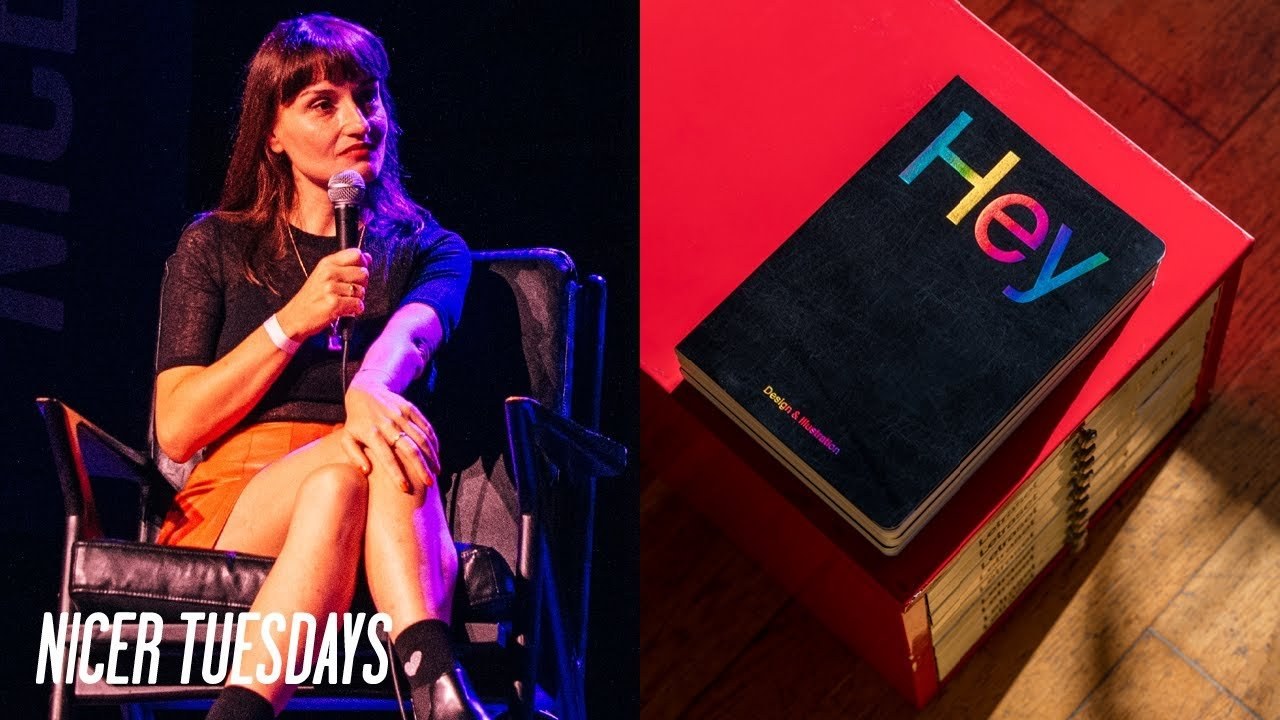
“Building a creative company is not just about the products you create, but the community you foster around it.”
Transcriptmay contain minor errors or formatting inconsistencies
[Applause]
thank you very very much much for coming I guess my first question was you know I mentioned there it's it's been 16 years since you started hey could you tell us just a little bit about how the I guess the studio came about like what were you doing before that and what gave you the impetus to start your own Studio yeah I finished uni in in 200 one or two yeah and a long time ago and yes and and after my studies I stud graphic design in Barcelona I was working in different Studios like seven years yeah and then I wanted to do my own style like create my own things everything my own way and of course I need to stop working because working with other people or the studios I couldn't make it happen so that's the reason I found my my studio and this is what I was working before I mean were you a bit frustrated by having to do things to a I don't know to a different kind of style that you wanted to do no because I was learning I mean I knew that I have like a style because when I was at University and also working in different places I realize it but of course I couldn't like manifest it I mean we're going to come on to style because I think it's a really interesting question and obviously hey has a a very unique style and an aesthetic but I guess just to come go back to that time I we were talking about 2007 yes so the following year was was the financial crisis what was it what was it like I guess being a a very very young Studio back then yeah in 2007 2008 what were those first couple of years like yeah for me of course I didn't know about that at the beginning but because I was working alone I was at my home and the first years like the first five years and yes I was alone and for me it was an advantage because at that time in Spain was very very hard a crisis families friends they they sto working from one day to another it was very fast and then and suddenly I I came up with my studio but very small only a few projects and and I visit companies in Barcelona editorial museums and I said hello this is my portfolio and they say okay let's try it because I was young and of course more affordable comparing with other studios Okay interesting by the way we're going to be seeing lots of your your work behind us on the screen yeah just for everyone who who wants to know.
That's that's all of hey Studio's work I mean not all of it there's there's a lot over the last 16 years.
But that's a kind of a selection of it I guess in those those first early years like what were some of your coping me mechanisms like how did you manage when times were a bit tough and when you know the projects were difficult to come by because I guess I mean some people are going to be going through something similar now I would expect you know we're in a kind of a difficult climate at the moment as well so what were some of your ways of managing back then yeah I work a lot yeah. I was at my home.
And I did like long hours working now I have a daughter and now it was impossible to make it but before I didn't have so yes I think work a lot. And I send a lot of portfolios but not just sending an email you know I call a lot of places and I try to contact the right person yeah this is what I did a lot yeah it was a spam you know yeah you sometimes have to spam you just have to yeah B bombard people I think that's right. And I guess yeah today as I mentioned hey is kind of one of the the most yeah respected branding and Design Studios in in in Spain but also I guess on the continent as well you've grown it into this amazing business but I'm kind of interested to hear like from your perspective what have been some of the biggest challenges over those 16 years I mean you've probably seen you know financial crisis and then another.
But yeah what have been some of the biggest kind of tricky things and difficulties that you've had to overcome yeah 16 years is a lot yeah.
So yes for me of course the first years was like was setting up the studio I had a lot a lot of energy at the beginning and then Through The Years sometimes I lost it because of personal things as scores and yes but for me the most difficult part like to create a studio because a studio means people right not just me if not it's a freelance H Studio means people and people managing people managing Egos and that was the most and is is still the most difficult part because for me graphic design or create creativity is easy I have a lot of ideas plenty of ideas but managing people and how to make my team happy working all together.
This is difficult it's not easy I mean that's that's I I reckon if you spoke to like 90% of people who run you know creative businesses but kind of probably any any business they'd say yeah managing people getting everyone pulling in the same direction is like one of the one of the biggest biggest challenges right yeah and and and I think because creativity is something that comes from the heart. So it's delicate yeah working with also with myself you know yeah.
So yeah.
So I I remember 5 years ago. I had a personal transition and and yes and I try to to learn from that. And that's okay if I don't know how to make it.
So I always say ask for help so I ask for help and and and I ask a coaching someone that helps me and also helps the team and it's very important that's good so you had someone to come in and kind of mediate and that's really interesting I mean I guess I mean one thing that you touched on there which I'd love to come back to is just that thing of because it's creative work. Actually people's ideas are very close to their heart because it's like almost a expression of their own personality so it's difficult to kind of criticize creative work sometimes because of that right yeah.
I think it's important to know that I'm someone it's not CRI I sorry it's difficult for me to say this word in English it's not about your person never it's about the work. So if you can separate this from your person and work you are free to do whatever you want you are free you're free your mind but if you can separate this you are yes I mean go to therapy and a lot of things yeah it's it's and and I realize it like I don't know seven years ago six and when I did it okay I'm free I'm happy you talked about kind of I guess Studio culture maybe is is how you describe it that kind of thing of having everyone pulling in in the right direction or the same direction at least you in the pandemic I think well since the pandemic lots of Studios have kind of gone to remote working or kind of semi- remote maybe like a hybrid model you believe quite strongly that we should be in the same space if we're working on the same projects and things could you just tell us a little bit about why why you feel that way I mean you seem to have quite strong views about this yeah yeah we were in in Spain in in the studio we were like two almost three months and then I asked my PE my team what do you want to do and they say I want everybody wanted to come back everybody and I said okay and but I I want a day at at my home please and I said okay. So let's do one day working from home and because everybody wanted to to be with people and talk and I think in in in creativity it's very important like talk and share ideas and share ideas for the moment how the technology is is not very easy so maybe in the future if I can see yourself like real okay it's possible but now for me it's not enough I mean maybe we need all need to have those like Apple headsets and then then might yeah if everybody has the apple and yeah maybe it's this isn't a branded show for Apple by the way just just this the second time it's come up I'm sorry but yeah no I mean it's it's interesting I guess as well you know when you're talking about things in person there's there's a way of I mean you you've talked about this in the past I think as well that younger team members or junior team members need to learn from kind of seniors is that something that you felt yes and I talk a lot with this with other Studios and people around Studios and they said okay the first person that are always in the studio people that maybe are working from home always are the Juniors always so let me think about that because it's okay they need U guidance of course because maybe a senior or someone that has a lot of experience they don't want anything to hear you know okay and young people they need they need to learn everything.
And I'm there to say okay this is a liat tour this is a track this is a space how you say it in Zoom you know like try it and print it and make it bigger and smaller and wow it's quite difficult for me and and also I know it's you need to make an effort but it's I think it's very necessary I mean it's very interesting how yeah. So many studios have gone different ways right some are fully remote and kind of swear by it and say that it's brilliant some are kind of fully you're you're I guess more towards the everyone in the studio but you do have your Wednesdays at home yeah the same day I guess I'm also curious to hear about your thoughts on work life balance because it's something that you just mentioned there that in the first five years of your studio you were working all the time which is probably not the kind of thing that we would recommend but sometimes I guess it is important or it's necessary how have you managed to to kind of I guess unlearn that because I remember you saying once that you were the kind of person who responded to emails at 1:00 a.m. Like how have you managed to unlearn that behavior or like change what you do yeah.
I think that when you have a company you you never switch off never and but I I was thinking about before and okay I never switch off maybe I'm on P POS P you know. And it's there. And some so but I'm always there always it's difficult when when when you run a a company and in my case it's a small company so I take care of almost everything.
So I don't have like I don't know people that makes these so so yeah I I think it's very difficult in my case to disconnect but do you I mean do you manage to do it ever are you ever kind of thanks to thanks to therapy this is an advert for therapy by the way.
So we need a partner of this I don't know yeah thanks to to to learn and yeah but this is true it's not a joke really yeah.
I think it's important to know the balance and when it's necessary to work a lot and when it's not and disconnect and and learn how to disconnect it's good yeah and I guess when you have like a a team behind you you can kind sometimes you can yeah kind of Disconnect a little bit and and yeah and I say okay never is so important you know maybe you think it's important then you ask the client it's can I delay two days of course yeah you know okay. So ask this it's not as important I'd love to I mean I want to come on to to talk about some some projects and some of haes work.
But I guess one thing that again just from a kind of you know if people here are I imagine Lots working for smaller independent Studios or or lead teams or kind of have Ambitions one day to set up their own company when it comes to kind of keeping your team inspired and and creatively fulfilled I guess how do you do that I mean you know we've all been there when it's stressful and busy like how do you keep your team kind of inspired with the yeah what's going on I think it's a teamwork it's not just me I mean it's at the studio everybody has a voice and if someone wants to propose something but for me the people that I hire needs to be curious and has curiosity always because I'm not I have curiosity but not for everybody you know.
So I need people that helps me in that case so yes goed she she for example she's the project manager and she is is also swing dance dancer so she is super optimism all the time and propose a lot of things I think it's important that to be around people that has the same Spirit as you or maybe the things that you don't have yeah yeah exactly kind of a bit of a complimentary Yeah because sometimes I'm quite like lazy or so yes I don't believe it is like what okay let's do this and okay okay okay okay get everyone up and doing some dancing I mean I'd love to again yeah do want to come on to the work and maybe one more question because again I feel like this is something that lots of people are going to want to hear your thoughts on how you deal with clients because you know I'm sure we all have clients out there we want to know as many tips as possible on how to how to deal with them how do you maintain your kind of your point of view or your Creative Vision I guess even when it's kind of in the face of pressure from a client like if you really believe in your idea how do you kind of fight for it I guess wow I think it's important talk with teams Timmy right or team sorry a conference because it's about explaining a a story very well done and this is some something that maybe designers not we're not very good on that okay this is my idea.
And we think that everybody understand that and no it's not that true so yeah.
I think it's very important to explain it very very well and like a like a film exactly and this is my I think it's very important like why you chose red explain it whatever it is it could be real or not I mean I'm sorry about that.
But I mean you need to find something that is science because design is not science so you need to to okay let's do this this this this this and the client can say no and this is something important to work on yeah and I guess yeah when they say no very directly that's maybe where you have to slightly draw the line under the fight potentially I mean yeah we're all going to be I think talking about the three TS from from Timmy's talk for sure let's let's let's talk about some of the work I guess something that really stood out to me on your website and it's something that you. Actually mentioned earlier when you were saying you had really like strong ideas about what you wanted to work on when you were working for some other Studios very early on in your career but on your website you say that shapes quickly come to mind when we hear about something exciting I'm really interested by that is that the kind of brain that you have does your brain just kind of immediately start generating shapes and colors as soon as you kind of almost hear a a client brief yes that's incredible yeah I'm the one I'm not looking the camera you know yeah yeah and Colette is okay yes yes I have a lot of ideas the problem is that I don't have money to make it happen you know no it's true for example the podcast of course I would love to do like more things and like create like other stuff that it's not just a podcast so create a community so of course I need supporters and that.
But ideas I have so a lot yeah I mean to coming on to the podcast where did the podcast come from I mean like what was the what was the idea behind it CU yeah women at work is a great idea for a podcast yeah it came because I felt very lonely as a this woman in design my references when I was studying I think were like a few or maybe just one paare irom so maybe two I don't know yes and I'm happy that. Now it's not like that but yes and also I went to conferences and a lot of places I was was the only woman having a studio people I mean like and yes and I felt very very lonely and I think okay we need to to give voice to to woman that has the same Spirit or maybe like make it happen and make it because when you have references reference you have the energy to make it happen and this is very important at the end is the podcast is is a a place that we give voice to creative people and and Ana she's the host I'm not the host but yes I'm part of the team of course and and and I I think it's supporting women yeah do you feel like the situation has improved or is improving or do you think it's still as as bad as of course it's improving yes we all have more reference and but in talking in with Design Studios branding not so much I remember reading somewhere.
I think it was 1% of of studios are women LED which just is yeah completely shocking I don't know why but I think it's part of the history you know yeah yeah exactly yeah it's definitely a kind of structural structural problem yeah coming back to the projects I guess one thing that strikes me about about your work is the breadth of projects that that you work on you know it's digital and physical it's kind of projects that involve a lot of handmade craft I'm thinking about the identity that you did for AR the the I maybe saying that wrong yes exactly for for the shoe brand and some that are kind of much more futuristic and and kind of digital I mean is there ever a time when you feel nervous about a route that you're proposing or that that it's going in a different direction or are you always confident that you can do any kind of project no matter what kind of outcome you're you're working towards yeah I like the take risk and and I if it's something I don't know how to make it I ask and I try to find someone that helps yes I like it I like like new techniques a lot so yes I like to discover and I have this curiosity it's part of my attitude I mean we're talking about the kind of breadth of projects I think what's also really interesting about ha's work is it's kind of possible to tell when a project is one of yours somehow I don't know what it is it's whether whether it's the color or the vibrancy or something about it but you can kind of tell yeah in the colors and and the shapes that it's a hay a hey project in a way it's kind of you're not one of those invisible Design Studios in that in that sense is that something that you're kind of aware on aware of when you're working on a project are you conscious that something needs to fit your aesthetic or is it just something that happens kind of purely coincidentally that it's your taste and it's your style and that that ends up in the project yeah it's my my style and but it's not just I'm I mean my style is like being simple like with the minimum elements make it something big and it could be in TI face color whatever and yes color for me it's very natural when I was a kid every I mean it's part of of me as well so people that work with me also it's important that they like this because if not it's some it's a designer that only designs in black and white it's difficult but yes and I guess clients also it's slightly self- selecting like clients will come to you because they know that.
That's what they might get back right they they want something a bit more colorful like if someone was wanting a black and white identity sometimes we have a client that okay but you don't have like black and okay I mean I can make it I mean we have some but of course.
This is not the style but it's I'm adapting to you as well I mean it's not necessary to be always like this.
But this is how I express all the adjectives and attitudes that for Brands so of course Brands needs to to have these elements in their b or whatever yeah I mean it feels like you know whenever I speak to people who are running Studios or creatives and designers at the moment it feels like there's a bit of an elephant in the room which I'd like to address which is AI of course I can slightly hear the collective grown in the room when I when I mentioned that.
But I think it is important that we we talk about it because you have some quite strong views about Ai and I guess the role it's going to play in the future of the creative industry and the design industry can you just share where you stand when it comes to Ai and what what you expect the future to look like we are okay cool do you want to elaborate on that a little bit no I mean seriously do you really think that. That's that's the case I think so yeah no I'm sorry about that I'm sorry but I think I'm sorry it's something that we talk a lot in the studio and I try to be positive I tried because there is a a very young designer and when she listen to me she got depressed so okay let's try Okay.
I was like I I'm using my journey a lot because I want to learn it and to how this tool can help me. And now it helps me a lot okay it's for me it's like wow wow it's my I'm I'm obsessed you know.
But it helps me to realize ideas it's one it's a tool and for me it's just a tool okay. I am because I have the knowledge I have experience so but some somebody that doesn't have the his the the knowledge and the studies it's the wow it's very I don't know how to say it in English it's Beno I don't know it's a poison yeah yeah thank you and but for for me old techniques I love old techniques and for me.
This is another one you know.
And I think it's important to know that and learn it because to know what is happen what is going to happen in the future so maybe my next project I don't know is to create a Hast prompt and I think it's something that it's possible so you input all of your work into an AI it's going to happen somebody's going going to make it. So it's better to make it by myself right and do you do you ever foresee it I mean being able to do exactly what you do because it sounds like what you're saying is that you're using it as a tool because you still need a lot of the experience and the knowledge that you have from a career in design yeah do you think it'll ever be able to do everything that you do or do you think it'll always still just be a tool that we use alongside all of our human faculties I'm cross crossing my fingers and toes here though I don't know because it's going very fast but for what I'm doing now is I'm I'm the creative director you know I choose this this I'm I'm very fast because I have the eye for that.
So I don't know the future but I think it's not very positive sorry about that.
But I think the positive part of me because to say something optimistic no is that we are going we can we will have time to focus on what we love for example I love a lot of things that are physical so for example invest time in make something physical for example this event that is going to be maybe in February okay. So yes it's it's something that it's not just design it's like to create a community Through the cre through creativity so creativity is an amazing tool to make a lot of things not just a lot time type you know so yes for me.
This is exciting or maybe I don't know food design I don't know a lot of things that are more physical maybe than digital so is that the kind of I guess you know it's quite it's quite a it's not particularly Rosy picture that you're painting but I guess if you were going to talk to like a young designer out there specifically with this idea of AI in mind I mean is that I guess what would your advice be to a young designer kind of setting up today would it be to create things that are I guess more difficult for an AI to produce which is yeah community and physical things yeah of course yeah for them I'm sorry no no I think it's very important I always said like learn from the past or inspired by the past to imagine the future it's very important because the pillars of what we are doing now is from the past so yeah yeah I mean all the techniques that sometimes we used I remember there is one technique that is from a century before Christ and yes and I think it's important to know everything not just what is going happening right. Now is that the glass blowing that project yeah I don't know if we've got a picture of it it might have come up already but yeah you worked with some some glass blowing which is a very old technique yeah as you say so there is hope I guess I mean one thing I wanted to ask is you know you obviously seem to be very up to date with what's going on and the emerging Technologies and some of the more disruptive technologies that are out there how do you kind of keep up to date with them I mean did you download mid journey two years ago and you've been working with it nonstop it sounds like you kind of really want to get into each of these new technologies as they emerge I think I love to be informed in many ways so yes I'm I read a lot I think it's very important to read everything so but the good news not the bad news but yes I think it's it's important to be informed and to know everything I don't know of course when I was studying graphic design it was all about logotypes and stationary design you know.
Now. There is no station I did my my car in I know something that. Now it's not possible but yes I think you need to evolve right yeah fair enough we're going to move on to some some audience questions now some questions that have been submitted by our audience and yeah we had some really really good questions here we've only probably got time for a few but I think I'll just start with with Emily's one which is what's something you wish you knew or wish you'd done when starting out so something that you wish you'd kind of known when you were first starting out in 2007 as a as a designer on your own or something that you wish you'd done back then maybe I don't know that all the paperwork was very stressful you know and wow and yes sometimes I didn't receive payments of these kind of things.
So yeah maybe some advice on that yeah some of the kind of more yeah the business focused so invoice 50% in advance this kind of tips yeah always yeah don't don't accept 365 day payment terms and that kind of thing of course if you are working with a big company I'm not going to say the name it's not possible but in the others yes I mean we're in the spirit of just dropping absolute clangers today so feel feel free to we'll move on to this question by Joanna as a woman how would you say your work is influenced in a woman-led workplace like hey so yeah how does how does that influence your work yeah.
I think just like with a podcast and give voice to other people it's it's enough I mean it's just a to have a reference that okay.
I have a studio I have employees I have a daughter everything is possible I mean yeah it's an example at the end Joey asks and there may be a someone searching for for a job here but what do you look for in new hires this is something that you maybe not you know it's something that you mentioned earlier that you know you want someone to have a bit of a kind of idea of I guess you're aesthetic and be interested in color and shape and the kind of things you work that love threat no it's a joke no I think it's for me it's very important the attitude I always say 50% is the attitude and the other 50 is the talent so for me it's not much important if you are the super graphic designer the best in the world no if you don't know how to work with in a team you are not part of hay so I know it's not easy to find this in an interview but I try to do the correct questions sometimes I'm I'm I don't have very good luck but yes I also I have Instinct a lot of instinct so I trust my instinct yeah and finally question from oty how did you have the confidence to push through the beginning phase of your studio you know that first phase is tough you're you're starting out you obviously don't have someone to lean on when you're kind of striking out on your own how did you have the confidence to to push through that early stage I think because passion is is the the Moto here I mean motor the the tool the energy I had before I was young I was 27 yeah.
I think it's a passion is what moves everything yeah you have this passion that can you can work whever you want and everything yeah.
So maybe more than confidence it's about it's about passion that that gets you through so passion yeah and also like have people around you that helps you it's very very important alone all by yourself alone it's is very very difficult hope that hope that helps there's some some good advice there for for oty well listen thank you all so much for those those questions everyone who submitted one maybe finally just the last question for me you know we've we've we've touched on some some pretty hard-hitting subjects today.
But I'm kind of interested to hear what you're excited about working in or rather on next year yeah kind of mad that we're already getting to the end of of 2023 but yeah what are you most excited about for 2024 and and sinking your teeth into yeah I'm more focused on community for example a website that we have designed this year is going to be open source for everybody and I don't know when the developer answer the emails and but yes I like like to to help on Okay let's this is something I can share with people it could be a website it could be a podcast it could be um whatever a meal you know.
So this is what excites me a lot and thinking about not Jazz design that's lovely yeah.
I think that's a really lovely sentiment to end on and yeah let's make Community the word for for 2024 Veronica it's been absolutely lovely catching up with you I'm afraid that's all we have time for this evening but please everyone join me in saying a massive thank you to Veronica FTE thank you
Latest Talks
-
Murugiah
Why you should reject the formula and make art about things you love
Watch -
Amber Weaver
How does contemporary type design translate into the wider world?
Watch -
Delali Ayivi
How does photography give us the right to imagine our futures?
Watch -
Will Anderson and Ainslie Henderson
Bringing stop motion sorcery to BBC’s Small Prophets
Watch -
Ollie Babajide Tikare
The importance of not flattening the complexity of observation
Watch -
Marina Willer
Design thrives when you find poetry in the simple things
Watch