
Henry J. Kamara is a London-based photographer dedicated to preserving Sierra Leonean culture through his documentary work. He is known for his project 'Keeper of the Flame,' which focuses on significant social issues within Sierra Leone, including Female Genital Mutilation.
Henry J Kamara
Preserving Sierra Leonean culture one photograph at a time
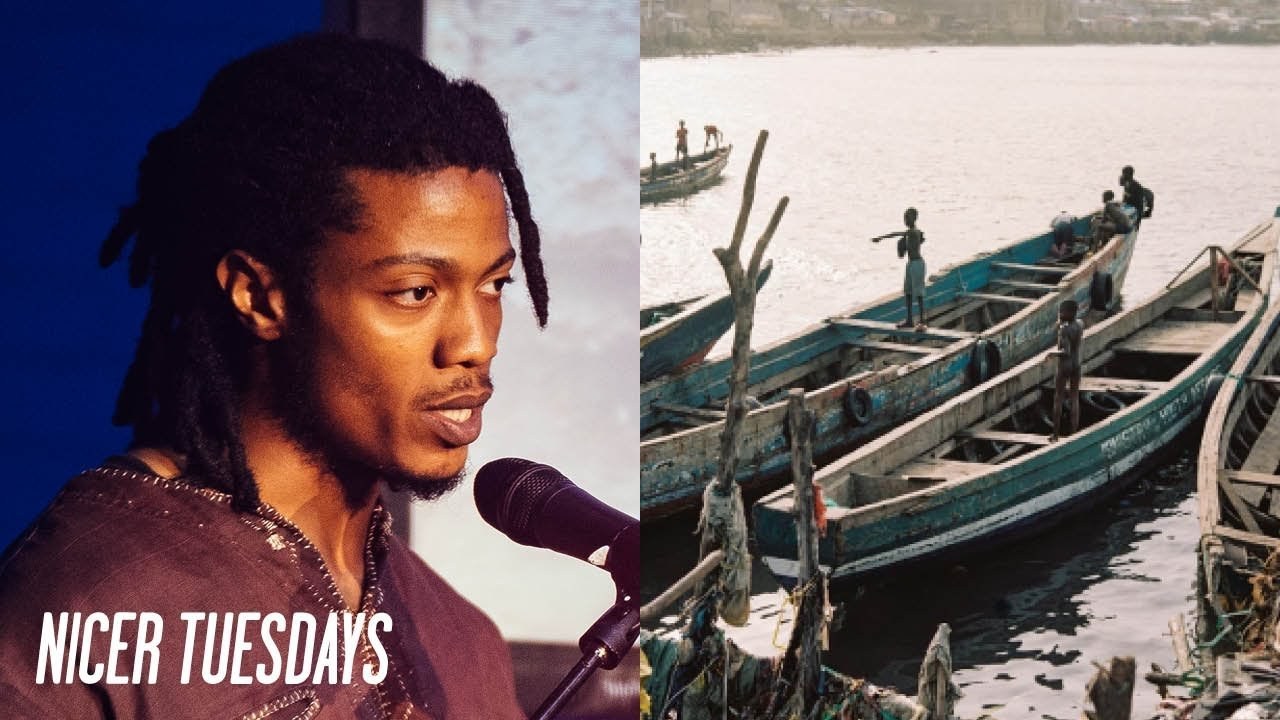
“I think many issues like this one can be solved by making a safer space for our women, our sisters, our mothers.”
Transcriptmay contain minor errors or formatting inconsistencies
[Applause]
good evening everybody so my name is henry j kamara I am a storyteller and today I'm going to talk to you a bit about my photographs but before we get started I'm going to first show you a picture that's not a photograph it's an image and I'm going to ask you what do you see so can I get some answers from the cards I'm hearing duck rabbit some people saying dark okay interesting so the reason why I chose to start with this image is just to make everybody aware that your position your perspective and your experiences influence what you see and for a second when you look at these photographs today forget about the preconceptions that you have that you've developed in western culture and society for a second see these images in a new site instead of seeing poverty see strength so today we're going to start with some excerpts from some of my books the first is universal spirit which is a book I made during lockdown and the first chapter is going back in order to go forward an old african proverb sankofa and this book was dedicated to the knowledge seekers of the world.
So there are definitely some things that are better expressed through words and I know this because I studied english and creative writing at uni but there are definitely some things that I better felt and seen and that was part of the reason why I gravitated towards photography I basically got sick of needing to compile primary and secondary influences and verify my perspectives through other people. And I decided to use photography as a way to kind of cut through that so from a very young age I was very aware of my diaspora like I've mentioned I am a sierra leonean but I'm british born so that meant when I was at home I listened to sierra leone music I ate sierra leone food I grew up with a culture that was defined by sierra leoneans but when I left I had to play a different role I had to be british I had to you know be a certain way.
And I was very aware of that from a very young age and that's kind of why I decided to set sail and go back to sierra leone so when I was growing up I was told loads of stories by my mum and my dad and by other family members about what it was like to grow up in sierra leone and I was really inspired by the thought that I could go back and experience some of these incredible stories and I guess get in touch with a part of myself that I missed out on by being born in the uk so photography was the way that I chose to bring that experience to life. And I guess share with others who also might have felt a similar connection or disconnection to a place or people it was incredibly humbling to see families and communities skillfully design a way of life that paid homage to the natural world around them without very much resources but with a keen understanding of the way the sun rises and sets at certain times and what different soils reacts better with different plants they were able to build a sustainable way of living something that was still I guess striving towards in the west children quickly became a focal point of my photography at the time I was spending a lot of time meditating on my I guess inherited sense of responsibility to continue the traditions of my tribe and my people and the weight that children carry in sierra leone they are forced to grow up very very quickly as I spent more time in sierra leone the stories that I gathered and the people that I spoke to started to have a real impact on my social political and historical perspectives and I wanted to I guess find a way to bring that impact to the people that I was sharing my photos with so with that I decided to create a body of work I'm a big fan of making books so I decided to create a book that would be I guess my lifelong commitment to documenting and preserving the culture of sierra leone and that lives under the banner of keeper of the flame so keeper of the flame as I have explained has begun with stalking to my family reconnecting back in sierra leone and just getting a sense of what it was like to to grow up in sierra leone at that time I was often thinking about what if I was born in sierra leone you know what if my parents didn't make the journey what if there wasn't a civil war in sierra leone that forced my parents to leave you know how would my life be different what opportunities would I have been limited to would I still have the same perspectives so all of these questions sort of I guess started to find their way into my work which is a great way.
So I guess it's a privilege to be able to kind of I guess think about these things from personal perspective but find a way to explore them through your work.
So these two young boys daniel and valentine very significant I met through a good friend of mine davao timothy who is a pianist and incredible artist he's also of sierra leone descent and when we went to sierra leone I met him for the first time we had a conversation similar to what I'm talking about today.
And I didn't know at the time but he recorded the conversation in a similar way that I use photographs he records sound and six days later he hands me these headphones in the mountains in sierra leone and it's in this incredible keystrack and it's basically got what I'm saying about my diaspora laid on the track and it the track's called twosim and it's basically surrounding the idea that. There is a phone that you use in sierra leone that operates on two sim cards and us being of dual nationality we operate with two passports so I've got a british passport necessarily on your passport and that was sort of I guess a spark for me to start exploring my diaspora on a on a art level these next slides contain images of a place in sierra leone called susan's bay while I was out there shooting another project I heard of a fire that caught place in a shanty town in sierra leone and off the coast and I decided to kind of go over and just speak to the people I guess share my lens and and be of service as I got there.
I started to think a lot about the majority of photography that is used in western media to document disaster and conflict and I guess I wanted to do something different because a lot of the images that are chosen are intended to show a distinct level of struggle and pain but when I went over I wanted to share what I believed was a showing of human kindness and community I was fortunate enough to convince the guardian to publish his photos and it was a real landmark for me to I guess do something that I hadn't seen darden beforehand looking at pictures in sierra leone and seeing something that was quite inspiring so the fire started in susan's bay by a young child actually playing with a lighter and a piece of plastic and because of the materials that the houses are made with the young child's house caught a light which then started a chain reaction and many of the houses were burnt in the shanty town but what that did do is show an example of the community needing to come together the image on the right is an image of a washing and bathing situation which basically meant that the community needed to come together to find a safe way to yeah make themselves clean which was governed by the bylaws at the top right and yeah that was an incredible experience I felt like I needed to document so moving on within the keeper of the flame.
There is one project which I am currently working on. And it is called keep the drums loser knives hello my name is campaigner a community development worker ♪
the structure of the bundle society in salem you have the men who are the head they're called the circles ♪
and then you have the women who are the quarters they're called the sewage and these sewers are initiated by the so-called so they must have gone through the bundle society which is known to you as fgm it is so ingrained into the people it's been going on for many many many many years the way it is work is a family trait thing it's a rite of passage as well you know. So if my grandmother was a quarter anyone of maybe my mom or my sisters or even my cousins can be chosen to take over her.
So that's how it is so if they choose you you cannot deny it they will just give you this gift and you have to take off the responsibilities so that's how it is so even the cutters they are victims themselves ♪
every girl wants to go you know because if you've not been treated upon the society it doesn't matter how young or old you are you are be you've been you feel like an outcast within that community you can't like if you're married you can't cook for your mother-in-law or your sister-in-law nobody will eat your food because they see you as unclean you know so you feel like you're alone so children do feel like that as well like I want to play with my friends who have been caught who has been chewed upon the society they if you come they just walk away from you because topic might come up from the bundle bush and you're not part of it so you cannot get involved so that was a working short trailer of a documentary that I'm currently working on.
And this project is entitled keep the drums loser knives and for those of you who don't know what fgm is or stands for it stands for female genital mutilation which is either the whole or part cutting of the clitoris of a young woman or young girl and within sierra leone secret societies play a vital role within understanding the place in society and also it has a socio and economic structure that also allows the women to play a significant role within the community so in some ways the bondo binds the community so I was given the opportunity and the complete privilege to meet an incredible woman called sarian karim kamara who is an activist and a woman who has dedicated her life to saving young girls and young women from the tradition the reason why the bondo society has sustained such a integral part in the community is because of this idea of a right of passage defined by the poorer society which is an all-male society it defines what the men believe an appropriate woman should be like in a marriage sarian and her community have dedicated their lives to sharing their story not just the physical consequences but also the psychological consequences to help not only the victims of fgm and the bondo society but also the women who are entrapped in this entangled tradition that binds them to being women who have to also do the cutting and they do this by the ethos keep the drums lose the knives so sarian believes that it's significant to maintain the drumming and the dancing and the sisterhood that the society brings and promotes but within that. There is a need to forget the knives and create a safe space for women to come together to talk about their issues within the community and not defining their existence through men I.e men not making laws about women's bodies so the women who are a part of the society are the sowes they are highly respected women within the community and the history of the bonda society stems back to pre-colonial times and what women in many villages like this had to do in order to become women who are acceptable to colonizers who are coming over and dealing with trade and putting taxes on living this was a way to offer yourself as a suitable woman for some of the people who were coming in and dictating who was allowed certain pieces of land and allowed certain promises of food and over time.
This is sustained as a way to appropriate yourself as a woman and to be respected in the community but what sarian so rightfully mentioned in the video is that the women themselves feel like they are entrapped in this cycle and they need to be freed from the responsibility of needing to do this within the community so what sarian did was on the 28th of april 2019 in the village of cantentine in makini 28 surveys gave up their practice and committed to keeping the drums and losing the knives now in these baskets there are the ancestral baskets which are passed down from generation to generation which binds the soweis and in front of the entire community after going through the educational processes and being provided a safe space to talk about what it is that they are forced to do many of the women took the opportunity to learn a new skill or a new trade so that they no longer had to cut young girls as a means of income and like I've explained these women are highly respected and revered in the community so you might ask how did they feel about giving up that position I think in this image you can kind of see that.
There is a huge sense of relief from needing to do that. So it was an incredible project and the reason why I gravitated towards this project was because I saw the impact of not just this happening to one single woman but also the ripple effect that that can have with a woman in their relationship and then that how that then affects a woman in their family and how they raise their children and how that then ripples out to smaller communities and larger countries and when you look at some of the issues that exist overall in sierra leone I think some of them can be solved by just creating a safer space for our women and our mothers and our sisters so within that in the community the ancestral baskets were burned in front of the community and this was a huge moment and a step forward to not just ending female genitalia mutilation in sierra leone but across the world and hopefully this can be an example for the rest of the countries that also practice fgm now.
This is an ongoing project. And something that I've committed to doing I guess alone alongside keep the drums loser knives and I've currently launched a kickstarter to get the production of the book of the images that you see today and complete the documentary because I think that.
This is a project and a story that I think needs to be more widely known and spoken about and yeah if you'd like to support come and find me after you can have a chat and I can send you a link and we can talk more about it but with that I'm gonna end it thank you for listening ♪
[Applause]
Latest Talks
-
Murugiah
Why you should reject the formula and make art about things you love
Watch -
Amber Weaver
How does contemporary type design translate into the wider world?
Watch -
Delali Ayivi
How does photography give us the right to imagine our futures?
Watch -
Will Anderson and Ainslie Henderson
Bringing stop motion sorcery to BBC’s Small Prophets
Watch -
Ollie Babajide Tikare
The importance of not flattening the complexity of observation
Watch -
Marina Willer
Design thrives when you find poetry in the simple things
Watch