
Hannah Buckman is an artist and illustrator known for her insightful approach to illustration and unique aesthetic vision. She has developed her practice while working with the platform gal-dem and has focused on major themes that inform her work.
Hannah Buckman
An illustrator questioning whether any creative work is truly authentic
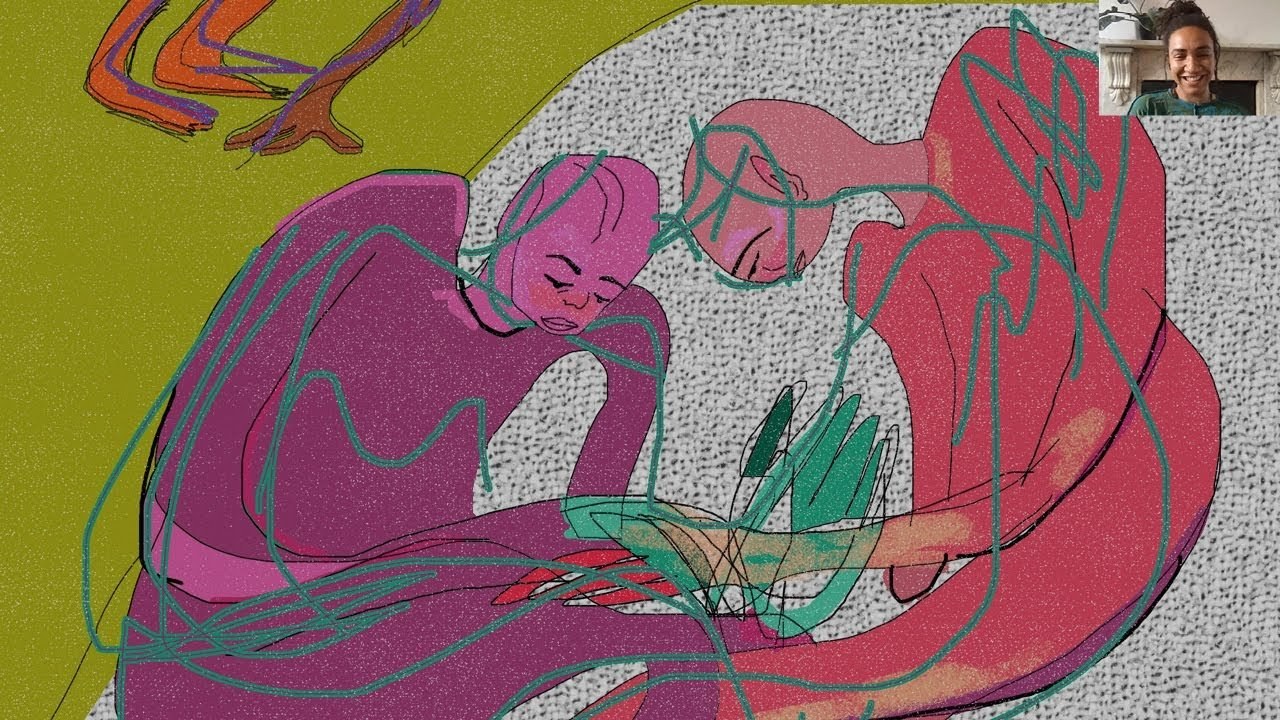
“As creators, we often question whether our work is truly authentic or just a reflection of what we think others want to see.”
Transcriptmay contain minor errors or formatting inconsistencies
To have hannah joining us today.
So we're gonna say hello to her and hopefully she's there with yeah my god and cameron hi how's it going anna yeah good thanks oh a bit nervous but excited as well yeah yeah no but don't be nervous I'm sure you'll be great it's lovely to see you and yeah thanks so much for for joining us today. So I'm gonna leave you.
Now I'm gonna disappear and I'll see you in about 10 minutes it's over to you now for your kind of presentation but remember everyone at home please just think about questions you want to ask hannah and yeah pop them in the chat for us to see and yeah we'll get around to the q and a part after this thank you hi I'm hannah bachmann I thought I would just like talk about my background a bit and like how I got into illustration.
And then talk about a few like projects I've done more specifically okay.
So I graduated from campbell world college of art in like 2015 and I kind of like didn't really feel that confident in my work at the time I wasn't really sure like what I wanted to do or like where I wanted to go with my work.
And then I kind of like took a break from drawing for about a year.
And then one day I saw like an open call for like women of color illustrators on galdom on the instagram that they posted and I thought it would be weird if I didn't apply because I kind of like fit the criteria so yeah I feel like a few of the images I submitted to galdom and I kind of like got an email response quite quickly and like was taken on board nice boost for my confidence yeah.
So over the next year or so I just carried on doing illustration for galden I thought it was like a good opportunity for me to like develop my work with like actual like live briefs I knew that would like have an audience like watching I kind of like felt like I was like starting to like build a portfolio yeah just like through doing lots of suffolk album and like these are just a few of the things I did this was for their website this was some thing with adidas in collaboration with garden and this was something I did for like a talk on black motherhood like a poster design and I guess because like the subject of this talk is home. And identity I thought I would like show this project that I submitted for one of gaudin's like second print issue which was called the home issue I think it was like me trying to figure out how to make more personal work that I knew might be shared online or just shout out to an audience and I think that.
So I kind of like heavily referenced like film like scenes from films that I was like that impacted me as a teenager but there was also like a sense that I I don't know something like inaccessible about the movie movies that I would watch like kind of like felt like I saw myself reflected in the lead characters but then like not completely like I always knew that I would be like perceived differently to like how they might be perceived but I kind of wanted to just like subvert I don't know this kind of idea that like only white people in film and tv like sometimes are allowed to have like new ones to like develop story lines and kind of just wanted to yeah just like subvert those stereotypes I guess with this project yeah and then.
I just like continued to do more commissions I think through working with garden I kind of like got discovered by other publications and I want to like go through them quickly because I know I haven't got much time but like this is something I did for the washington post something for time out the cover of timeout about nottingham carnival this is something I did just medium.com for a story on like what it's like to have an adhd brain and this is a commission I did in january 2020. It was for aiga like the iron design website part of it in collaboration with adobe and it's for like a small piece on online communities someone like communities like that are people that are made by people who are interested in using coding meaningfully and like new and innovative ways I guess I kind of wanted to like the idea of like a co-op or like a sort of house share came to mind just like a way to communicate this idea and also like the fact that the if all the rooms have like their own different perspectives kind of felt like a nice metaphor like there's people doing different things.
But they're all still like part of a larger network yeah. I just like really enjoyed this brief yeah and just like the idea of like smaller online spaces where you can like maybe have like more meaningful connections with like fewer people and these are a couple of the sketches I did so I guess like they kind of came out quite whole already which I kind of feel like is how things that I actually like more usually turn out like usually I can just like like the first idea I do is the best and like if it comes out like the quicker it comes out I think the more I like it I don't know.
So then in september 2019 I started doing the drawing year at world drawing school okay.
I wanted to like learn how to use like physical materials again or like go back to using because I've been doing lots of digital illustration and using photoshop a lot. And I was starting to feel like I was like churning things out a bit and kind of like not sure like if what I was doing was meaningful or like trying to figure out why I'm drawn to just like creating more of this stuff yeah this is I got a commission while doing the drawing yeah this was for harper's magazine and I feel like I kind of took inspiration from a class I was doing it to the royal dream school we spent like a whole day kind of like doing these little dot drawings like kind of based on like a pointless kind of style and I guess like I felt inspired by that.
And this piece for harper's magazine was for like a story called the work of art which is a story about like a controversial piece of art. And I think that it kind of like touches on like references like ongoing debates about around like the appropriation of black culture and art by like non-black artists I feel like it's kind of a matter like illustration I did where I like took elements from the story and made them into an artwork on the wall.
But then the people that are like in front of the artwork are also like within the story and like kind of making a spectacle out of the story and artwork which is I don't know if it makes any sense at all.
But it's kind of like what the story was about I felt yeah and there's just like nice imagery in it like referencing like van gogh starry starry night and like images like crumbling scabs and like a honeycomb of black bubbles that I just wanted to like convey was like kind of like dreamy sort of like surreal sense yeah and these are like two of the sketches that I did for that the one on the left is just like a more straightforward depiction of like the most dramatic scene in the story and the left was the one that got chosen this is a drawing that I did in the studio while I was on the drawing yeah and it's called family palava which I kind of feel like the title speaks for itself but I wanted to just show this to like give some context for like other things I was doing while also doing commissions I kind of like can't seem to get away from like interior like domestic scenes where like the room or like the environment kind of becomes a character in itself yeah and this is another one that I did like a pastel and charcoal drawing in the studio as well kind of like a psychological space but the same like the room being part of the narrative as well yeah.
I just wanted to show those images yeah for context so this is like a commission that I got quite recently like earlier this year for varun magazine so I was already like thinking quite a lot about rooms and like people in rooms and relationship dynamics and the brief for this was like to create something for the cover of the magazine and the theme was intimacy so thinking about like being locked down quite a lot and spending a lot of time in a confined space but also about like couples becoming entwined over time. And into one continue merging into one continuous blob and dancing and like how that can be an intimate act and yeah like the sketches just felt really easy and natural I'm not sure if that's because I was like drawing continuously for a year or if I was like I don't know just like a good subject for me yeah and there's like some sketches on the side like like an example of what I did yeah.
I think that's the amount of time thank you for listening thanks very much hannah that was that was amazing yeah really really great great to see your work.
And I guess some of the influences as well behind it and yeah I guess how it's developed over the years so thank you so much for that we've had a lot of questions actually from the audience which is which is fantastic and I've got a couple of my own as well so just to start with nicholas asks who are your biggest influences yeah interesting question I guess like who are the artists and illustrators you look to I guess I like I like quite a lot of like surreal like female painters like leonora carrington and like dorothy lessing and yeah people like that yeah I can't really think of like too many sorry that's all right no there's already a really great list there yeah I hope that answers your question ridiculous I found it really interesting you were talking there about how you're kind of interested in how spaces can become almost like characters in your work with their own atmospheres their own kind of moods and can you trace where that that interest came from that idea that like yeah the spaces have their own kind of I guess like yeah almost personalities I'm not really sure I guess I'm like I'm quite interested in like psychology and like I really enjoyed reading this book the body keeps the score by dr bessel van der kulk which I think he talks about like rooms and like objects and people in rooms and how they like kind of relate to each other yeah.
I think through that nice rebecca has asked are there any people or groups you'd love to collaborate with oh I feel like I'd really like to collaborate with friends like and I'm interested in like fashion designers like maybe like charlotte norms or something would be a cool collaboration I don't know yeah that would be amazing yeah I could definitely see your illustrations fitting very nicely into the fashion world as well there's a great question here from paul any mediums or materials you haven't explored yet but would like to I think maybe that's in reference to the fact that you mentioned that you kind of gone back to a bit more I guess things that you you know involve using your hands and craft when you're using too much kind of photoshop and digital techniques yes any mediums or materials you haven't explored yet but you'd like to I've I did like a little bit of oil painting like while doing the drawing yeah but I kind of want to like explore that a bit more because I feel like it's like there's a lot to learn through that.
So yeah I would say oil paint yeah great and maybe one more from liz here how do you convey ideas or narratives in articles with themes that aren't necessarily visual it's a really interesting question I guess about editorial illustration there how do you convey ideas or narratives that aren't necessarily visual if it's quite conceptual or something like that I don't really know how to explain I think that I just like I pick out like certain words that just like stick out to me and kind of think about things that like that like surround that word that just I don't know it just kind of comes quite easily I'm not really I'm sorry it's such a bad like trying to explain I don't know sometimes I mean it's yeah sometimes those processes are very natural and they kind of they float very quickly yeah yeah sorry that's and one final one from nicholas just because it is it is about you know how you know when something's finished I think that's very it's always a really interesting kind of conversation how do you know when your fin your pieces are finished because there's often a temptation to kind of tweak and continue tinkering for forever how do you know when you're kind of yeah I'm done with that I can kind of draw a line under it I guess just like yeah I guess it is also just a feeling that just like comes about I don't know I do I do find myself like wanting to like get through things quickly or just like I do think I do like make work quite fast so it kind of just like naturally ends when I'm like maybe like a bit tired even I'm just like done with something yeah I mean your work does have that kind of great energy which I think comes from that speed sometimes yes you don't want to lose that for sure and over tinker with it yeah definitely fantastic well listen thanks so much hannah we'll probably have to leave it there.
But yeah we really appreciate you you're joining us this evening thank you so much awesome
Latest Talks
-
Murugiah
Why you should reject the formula and make art about things you love
Watch -
Amber Weaver
How does contemporary type design translate into the wider world?
Watch -
Delali Ayivi
How does photography give us the right to imagine our futures?
Watch -
Will Anderson and Ainslie Henderson
Bringing stop motion sorcery to BBC’s Small Prophets
Watch -
Ollie Babajide Tikare
The importance of not flattening the complexity of observation
Watch -
Marina Willer
Design thrives when you find poetry in the simple things
Watch