
Jack Rowe and Solomon Thomson are leaders at Gay Times, known for their work in reviving the iconic queer magazine and addressing its rich history and cultural significance.
Gay Times
How do you bring an iconic queer magazine back
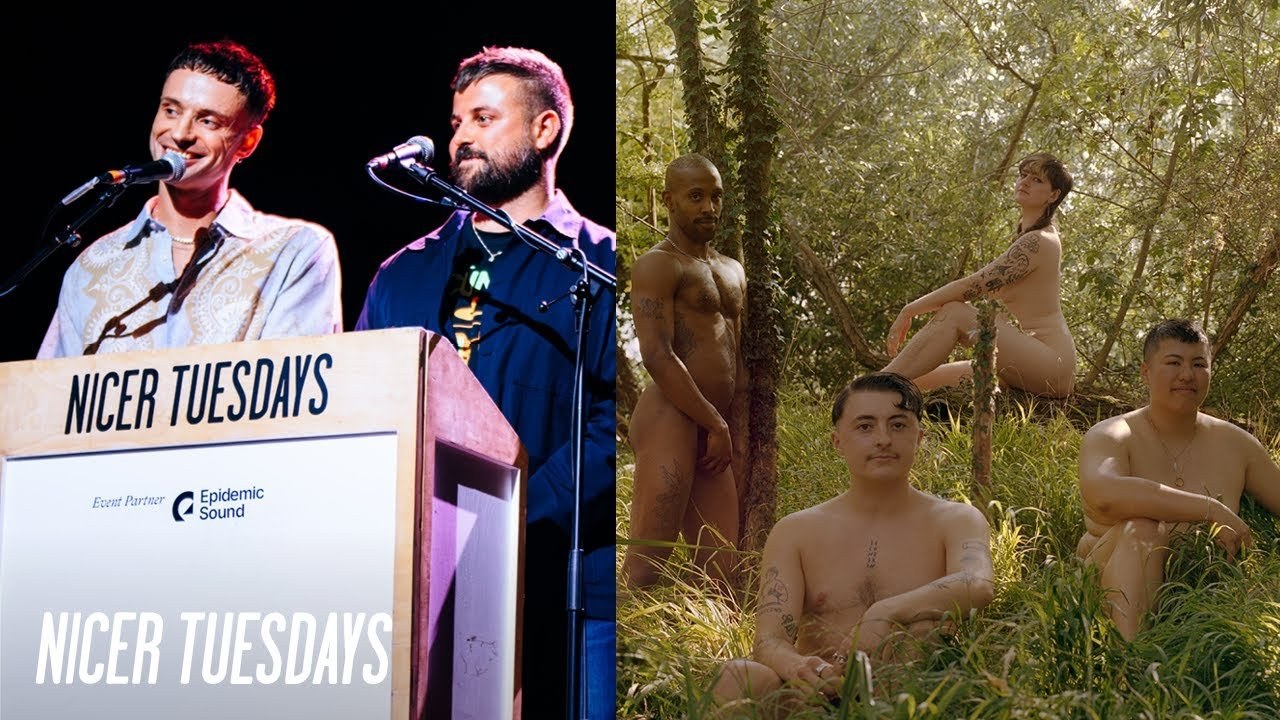
“Reviving Gay Times isn’t just about the pages we print; it’s about capturing a legacy and amplifying voices that have been silenced.”
Transcriptmay contain minor errors or formatting inconsistencies
[Applause]
Thank you. Cheers, babes. Hia babes. I'm Jack, senior art director at Gay Times and I'm Solomon, managing director for Gay Times. So, when I was young and closeted, as a young closeted gay boy, I was obsessed with queer culture. It felt groundbreaking, new, exciting, and overall fun. As I got older, embraced my sexuality, and learned about our community's history, I realized queer culture is groundbreaking. It sets trends as opposed to follow following them.
You don't have to look far to see this. Trends born in LGBTQ spaces are often picked up and reshaped by the mainstream. A classic example is Vogen Ballroom. They grew out of the black queer scene in the 70s and 80s New York with roots stretching even further back. Madonna brought ballroom into the global spotlight. And now artists like Beyonce reference it in their work. At Gay Times for more than over 40 years, we've been part of the same story, pioneering LGBTQ plus media and culture, setting trends, and constantly evolving as our community does. So spearheading a magazine with a legacy that extends way back to in fact beyond when we were born obviously comes with some kind of responsibility.
But we're lucky to work with a brand that has a history of continually reinventing itself and experimenting with its identity always to reflect the community and the culture at the time. Gay Times first appeared on the mast head in 1984.
Before that, there were a number of predecessor and offshoot titles, all of them centered around the gay community at the time. The 1980s, of course, were a socially and politically turbulent decade with the HIV crisis ravaging our community. Gay times provided vital health information where mainstream media wouldn't.
Our reported on gay and bisexual celebrity and culture counteracted negative tabloid coverage, whilst the classifides gave gay and bisexual men a way to meet up. The 1990s bought a new era of LGBTQ plus cultural empowerment. During this time, the magazine became more broadly accessible. It was sold in high street news agents for the first time.
We also introduced our sister publication diva created for lesbian and by women. The new millennium shifted focus towards key political and social issues like the repeal of section 28 and the introduction of an equal age of consent. It also brought about a host of salacious covers. In the 2010s, our mast head led with the GT acronym with a cover focus on soft male nudity and bigname talent.
We also created Gay Times Honors, an award show celebrating queer and trans trailblazers. And our editorial expanded again with a greater focus on intersectionality. The 2020s marked a shift in focus towards talent and really honing in on cultural alignment as queer culture became more integrated into the mainstream. It's less about the nude gay male and more about celebrating queer icons. This decade also brought a major change for gay times. We phased out print and became a digital and social first platform.
That move has significantly extended our global reach and impact. Across this four decade history, we've of course got such a rich catalog of content. It's delightful to have an archive that documents the past 40 years of LGBTQIA plus life in the UK and beyond. And we're committed to sharing that archive with our audience. Cherry picked articles are now available on our new magazine platform with articles from the likes of George Michael to Grace Jones. They're great. Also, side note, we've just moved into our new office in Hawkton and have been reunited with our archive finally.
So we're now able to look through it. It also includes predecessor titles like Gay News, Zipper, and HIMYM, which I can assure you are quite the Eiffel. And we'll be opening this up to to community to come and have a look soon. So, keep your eyes peeled if you'd like to come and entertain yourself. Here's a bit of a funny piece of history of the Gay Times.
We used to be run as part of the same group that ran sex shops and porn outlets. Back then, all the negatives from our photo shoots were stored with the Poppers. Legend has it that one day the crates of Poppers smashed and ruined the lot. So sadly all those photos are gone forever. The archive that we do still have is brilliant to look back on and we often use it as inspiration and as a reference point.
This was from the pastup era when pages were literally pieced together and everything feels a bit DIY and rough around the edges. Our main stakeholder of course is our audience. They really are our chosen family. From supporters who've been with the brand since 1984 to those younger demographics who are just engaging with Gay Times now, we are committed to serving them all. And of course, that's not always as easy as it sounds considering there often times perceivably vast differences.
But they're all diverse. They're creative and they're pioneering and they continually inspire us reflected in our content with coverage reflecting their achievements across the globe, across territories and across demographics. We reach today 72 million people with the UK and the US being our largest markets.
I think what's so special is 89% of them agree that Gay Times is a trusted media brand which really is crucially important I think today in this world of misinformation. Even with the setbacks that we're seeing across the globe, the retreat and the roll back on hard fought protections and a retreat from diversity, equity, and I diversity, equity, and inclusion initiatives, the queer community is actually the largest it's ever been. It's increased in size 75% in the UK from 2018 to 2023 alone. And that increase is over double among younger demographics. What this shows, I think, is that queer culture is not niche. It is culture. And this isn't isn't a community that just disappears. Social media is arguably the biggest face of Gay Times today.
It's where we interact with our audience every single day. We're proud to be the first LGBTQ plus media brand to pass 1 million followers on Instagram and that number is still growing fast. A lot of that growth came from a pioneering pivot in our social strategy where news content is shared in a clear and digestible format. We're always find finding new ways to spotlight our community history and present- day achievements. Educational formats perform especially well. Our pink triangle explainer was viewed by over a million people, tracing the symbols journey from Nazi concentration camps to modern politics. Paired with reactive content, this approach keeps us current and central to cultural communication. Of course, our work with global brands plays a large part in empowering our audience ecosystem, but it's clear to us that this work couldn't be a bad slapping exercise. The brands that we work here with need to be values aligned and understand the reasons why reaching the LGBTQ plus consumer is powerful.
This has informed our partnerships approach, creating impactful collaborations that champion authenticity with always with creativity at their heart. Our partnerships often aim to share shine a light on the varied lived experiences of our audience and contribute back to them in some way. To pull out a couple of highlights, as part of their goo find that thing campaign, Google came to us for help in reaching the Gen Z demographic, a large part of our audience.
We worked with three creators, Jess, Pipper, and Salana, to champion creativity through the lens of queer subcultures. We subtly integrated how features of their app helps its users express their identity and individuality. This comprehensive social and digital campaign was all wrapped up in these gorgeous dreamy worlds that were built on their personal aesthetic and the aesthetic of their subcultures like fairycore which you can see in the bottom right. Earlier this year, we worked with Arsenal Football Club.
So, sorry for anyone who's not a goona in the room. On a community first campaign to support LGBT history month. For a stereotypically hetronormative environment, the club felt it very important to profile their commitment to the community. So, we met with queer couples from their fan base in a visually stunning photo series that explored the concept of pitchside dates.
This was shot by GT contributor Lydia Garnet. And this kind of content really performs for us that centers the community. This campaign in particular performed well above benchmark with some incredible engagement. Our audience is always centric to these projects both on and behind the screen. Our editorial magazines alongside community contributors all collaborate to create the content. This leads to cohesive and authentic campaigns and has also led to the inception of GT Alliance, a roster of brilliant diverse creatives who we who we work with to produce this work, creating more opportunity for our community.
These are external to Gay Times. So if you have a creative agency or a freelance strategist or producer, please do get in touch as we're always looking to work with brilliant people. Being the image conscious quiz that we are, after 40 years, we felt the sag. It was time for a faceelift. From Madonna to Mark Jacobs, everyone who's anyone's had one. The problem that was our previous format was perfect for bold talent focused covers.
But we needed something that could speak to a much wider audience. From talent and news to community justice, sex and relationships, and identity. The solution was to create something inspired by classic printed papers but still structurally feeling quite modern and that could evolve with the digital world. We updated our mass head to the beautiful Khis type face by Marggo Levique Studio. This new design gives us flexibility we need across all the different formats and all the types of visuals that we work with.
We launched the redesign with a package issue exploring all things penis related from trans dicks to small dicks and chassity cages. In all of Gay Times history, we had never had a still life on the cover.
We worked with photographer Marlo's Harmons and set designer Pierre Valiant on a still life series exploring queer semiotics through the fhatic object compositions. I thought it was really really interesting to have a sappic photographer explore the concept of a penis issue for us with our talent issues. We always aim to push the creative collaborating with brilliant queer photographers, stylists, glam and set design teams that make my job so easy by being amazing at what they do. Our aim is to to show talent in a in a new light in ways which they haven't been seen before.
Here is Julia Fox shot by Luca Venta. For our beauty issue, we had LSD XOXO shot by David Oldenberg. We've also been exploring image submissions platforming incredible creators from our community. A great example is our power issue cover by Lindseay Perryman, which explores the afterare of trans mass surgery.
I remember growing up in the 2000s and it felt like every other issue of Gay Times was the naked issue. And walking into WH Smith, there was always a guy on the cover with massive abs and tits staring back at me. It definitely didn't reflect my body or the broader audience that we speak to now. So, we decided to bring back the naked issue, but reimagined. Shot by Richard Dora, it now celebrates all kinds of bodies and identities. We've even started experimenting with print again and the response has been absolutely amazing. Our GTZ looks back at the last 12 months of editorial and it sold out really quickly online which has got us thinking about how we might build on this in the future. So, it's clear that Gay Times is no stranger to exploration and adaptation.
But what's next? We're currently focusing on building out our subscriber platform with content and events. We're looking at powerful editorial that fights for the rights of our community across the globe. We're formalizing our best of printed edition. We're looking at new concepts on social more impactful and values aligned power partnerships to power the work of our editorial offering. So if anyone in the room has any brand budget, please do let us know. And of course, more covers and storytelling that reflects the like the multiplicity of queer and diverse lives. Essentially, watch this space.
We have some fabulous plans ahead. Thank you. [Applause]
>> [Applause]
Latest Talks
-
Murugiah
Why you should reject the formula and make art about things you love
Watch -
Amber Weaver
How does contemporary type design translate into the wider world?
Watch -
Delali Ayivi
How does photography give us the right to imagine our futures?
Watch -
Will Anderson and Ainslie Henderson
Bringing stop motion sorcery to BBC’s Small Prophets
Watch -
Ollie Babajide Tikare
The importance of not flattening the complexity of observation
Watch -
Marina Willer
Design thrives when you find poetry in the simple things
Watch