
Es Devlin is one of the world’s most respected set designers, known for her innovative and renowned installations that have shaped the landscape of contemporary performance art.
Es Devlin
How Es Devlin became one of the world’s most respected set designers
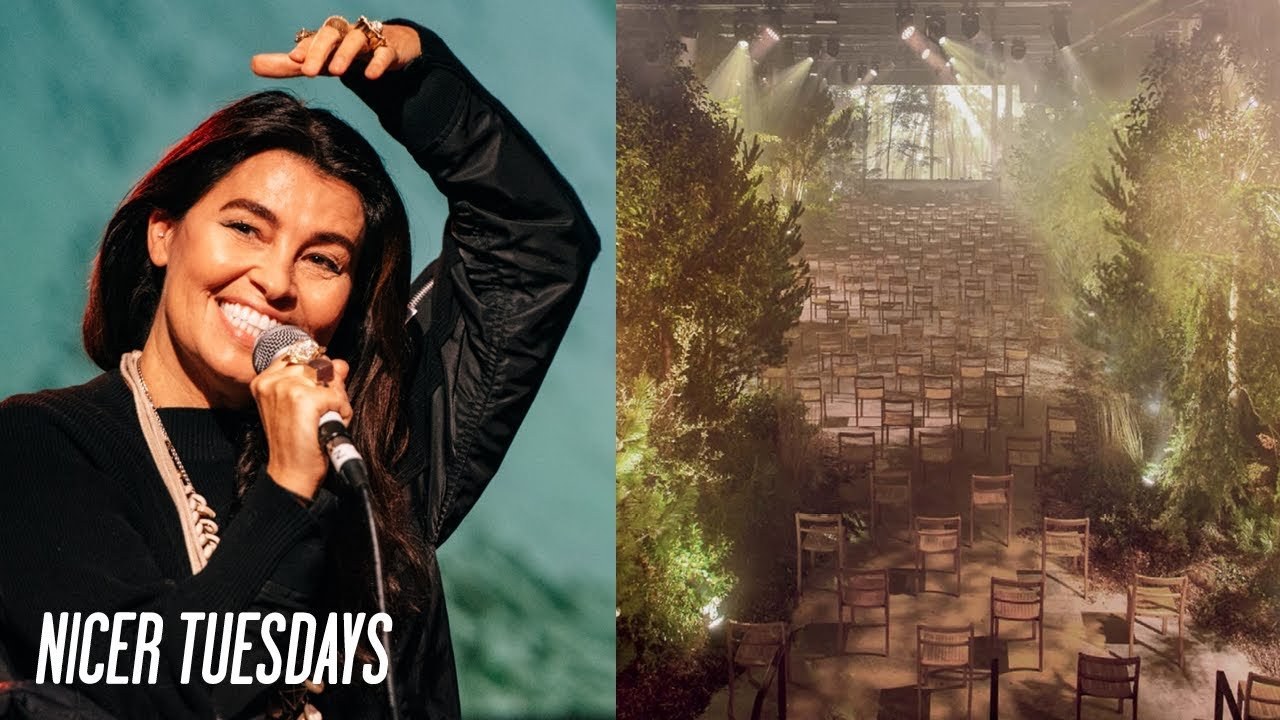
“Creativity thrives on constraints; it’s the boundaries that challenge us to innovate.”
Transcriptmay contain minor errors or formatting inconsistencies
[Applause]
hello welcome to nice Tuesdays I'm so glad that I looked at everybody when I wasn't Blinded By the Light cuz I said to olle this is such an amazing audience I actually I was a bit peckish earlier and I went across the road to Mangal to the restaurant and I watch you guys all queuing up to get in and I thought wow these look like really beautiful lovely people.
And I'm so happy that they're queuing up to come and see us have a chat and now you can't see them at all so so thank you for coming yeah how are you doing thank you so much for for joining us here tonight I'm going to unroe I thought I was going to be really cold but it's a weir the warmth of the warmth of the audience is is warming me up yeah how are you doing you're you're off to New York I think fairly soon.
But we managed to catch you before then yeah it's it's an interesting time I feel like I could you know it's a very healing thing to have gathered all of this work from 30 years of work and 50 years of life into this object and it's sort of a relief someone at lunch the other day said to me like they often do there was two people I didn't know them and they said what do you do I was said oh God do I have to explain it. And I had a copy of the book.
And I just plunked it on their plate I and I said look you read that I'm going to go and get my food and once you've read it you'll know what I do and and and I won't have to explain it anymore I think it's like it's like the best business card in the world isn't it it's just yeah yeah it's building up my muscles well listen you mentioned 50 years of life and 30 years of of your career I wanted to start by going way back to the beginning because you studied you studied theater design and I just wanted to know what it was about that course in particular that really appealed to you and why you wanted wanted to do that that in the very first place it's a really good question when I was I guess you know choosing what subjects to study I sort of ruled out the ones I couldn't do cuz I was crap at them like quite a lot of them. And then. I thought okay well I can do art I'm can do English literature I can do that and there was a group of people from my school who were going to art school.
But I just didn't feel like I was ready I didn't feel like I had anything to say yet and all these people who were ready to go to art school they were so ready to express themselves and to speak and to Give opinions and I I felt like I still had a lot to learn so I went to University and I studied books I just read English literature I read books for 3 years and of course the more I read the the more I wanted to make so I spent a lot of the time making things I I lived in this flat and it had shagpile carpet on the floor and all up the bath so I peeled up the carpet and painted pictures everywhere.
And I thought the landlord might be pleased but he wasn't and I had to paint over it all and put the carpet back.
But I I was constantly sometimes I don't know if any of you feel this but sometimes when you make yourself do one thing you're sort of Daring yourself to do the other I don't know if anyone else feels that.
And I was sort of making myself read when all I really wanted to do was make anyway finally I'd finished that course. And I was still no nearer to having an idea of what I wanted to do and somebody said to me after I'd done a foundation course you know most people do their Foundation course at 18 I was already 22 I was a mature student and someone said you know why don't you try theater design I was like theater design I I don't theater's quite boring I don't really like it you know it's a bit embarrassing you know there's people singing and music I don't like it and and they said yeah but you should go and visit this course.
So I went into this room and I just felt at home there it was like I had been it was like people doing what I had been doing since I was a kid cutting things up starting with words starting with music making three-dimensional models staying up all night and interestingly the course that I went to closed down.
But it's just started up again and it is called Genesis theater design course.
And it is exclusively for low-income and Global majority students specifically to try to balance our practice which is is imbalanced at the moment and it's a really exciting course if anyone's interested that sounds amazing yeah I didn't realize that had you previously I mean it sounds like you were a very creative Child and Adolescent and young adult I mean had you had a very creative upbringing because I have to say before you know preparing for this I I rewatched the Netflix abstract episode and The Producers go see my dad's tea Coes yeah exactly yeah they go to your parents house and it's full of stuff that you know your dad's made and he's like made a table and a tea cozy and stuff was there lots of going on when you were a kid yeah I mean when I was growing up you we you know our family had a nice house and we lived by the seaside but well. There were four kids my mom was a teacher my dad was a journalist and certainly if you wanted to give someone a present you had to make it you weren't going to go and buy it you know and you know.
So we made stuff and there was only three channels on the Telly in fact my mom got rid of the Telly I'll tell you quite a funny story we really wanted a TV and my my mom and dad didn't want us to have one because it was complicated they had sort of adopted some other kids for a while not adopted but they were looking after them for a while so they had three teenagers plus their own four kids and they didn't want the teenagers to be constantly watching the TV so they got rid of it. And we were only allowed to watch TV on a Thursday night and we'd go across to this girl Cindy Simpson's house don't remember the name Cindy Simpson.
And we watched Tomorrow's World on top of the pops and that was all we ever watched and eventually we wanted a TV so much that we were quite crap at the violin and clarinet and P we played instruments quite badly but we went busking in tumbridge Wells and and and we made a bit of money and we bought a TV and we gave it to my parents for Christmas as a gift so my dad was quite happy so we sort of got a Telly in the end but all I'm trying to say is there wasn't much to do you know we lived in a in a little Country Town in Rye near Sussex in Sussex and you know we made stuff and we didn't have many materials so we used cboard boxes and nonsense like that. And we just piece things together.
So yeah I mean it does feel like whenever I've seen you talking about your work making feels very natural and like something you've been doing since you were yeah tiny so that makes sense I guess from that theater design course you then I guess a lot of your first projects were at the bush theater in Shephard's Bush which is a theater of 78 seats I think or don't know if it still is but it was it certainly was actually the seats are a bit like the ones you're sitting now has anyone got anyone's foot kicking into their bottom that was like that's what it was like at the bush the it was that kind of VI was quite nice though isn't it yeah it's quite cozy I mean actually I've never you you guys have to tell me afterwards but are you all right comfortable yeah but what I guess like working in such a small space really intimate space what did that teach you about the art of kind of stage design when I made my first projects at the bush theater I did like five of them in a row in that room and what I learned was to have a relationship with one small room the room became one of the actors the room became a protagonist in the work. And I developed a relationship with that room and I could reach the ceiling I could climb up on a ladder and change the light bul myself I could stay up all night I had the keys to the theater so I could paint it make stuff and I learned how much magic and and and also this was a time in British film history when films were particularly underfunded so quite a few Young Writers were really writing film scripts that they couldn't get made so they would write a script with like 64 scenes it' be like okay we're in the park now we're in the bedroom now we're in the pub you know and and you couldn't you didn't have the option to try and make a real bedroom or make a so it made you think in a more lateral way about how to evoke place and how important was place anyway I mean because you used a lot of projection I think then right or this was I know that you did at the national when you did Harold Pinter's betrayal that was when you used a lot of projection I remember you saying at one point and I guess on reflection you said it didn't really need that I think your the quote you had was like it's a very happy play in a white box and you'd thrown a lot of projection onto it.
And I guess how much of your work now do you feel like is about maybe self-editing refining things selecting rather than throwing everything out a project like you did like that with that project I mean I think it's a really good question around how do you self-edit what what does something really need and that just takes time to learn and I'm really glad that I didn't self-edit too much at the beginning I'm really glad that I was so hungry to try things and to you know be a bit too much some of the plays what what I meant by that comment was in theater I became a bit too much you know I would just like Chuck everything at it. And it was like why don't you go off and do pop music you know because I was almost rejected not no I wasn't rejected but it was it was a better place for me to put that energy probably in the end it was better accommodated in music by the by the of early 2000s I mean you've worked with you know youve done some enormous shows for the likes of Beyonce as I mentioned and many other enormous names in in the music world do you think you could have done that work without that grounding in theater I mean I want to come on to that work.
But it's just interesting like how how much do you feel like that influence of of the early work I guess in theater it's a really good question.
Now that I run my studio and I have you know eight designers practicing with me I feel it's really important that when we do theater and Opera projects everyone in the studio has AG go at them because what you learn from the focus and the rigor and the limitation of theater I think steals you and hones your thinking in a very specific way which means when you go on and you have a big budget and there are far fewer parameters you've built up a muscle in how to think with some rigor and to root yourself always in what do we really need and what does it mean otherwise there's a real danger as some of you I don't know if many of you here practice in music or if you practice in you know creative making in any way.
But there are so many invitations for us to make things without too much meaning and and certainly what my my team learn as I learn is every single gesture must be intolerant of a lack of meaning that's an amazing phrase yeah no and I guess if you have if you were immediately given a massive budget you wouldn't necessarily know to do that right you could because anything is possible you could almost go in any direction yeah you maybe lose that that that meaning well in a lot of the other areas that I practice in often the first thing is what what do you want to make not why do you want to make it you know and and what what materials do you want to use or what equipment do you want to use and that's all sort of irrelevant until you know what you want to say and why and who's it for and how is it going to actually be worth saying and in what way is it going to change people's minds in any way how is it going to touch them otherwise it's not none of the rest of it means anything.
So that's what the grounding in in this type of small scale work that was a bush theater piece there that was a really early dance piece so that that grounding was important and still is you've collaborated I mean we've met mentioned a few of the names but yeah you've collaborated with some of the biggest names in pop music music generally you once described it as saying you you you found willing collaborators who you've been able to align your Paths of inquiry with which is a lovely way of thinking about it how much do you lead that collaboration from the beginning and how much do you let them lead it I'm really interested in what that looks like at the start of a project and as it as it kind of continues it's a it's a really good question.
And it's one I get asked quite a lot because there's a really a really interesting I think fascination with who decides what where did the idea come from who's telling who what to do what's the hierarchy who's the boss you know and honestly the the outcome is the boss the show is the boss you know and and and after a while that starts to become clear when you're any of you who've experienced this when you're ID in collaboration or as one of my friends in the book Chris Heath calls it in Collision CU sometimes it's a collaboration. And sometimes it's a crash and a collision and the outcome can be equally valid whether that feels like a collaboration or a crash collision you know they they can both produce a worthwhile thing.
But the as you start doing it you begin to have a sense of what's possible the the V diagram overlap between your batch of poems your personal story line of inquiry area of interest and your collaborators and after a while you tune your gaze in and you can see this hovering overlap where you might just find common ground but you have to find new language every time and you have to trust it's like one of those you know those cartoons where Mickey Mouse or whoever steps over the cliff and they just stand on air for a minute before they fall you you just have to trust that you're drawing a line around something and you don't know where the line is going to end if you already know what shape you're drawing then you know you're not developing your craft probably the idea of like a kind of creative productive tension I think is something that I looking through your your work it feels like it's there a lot of the time I guess there's there's always this idea or often this idea in your work this tension between kind of power and vulnerability it seems seems to crop up a lot why is that a kind of theme you return to you know from theater to these kind of incredibly celebrated celebrity artist that you work with I guess is it about expressing something in the artist or is it more about how it makes the audience feel where where what are you kind of thinking about when you look at that tension I I've only started thinking this lately but a thought I've been having lately is this is that working in big music presentations concerts stadiums sphere really that form of large scale concert is only really 60 years old and it began in 1965 with the Beatles really it began with them on telly cuz TV had just really begun to be in everybody's homes and they were the first band to have this TV intimate reach so they're in every they're the first band to be in everybody's bedroom or probably TVs weren't in bedrooms by them but to be in everyone's living room they were the first band that penetrated into people's homes like that so when a young person who was a fan and felt that intimate connection with the Beatles and with their music and with their faces and their hair and their clothes when they bought a ticket to Shea Stadium which was the first ever stadium tour in well it wasn't a tour it was a oneoff in 1965 they thought they were buying a ticket to that what they felt when they saw the the film closeup the camera closeup of those four boys men on TV they thought that's what they were buying a ticket to but of course they weren't they were buying a ticket to a stadium they couldn't see anything they couldn't hear anything no one had figured out how to protect a band in a stadium and how to you know augment the sound or show the face so in fact it was a dangerous situation the band weren't safe because they were you know kind of threatened by a mob that were disappointed because they had bought a ticket to intimacy and they were at a kind of Riot couldn't see couldn't hear so in a way everything that the art form's been doing since 1965 it's only 60 years is to try to you know ameliorate that and any of you who go to pop concerts know that there's still a way to go mainly what you feel when you arrive in a stadium is okay this is a sporting environment that's trying to be a place of communion and art.
But I still smell the sportiness of it and the main thing that you take away is oh there's a lot of people been up all night putting some gear up you know it's a load of trust it's a load of lights it's gear and you know that that gear got up there with a load of machines and Men up ladders and up Genies or whatever they were doing but it's industrial toring gear and and so much of the work that I try and do is to mitigate against that like what's the medicine and actually this one at the sphere has been a bit of a revelation of course there's lots of things that we could critique about it but what I will say is it you can't see the gear you know the speakers are behind the screen and that's a bit of a revelation. Actually. And it's made for music I actually wanted to come on to the sphere because it is quite incredible and watching you you obviously worked on you's show for the sphere which is that that venue we just saw in in Las Vegas I it was described somewhere as the the best American invention of the past 10 15 years or something which you know you know we can discuss but just talk us through that that project. And I guess like what working make making work sorry sorry on that scale what that's like and and how it was different to anything you you've done before I guess yeah I mean this we were worried about doing the sphere we were really worried about the amount of energy it consumes about who is it for what's it really about.
And we made a decision that it's an inauguration of a new building and that can only happen once and I've been fortunate enough to inaugurate three or four buildings now. And it's really special the first time a building sings the first time it hosts its guests its audience and it starts to Define its character and you may have doubts about every atom of emissions that went into building the building that go into powering the building what I will say about that one is they are committed to 70% solar power it's not there yet but they have made a public commitment to that which is something which not all new developments even of housing let alone theaters and public buildings is doing but we were able to launch it in a way that celebrated all the endangered species of Nevada and became a group art show. And included John Gerard Marco bramba and briano and myself making artwork. So if you're going to inaugurate a building I felt it was done right and people are are feel are enjoying it so and it looks amazing I mean it looks like kind of nothing completely out of this world you spoke about how I guess like Stadium gigs and and you know concerts generally have changed over the past 60 years or or certainly since since the Beatles you've also mentioned before about how you used to design for the people in the audience and there was probably one professional photographer there who was you know very closeup and taking pictures of the band and that would be what memorialized that that concert whereas now obviously we've all been to music gigs recently where everyone's got a phone out how does does that change how you think about the show does it change how you think about the show are you thinking about the fact that it's going to be you know each person has their own audience afterwards and is broadcasting to that audience you know do you have to think about the square screen and what it looks like from a bit further away Etc I don't I don't design the show differently because of that.
But there's no doubt that the artist sees their show from every angle you know before they were in the show. And now they do look at the footage after.
So they know exactly you know they will give you notes and say well. Actually from that seat over there you know.
So there's a real Dem democratizing aspect to that I don't know I think the phone thing at concert is quite weird I get it.
But it does it does have a weird atmosphere to it it feels almost involuntarily involuntary the filming of a concert and I wonder I guess it's it's just to sort of be I guess people are in the moment and then they're also filming the moment so they can be in the moment again you know yeah I've always thought that it kind of slightly diminishes from the the being present in the moment when you're filming it but maybe I'm just oldfashioned I I was actually at the weekend gig in the Olympic Park and the girl in front of me she faced me for the whole gig she wasn't looking at me she was looking at her phone and she filmed the whole gig with herself in it. And I I tend I've really learned to not be judgmental about that because I just think being judgmental is an uninteresting choice so what I tend to do is I've tried to find a new word for selfie which is self-portrait.
And I think the art of taking a self-portrait is an honorable thing to do and an interesting thing to do and it's something that people have always done so I'm thinking of that girl and saying okay she was taking a moving self-portrait in which Abel was behind her and she was filming herself enjoying the show. That's my way of looking at it cuz I don't know how else to well the worrying thing is that she could have been filming you the entire time.
That's the the real concern I'm glad she wasn't doing that I guess a lot of the the tricks that you play I mean tricks is really you know yeah reductive word for it but you know playing with light and scale it kind of depends on the fact that the audience is often static and in one place you know viewing your work from from one place but you've recently done I guess more interactive and kind of fluid installations you know that an audience can walk through engage with how does that change how you think about something when the audience perspective is is moving it's not it's not static I mean I've got a real I've got a real admiration for audiences like I mean I did mention this earlier that you guys all queued up and you're all sitting here and you're all really politely and engagedly putting all of your attention to us here which I think is a really beautiful thing. And I think it's more more rare and unusual and I was you know highlighting that to Matt that you have this beautiful big audience coming to to be part of this conversation.
And so people sitting still there's a way Lindsay Turner who's a theater director I work with she puts it really well she describes what's happened happening in a theater she says the performers pretend that the audience are not there the audience pretend that they're not there. And we all agree to do this at precisely 7:30 we we still our ego for the greater good and I wow such a beautiful way of putting it. And so unusual that we decide it it I mean I cannot tell you how fragmented I often feel by my little hand going to my little phone I'm reading a book and the little hand I was like what what are you doing there hand why are you at my phone I was on this page why why are you there why are you checking your stupid Instagram you know.
So we constantly feel fragmented and we're our species is in a moment of wrestling with that in all sorts of ways so therefore the Gathering of an audience and sitting still and focusing is a beautiful thing equally there's a really lovely moment if you could say to this audience right now okay we finished the talk that was all cool we're going to cut a hole in this screen and you can walk in and everything that you just saw here you're you're fine behind that. And so I've started making installations like that MH where I make a little film.
And then I make a hole in it or I open a door in it. And I say okay you you've sat quietly we've looked at this together now now you go in and I I think that moment of shift from Focus engagement the stilling of the ego for the greater good into agency and determination yourself for how you're going to proceed through the next bit.
And then a final sort of act when you step out like well how will this affect my thinking how will this change me what will what what will I read what will be my next line of inquiry from this how will I build on this those are the three pieces I'm now really interested in fascinating yeah we've talked a little bit about technology obviously the sphere and smartphones I'm interested have you been interested in creating spaces in VR have you been asked to do it what's your thoughts on that I guess are you do you think in the future you might be making work for people wearing VR headsets sitting at home or is that not a world you want to be in before it goes if you were going to ask about AI these are the those were the last two pieces where the collective poetry Works a building 22 M high that wrote a new poem Every 90 seconds it could have written one every 1 second but we weren't fast enough to read it.
So we slowed it down and the previous one was Nelson's column and a Christmas tree is thing at the VNA both of which were made of collective poems VR uh I've tried I've been in the shark thing with my son I've put it on yeah I mean I I remember that the VR I really enjoyed I haven't made any the VR I really enjoyed was when Jr did it he made a beautiful VR piece and it was one of those ones where it was with a Sunday newspaper supplement I think it was the New York Times and you got a cardboard of course I loved it cuz it was cardboard and you made it yourself so you folded this cardboard thing.
And then you slotted your phone into the cardboard box and you put the cardboard box on your face so you stuck your phone to your face perfect yeah and that's how you watched it do you ever anyone remember that.
That's how you did it right you stuck your phone on your face and it was really clever because it the whole film was an interview between Jr and the camera and it was all about this magnificent he pie piece he made in New York with the one immigrant walking that he had overnight pasted to the ground I think it was a young Syrian gentleman who you couldn't see when you walked over him so people walked over him all day and then Jr went up into a helicopter and the one moment they actually used the VR technique really was when he looked down and you were wearing the glasses and you looked down. And it as if you were in the helicopter with him and you look down and you could see This Magnificent man striding like the biggest man in New York and he that moment of making this ignored invisible figure magnificent I thought well.
That's a really brilliant use of this technology so I guess yeah if I have an idea that wants to do that I will but for now I guess yeah I'm I'm very into the communal aspect of things that how people sit together how people's bodies behave together so anything that isolates I'm more interested in AR glasses than VR glasses I guess so okay thank you yeah interesting I want to also talk about well the book. That's between us because it is your first monograph an atlas of e develin it's coming out soon it's published by TS and Hudson in associate with a retrospective exhibition you've got opening at the Cooper H in in New York later this month it's 900 Pages it has over 700 color images it is amazing I've just had a a look through it and yeah it is absolutely incredible can you just tell us a little bit about how it came together how long it's taken to bring together and yeah what it was like to work on something this this incredible and massive I was trying to make a book for seven years. And I feel really happy that I finished it and my family are really happy that they not doing the bloody book anymore it's done but it I kept trying to make it and every version I made cuz in my studio we would piece it together print it out stick it together make a mockup cuz I was like I don't understand any of this flatband business I need a book.
So they kept making it we've got like 20 of these big ones small ones tiny ones giant ones thick ones but every time I organized the material it was a bit exhausting because I kept arranging it by project going you know this was a bit of text about it here's some sketches here's some more sketches and here's the picture of the work. And then.
I did that again again again again in about 260 projects and it it was just like going breakfast lunch dinner breakfast lunch dinner breakfast lunch and you just wanted to vomit. And it was it was sort of you know you looked at you went wow E's been busy you know it you you didn't particularly feel nourished or any kind of Arc of well what does that mean for me. And I I only wanted to make the book if it was going to be of use to someone who had it in their hand as well as it's obviously of massive use to me because I've spat it out.
So I feel great but it that wasn't really enough so I found a way to arrange it which I think actually works it's you sit with me in the studio for the first sort of 2third of the book.
And I sort of tell little stories and you only see things that I've made with my hand and then you enter into the work the photographs and then they're arranged in what I hope is quite a palatable digestible way because they're first organized by form and then by color so you kind of flow through them without feeling too tired MH or too overwhelmed and you and you hope I hope what it's done for me is helped me find threads through my own practice and what I really help it does well you know you don't have to buy the book you can look at the website or something.
But I really hope that my example is helpful to any one of you who applies your art because I think so many of us we find we have some skill or some sens abbility in art. And we put that in service of things we're invited to do so many of us are applied artists and then we look back and go but but you know I didn't choose to do all those things I agreed with some of them I didn't agree with others there was always compromise was it really my idea so few of us work with absolute Purity from start to finish on an idea. And I guess what the book proves and hopefully what my practice proves is that you can look back over your own practice as an applied artist and find your own thread that.
Actually in the end represents you and your identity and you can gather that into an album and say well. Actually. There was a kind of line inquiry there was a logic to that. And that's really healing and helpful to sort of look at your own purpose and your own identity and I hope that's what people feel when they look at it it's an amazing book yeah I mean it's it's feels so rich like yeah I feel like you could read it for years and come back to it and still find new things in it it's so dense and Rich it's brilliant and yeah perfectly in time for Christmas so yeah.
I think people should buy it not just go on the website but I've taken up a lot of time.
So we're going to have a few questions that were submitted by the audience now we can do them quickfire but we had a question from Joe Heyman how do you apply your design principles to smaller scale events where is Joe put your hand up Joe you have to stand up because I can hardly see anything Joe hello Joe thanks for asking the question what was it again oh yeah how do you how do I apply it to smaller scale that's it yeah I I I think with determination and knowledge that it doesn't matter how small the scale is I mean I still you this book is quite a small scale thing I've never put so much bloody effort into anything. And it's small scale but in ter do you mean in terms of like a small for yourself in a small scale theater yeah are you go on shout it out are you are you a set designer what do you do okay. So when I worked at the bush Theater which is quite small scale the director there always used to say to me big ideas for tiny spaces and I in a way weirdly if you are in a small space trying to make one gesture just one in and if you if you have a budget of 50 Quid just say well how many of one thing can I get for 50 Quid it might be 50 bin bags you know. Actually there's an example in the book and and maybe in the pictures of this of a piece I did at the Royal Ballet and I think the budget was £300 for the set or maybe it was 3,000 I can't remember it was it was even whatever it was it was three it was too small.
And it was small it was a small number at the time. And I just said it was £3,000 and I said well what what can I have you know what can I have 300 of for £3,000 and we just had 300 white scaff bars you know and just something like that just go don't just pick one gesture one and and then think about what would be the gesture that would you know if it that would most bring energy to the space even if you turn all the lights out because the room looks turn the gesture is that you can't see anything and just think do the sound just do one bold thing. That's my advice love it this question comes from M ariro I hope I'm saying that right how do you deal with maintaining creativity and uniqueness as budgets grow so as the budgets get bigger how do you still maintain creativity and uniqueness questioner where are you m Aro you here are you over there Hi how are you good thank you thanks for asking the question. That's in a way even a harder question than the previous one I think cuz that's when things can get you know generalized bloated and generalized and Bloated again as you know.
So I think again the answer is quite similar it's it's what's the gesture you know even today. I was having a conversation with a really intelligent director who said to me oh I thought the castle maybe should be like this maybe it could be a bit like this I was like what are you talking about I I don't want to talk about what this Castle's like what's the gesture what what's the sweet what what's the meaning what we trying to say you know cuz nothing else is worth bothering with so I think as soon as you find yourself decorating and you know try trying to think about is it blue or is if you're asking yourself the question should it be blue or should it be green then the the foundational work of why it should even be there in the first place hasn't been done so I think the biggest recommendation I would give is if ever you find yourself yeah in one of those kind of decorating questions then dig a bit deeper cuz you're you're painting something that wasn't really built yet and go back to the root of why you doing it. Anyway.
And is it. Actually worth doing and if it's not then don't do it unless you're being paid and then try and think of a really good reason for doing it better than the reason that you're being paid my a a friend a friend said to that me what once I said to him he said why are you doing this I said oh well they're paying me he said that's a really crap reason for doing it I said yeah but I need he said it's still a crap reason he said you may need to be paid but you've got to find a better reason an additional reason. And I' that's really stuck with me it's never good enough final question. And this one's from ish Brisco what advice would you give to yourself when you started your career knowing what you know now with this amazing where's the questioner iish again sorry if I'm saying that wrong yay hello thanks for asking the question advice say yes to everything yes just say yes to absolutely everything at the beginning because everything you do you'll learn from you might learn that it was a crap idea to say yes but you won't learn unless you say yes that's my advice that's lovely one final question for me you've said that you bring people together in temporary societies and You' you've spoken this evening about how that Comm aspect is something that you're really interested in I mean Society can be quite a tricky thing to get right I guess we've all seen that in recent years what do you makes a kind of Ideal temporary Society I think there's a lot in that question I think the fact that everyone sits down together with respect and quietness and respecting stilling stilling each stilling their ego that's already ideal that we talked about earlier.
I think the fact that we come in as a group of people.
And we leave as a slightly different group of people. And we all went through one experience you know if we've all been singing together we all left having you know a r brought to life that part of our brain that sang that particular note I guess what I would mainly say is what we're doing this evening and what you're talking about temporary societies gathering for you know shared experiences rituals this has always been our Birthright like going to sleep or eating this has always been something that you did to remind yourself that you were human and it's only in this odd moment of current Western society that we consider it remotely something you do on a special night out you know ritual would have been just a weekly Habit in every other culture and Society till now.
So I tend to think and and also sinthetic ritual the idea that you would go to a room where you would smell the incense you would see the light coming through the windows you would hear the music you would hear the poetic texts and you would be in communion with people that has happened in every society in every age until about 500 years ago.
So I would say and and none of it used to be called Art it was just called the ritual the thing you did the Gathering whatever.
So I would say that where we at now is more of an aberration from how it has always been and I think the more we can all you know as we move forward and make our work and you know gather as everyone's doing here and going to going to things together turning our phones off being unfragmented being focused coming away change that's us slightly reinstating what has always been our Birthright.
I think that's a lovely message to end on I'm afraid we've definitely used up all of our time but thank you so so much asz can we all have a huge round of applause as dein thank you thanks thank you
Latest Talks
-
Murugiah
Why you should reject the formula and make art about things you love
Watch -
Amber Weaver
How does contemporary type design translate into the wider world?
Watch -
Delali Ayivi
How does photography give us the right to imagine our futures?
Watch -
Will Anderson and Ainslie Henderson
Bringing stop motion sorcery to BBC’s Small Prophets
Watch -
Ollie Babajide Tikare
The importance of not flattening the complexity of observation
Watch -
Marina Willer
Design thrives when you find poetry in the simple things
Watch