
Eric Hu is a speaker and creative technologist known for his provocative insights on the impact of AI in creative industries.
Eric Hu
A journey through pixels, originality and AI
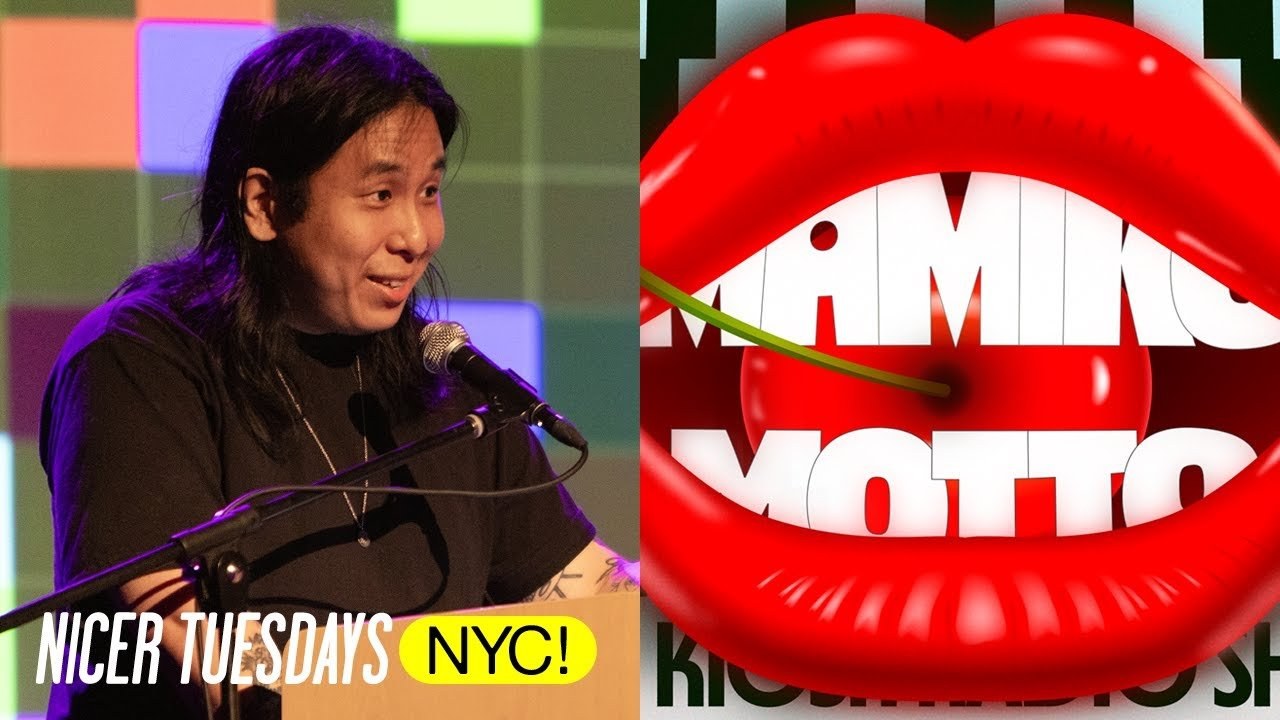
“In a world where pixels can be generated in an instant, originality is the new currency.”
Transcriptmay contain minor errors or formatting inconsistencies
Foreign thank you so much thank you everyone for being here and showing up it's it's so great I just after so many years of the pandemic you know big thank you it's nice that for just all the support for the last 10 years it's like it's so crazy to just you know to just religiously consume that blog when I was a student and to just be here right now. And I'm grateful to all of you who made time out of your Tuesday to attend here.
But I think you know for those who don't know me I can start to introduce myself and just what I'm about I think you know primarily I'm a designer I've had other kind of titles you know art director creative director I don't really give a it's it's mostly just very specific context is money but like you know I would say like try and true like we're you know the title the label the identity that is you know informed my work and what I do has just been designed because it's the primary domain of typography which is I think my first love before I even learned how to read I loved drawing like logos which is just like what a loser but it was you know.
This is just who I am and you can't Aid a goldfish for being wet so you know I you know I do a lot of just like you know I work with a lot of kind of cultural institutions music Etc and I've had that immense kind of prevalent privilege and also I think like pressure in a way.
But I also you know as has been eluded like a huge just like fan and just obsessive about technology I got my start creating websites so you know coding and everything has just been this fundamental kind of dialogue and everything in my work.
But I think mostly I would say I use like what I've learned in my expertise on just pretty dumb at the same time I think some of you might also be just familiar with the work where.
I started the design team at Essence and you know rebranded the company and so you know that was like one of the proudest kind of just projects I've done in my life I've also you know worked at a Fortune 500 company as a cognitive machine but also just like really kind of memorable experiences but I don't really want to talk about that I kind of this is a new talk so I'm a little bit kind of nervous and there's not really that much like work about it it's it's just I've had a weird kind of thought and it's just been in my mind for the longest time.
And I promise you that no blunts were hit in the making of this presentation but you know. I just I think recently I've just been thinking about this question you know are images created or are they discovered and believe me it sounds like really obviously dumb or just not even a question at all.
But it's something that the more I really try to fundamentally think about it with I think the things that I've learned and what I know about the years it became kind of a more ambiguous or more vague kind of like answer space that I wasn't really sure what happened and so I think I'd like to start off with that talk and just maybe kind of go into fundamentally like what makes a digital image in particular and you know for that I think we have to start at the atomic level the pixel you know the singular most irreducible unit on a computer screen I think you know thanks to the wonders of Technology there's definitely a lot more pixels on everyone's screen this year unless you're you know you want to be like a cool guy or something for no reason.
But I think you know it's one of those things where.
I think we're very aware of but we're really not at the same time.
But I just want to take everybody on a little bit of an exercise so how about we create like a really tiny cute little baby image really quick so you know we'll call this tiny image let's make it five pixels by five pixels and let's start.
And so we have this you know little small but very honorable canvas within which you know it's think of this as a grid where where a pixel is essentially light pointing at a screen right it's either off or it's on. And so with that you know you can turn everything off you could also turn everything on you could turn some things off and you could turn you know some of them on too and once in a while you're going to get something where it's like hey that looks like something that looks like a symbol that I know you know or I could see a face in this.
But I think you know most of the time like just as you're just randomly going through the cycles I would say the majority of the images that you're going to put forth are pretty random and maybe not have kind of meanings but I think the Simplicity of this is really interesting because with that off and on zero one you could kind of just map like an image kind of numerically you know.
And if you format a string and decode it in a certain way you could get that image again too but you know I would say that like because it's a 5x5 it's like you know like tic-tac-toe there's kind of a set amount of images you can make because of just you know how small it is right it's not infinite you know there's only it's just like spinning a random number and random distributions there's there is like a finite amount right. And so I did the math and it's about 33 million images it's a lot it feels like Infinity but it's not Infinity and then when you talk about color it gets a little bit more complicated right.
So we go back to the pixel and you know when we talk about color there's you know a pixel is comprised of like three lights that shine in red green and blue and you know in our most of our like computers and our color spaces we number them like zero to 255. And with those numbers we're able to just represent 17 million colors right and human beings we could see mostly a million. And so most of that those colors we can't even perceive so effectively you know within these like three color combinations we could see most of the things that a human being can see and again a lot of it's going to be random if you just kind of just number it numerically once in a while you'll get something where it's like hey it's still a tiny image I'm not completely sure what it is but it might be a sun in a blue field or it might be a UCLA Jersey you know but not sure but again it's still kind of just you know if you're just doing a bunch of just random images on a 5x5 grid a lot of it's just going to kind of look pretty random but even as you know there's more comp there's more complexity to it it is still a finite amount it's a much bigger amount maybe something that it's like very really hard to kind of fathom but again it's not infinite right. And so I think when you're talking about an image like conceptually it it may feel like Infinity but the moment you start putting parameters on it you give it Dimensions you give it a size it's a big ass number but it's it's not forever right.
And so you know again it's like our images kind of created or discovered you kind of get into this kind of weird philosophy space where you know not definitely not the only person who had thought of this there's a lot of analogies over history like the infinite monkey room and what that is is that if you get a room with an infinite amount of monkeys you know all typing it's going to be gibberish for most of the time right. But in an infinite amount of time you're gonna randomly get a work of Shakespeare one moment you know. And it's like especially if you limit it to like a specific word count and whatnot too. And I think also just again how you you know we're able to represent certain images like numerically you know you can kind of just phrase it in a different question like is Math created or discovered you know it's not we're not creating numbers out of thin air it's like we got to the highest number we got to create a new one it's you know those numbers exist you know in our universe it's just we haven't really labeled it right. And so I think you know numbers of course kind of form this big component in code and I know.
This is a room full of graphic designers illustrators artists and stuff so I apologize but you know just please bear with me for a second let's just look at a very simple line you know and pretend if this helps just pretend it's geometry not never mind just forget it don't don't don't bring it out math class sorry let x equal zero it's it's a very straightforward thing it's like you're assigning the value of zero to a constant that you call X right.
And so you're not creating the number zero from X you know you could almost think of it in a way where there's this program where Dan abramoff he broke it down to me in a really beautiful way where it's like if you think of your constant you know as like yourself in a world and you think you know in this world you're surrounded by an infinite space of stars imagine there's you know an infinite amount of stars in the sky and they all correspond to a number you know you might get like zero you might get like a huge number you might get like a triple digit number but what you're doing essentially is that you're pointing at a star and you're saying like that's what x is pointing to and we're going to assign a different value you just you know cut that string loose and you point it to another star it you know it's like what's the point of that right it in programming it's pretty profound because it it deals with a lot of like you're not really creating new resources you're you know reusing and relabeling but again you know what does this have to do with Just Like A random assortment of pixels right like none of us really make images that small. And so maybe there needs to be a more kind of practical example where you know.
I think about noise a lot like a noisy image like just everyone that's ever tried to take an iPhone photo in the dark knows what I'm talking about there's just kind of just specs everywhere just like random like randomly colored dust right and even this one it's okay but then let's look at like a really noisy image let's see what's going on right if you try to you know ask a computer what this is it probably can't tell you because at the atomic level it's just a random assortment of pixels but what's crazy about you.
And I is that as a human being it's kind of easy to see what's going on it's you know two people and a bunch of balloons but it's wild it's like when you zoom in it's it's really just a random assortment of grids but as human beings like we're so gifted at pattern recognition that we're able to see something just like we look at clouds and we could see animals or constellations in the sky and think of like Greek Heroes were able to find that signal in that sea of noise right and you know eliminating noise has been just this really hard problem like anyone that's trying to you know make noise go away in Photoshop I think they know what I'm talking about where the image kind of just looks kind of deep fried and it's like not really sure like what's better and what's not and you know because I think mathematically if you try to do it through code it's like okay let's take an average of this area and let's locate like the one pixel that stands out you're not really getting that's not really how it works right like at some point you know if if we could tell a computer like those are two people it might make better sense of like what color belongs where and what color you know doesn't belong in an image and you know.
That's what researchers and Nvidia tried to do I think 10 years ago it's like hey we can maybe train you know an AI kind of data set in like just like computer vision and deep learning and we can kind of reinforce what things are and it could denoise things in a in a better way too. And so what they really tried to do was like they give it an image and they labeled it.
This is a cat and then we're like let's put some noise on it and because you know you know it's a cat it's able to denoise it pretty effectively and that's pretty good so you know they added even more noise onto it it's like can you see a cat from that. And it's like you. And I could still see that cat and you know training this over years and years and just millions and millions of kind of iterations they're able to denoise that right.
And so then came the ultimate Challenge where it's like can you see something. And this is I think the limits of our understanding right where it's like I don't see in there. And I don't think most of us will but we tell it.
This is a cat and it's like wait a minute because of all that iterative practice like kind of training of all these years it's able to do so and then you know by 2018 like the researchers in Nvidia were just like you know really Joyce it's like it's gotten really good but then you know this sub headline had something that felt really ominous where it's like low light photography magnetic resonance imagery and physically based synthesis what the does that mean right. So here's the thing right a computer isn't doesn't know what to really do with this until you tell it.
This is a cat and then one guy you know one person I don't want to assume the gender but like one person or maybe a few people I don't really know the entire backstory they're like what if we lied to it what if we told it it's a dog and this simple very straightforward AI thing to remove a very specific task the use case suddenly became much more infinite because once you tell it it was a dog you know you get essentially like hallucination.
And it's you know it just needs a little bit of nudge and it's able to kind of complete the rest and you know when I look at those noisy images in many ways I just kind of think back to those like random assortment of pixels you know.
I think when you're working with AI whether you're in mid Journey or you know whatever stable diffusion whatever software you know the process you're entering this thing called latent space and again it's like this infinite hallway of like every possible image you know we give it a prompt and it gives it a random number and from that random long 18 digit number it's able to generate like a noisy tiny little 32 by 32 image and from there it's getting our prompts treating it as a little bit of a nudge and evolving it right. And so I think a lot of people engage with AI but it's like you know there's definitely like legitimate questions of plagiarism like consent Etc but you know at the end of the day it's like when you really try to understand the platform it's not necessarily that different from how you.
And I may be taking our experiences it's like we're trained on a bunch of different kind of images and we're you know making meaning out of them we're assigning labels to them in our head and when we create work we're going through that Infinite Space in her head and we're almost trying to grab something out of The Ether. And so you know in a way it's like if you're talking about a digital image like a 32 by 32 image or even like a 500 by 500 image pixels that is in a way it's like those images it's just probability at a point in a way conceptually they already exist and in a way we're kind of just pulling them out of this ether in a way right.
But then if images might perhaps be discovered you know is Art discovered absolutely not you know it's like and don't believe anybody that tries to attempt to tell you this.
This is something that I think what you. And I all know too right.
And I hope that I wasn't really leading you on in that direction because it's just I think every everyone here that has created an image or created an illustration or done something we know in our hearts like that is such an oversimplification of that question I think even when we talk about Ned art and stuff it's not really something in the computer like the art happens because of this context you know a monkey could land on Shakespeare but it's still not Shakespeare because Shakespeare Works came out in a very specific time you know Shakespeare was a very specific person with a very specific history what this has is context right and human beings are the ones that provide that context and context is this important building block of Art. And so this thing that I said that was random in the beginning I could give it meaning too I think it's a cool dude enjoying a tasty sub and now I kind of see it right and the point is is that like everything is is random and tells it isn't you know there's these aren't random numbers that's like the near area code my hometown area code like my ZIP code and Mike Jones's phone number my birthday and you know it's like the fact is like even when you give us nothing but numbers like just numbers like just neutral numbers we come up with meeting ourselves like we literally have lucky numbers right. And so the thing about AI thing is just like yeah I've experimented I've dabbled I've been genuinely impressed like what I try to do is like I really try to just break it as much as possible like I'm not really trying to imitate something I'm trying to just get it to make ugly stuff and just being amused by it I think once in a while I've tried to make like more impressive things like making type do this.
But I think the funny thing with like it's like filters it's like the moment it's like mainstream it's kind of boring already and so you know I I the reason I I think I wanted to talk about this. And I know I'm going a little bit over time.
So I'll be a little bit mindful but you know it's been kind of a tough year I think for me and a lot of my colleagues like we're I think all a little bit embarrassed to kind of admit it but for some reason like the Scopes are twice as big and the money is like half as much you know at the very least and it's it feels like you know in this like kind of weird economic downturn that like these new tools that you see like weird you know Twitter Bros who they themselves couldn't even pass a Turing test like saying that.
This is like the end of our careers and whatnot it like all of that just like feels really weird but at the same time it's like people could keep squeezing but I think you know we had the juice and I and I think a lot of times there's this human tendency to try to describe the world in very simple engineered kind of mechanical terms but the moment we think we like figured it out you know it's like the greatest like discoveries of the 20th century you know Einstein's Law of like relativity second law of thermodynamics you know all of these things are like they talk about this like complex irreducibility but in a weird way what we discovered is that like these laws are derivable from the point of view an observer you know it's like in a weird way it's like the more we try to describe the world with numbers and data points we realize that like there has to be an observer to kind of make the math kind of lean up right.
And so the thing is is that like with AI it's like there's a lot of people that are very scared of it a lot of people are very dismissive I feel like both things just kind of don't really kind of feel right like I'm not scared for art in a way I'm not really scared for artists but I'm scared that the people that pay us are definitely going to try to do something kind of funky and I think that's a little bit I think kind of different right.
But I think what I try to tell my friends it's that like I'm not going to try to uninvent the steam engine but I think we could really put our efforts into making sure that the train stations serve everyone kind of equally and that means like advocating for consent on data training right.
This is like the original sin of the internet we made ourselves like better you know design has had a much more meteoric like reach and like Cultural Literacy in the last 10 years because of social media but we've almost just given up all our materials for free to be used on training sets right. But in a weird way it's like I don't necessarily regret the connections that I made like this is all due to us you know feeding these like AI language models in a weird way it's what also brings us here tonight too and the fact that you're all you know taking time out of your Tuesday to come here I don't think this is something that you could really kind of describe in a single sentence or in an overly kind of simplified way.
And so what I'm thinking about myself is that like you know Creator maybe that word has just too much baggage like you know it's like they'll say like I can never be creative maybe it will that's not really to me like it's an okay word right like I'm I'm not really like fighting it I I think I know what I do is special and I know what I do is unique and maybe I have to think of it in a different way that you know that if I think of myself as a planet and I think of all the images that it could have ever made in this Infinite Space I feel in a way like an alchemist where I reach my hand out into just like that infinite Sky you know. And in that kind of sea of just randomness I pulled out the images that you know I made for a reason.
But then I assigned the meaning to them and with that I hope I could do this for the rest of my life for as long as I can and I hope the same for everyone too I'm not really sure where I'm going with this but thank you so much and thank you for your time [Applause]
Latest Talks
-
Murugiah
Why you should reject the formula and make art about things you love
Watch -

Amber Weaver
How does contemporary type design translate into the wider world?
Watch -
Delali Ayivi
How does photography give us the right to imagine our futures?
Watch -
Will Anderson and Ainslie Henderson
Bringing stop motion sorcery to BBC’s Small Prophets
Watch -
Ollie Babajide Tikare
The importance of not flattening the complexity of observation
Watch -
Marina Willer
Design thrives when you find poetry in the simple things
Watch