
David Uzochukwu is a photographer, filmmaker, and artist known for his otherworldly and dramatic imagery that explores themes of strength, masculinity, resilience, longing, and belonging through digitally manipulated work.
David Uzochukwu
Crafting surreal worlds where black mermaids surface and gods drown at sea
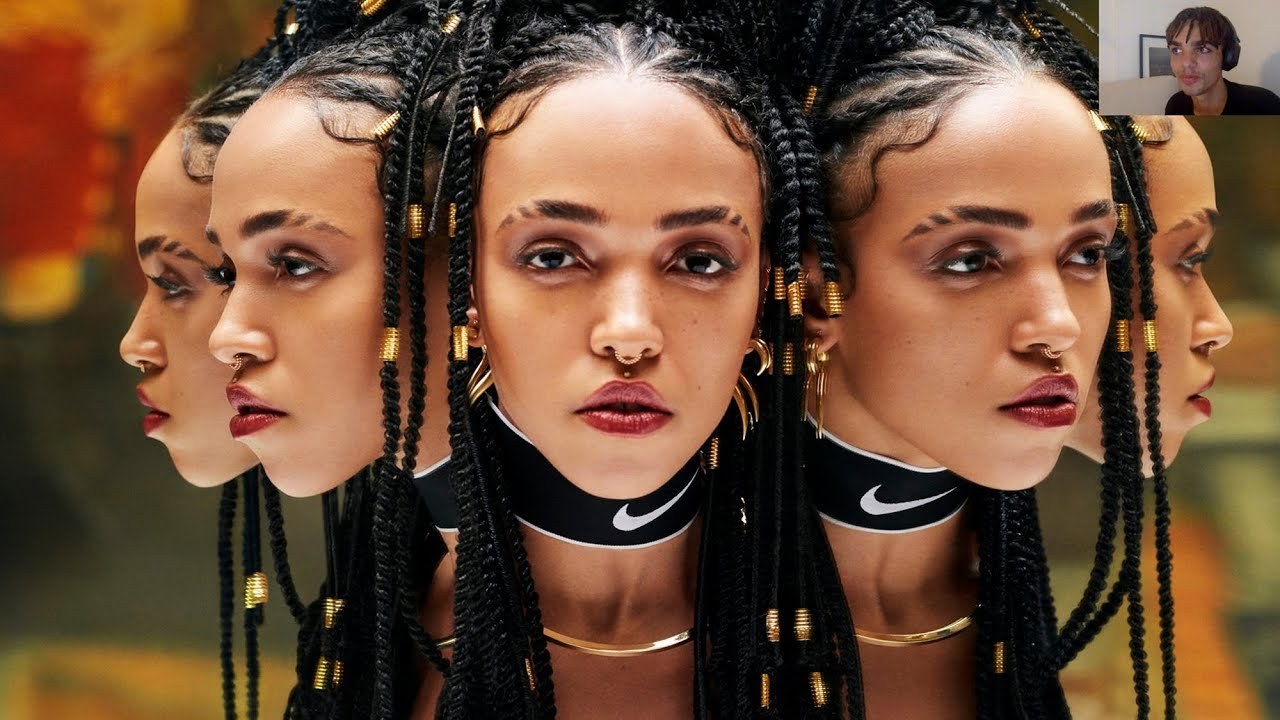
“Through creating these kinds of images, I attempt to cling to the things in life that inspire me, that feel like a breath of fresh air.”
Transcriptmay contain minor errors or formatting inconsistencies
Um it's time now for our second speaker and we're heading over to berlin to meet the photographer filmmaker and artist david uzo chukwu his work investigates ideas of strength masculinity resilience longing and belonging with these explorations often tackled through surreal and digitally reconfigured landscapes and characters on top of his photography work he's also just written and directed his first short film so today we're going to be discussing with david how he crafts fantastical stories and how he works with his subjects to create narratives that will later be finished digitally hi david how are you I think you might be on mute I can't hear you just yet it's been like literally one pandemic later and still starting thinking I'm doing great thanks for having me thank you very much for joining us yeah I know it's an absolute pleasure to have you here I'm very very excited to speak with you as per our kind of new look nicer tuesdays so you're not going to be giving a talk this evening but instead I get to ask you lots of questions and so does our audience so just another reminder to anyone at home if a question comes up comes to mind pop it in the chat next to your stream and I'll do my best to ask david before our time is up but first off david I wanted to ask you about how you got into photography because I watched an interview the other day with you as a 15 year old I think it was your first ever filmed interview how did you get into photography at such an early age though you know that that was about a photography kind of project.
So yeah how did you get into it so early yeah funnily enough I only very recently remembered how it happened exactly so I never had I don't have any artists in my family but I was just lucky enough to develop a crush on someone who was into photography and then I kind of just absorbed to their hobby and somehow it aligned with things I've been interested in before and just like collecting small pretty things and sketching and dancing and yeah surprisingly enough it was a medium that allowed me to kind of combine all of the things that I had been drawn to before exactly and then over time it just it just grew from shooting on the phone for two years over smaller cameras to committing more and more of my lifetime to it amazing yeah now it's a lot of great things come from those those early teenage crashes I'm sure I think one of the first things that maybe people will remember you worked on was it was a nike campaign with fk twigs again I think you were only 17 at the time how much of a defining moment was that for you in terms of your development as a photographer.
But also I guess for your you know your recognition your public profile as well yeah I mean it was it was a major moment I didn't feel as though it was a big moment for my development really I felt like I was I was ready I was up for it I was just really excited to be able to work with someone who is a deeply respect and to get that opportunity and I do think that it was a really huge door opener just because of the amount of recognition that is or that we do tied to both large profile artists and work for big brands yeah definitely yeah. I have that kind of star quality I guess but yeah totally understand what you mean when it's it wasn't necessarily about the your development as a photographer you know.
I think your your skills are already there before that I mean we're going to be seeing lots of your images up on screen while we're talking and I guess it's very clear like over the years you've developed this style of photography that's really kind of otherworldly and surreal you know thinking about it with kind of these protagonists who are both human but also non-human at the same time and the world that they're inhabiting they're kind of they could be earth but they also could be a foreign planet and what is it about those kinds of images that's kind of always fascinated you yeah that's a really good question I mean first of all I have always I mean before I started doing photography I was I was reading a lot and escaping a lot and reading a lot of fantasy and I think it does both stem from a place where I'm just a lot of the time not super interested in a lot of things that surround me in the sense that I'm not so interested in a lot of like pre-shaped things.
And I feel like a lot of our you know close environment but also society you know just has been shaped by others and so maybe creating things that aren't necessarily linked to our everyday life that feel different that feel like a breath of fresh air are just that for me during the process of creation it's kind of like holding on to like all these tiny bits and pieces during your every day that make you feel alive and trying to stretch them and extend them and bath in them.
So yeah.
I think in a way it's a lot about control over the of your own every day some sort of freedom and the interest in and actively choosing how you want to see the world and what you want to focus on and what you want to see that's a beautiful way of putting it yeah and I mean I feel like a couple of the images that we've just seen on screen are a really good example of this I'm keen to hear about your your process and one of the images that we just saw you know it's a man in the shallows of an ocean there's kind of spines or fins running up his back how do you go about making that image I mean what was the process that went into that is it mostly a digital process is it mostly an analog process yeah keen to hear what that what that kind of looks like yeah I mean there's not one process per se but a lot of the time I sketch everything out beforehand so I know pretty much what image I at least you know want to aim for also because it's just otherwise I would just during shooting especially if other people are involved or just be freaking out trying to be like okay what is it that I wanted and how do I need them to put their hands and so yes things are sketched up beforehand and then I try to I'm not like they're actually two images I think two images I'll think of when you describe it like that is it the one with like wait is it the one with like two people kind of slumped over each other or is it the one with one character alone in the sea the the one with one character alone in the c is the one I was thinking of yeah okay okay love it I mean for that one I shot I mean there's a lot I try to shoot as much as I can in camera a lot of times there are just very you know limitations limitations that you're confronted with so for that one obviously I couldn't find anyone with a like door saw like with a with a thin so I needed to shoot some plates of fish I needed to I waited out into the ocean and shot the character right there in the sea but then also the background of the image actually stems from landscapes that I shot while traveling elsewhere.
So it really depends how much of an image I can you know as much of it as I can make happen in camera I do but then a lot of times I also don't necessarily bother like it's about like what what what is what's the least effort how am I going to get my image the most efficiently and how am I most surely going to get the image that I want and a lot of the time that means that it's gonna come together in post-production.
Anyway or be stripped from any anything that reminds us of like modern society or yeah.
So it's it's very much a one large the parts of the process that are analog and they're digital they kind of fuse yeah really interesting and I'm also really interested that you you start your process with us kind of with a sketch is that is that literally with a sketchbook kind of drawing these bodies and what they might have as kind of attached to them or on top of them absolutely yeah totally I have sketch books filled with ideas but it's also it's really interesting and they stick with me for years it's just literally seeing very much.
And then trying to somehow go for it.
And sometimes you know when you don't get the images worse to try again reshoot it three four times or sometimes you're lucky and something nicer happens or something that yeah in a way you can't control it either way yeah but there's always definitely at least a pretty precise guideline of where I'd like to be at the end of the shoot that's so interesting I I found it fascinating because some some photographers will say you know they really they kind of think and they have their imagination comes through the camera you know they'll need to shoot a lot before they get the idea whereas you starting with a sketchbook and a blank page is such an interesting part of the process I do think that in a way it's also a downside to the process and it means that I mean it needs a lot of practice and it needs like me shooting a lot in order to kind of leave room for for improvement and leave room for just yeah luck to kind of play play its role yeah because I think it can be really easy to kind of rest sit with these ideas that you've been sitting on for for years and not really push them any further or stop questioning them.
But then again also maybe the reason why you're sitting with them for years is that they're like not quite ready to be made yet and even after shooting sometimes images like the one with the with the fin I think that one if I had it unfold on my computer for at least three years just because sometimes things take time to come together how you want that's an amazing kind of yeah insight into how much patience you need and how much kind of yeah how much development these ideas require and I wanted to kind of pick you up on one other thing you mentioned there you said you don't want any kind of signs of modern society in your imagery I mean is that something.
That's in the back of your mind when you're when you're making this work is kind of tapping into something a bit more primordial or a bit more I mean obviously these are very natural environments and they're kind of natural shapes as well yeah are you trying to kind of I guess get away escape modern society by finding something a bit more primordial maybe yeah I'm wondering if I would say I mean in a way yes I think that's that's the spirit I'm wondering if primordial is the word I'd use because I feel like it's not necessarily about going back to some like presupposed space but more about just visualizing something that is is already there and there's like almost a parallel plane not visualizing feelings and for some reason for me that rarely includes like yeah the things that I'm surrounded with every day but it's hard to put it's hard to put into words yeah and also I appreciate yeah I've put words in your mouth there I'm sure there not necessarily but no no it's it's not it's exciting it's just I'm realizing I'm learning a lot about how it's potentially charge like the idea of of nature and wilderness as opposed to as opposed to culture and how the idea of nature can be used in order to you know in dangerous ways to kind of because because it used to it is used to to degrade or to kind of draw borders between nature and culture that are somehow violent so that's yeah stuff that I kind of think about occasionally very interesting I'm kissing how you now divide your time between you know personal work and the maybe more commercial editorial shoots is it relatively flexible or do you kind of will you go months at a time only working on you know a personal project or only working on editorial and commercial shoots yeah sometimes I mean it depends I do try to try to balance it when I take on commercial work I mean for the last two years I've done the only personal work and been very focused on like developing one particular series of these these black mermaids but I do feel like it's it's slightly overwhelming to try to just balance it all and do it all at the same time so a lot of times when I'm investing and you know investing my energy and in my force into commercial project I just don't have the the capacity to keep doing personal work which can be really sad but also it's just like a a reality that I wanted to make transparent and share because I know also some people feel feel like they can balance it.
And then I know in the past I've had moments when I'm like why you know why am I unable to just do it all all the time yeah but they require I think such different head spaces quite a lot of the time you know apart from just time and effort and you know not not sleeping but it requires such a different you know mind frame to get yourself into to create those different types of work I think yeah I do think there's some sort of I do think there's a difference and for the longest time I was trying to pretend that.
There wasn't or or act like there wasn't or but there's just so much there's a lot of collaboration and you really need to sit with other people and breathe with with them and align your ideas and that just takes a lot of energy to like get on the right the exactly right like wavelength and yeah as well I think you've got to be one of the few photographers out there who's also a student of philosophy I think you're still studying are you or have you now finished that degree no I'm gonna study forever I am studying stuff how did how did that kind of the academic studies and the kind of thinking about philosophy on the one hand how does that influence then your your photography the work you make with camera in hand I think that in a way I mean it structures you know instructors my thoughts and it helps me I do think that it helps in the moments before I take the camera in hand it helps with figuring out what it is that I want to do and why I want to do it finding ideas for for new series but then it also helps afterwards and it helps and kind of you know after the images have been made categorizing them.
And then finding like red threads and yeah just kind of making sense of them in a way that is separate from the intuition and gut feeling that I think you need in the moment that you make the world yeah interesting so there's almost like two speeds that you're so when you're creating the work there's like a whole set of kind of speeds and feelings around that.
And then you need to have the more reflective slower process afterwards yeah because I think there are so many layers to it I mean there's the conceptual layer beforehand and then there's a very I mean not necessarily I mean that's then there's the technical aspect of just making good images happen or of making good films happen and then you kind of need to bring it all into context again yeah but definitely sort of for me I think these are definitely phases I'm trying to do it all at the same time it's just going wrong yeah yeah I can imagine that's that's that's pretty challenging as I mentioned in the introduction you just wrote and directed your first short film called gotta demo I think I've said that right in the gym please correct me if I'm wrong yeah no can you tell us a little bit about the film can you tell us a little bit about the film and yeah I guess why you wanted to make it as well yeah now I'm super excited to make it I co-directed it. Actually with varus challenge and we thought we came across the so wait let me start earlier so gato de maroon is I mean his word is german it means dusk of the gods and so it's the age or the period in which gods die and so we came across a a short film competition about that was asking for short films about europe and and we were brainstorming about what are the images that come to mind when you think about europe and the first and most yeah the first thing we're without question all these images that we have of people drowning and being made to drown on our shores or in our waters and we somehow wanted to make that pain visible and and kind of thought how could we how could we do that in a way that wouldn't exploit the bodies of these people who are who have suffering and have died the way that these more documentary images do and so yeah we wanted to find a way for this paint to sort of capsize the lives of of europeans that usually aren't affected by by it.
And so we wanted to make a short film about a community of europeans who go out into the mediterranean sea to have a burial and then their ship crashes and these are but it's still I think sorry I was gonna say that they're described on your I've only seen the trailer on your website but they're described as a kind of wealthy community so it's it's almost flipping on on its head the the images that we normally see from the refugee crisis I guess yeah it's also I mean it was really interesting playing with like ideas of of luxury and almost feeling like an like a commercial shoot on some in some moments and having yeah like the violence of that while thinking about what it. Actually was that we were trying to talk about or talk about or speak of that was present with industry so that was yeah it's super interesting but yeah it's still doing its little festival run I'm hoping to be able to share it very soon great yes 2021's the festival circuit year for it.
And then yeah I'm really looking forward to seeing it at some point we've actually had a question come through from valentina in the audience which is going back to I think it's one of the images that we've we've been seeing in the in the slideshow it is from that fk twigs shoot valentina's wondering how you achieved that kind of that look was it using lots kind of couple of mirrors or is it editing the angles together in post-production um it was mirrors it was mirrors it's just very fun you know just putting up these little mirrors for twigs to just poke her head through but it was it was based on an image that I made of my sister a few months earlier in our garden and so I thought it was very fun with you know how processes that you just develop on such a small scale through experimentation and through I mean you know it's not a crazy setup but how they can just be applied to to other contexts it's kind of it was cute it was a really nice moment having the image of my sister in mind poking ahead through but it's this artist that you loved yeah it's brilliant it's such a clever thing I mean as you said it's like it's not the biggest setup it's very simple but yeah it creates an image that's really unusual actually yeah at the end of it and the other thing I wanted to talk to you about oh sorry please go on no sorry it was I was just about to say that it's actually kind of fun to just be able to trust in that experimentation that you that you do and in those processes and just being able to trust in your ideas and and just never mind the context that you're in like in a way I think that's just something I wanted to also put out there that it's really exciting and that you're capable and in the way that connects to weather to your question from before of how I felt the job impacted me because it's just literally an application of techniques that you have already that you carry within you yeah absolutely thank you yeah thanks valentina for that for that question yeah.
I wanted to come on to something else that's coming up for you which is you're about to start showing in all as part of the the show the new black vanguard which is I think based on the book. That's edited by antoine sergeant what work are you showing there and how does it connect with the rest of the work. That's been curated for the show do you know or is it still being kind of decided I think it's early july isn't it exciting yeah yeah it's it's early july I'm super excited to show that. Actually I don't I mean there's been an american chapter of the show and there's they're expanding to this european one and I'm not sure what work they're adding apart from the one high fashion image that I'm contributing but where I'm not I don't know if I'm allowed to share which image it is but I think it's going to be really cute and I'm sure that I mean it's super exciting to be in the company of everyone who is exhibiting it's a huge show.
And I think it's really nice to just yeah have all these black kids making fashion work which is so luxurious and frivolous and yeah fantastical yeah yeah absolutely I mean that's what that book is yeah all about isn't it. And I guess for you what are you most excited about when you look at that kind of current crop of young black photographers that's that's currently emerging I mean you know there's there's much older names in that in that book alongside some very young ones but yeah what I guess what makes you excited what do you think about that group yeah yeah it's very true I was thinking a lot about about the the younger ones and but I think I mean it's gonna sound very serious and like slightly glam but I think it's in a way exciting I mean I'm excited by this willingness to question their own work or by how intricately maybe ethics are tied into it a lot of the time I feel like photography having been like you know it's short span of existence it's like being conscious of its of its potentials and its impacts and its world-shifting abilities is super nice and I feel like especially a lot of young photographers who's like I I I follow are super conscious of that and make it like the core of the work questions of what do I want to be putting out there what is my responsibility as a photographer and artist in a way that yeah maybe historically we haven't always seen yeah absolutely yeah I couldn't agree more I think that's such a such an important part of so much of the work. That's yeah in that book. But also I guess elsewhere that we're seeing at the moment which is yeah hugely exciting david I'm sorry I'm afraid we're gonna have to leave it there.
I think we've just about run out of time but thank you thank you so much for yeah first of all showing your work.
And then talking about it yeah with me it's been it's been fascinating thanks for having me you
Latest Talks
-
Murugiah
Why you should reject the formula and make art about things you love
Watch -
Amber Weaver
How does contemporary type design translate into the wider world?
Watch -
Delali Ayivi
How does photography give us the right to imagine our futures?
Watch -
Will Anderson and Ainslie Henderson
Bringing stop motion sorcery to BBC’s Small Prophets
Watch -
Ollie Babajide Tikare
The importance of not flattening the complexity of observation
Watch -
Marina Willer
Design thrives when you find poetry in the simple things
Watch