
Daniela Spector is a lens-based artist known for her photographic practice that focuses on archiving and the exploration of grief. Through her project 'I Forbid You to Forget Me', she articulates her personal journey following the loss of her mother in 2019.
Daniela Spector
Making work that carries the weight of grief
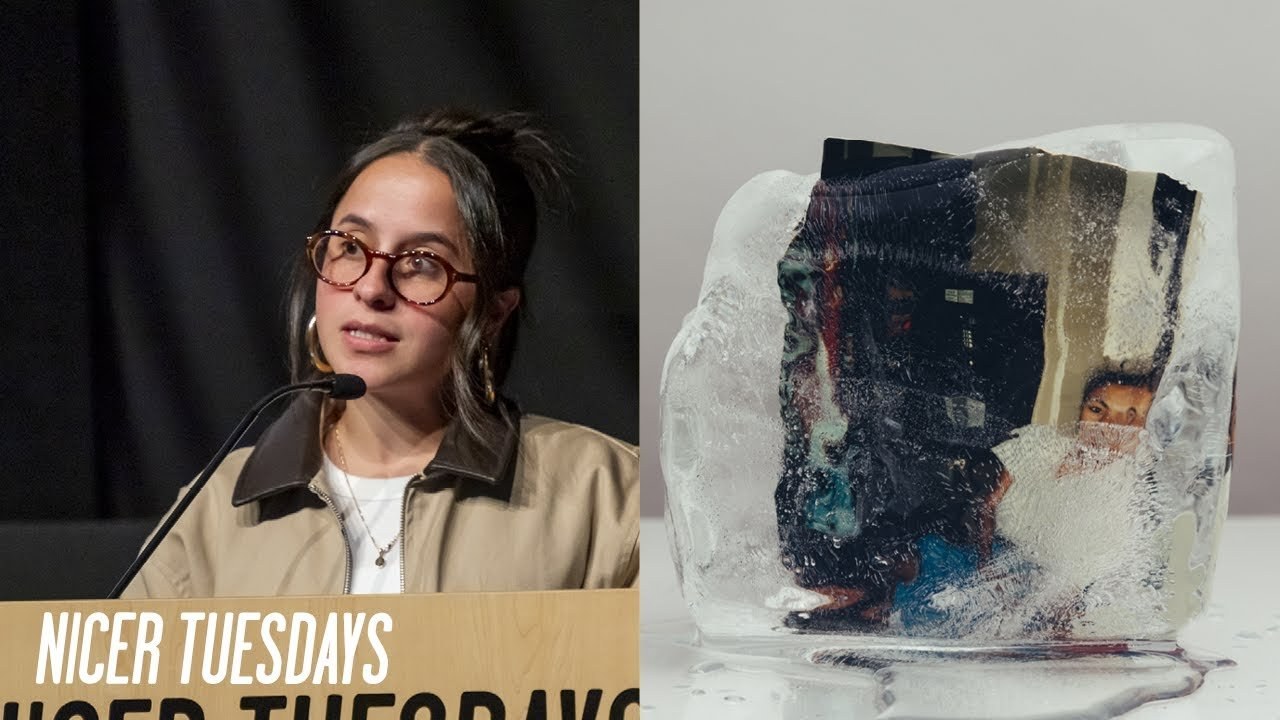
“Grief is not just something you feel; it’s something you carry into every part of your work.”
Transcriptmay contain minor errors or formatting inconsistencies
Hi, my name is Danielle Spectre and I'm a visual artist with a focus on archives. All of my personal work has stemmed from one series that began in 2019. [snorts] On August 24th, 2019, about a week before my trip to Hawaii to celebrate my husband's 30th birthday, I got a call from my dad. Mom had a stroke and they were going to the hospital. Something shifted in my chest. After talking to my dad, I searched for F in my contacts, tapped the number, and my older sister answered. The call lasted a few minutes, but she was confident in her mother's ability to bounce back because mom had done it before. The year before, mom had a stroke and had to regain the ability to walk on her own. But you're not supposed to be good at bouncing back from strokes. So, I booked a flight from New York to Miami for the next day. I [snorts] could see my mom for the weekend to Miami and returned just in time for our flight to Hawaii. My mom had been sick since 2013, and I became used to these calls. Walking into her hospital room, I knew this time was different from all the other times. My mom, my family was hopeful, so despite my lingering concerns, I still went to Hawaii. On September 3rd, 2019, my husband's birthday, I got another call from my dad. This time, he just said, "Oh, Della, I'm so sorry." [snorts] A few months after her death, I was going through the things she left behind. And I found an image of my mother had never seen before. Below her portrait, she wrote in Spanish, "I forbid you to forget me." I [snorts] wasn't raised with religion, but I was raised not to disobey my mother. And so, on the floor of my childhood bedroom, I began documenting everything she left behind. I titled the series I Forbid You to Forget Me.
[snorts] I photographed her fans, her perfumes, her sewing material, her chakkis, and her medicine. My initial approach to this project was similar to that of an archaeologist, excavating my mother's life by analyzing the artifact she left behind, desperately trying to make sense of her being gone. I came across this quote by Jason Fitzgerald that helped me shift my approach by pulling back from theformational impulse. I don't mean to disavow it. Rather, I mean to release the clenching mental states that information favors and to invite other states of mind, call them speculative states, associative, dreamful that are all essential for remembrance to remain vital. After all, remembrance is a live process and belongs to the living. Even as the heart may crave stones and monuments to give duration to grief, faced with the task of remembering, should the heart make a stone of itself. As primarily a lens-based artist, it took me a while to find a way to make work that work that carried weight to it. Emotional weight at first, but eventually physical weight, too. A weight that mirrored the heaviness of grief. Experimenting first with the fabric my mother collected, [snorts] layering it over images or creating shadows with it. I froze photographs of my mother and ice, creating an ephemeral piece that changed over time. [snorts] In 2023, I began embroidering photographs from my family archive with a popular children's rhyme my mother used to comfort me with when I got hurt as a child, heal, heal, little frog's tail. It felt appropriate to use images where I was complaining or pouting, of which there were plenty. Each piece takes about 2 days to complete. Later I became interested in how the text and image worked together. Saturating the image with the phrase [snorts] themes of red documentation and recontextualization emerged naturally within the project and I followed. They led me to create two series body of work and inheritance. [snorts] Body of work transforms the subject's bodies into living canvases to display their art. CJ is a photographer and a poet, and I projected his images and poems onto his body. The next three artists are all painters.
This is Kayla, Monica, and Bianca. , all of these are made with a cheap projector from Amazon, and it's always kind of best when they're wearing all white so that the images appear. Inheritance explores the connection between generations through the lens of children's wearing their parents' clothing. The subjects become vessels of time as past and present intertwine. The first subject was Cat. With Lita, I recreated photos of her mom from her Studio 54 days using the same outfits. And Lily and I found each other on Instagram in 2020. Her mother also passed away and we bonded through our grief. I photographed her in her apartment as she tried on over 30 pieces of clothing her mother left behind.
Each frame has more and more clothing piled up around Lily. It was [snorts] only in retrospect that I could see the through line between these projects with my mom in the center of all of them. Each project helped me develop my visual vocabulary. Going through my mother's things created an insatiable curiosity about my family's past. During lockdown, I spent months digitizing boxes of family photos and organizing them in Air Table. This allowed me to collaborate with my family on the archive. My dad would go in and add dates, names, and stories. [snorts] This process led me to discover my paternal grandmother's FBI file. My grandmother, Norma Spectre, was surveiled between 1949 and 1978 for involvement in the Communist Party, Federation of Greek Maritime Unions, Women's Strike for Peace, Brooklyn Committee for Sane Nuclear Policy, and the National Negro Congress.
I wanted to create a book that felt that appropriated the pages directly from the FBI file and recontextualize them through the lens of family history. I pitched the idea to the Penumbra Foundation for the 2024 Risograph residency where I was able to bring the idea to life. The book is meant to resemble a government file.
The lefth hand pages feature the FBI's portrait of my grandmother and the right hand pages feature images of my grandmother from our family archive. [snorts] Each spread is connected by page number but disjointed by binding. The reader is forced to engage with the book with both hands to each to see each spread at the same time.
I made a hund I made each of the hundred copies by hand. My dad, Daniel Spectre, wrote the forward for the book.
So there are three generations of specters in one book. But after all of this work, I realized that my mother was more than a project, more than my mother. Edmolinda Flores was funny, outgoing, and curious. She was a political activist, a social worker, and an ASL interpreter. She gave so much of herself to others during her life and after. I'm grateful for this opportunity to share her memory and to forbid you to forget her. [Applause]
Latest Talks
-
Murugiah
Why you should reject the formula and make art about things you love
Watch -
Amber Weaver
How does contemporary type design translate into the wider world?
Watch -
Delali Ayivi
How does photography give us the right to imagine our futures?
Watch -
Will Anderson and Ainslie Henderson
Bringing stop motion sorcery to BBC’s Small Prophets
Watch -
Ollie Babajide Tikare
The importance of not flattening the complexity of observation
Watch -
Marina Willer
Design thrives when you find poetry in the simple things
Watch