
Anna Fearon is a speaker at Nicer Tuesdays, known for advocating the importance of giving unseen stories a platform.
Anna Fearon
Giving unseen stories the platform they have always deserved
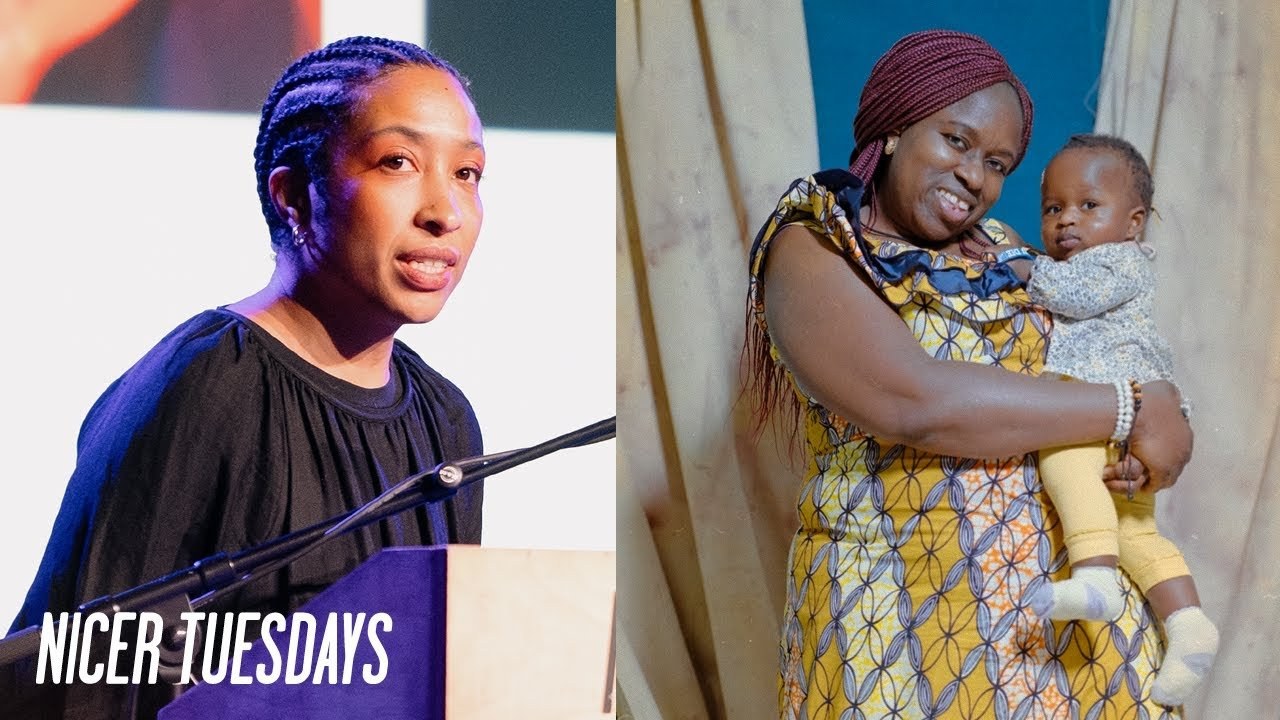
“Every unseen story deserves a platform, because that's where the magic happens.”
Transcriptmay contain minor errors or formatting inconsistencies
My name is Anna Fearon, I'm a photographer, director and a writer. When trying to figure out an arc for my talk today, the words feeling unseen were the ones I couldn't seem to shake. Navigating this industry as a black queer woman, it's hard sometimes not to feel unseen.
What only does this phrase surmise how I feel moving through this industry? It also epitomises the personal driving force and theme that permeates within my work to tell stories that are so often unseen, overlooked and untold. The stories that centre black, brown and queer people and bring these to the foreground. In my storytelling, I always strive to be authentic, honest and nuanced, telling stories with dignity that explore the intertwined joy, pain, hope, love of my subjects.
This has been the common theme that weaves together the variety of work from short films to photography to music videos. That was a short clip from my music video for Cat Burns Into You centring a love story between a young queer couple. Some film photography from a photo series colour and movement which were hand printed in the dark room with dancers responding to colours as a form of self-expression and resistance. From my series of black family portraits.
I started in photography before progressing to making short films and music videos. When I was just out of uni, I started interning with a couple of photographers and then started doing test shoots back then when the model agencies had very little diversity. My publication Blue was born out of navigating the industry and wanting to see more representation. I have published two issues of Blue magazine which was self-funded.
I founded the magazine with the intention of celebrating Black Beauty. It was really important within the publication that all types of Black Beauty were celebrated. Different skin tones, hair textures and features. From the first issue to the second, there were already huge shifts in the industry. Model agency boards were becoming more diverse.
Expression at least on a surface level was becoming more diverse. To me this was really exciting and I could see it more across the creative industry. Growing up I experienced both being hyper visible and unseen at the same time. After moving from Croydon which was very multicultural, I went to an all girls grammar school in Kent. As one of the only non-white students, I was hyper visible and unseen.
But it was also at the same period of time in my art and design classes, I had an incredible teacher that made me feel seen, encouraged and recognised. One of the reasons why I believe in the importance of teaching and alongside my creative practice, I regularly teach creative workshops with children and young people.
It only takes a couple of people to start seeing you, to start seeing yourself. I have worked many jobs throughout my creative career as I sustain myself from bartending to waitressing to office manager to production assistant. In these different environments and spaces, you experience people who deliberately don't want to see you and then in contrasts, I have gone on set as a director and also been met by surprise looks.
I want to quote my favourite Audre Lorde quote, whose ideas on intersectionality have been really impactful in my approach to making work. She spoke of the dangers of staying silent. Visibility which makes you most vulnerable is also our greatest strength. There are many ways in which the world can make you feel unseen and despite the obvious frustration to this, being unseen gives you a different perspective and empathy to different people and to different stories. I have been inspired and take inspiration from writers, artists and filmmakers. The time we are living in is so exciting because of the emergence of visibility of so many incredibly talented black creatives and storytellers of our generation. It is also important for me to look back at the legacy of great black voices who have refused to be unseen, people like Cheryl Dunn, Marlon Riggs, James Baldwin and Audre Lorde. Storytelling and narrative is becoming more important in the work I create, not only to see representation on screen but to see it also reflected within the people telling the stories and the stories being told. I have always tried to make sure that the team I am working with behind the camera reflect those in front of the camera in order to create a safe set environment and so that the storytelling is authentic.
I always try to have a predominantly black and POC crew where possible. My very first short film, The Muse, was commissioned for Channel 4 Random Acts for their Black History Month programme. For this I wanted to explore the nuances of black women and non-binary people, both artists and creatives, using the visual analogy of the mirror to explore self-reflection for an intimate and authentic portrayal of identity. One of the inspirations for using the visual anchor of the mirror was the powerful scene in Barry Jenkins' If Bill Street Could Talk, where we see actress Regina King looking in the mirror and we see her own internal struggle as she takes her wig on and off repeatedly whilst looking in the mirror. I see a new better version of myself, one that a younger me never thought I would be able to reach. I see someone who is quite vulnerable and soft. I see Titi Lyle, which means everlasting joy. I see generations before me, people that have fought for me to be able to live my life with the freedom that I can. I'm painting black people as a black person, I'm painting both people as a queer person, that kind of self-defining narrative where it's not someone else's posing a narrative or idea.
I want the work that I send out to the world to be human, realistic and show the fullness and variety of our experience, but also to really prioritise joyfulness because that is my reality. I see queerness in the way I move. I took all the elements of movement and dance, which makes it virtuosic and favourable and I just queered it. Motherhood was my second short film that was also commissioned the following year for Channel 4 for their Random Acts programme for Black History Month. Motherhood was an exciting opportunity to explore the diverse and varied experiences of Black motherhood.
I wanted to have mothers at different stages of their journey into motherhood, navigating different challenges from different backgrounds and life experiences. Black women have so long been held to unfair expectation to be strong, but I wanted in this film and my other work to tell stories that encapsulate the softness, the joy, the pain, the laughter and all of the dynamic elements in Black women's stories.
I think the myth of mother is what imprisons so many mothers, that we are all sacrificial, super strong, especially when we look at Black women. The strong Black woman narrative haunts us because all we're really talking about is akin to slave hands. Oh, they're strong, they don't feel anything, so they can keep working. It justifies the atrocities that Black women's bodies have faced throughout history. It's been the most peaceful thing in my entire life, which is so weird because it's such a strenuous experience. It's been a journey of being really scared and worried about who I am, my identity, having that change and almost sacrificed to then seeing it as me evolving rather than me giving up who I am.
I feel like I've navigated from that identity of being a strong Black woman, being able to handle everything because I've not been able to. Partly it's because I've been weak, I've been sad, I've been depressed, I've been anxious, but I've been curious enough and it's that curiosity I believe that's kept me going. How are feeling? Here are a few stills from my short film for British Vogue, Black Love is the Revolution React. Unseen pictures. As well as short films, I've also attempted to navigate the landscape of music videos and commercial work. In doing so, I honestly continue to feel unseen.
So I'd like to dedicate and acknowledge the fold of music videos and commercials that I pitched on and wasn't awarded. So here are all the stories I could have told. Pitching is notoriously challenging, but even more so for Black and POC directors. Either work have done the stats that 38.5% of commercial jobs won by people of colour compared to 59.7 won by white directors. Yet the average hours spent per pitch for male directors is 29 hours compared to gender marginalised directors spending 37.1 hours. And white directors spending 30.2 hours compared to directors of colour spending 42.5 hours. So probably the percentage stat would be higher if you sit on the intersection. A couple of stills from the Cat Burns video we saw earlier. But let's get back to talking about some of the work I have made. One of the first music videos I directed and still one of my favourites is the Cherry's video for Hope Tala. I love the creative potential and freedom of music videos and Cherry's was a great example where I was able to exercise creative freedom with an open brief and I was able to develop a concept and have my vision trusted.
I use the opportunity to be playful and go to town with the art direction and visuals, bringing lots of period and renaissance references from styling through to choreography. One thing that carried across from my photography work was this meticulous attention to detail from styling to set design through to composition and framing. I love period dramas and even more so when we get to see black characters in period drama. I'm a big fan of Bridgerton so if anyone's listening can hook me up with my directing goals. For the Hope Tala video I wanted it to feel like a series of moving renaissance portraits through the subtlety of choreography each scene becomes a moving portrait. In the opening scene Hope stands like a heroine wielding a sword while the dancers hold a gold gilded frame around her. What's next for me? Narrative work is a big focus of mine going forward and I spent a lot of time this year writing and have several projects in development so these will also remain unseen for now. I hope that in my lifetime I can tell more stories that are unseen, stories that deserve and need to be told. I hope even more so that the next generations of black and queer storytellers won't have to fight so hard to be seen that they can focus on more on what they want to say. Thank you for having me here at It's Nice That and hopefully you'll be seeing a lot more of me. Thank you.
Latest Talks
-
Murugiah
Why you should reject the formula and make art about things you love
Watch -
Amber Weaver
How does contemporary type design translate into the wider world?
Watch -
Delali Ayivi
How does photography give us the right to imagine our futures?
Watch -
Will Anderson and Ainslie Henderson
Bringing stop motion sorcery to BBC’s Small Prophets
Watch -
Ollie Babajide Tikare
The importance of not flattening the complexity of observation
Watch -
Marina Willer
Design thrives when you find poetry in the simple things
Watch