
Andrew Diprose is the longtime art director of Wired UK, known for his insight into designing for a leading science, culture, and technology magazine. He emphasizes the importance of commissioning and the role of magazines for illustrators and photographers.
Andrew Diprose
Twenty years of magazine design, failed covers, and learning to take criticism
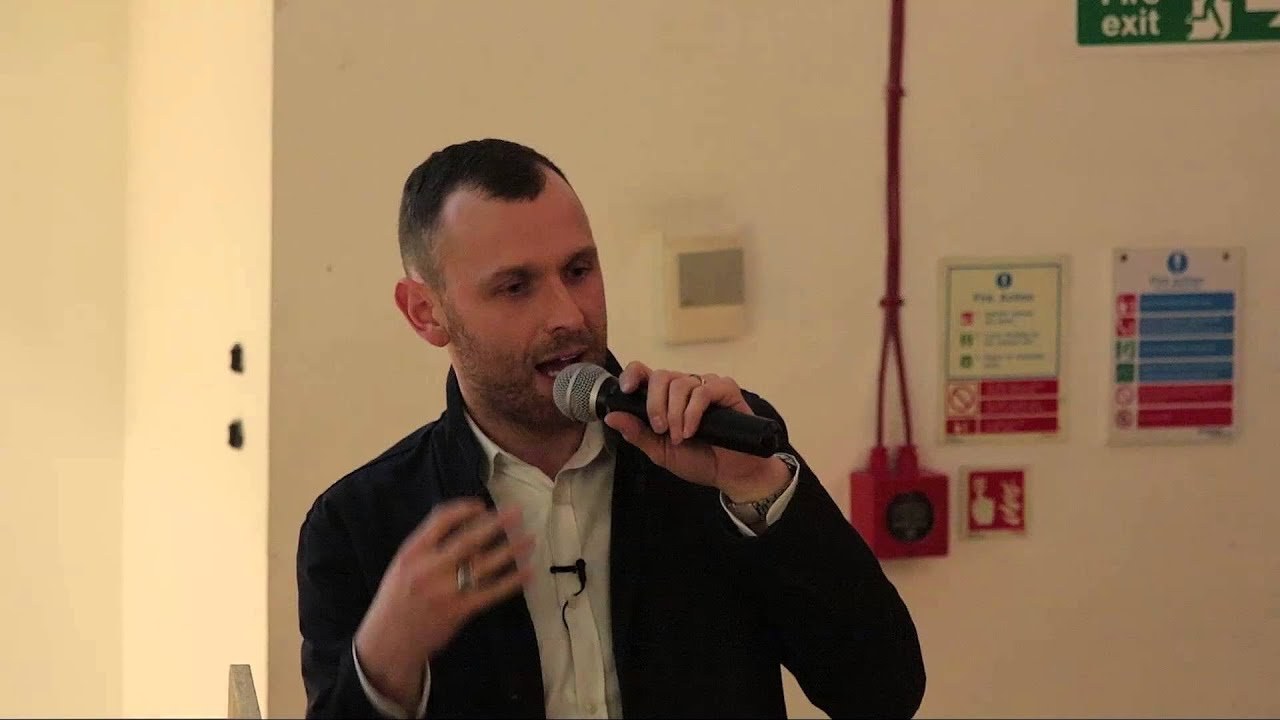
“Designing for Wired means constantly balancing between science and culture, where every decision counts.”
Transcriptmay contain minor errors or formatting inconsistencies
Hi hello I have a build some paper and a clicker and that's like too many too many things for me I thought that would be like a fun typographic gag but it's already some people have asked me what's gone wrong with my first slide so I don't know what else even work in us I am a man drew did praise on creative director of Wired I have been at Wired since launch in 2008 and it's my 20th year as a editorial designer this year which makes me feel kind of old thank you it's nice that for having me here I'm a real I said this earlier without gushing too much I'm a big fan of the site and regularly on there so don't look too closely at wide because you'll find where we get along great talent from ok here we go great that kind of show you have been up to for the last 20 years you can see there were some follow times in that see in that urn in that line umpire I started with work experience ID magazine and kind of way from ID magazine to smash it if anybody knows this much it is that's why I need maybe in the wrong direction some people might think I kind of enjoyed it at the time okay here we go there's a driver before and on dates it's kids it's like Darwin dama and three-wide went over at GQ magazine and then armed Wyatt I warface for a contributors picture and it's only getting worse over time what I want to do a freestyle roughly what I want to do I buddy got ten minutes which is owned is a lot of time if you are a dentist but I'm very short amount of time of your editorial content I like to go to tell you people talk and I like to have something I could take away with me.
So I tried to make it super relevant some things I've learned to why black Isaiah 45 points that way you can know what I'm starting that week and I don't want to finish it okay here we go launching Wired magazine or criticism and the art of sucking it up I don't know how many people here have launched a magazine Oh big publishers but there are no shortage of people to tell you what they think I came from GQ magazine and I at that time I felt like I pretty much knew what I was doing magazine design and I think that was a really big mistake I the firm my first meeting for Wired magazine kind of went like this I pretty much designed a whole dummy I printed it out of ninety-seven percent of but if a flip book I got to the director's office at me look at the first page that said the tire looks a little bit small. And it confused me all the way through every single page she turned it got progressively more angry to ended up working on my own down the corridor here difficult and and worked off into the distance angrily I had a lot to learn this was my first issue Scott to the art director on why I did in the u.s. At that time said to me I think you've got it you know you're going to look back in you're probably going to hate the first year year and a half of the magazine you know.
That's healthy I can hardly look at the first three maybe four years with me go five years I actually think that's healthy but the front of really trying to make it a rambling way is that you know really at that time I wasn't seeking out criticism you know anybody who had something to say really was a you know I felt threatened by one day I don't know what happened but I kind of had this like complete like I don't know it's like a complete change of thought and I suddenly realize that other people offer me advice whether it's from the US whether it's from from previous publications they don't have something to say and probably fifty percent of it was very valid and I was the person who really needed to learn and when I start to take a nap afford the magazine looked better in six months so probably done more than the you know that I've done in the last chain of four years before before that time as where. I am I'm leaving going into the voice but since the when I had come on I kind of feel like a bit better about it okay why do you learn over a magazine when we started I did think it was a magazine here we go there's printed magazine in the middle there. Basically why it is a brand I didn't think about it like that at the time but why are these days is a brand we are very proud that we have integrity we tell important stories or we are creating now when we started we were just doing a print magazine and nobody had held and I had before nobody looked at any content on the phone there was no idea that there will be wide conferences or consulting business or a podcast and this has happened in the last five this has happened in the last five years I have to have had to change my thinking about how I work my the way I work and my workload has changed and I think it's healthy that.
Now I am thinking of how we view the content specific to the medium rather than just thinking about printed pages lovely though they are you know when it comes down to it I don't know how many people are I should have said this earlier how many people I presume your magazine lovers which is really lovely but it's interesting for me I'm going to have my head half in the print camp half in the digital cam half in thinking about how we're working on the brand when it comes to two events and consulting okay I'm already on point three I might be I'm writing through okay here we go there is an idea there's an idea in there somewhere damn it I don't know how you get your kicks creatively assume you agree eight of people and for me it really distills down the pleasure I get from my work is from having an idea a sick whether it's a simple idea or something very clever and seeing it come to life.
And if I can affect an audience with that idea then the pleasure just as increases and magazines are the perfect place to have this you know where weekly monthly or yearly the idea that I can think myself out of a tough situation and hopefully you know create something of value and tell a story to an audience and the audience is there is immensely satisfying and that is an utter utter chewy with magazines ok this is the editors like we've got covered to do I think it's all going to be about failure which kind of it was part of my first point the idea a very wide idea I'm sure you all know a bit of that failing fast and learning from your mistakes and moving on is really to be heartily approved of a lot of Silicon Valley companies that we have we have featured and a lot of very successful tech companies have started with that the people obviously haven't you know struck gold on their first go they've made a lot of failures they've learned from it and they've moved on. And that's really approved off this country and Europe I think it's still a little bit frowned upon.
Anyway either way the idea of recover that's all about failure didn't term you know it didn't wet my appetite the idea that Alan will sugar was on it just to just compounded the misery you know we we we racked our brains and I feel like it's one one of my toughest covers and one of my most pleasurable covers with with with the outcome the readership really engaged with it. And I am pretty proud of it.
And we did I you know with no irony the printers did say is there something wrong with this cover okay this is another one the cover story is all about Google algorithms that was a joy as well I'm important a very very important company very very important story but a little bit tough visually for the cover we just went super super simple we die cut a hole in the center of the cover Google just like Google everybody recognizes the logo is that going on so moving on there you go that's the cover that was the inside of the first page made it a little bit tough to sell an advert on the inside of the front cover with the dying cuts but again the readership loved it and that was a highest selling issue of the year I have this constant sort of this kind of dialogue about some of them are some of our most successful covers of some of the covers which are the simplest you know we tell a very simple message we get it straight out there and the readership like it everybody seems to like it I've been weeks crafting a cover case in point being my 60th cover for Wired where. I had a cover meeting the other day we've been working on it for three weeks turned up at the managing director's office for a meeting about it didn't like it first cover turned down in five years.
So I think there's something said for doing it doing something simply this was another one Raspberry Pi I assume you know about roles we play 16 pound computer massive British success story global success story it's just a small computer oh this was our end result this was how we got there we wanted to do something simple and heroic we had a nice case made for it they're kind of glow lead and it was trying parent it was nice he had beautiful photography from Wilson Hennessy and I wanted speak to either born his work with Jordan may cough I don't know whether you know his work for fine for absolutely ages and he worked on this thing it was on the far left-hand side I thought I was amazing it kind of looked heroic and a bit filmic and epic ins you know is beautiful the typography is beautiful the shadow was beautiful nobody likes the color and everybody thought it would be miserable and dark on newsstand so he pushed it.
And we made it simpler we went to the middle we had this bevel type this was over a couple of weeks stripped it right down made it super simple and when it. Actually came down to a much as I loved loved loved his work the one on the right hand side was the one we ran with it was our simple type face with a bit of a fade on it.
But it's sold really really really well I don't know really what you're going to learn from that but okay surround yourself with talent okay I'm gonna try and speed up a little bit.
This is another really obvious point especially when I started Wired magazine that are our department has three people. Now it's nine people.
But it was me the picture editor and my deputy and there was a feeling that I wanted to try and do everything myself and I think the magazine was worse because of it over time I have tried to surround myself with the best people I could find talented people people who whom I can go to people you know who I can say oh I think you know you are going to be better with composition on this layout you are going to be better deal detailing on this layout and people I can go to with no kind of sense of pride that are only going to make the magazine better it's taken me a while to learn about that and lucky I'm surrounded by some brilliant people and they are a joy to work with they are slightly desaturated for your enjoyment okay you're surrounded myself with talent came over cat is a lot as a lot further reaching than the staff using years ago cheers a as a magazine designer and a friend who was working on the newspaper and he was talking about working with this amazing photography was so excited and I was a little bit like yeah what you know whatever I was a little bit naive I didn't really realize I spent the whole of my time probably pre-wired trying inadvertently to design myself out of effects rather than finding the rule talent who were going to supply the best illustration and photography or filmmaking that I could find and it took me until you know.
I was I don't know much too much longer than it should do for me to find that.
Now we've wired all I want to do is make a great environment for people to show off their work I want to show that I respect their work I want it to be a nice environment and I want to coax people to do their best work for me because quite often the people for editorial won't be doing it to make the dollar they're going to be doing it because it's going to be a nice place to show off their work.
Now that I've kanda beautiful like the Thameslink that we have a photograph I Christopher request these are some of my favorite shots Liam sharp amazing shot AAA a photo story for us in Africa about a company called videre that are fighting human rights abuses where he basically had to turn up I wouldn't tell him where he's going the week and even tell him what town is going to be shooting any had to turn up to find somebody because he was shooting people that were in danger so to get a shot like that in the background of some weird wasteland that he didn't even know where he's going to go I think it's pretty impressive and Tom naggy these were on it's nicer actually we send somebody along to lego which was a rig you know beautiful opportunity and we're all fighting LEGO fans and Tim sent Tom who normally just call photography to do something like that was was a real treat ok here we go Chris christman we shooting Richard Branson we had we had seven minutes with Richard Branson that turned into four minutes by the time he and up chris is brilliant brilliant photographer and he already had two lighting setups we were we were at the at the test facility we got great access we've been working on the story for two years it came down to four minutes he had to set up lighting setups that's one of them and the other one is was shot on drew a wing and literally Richard turned up hello good did you think amazing superstar and literally as we were packing up her stuff we saw him flying off on his jet as we were still packing the stuff up that was a bit hairy but I think he got the shot and just to wrap up.
This is point five I've spoken very fast sorry I apologize by hope there's been something for you in there get another project I am I am blessed with wired magazine in that I get to do some really fun creative work but whether Yoda you're in a position where you feel like you can do that kind of work or whether you're in a frustrating role I would heartily recommend that everybody else find themselves something else to do as well.
This is a magazine that I published with my brother called the right journal and we've been doing it. And in exactly the same amount of time as worth magazine unfortunately I've only done eight copies of the right German 60 of wired so that says something about how I spend my time.
But the the point being that I get something that I get to use a completely different part of myself as a designer with the right journal I don't know if anybody's seen it it's very simple it's very uncomplicated whereas wide is all about the new and exciting and conference you know being confrontational with the reader the right journal is very very simple and I think I I love to see designers or creatives come to see me with with personal projects because it says a lot about them and about how passionate they are and about how they like to get how like how they like to get them work out there.
And I think it's a self-fulfilling prophecy you have you know you have a you have an outlet for your best work people can see your passion that they can come with you along that journey and then.
I think you can you can you know you can up your creativity and people can see really what you're capable of and yeah. I think is about it
Latest Talks
-
Murugiah
Why you should reject the formula and make art about things you love
Watch -
Amber Weaver
How does contemporary type design translate into the wider world?
Watch -
Delali Ayivi
How does photography give us the right to imagine our futures?
Watch -
Will Anderson and Ainslie Henderson
Bringing stop motion sorcery to BBC’s Small Prophets
Watch -
Ollie Babajide Tikare
The importance of not flattening the complexity of observation
Watch -
Marina Willer
Design thrives when you find poetry in the simple things
Watch