
Andre D. Wagner is a renowned photographer known for his impactful street photography that aims to connect with the subjects in his images.
Andre D Wagner
A street photographer on a mission to truly connect
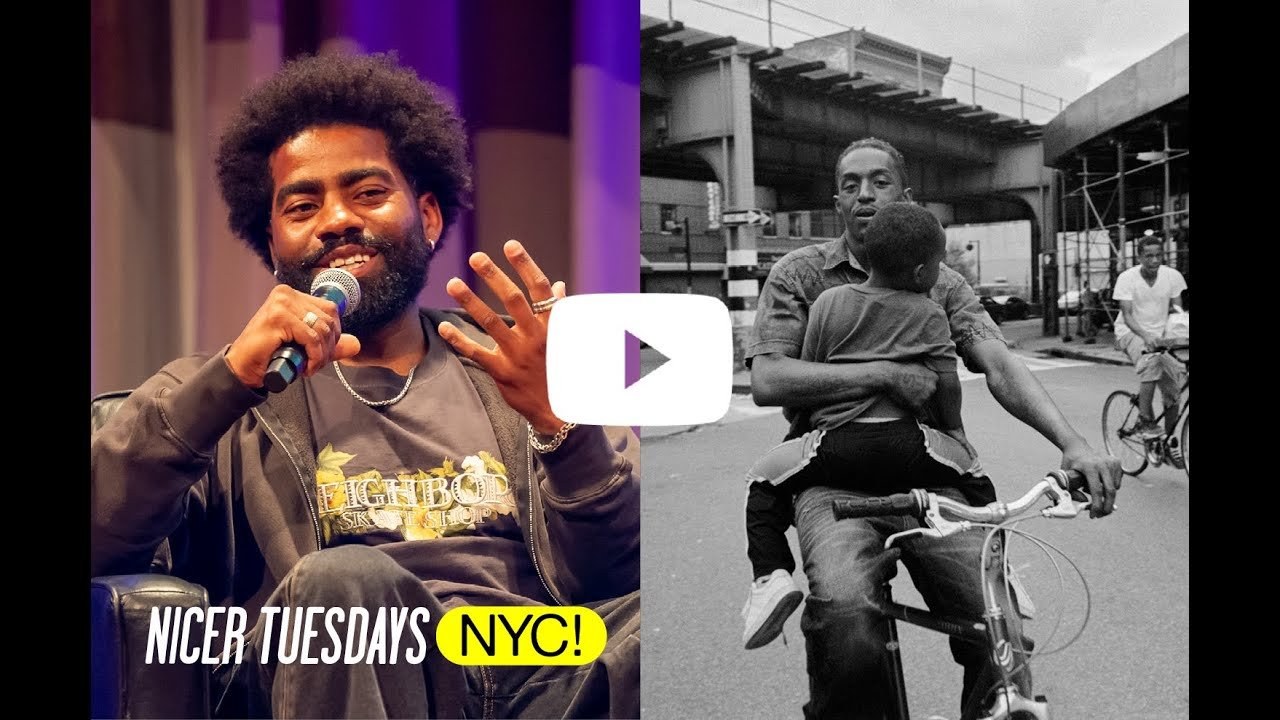
“I feel like it chose me.”
Transcriptmay contain minor errors or formatting inconsistencies
[Applause]
thank you for that beautiful introduction thank you for all you beautiful people for being here.
This is great welcome to nice Tuesdays thanks so much for for joining us how you doing I'm doing good I'm feeling good those are great presentations we just had I've been laughing a lot was not expecting that.
So it's been incredibly funny well listen thank you so much for joining us tonight for for nice Tuesdays I guess to start with I thought there's no better place to start with going right back to the beginning because you grew up in Omaha Nebraska and I just kind of wanted to know how you feel like looking back today how that childhood kind of comes out in your work and has like influenced your your photographic practice Yeah omahan Nebraska that's where I'm from growing up as a kid I was very into sports and Athletics you know basketball was pretty all consuming for me you know I when I moved to New York and I think really just trying to find a way to continue just figuring out what was working for me you know after being a social worker and always kind of interested in being into the Arts I needed something that also to kind of help me deal with the physicality of like what it is to be an athlete you know.
I think so much of just like like my the groundwork of just like how to build onto something is is rooted in athletics I think I was I'm a very I I can be like I have a very addictive personality and I think what's beautiful about sports is that you kind of get out what you put in I think yes we all have natural talent but there's also just a certain way that you live a certain way that you practice just a certain way that you have this like Rhythm to your life that you can continue to build upon it.
And so you know kind of falling into photography like so much of just like my my mode of working comes from being a a athlete that is so interesting that kind of like discipline that being a kind of elite athlete actually requires you know you have to be at it every day and that's something I guess that you've taken into your photographic practice Yeah well you know when I moved to New York in undergrad I I studied social work when I moved to New York I moved here to get my masters in social work I was going to school at forom to get my MSW and I I you know.
I started taking pictures before I moved to the city but just like the art life just everything that New York has to offer none of that was really on my radar at all like the only thing I really knew about New York was that my dad liked to watch Law and Order you know. I had no sense of just like communities the art scenes galleries all of this was you know. I was kind of oblivious to that in a way and when I moved to New York I was going to school at forom I had a camera I was I started I was taking pictures you know already but just moving to the city alone just turned my whole world upside down when I was going to school at forom in Lincoln Center I was living in graduate school housing which was on like 58th Street between 6 and 7th so I was like a block away from Central Park I'm on Billionaire's Road you know my school's down the street and and you know. I was just like whoa like where like this like everything just made an impression on me I think starting school in that fall semester just right after the holiday seasons like I remember you know coming to the city with like my my suitcase and like nobody told me not to like get on the subway during rush hour and like you know everybody's trying to get to work. And I'm trying to Lug my suitcase on.
And I just remember everything just feeling like Larger than Life you know I remember looking at Christmas trees and they just look crazy and like people coming out of stores with like mink coats on. And I don't know just like just everything that the city just the the movement of the city just was like so intriguing and it was also all very new to me you know. And so photography was also fairly new to me as well. And so you know to have a camera and also be having all these Impressions on the city it just kind of just started to happen naturally you mentioned that you came to the city to study social work. And I guess at what point did you realize okay I'm actually going to be more interested in photography here and and the social work kind of took a bit of a backseat like at what point did that did that happen and why did you think it happened I mean it happened early I I always say that like you know I didn't really choose photography I feel like it chose me I I was in graduate school I was just going to my classes I was having a really tough time early on I was very broke I I was having a hard time I mean I remember even just needing to get my I I needed to get my the loan that you get you know to start school I needed my reimbursement check and like they were just taking forever to give me my give me my reimbursement check and I I remember this just got to a day where. I was like I really need my money right.
Now I'm already hopping trains I got a IOU at the dollar SCE spot you know. And I remember I would go to forom you know in Lincoln Center and I'm I'm in the office and I'm like I need my refund check and they're giving me the runaround so I hop on the shuttle bus to go up to the forom campus in in the Bronx cuz I'm like I need I need answers right now. And it just it felt like I was in a movie in a way.
And I remember getting to the admissions office and like you know by this time I'm I'm just like so kind of just like emotional and just like charged up. And I'm just like you know I I'm you guys wanted me here in this University I'm trying to study I need you guys to help me out and like you know snots coming out of my nose I'm crying I'm like I need my money I need my refund check and they wrote me a check right then and there. And I remember walking out of that office and like I almost kind of had this moment in like kind of like a Pursuit of Happiness where everything just like slows down and like Will Smith is looking around but it was like that these are the kind of like this is like the first kind of Impressions I'm having in the city and I'm just trying to get going you know and you know I I started meeting a lot of artists in the city and I started photographing for this poetry Collective called the striver Roe early on and they're they were huge like they every time they would have a show you know lines around the corner so I'm photographing them while they're practicing I'm photographing the shows and one of the guys that ran the collective was just really into my photography and always really encouraging and he was like hey I think you should read this book and he gave me this book by Gordon Parks and it was called voices in the mirror and it's autobiography of his life. And I'm reading this book you know in Manhattan in my in my apartment and I just feel like a personal kind of connection to Gordon Parks and his story with Gordon Parks being from Kansas City me being from Omaha him trying to you know Gordon Parks was a professional athlete like I played basketball in college and he spent a lot of time in Chicago and Minnesota and I I always I spent a lot of time in Chicago.
And then just reading about how he ended up in Harlem and how he kind of started off like as a photographer doing fashion.
And then like later got into the FSA and started just creating all this incredible work he was the first black photographer to shoot for Life Magazine so I'm reading this book. And I you know I'm just realizing that like okay like this photography thing could really like be something like you can really tell stories you can make images that impact people and communities and you know.
That's when the moment I was just like I need to like pursue this and go after this. And I think pretty much what happened was I I did that first year grad school I got a apartment in Bushwick where I actually had a friend who was from Omaha who was looking for apartment so me and him got an apartment in Bushwick I didn't know nothing about Bushwick besides like the most deaf song you know what I mean like blacker than Bushwick and been you know Myrtle or whatever.
But I moved into Bushwick and I didn't go back to school the second year. And I was just like I'm going to be an artist I'm going to be a photographer you know.
And that's kind of like kind of how I got started that's amazing and also amazing that Gordon Parks was the I don't know the book was the kind of first starting point and it's kind of come full circle now with you having work at that at that Foundation. That's incredible I mean I guess I wanted to come back to social work because I guess you know at the time back then you were you came to the city to study that. And it didn't quite work out but do you feel like your interest and your background in social work now comes through in the photography in any ways or yeah you know.
I think social work just informs how I moved throughout the world and especially as a photographer with a camera you know I landed in Bushwick and I started photographing the community I started photographing the kids on my block and just my neighbors and as a social worker you know.
I think one of the first questions I ask myself is like what's my responsibilities to the to these people and to this neighborhood you know it wasn't just like let me just go and Snap photos like I was just thinking about like you know a little bit deeper and at the time I had no idea like what those answers were but I think opening myself up to that Curiosity and also just knowing that like you know. I just I'm I just landed in this neighborhood then I can't just kind of act like our own space so that I know what's going on.
But I need to open up myself and be informed by the people who live here of what this place is like you know. And I think just that question early on gave me the space to kind of like walk into some type of understanding through continuing to make work I think also just you know the kind of spaces I've was in as a social work I did a lot of juvenile court work I worked with a lot of at risk youth and so just once you like enter people's homes and you really see you know the kind of situations that people are involved with it just gives you a different type of humanity you know.
And so I think just my natural kind of personality and how I was with people. But also just like making people feel seen and I think just kind of you know being able to meet people where they are just kind of gave me like another aspect into the work of Photography that's so I mean it it definitely comes across in the work I mean we're seeing photos from your from your Exhibition at the moment behind us and and some other ones as well.
But it definitely comes across in your work that you just have that level of a deeper understanding I guess as you put it for sure I guess it's been a decade now over a decade that you've lived in Bushwick and and been photographing those communities I guess just tell us a little bit about what you've seen change in those communities and in that that part of the city yeah.
So when I moved into Bushwick I was living on the border of Bushwick best ey I was living on Gates Avenue right off the J train on Evergreen so I'm like right between like the two neighborhoods and you know I didn't realize that the neighborhood was on the Cuffs of so much change at the time you know I don't even think I really at that time this was like 2011 2012 like I don't even think I really understood what gentrification was for real like where I'm from like I just people weren't having those coners kind of conversations and you know those early days being in Bushwick like I would literally just be outside from sun up to sun down and pretty much the way it would look is like I would go out in the morning and I would photograph like kids going to school you know parents going to work just like the kind of morning activity and I would spend all this time in my neighborhood and just like the way that it's kind of like the neighborhood's formatted is like I would I would live on this block and then like I go two blocks down.
And then I'm on Broadway which is like the main street so you got this is where the subway is this is where all the shops are this is where everybody kind of comes together.
And so just naturally being on my block going on Broadway and just kind of moving back and forth I started meeting people in the neighborhood and I I started documenting just the the space and like these early pictures is just like I'm meeting the kids you know I'm hanging out with the local vendors hanging out with the OG's on the block that's saying hi to everybody as they get on the train and I'm just getting to know the neighborhood and I'm also kind of becoming part of the fabric of the place you know it starts it goes from like who's this guy to like oh that's Andre the camera guy you know. And I realized that like just by being there with my camera you know talking to my fellow neighbors or whoever it was that it kind of gave me the agency that like I can make these photographs cuz it's like I'm kind of being accepted into the community and so you know.
That's how my day would start.
And then you know maybe around like 10:00 it would start to get slow in the neighborhood so then I would hop on the train and then I would go into Manhattan and then I would photograph all day in the city you know.
And then by the time like 5 6:00 maybe I'll come back to Brooklyn or sometimes maybe earlier I would to plan to come back to catch some of the kids like when they get out of school.
So I would try to be back in booklyn by like 3:00 or something. And so I just kind of like going back to like that athletic kind of like I guess way of working or just like that discipline but I would like have a certain regimen to my days and how I like formed it cuz it's like I'm also a photographer. And so I want to give myself like opportunities to like make the most photographs that I can and so I wanted to move kind of like in a Cadence with the city and and you know I'm just doing this for you know 5 years I look up. And I'm like I'm starting to kind of like really build a body of work.
And I remember even early on when I really started to fall in love with photography when I moved to the city and I'm you know falling in love with certain photo books and just like photographers work you know. I was all it was always daunting to look at these like incredible bodies of Works where photographers have made over 10 years 15 years. And I'm like how does somebody do this. And then.
I think like just by like you know putting my head down and doing the work I just realized like okay I'm kind of on this path and then you know everything just started to kind of continue to grow and Blossom from that after working in the same area for a concentrated amount of time especially here in New York where it's the city's just kind of constantly in flux you know I'm photographing my neighbors and the next thing I know know the building across from me. There is is going is getting construction the building down the street there's construction there's new shops and stuff that's opening up. And so I started to kind of realize that like you know the neighborhood is starting to physically change in the way that it looks when I go out on the streets you know I'm photographing with wide angle lenses I'm nine times out of 10 I got a 28 mm lens on my camera so even if I were to take a picture now like I can get you and get half of this crowd and so it's it's really wide and so what I realized that you know not only am I photographing like certain people I'm also photographing like the actual visual landscape of the place as well.
And so over time I'm just realizing how there. That's also like another layer in the work in sense of just like how the community is physically changing like I'm I'm seeing like some of my neighbors you know being displaced I'm seeing you know who was living in this building before gets knocked down and built back up and who's moving in and so my photographs were starting to kind of like have multiple layers on top of just like the main subject that was like happening and so like that's kind of how I started to realize like oh like something else is going on in the work as well. And I I guess like in a way I'm kind of happy I gave myself that time for the work to kind of talk back to me cuz it's like as an artist or as a photographer it's like you can set out to do a certain thing but for me it's like I also want to leave myself open to be informed by like what the work wants to do and so I think by just making the work and sitting with it and putting it on my walls and like revisiting it seeing what's working and seeing what's not and then starting to see the change it's like the work is telling me like okay this is the road that we're going down like just keep going because like it's it's starting to kind of Blossom in a different kind of way it's such a lesson I mean you said it before like you get out of it what you put in and it's like you know it comes back to that Athletics thing but like yeah it's a lesson in dedication you know you can only get that the work speaking back to you once you've done it for a few years and had and kind of really given it that dedication it's it's amazing I guess I'm interested like when you're walking around your area with you know you say you always have your camera by your side like what are you looking for what really attract you in a is it a personality or a scene that you want to to take a photograph I mean like what are you looking for when you're walking around cuz you know we all walk around the streets and none of us are like skilled photographers so I'm kind of interested like what what catches your eye yeah I mean you got to think I'm from Omaha Nebraska so especially I've been in New York for 13 years now so you know early on especially like anything would attract my eye like cuz it's just the life on the streets was just so vastly different from what I known and so in a way I I kind of like that mindset of just kind of being completely open almost being like a I don't know just being like a baby in the game in a way you know and just really letting anything be a possibility to turn into something so sometimes it's just the way somebody looks or it's the way that somebody's hell in the cab or the way somebody picks up their their baby or the way somebody's kind of looking past you or the way somebody some people Embrace the way kids are just like interacting with each other like all of these things just have like Impressions or know or you have your you have the sensibility to like everything. That's going on around you and as a photographer you know.
I think everything is pretty much fair game you know.
I think you think about like I don't say say like a sport like boxing like I I photograph boxing before and like when you get really close it starts to get physical and sometimes you like almost Flinch but like when you're flinching like that's when like that's the climax of The Moment Like that's the photograph and so in a way I kind of walk around with that kind of mentality like I want to be first of all I want to go out. And I want to like empty myself I want to ground myself I want to put my phone away.
And I just want to be present like okay I'm here I'm right now. And I have my camera and now it's just about being open and anything that draws my eye anything that that makes me go like or something tell the light tells me to go down this street I just want to react to like whatever is happening in the natural world you know. And that's what I'm drawn to and I think I like it to be really open like that because working on the streets it's really challenging to make cohesive photographs you know to make photographs where everything is in this right place or the composition that comes together.
And then once you got a composition.
Now we we haven't even got into like the emotional parts of the image like how does it make you feel and so there's a lot that needs to come together so by being open and sensitive to everything I have a lot of opportunities to make photographs I I a lot of Impressions and I'm giving myself a chance for hopefully something to stick CU a lot of the images don't work a lot of the photographs that I make at least when I go out you know a lot of it is failure a lot of it's like oh somebody they blink their eye or they turned their their head the wrong way or this or that you know.
This is real life happening I'm not on a movie said like people aren't models that nobody's here for me like this is just life. That's going on and the photographer has to position himself in a way to be able to see the beauty in the in the natural world where it's just like he's he's just like oh I'm just sitting here on the stoop or somebody's just on the bike but like the way that you see it the way that you might feel it it change once it turns into a photograph that. Actually works you you've spoken before about how I think you were walking around with your camera and it got mistaken for a gun which is interesting just because I think it shows that you know people are on guard on the streets right like no you're not striking up conversations all the time with people you meet on the streets so people are always a bit guarded what's your approach to that like how do you get people to open up and feel un like not threatened by you know someone approaching them and you know what's the what's the skill there yeah no that's a a great question I think what I started to realize with this kind of rhythm of working in my neighborhood and then coming into Manhattan like working in my neighborhood it's always just kind of just felt good you know it was kind of easy to make these images I I felt very welcomed I kind of just understand the rhythm of the place and then coming into the city was always like a completely different way of working for me you know everything's just happening really fast you know you're not in your community you people start don't look like you. And so I even had to find like the confidence like in myself to feel like I have a right to be here because like especially as a black man like nobody's like looking at me and like even just giving me like or just thinking that like I'm doing anything just like is you know you don't really feel that comfortable I didn't feel that comfortable especially early on walking around a camera everybody looking at me crazy and like I get it it's you know I'm I'm pointing my camera people.
And I'm making photographs and so I just realized that like something kind of just had to change like in my own belief and conviction in what I what I was doing like this is New York City this is Manhattan this is like the school of street photography was birthed in this place you know. And so clearly there's just like a art historical standpoint of work being made here but you know especially in 2011 2012 nobody was talking about black photographers or you it was even hard to find a history of black street photography even though that did exist and so I think just in a way it's kind of like a blessing to kind of work in a challenging environment like that because it really makes you ask yourself these hard questions I'm like why am I here why do I want to make these photographs in the city why why am I not just staying in in Bushwick best I making photographs but for me like the reality is is like I've I've always had to operate in a greater world. That's outside of my neighborhood you know I went to college in Iowa it was like a mostly white University I I've dealt with you know the town having KKK rallies I've played on a basketball team where. I was the only black person I've traveled with that team I've been called all kinds of names you know. And so it's kind of crazy to think about like a like a life lived and then to come to a point to where you can kind of like deal with that through street photography and I that's what I started to realize with Manhattan is that like now I'm I'm able to kind of deal with what it feels like it means to be in his body and in his skin and I can like make these photographs that kind of have this like poignant notes to them because like that's what it physically felt like to be in Manhattan at the same time.
And then like just giving myself that time to kind of keep realizing all of that.
That's how New City Old Blues started to kind of have this Arc and I started to realize like what was really underneath it because like in a way it's like all photographs are like self-portraits you know whether if it's a literal self-portrait or if it's like a street photograph because now I'm like finding myself in Manhattan making photographs that's really about my personal history you know.
But it's it's also about the place and what's very what's happening right now. And it's very contemporary and so that's just a lot of stuff to to be dealing with you know but like that as a street photographer you also have nothing but time you're just walking around all day talking to yourself you know and at a certain point you got to start working out all of these things to understand like what your work is you know.
And so I don't know I guess those that's kind of like some of the some of what was like guiding me. And I guess some of the revelations that I started to have just being on the street and then continue to have more conviction about what I was doing and then I realized like oh like I think I wanted to make a body of work that deals with my own personal history in the background but but it's like kind of conveying like how I've experienced the city and and which is like I'm here in my neighborhood where it feels good like this is a it's a great community and this is where this life is happening and then.
This is what it feels like to go out outside of my neighborhood into the world. And this is a different kind of feeling that's going on. And I wanted to address like all of that as well. And then like getting on the subway.
And then coming back to the neighborhood and then so like all everything just started to be a metaphor you know even the subway started to be a metaphor for this transition between like being at home and being somewhere else you know being in Omaha and being in college in Iowa being in Bushwick and what it feels like to be in Manhattan as a black man and so like all of these things just started to come to life.
And I think what you feel yourself with what you're thinking about what you're reading what you're concerned with as a photographer I realized like these things start to articulate or show themselves out in the real world and you know so like yeah. I have these metaphors in my head but like I started to make photo autographs that hit these very notes that I was thinking about and like that is like ecstasy you know to to come to a point in your art form where it's just like whoa like you feel that in the moment you know no amazing yeah sorry I didn't mean to interrupt but it's so interesting I mean I think you you kind of touched on it there that you know New York is the birthplace of street photography if if it had a spiritual home it would probably be here how much do you feel like you're how much do you play yourself within that tradition how much do you think about that how much are you a student of other people's street photography cuz I saw the the opening of your your exhibition you spoke to Jamal shabz for shabaz for you know a kind of a talk then he's obviously like the a legend of of street photography in the city yeah I mean I'm I'm a student of all of that work like I I love all of that work.
That's what I that's what I've studied that's what I've read about you know when I came came to the city and started going to Galleries and I started going in and and seeing bodies of work by Gordon Parks or Dave Heath Eugene Smith Robert Frank Gary winterr these black and white photographs deian Arvis Carrie maywe like seeing artist Prince you know.
That's what I wanted to set out and do it's like I want to make work that looks and feels like this but like I want it to be funneled through me I wanted to be Andre Wagner's work. And so like I'm a student of all of that work and to all to you know like you said that to have a show at the Gordon Parks gallery and to be in conversation with Jamal shabaz like it's just like it is a full circle moment because you just you realize like like okay like I just found out about you 10 years ago.
And now here we are you know kind of sharing this space and I think that's that's the difference of just like anybody with a camera you know. And somebody who also who understands like the art historical understanding of of what photography is what's been done what kind of work is being made cuz you also you don't want to go out and just like repeat what everybody else did I want to make my own stamp on it. And so it is important to understand that history and to kind of like work in that Cannon but you know make it very distinctly like you know Andre's yeah okay I read somewhere that you've always developed your own photography I don't know if that's still true it might well be but why have you decided to kind of retain that analog process I guess throughout your work yeah I I think it goes back to just being a very physical person and you know all just being very Hands-On.
But then but also like these early impressions in New York going to Galleries and seeing the work and being like I want to make this kind of work and black and white photography is very Democratic you know it's like you you don't even need a full dark room to to develop film you know but like I always wanted to like when when I saw like certain prints on the wall and the like the emotion that I would feel from that just also just understanding like the archival qualities in film and and silver prints and just how this work continues to last it's like I wanted my work to fit this like in the midst of all of that and like you know I'm an artist it's like I want to work with my hands and so it's like I wanted to develop all my film I wanted to build an archive I wanted you know my archive to be archived properly everything's dated and numbered you know we have specific neighborhoods because like as much as I'm going out and just thinking like I'm I'm doing this art my artist work like I it is like a documentary kind of like aesthetic and and way of and these are real neighborhoods real peoples real building and so like it is a document and so I think just early on like I I I wanted to take it serious obviously but then.
I also just I really wanted to work with my hands and and have like my hand in my work. And that's what helped me develop my own aesthetic you know because there's so many variables when making photographs the way you expose the film to the way you develop the film to the the the chemistry you decide to use the temperature you use that chemistry and then to making the prints the paper you decid to use the enlarger that you use is it a hard light or is it a soft light like all of these things are going to impact what the outcome is and as the photographer making the photographs like I want to have owner and agency over all of that you know.
And so yeah I mean that's still that's still how I work today I love that I'm an artist so I want to use my hands I feel like that's such a good line and yeah I feel like in a in a world where AI is kind of everywhere. That's quite a nice nice way of thinking about things I guess I mentioned right at the beginning in the in the introduction that you've also been doing an ongoing series of self-portraits and I'm just interested in how that fits in with the rest of your practice which as you said is like very documentary how does the self-portraiture kind of fit into that do you feel yeah you know so when I got into photography like I didn't immediately jump into street photography I if initially I was into portraiture and I it was just all about people's faces and I think the that's one of the beautiful things that a camera does is that it it captures a face you know. And it's almost like you get to stare at people without them staring back or something you know it's like you get to get be really intimate with people's faces and so I started off just photographing friends and just finding anybody who I can like find a sit for me and make pictures and it took me.
So I think it got to a point where I kind of just got tired of like trying trying to link up with people and aligning with people. And it's just like I want to make work like right now.
And so that's how the street photography started to become a theme because it's like I just had all this energy I don't want to wait around for somebody to show up like I just want to be able to go out and make work. And so this I guess I say all that to say that self-portraiture was always like part of my practice like soon as I pick up the camera I mean that cliche photo is everybody go to the mirror and they they make that picture you know and but like that picture just started to turn into something else and into something else and like sometimes when you just have the itch to like make a photograph or whatever it's like you always have yourself and so I I started picturing myself in that way and just kind of photographing myself in you know in I guess like in my studio and at home or in any kind of way I remember early on like in like maybe like 2013 2014 I I did a three 365 self-portrait project you know and like I remember starting that and just being real excited about it. And it's like man after a month you it just like whoa like what did we sign up for but like there's something really beautiful and the challenge of that like literally making a photograph of yourself every day and so you know my self-portrait practice has continued to evolve like you know I then kind of just started making a lot of the Street work.
But then like even in in 2021 when I started going through a divorce I found it extremely difficult to go out on the streets to make photographs so then I kind of turned inward again and started photographing myself and you know.
I think like I was saying just like so much of I guess what I'm trying to say with my work is all kind of funnel through personal experience in a way and and maybe the self-portraiture is a way to kind of deal with with that in a very a confrontal way with myself but it's something that is I don't know it's always evolving you know it's it's very it feels very vulnerable to to photograph yourself to photograph yourself over per like I've been photographing for 13 years I've been photographing myself for 13 years and to see all the different forms and shapes that you take as a person I also feel like you know if I'm going out into the world and point my camera and people faces all the time it's like it's kind of nice to see what it feels like to point the camera back at myself you know. And so yeah it's just something that I'm continuing to like work out and and am interested in and self-portraiture is also just like one of those subjects in terms of art that it's just like people have been doing self-portraits since the beginning of time you know.
And so I'm interested in a lot of types of Photography and so just always just trying to find ways to continue explore like like what it is to express yourself what it is to confront whatever it is like I don't know just trying to continue to dig deeper in any way possible I think you know I love painters and like I'm jealous of painters because I feel like they can always just dream up of something and start painting it but as a photographer you you need subject matter you know. And I don't know like sometimes where you feel like there is no subject matter like maybe look a little bit harder maybe there is you know fascinating you've also shot some portraits of some fairly big celebrities in your time I think Steph Curry John boa Viet Davis to to name just a few what's the difference between street photography going up to people asking for their photos like you like you do and yeah photographing like a major Global celebrity like that do you have to have like two modes of how you operate or is it are there. Actually more similarities than we might think you know.
I think early on. There was these like two modes but like now it's it's just like I'm always just showing up as like my authentic self like who I am and like that's when I have the most success connecting with if it's a celebrity or if it's just somebody on my block like I think one of the beautiful things with photography is you can come you can act like there is no hierarchy like that's how I act when I walk out into the world.
And so I could also treat my subjects that like that as well. And so I think showing up like that also I don't know it just I think it it kind of it just shifts The Narrative a little bit. And it it changes things in in that interaction with who you who you're photographing and also it keeps it fun like I think you know I like I have a a really fun time when I'm roaming around all day with my camera and it's like I don't want to feel like oh now that I have an assignment and I'm in a studio I don't want to feel bogg down.
So I want to keep it fun I want to keep it fresh and I want to find ways to bring I guess like the practice of street photography into the studio or into a portrait setting because at the end of the day I'm just I'm really interested in like the spontaneity I'm interested in some type of hidden truth and I think you can get that out of like doing portraits of people.
And so yeah it's just like in a way it's like you got to have that Discerning Eye and like you got to keep close look because like there's these in between moments where you might be able to catch a gaze and it might be something that you know maybe the sitter didn't think that they were given but it it.
That's what it gave and it's like I want to I want to look that intensely like at whatever it is that I'm photographing cuz I'm always just trying to get beneath the surface of like what it is that you see but like where where are these extra layers of depth and I think that's also how like photographs and work can stand to test of time is that I don't know it's like it's easy to make I mean it's it's hard to photograph celebrities in a way because they're celebrities and we all know their faces we know their personalities and and that just gets in the way of like looking at a photograph and so like that's why I like not having this hierarchy it's like how can I like make a picture of this person that.
Actually feels like a picture and not a like this is what this celebrity looked like today you know but can I get it something else yeah interesting we're very nearly out of time.
But I do have one final question which is about a person who's in the the show.
And I think we've we've seen a photograph of him behind us but a young a young kid called Cedric who I think you photographed when he was like quite small by the looks of things on on the stoop you were saying like nine years old I think eight years old just talk us to because I there was a picture you put on your Instagram of of him in front of his photo now at the opening just talk us through that that relationship how it started and and who Cedric is because I think that's a fascinating story yeah. So Cedric is one of the kids that used to live on my block and you know it's kind of started photographing him early on out of all the kids that I met me and him just kind of had this connection and he used to live right across the street and I mean he's very photogenic he's super comfortable in front of the camera you know and he's just kind of like the ring leader on the you know and kind of like so it's just like I saw so much of myself in Cedric I think you know as well like going back to the self-portraiture it's like yeah these are photographs of Cedric but like I also see like my myself in Cedric and so you know it started off as these photographs and then it's like I then I met his family and his brothers and his sisters and you know.
Now I've been photographing Cedric for almost like eight or nine years and like you said like there's a picture up here one of these photographs where he's sitting on the stoop and we recreated that picture like right before the pandemic hit again and the first the one picture he's kind of looking to the side and he just has like a simple t-shirt on.
And I think he's like eight or nine and and then 10 years later he's on that same stoop but then he has on a hoodie he his hood is up he has his earbuds in total teenager you know and he's like and so it's it's also interesting to see like how he he him growing and how he's changing and his and his relationship to the camera and you know those early photographs it's just him playing and doing whatever.
And then as he got older he's just getting a little like getting a little bit more conscious about like how you know how he's going to be portray pictures and things like that.
But yeah I mean it turned into a friendship like I I basically have been mentoring him I brought him to the show that was an incredible moment for him to see you know he felt like a celebrity at the at the opening which was incredible and like now Cedric's in his senior year of high school.
And so you know I'm I'm just trying to spend more time with him photographing him in this kind of like pivotal moment of his life but like I think that that that goes back to kind of what we were talking about earlier where like social work and just like the work of a photographer and like how all of these like worlds kind of collide like this is Cedric here.
But yeah just being able to kind of just see that out and have this connection with him and like I think think it'll be really beautiful for him to have this like document of his childhood and I've also been able to like Loop him in on like commercial projects like I I I did a project for apple and like I had him and a lot of the kids on the neighborhood like you know be the models for that shoot and like to just see them you know come to life in these different types of ways but to also be able to introduce them to like a a whole different world that they might not have ever you know been introduced to in that kind of of way is just like a beautiful thing.
That's amazing I love that you've seen this transition on the macro scale in like the neighborhood and then even on the micro scale with like one individual who has changed so much in that in that time I'm afraid we're going to have to leave it there we we're out of time but your show new city old blues is on until mid November at the Gordon Parks Foundation please do go and see it yeah it looks absolutely phenomenal I'm going to try and do it before I I fly home but just a massive massive thank you so much for joining us and for an amazing amazing interview thank you thank you for having [Applause]
Latest Talks
-
Murugiah
Why you should reject the formula and make art about things you love
Watch -
Amber Weaver
How does contemporary type design translate into the wider world?
Watch -
Delali Ayivi
How does photography give us the right to imagine our futures?
Watch -
Will Anderson and Ainslie Henderson
Bringing stop motion sorcery to BBC’s Small Prophets
Watch -
Ollie Babajide Tikare
The importance of not flattening the complexity of observation
Watch -
Marina Willer
Design thrives when you find poetry in the simple things
Watch