
Will Becher is a supervising animator known for his work on the Wallace & Gromit franchise, providing insights into the intricate process behind the beloved characters' adventures.
Aardman
An exclusive behind the scenes tour of the Wallace & Gromit universe
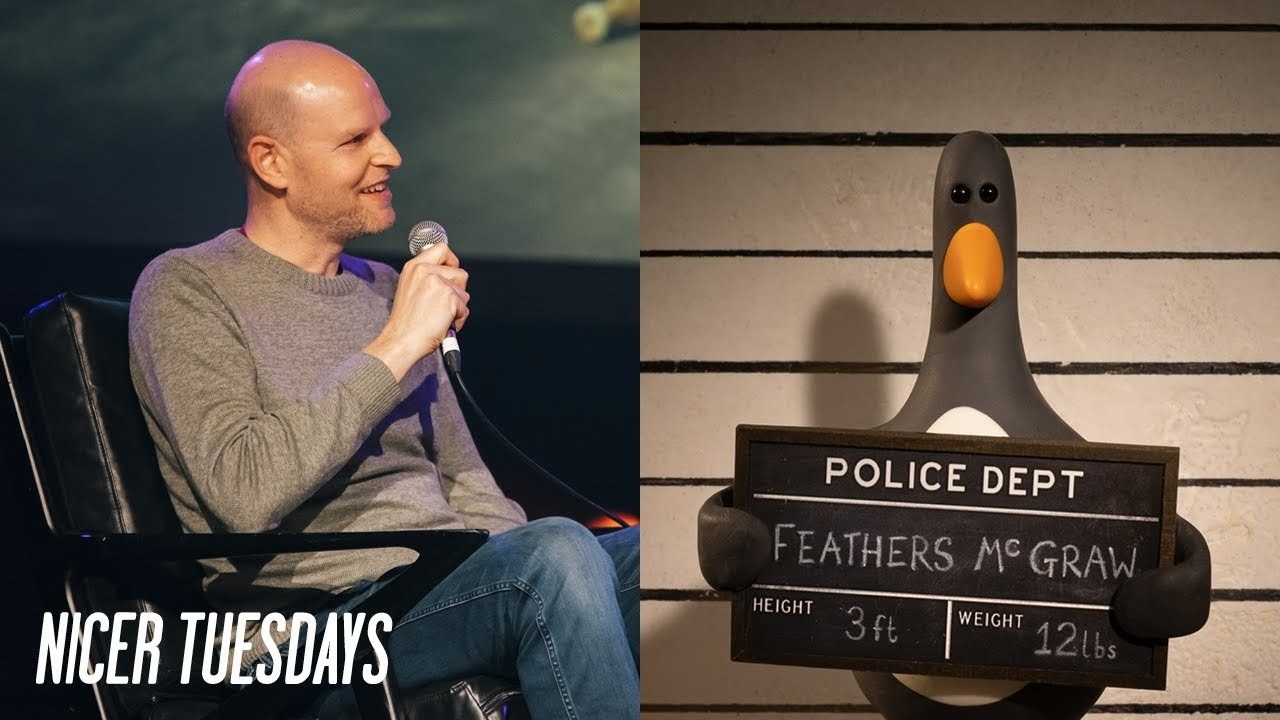
“Behind every success, there are countless hours of unseen struggle and creativity.”
Transcriptmay contain minor errors or formatting inconsistencies
[Applause]
hello hello hello how are you doing I'm very well thank you and thank you so much for having me no not at all thank you for coming I'm really excited to speak with you I'm going to address the elephant in the room straight away I'm quite Star Struck I'm not going to lie for anyone who can't see maybe at the back we're joined by Wallace and grommet today on stage this pretty EXC exciting this might be a question that immediately shows my ignorance are these real models used in animating or are they you know thousands of Wallace bodies around yeah these are exactly the ones you see on that screen behind you.
Actually. That's a lie sorry it's a it's a double eye that's not the same Wallace you can see he's wearing a coat up there and actually grommet is on his knees in this.
So they're separate puppets but these are the actual puppets from the film they're they're the ones we animate they're the ones you see in the film amazing and when they're in front of us.
Now I mean it's quite incredible what do you think for example makes grommet such a great hero when you see them like this in person what is it about them that has that means the personalities have translated so well I think it kind it sort of goes back to the beginning to Nick's first ideas with Wallace and grommet and that he created the sort of enduring Everlasting Duo of man and dog and grommet is there he's been there for 30 years in all of our sort of yeah experiences television and film he's he's longsuffering he's he he is such a warm soft character I think we can all identify with him at times so I yeah it's he's a great character to work with and he's a real obviously he's he's a brilliant character for armman over the years it's also kind of funny to look at them now because they they look a little bit like imposters because I'm so used to seeing them moving on screen and I'm kind of interested to know how you do that quite literally particularly as for example grommet is silent there's no dialogue there's very little almost to animate in terms of there just eyes and ears what kind of tricks do you use to bring their personality to life or like direct them yeah I mean so stop motion animation it it really physically involves the animator moving these characters around so we've got clay the faces are made of clay and particularly grommet his brow that's the area of all his expression.
And I think originally he was going to have a mouth in fact and the first shots that Nick started trying to animate it was really hard to get to reach the mouth and he he realized quite quickly he could do a lot of it just with the brow and so it.
That's the moment gromet was born on on sort of 30 years ago the animators that work at armman we train them up. And we spend a long time going over all those tiny details and it's part of my job to sort of cast the animators a bit like actors so I work with the directors and we we figure out all their strengths U some people are great at comedy some are really good at nuance and those key moments in the film with grommet they're the hardest shots they're the ones that take the most sort of work.
So that's where the animators sort of come into their own also so many of these kind of elements of them that you were just talking about the fact that they're linked to one animator that's really interesting because how do you choose which animator gets to work with which character is it like a personality thing you know is there quite a lot of competition internally to who gets paired with which character yeah it is it's I think everyone wants to work with wace and grommet and and Feathers as well let's acknowledge that feathers was in this. And it was a it was an amazing thing to bring him back you know a lot of the animation team had grown up watching wace and grommet so there is a bit of competition.
And we we have to be quite strict about it really because it has to be the best performance for the film. So it it often comes down to not the animator's personality but their ability to inhabit it's their ability to act and then translate that into the clay so it's like there's two elements to it it's the ability to animate technically move things at the right pace and speed but more importantly is like how they choose those acting decisions because the animators are left alone once they're animating a shot it might be days or even weeks that just they are in there with the puppets animating and then it's at the end of that that the directors and I guess myself would see the finished footage so we can't afford to make any mistakes and who how many people are in able or sort of allowed to work with feathers I guess he hasn't been on screen since the '90s right.
So I'm guessing that some of these animators had never worked with feathers before was there an audition process yeah I mean feathers incredible sort of screen presence on the wrong trousers pretty much anim ated by one person which was Steve box Nick obviously created the character Steve box was the only other animator really working with him so Steve has gone off to do various things and directed films with Nick but he he was the sort of the pure feathers animator and when we came well there he is he's he's always there watching us when when we started this project. There was one animator Ian Whitlock who who had worked on that film he was a prop maker at the time but he he sort of had all these memories about it so he was our first goto and in the end maybe seven or eight animators the team entirely is about 40 so it can get really big but we would trust really trust about seven or eight of them with those performance shots and the animator that did probably the most was sha Gregory who animated this scene here this iconic scene with feathers and the seal the Breakout feather stroking the seal was perhaps my favorite moment of this new film maybe we can talk a little bit about vengeance most foul because you know it's been 16 years hotly anticipated Christmas moment for a lot of people why and how did you decide on the story for this film and how was it kind of decided that this would be enough to bring back these characters what was sort of left Untold it's a it's a really good question it's one of the things that over the years adman you know the story is the obviously the most important thing. And it's it's got to be the right time these films take a long time to make as well it's a sort of fiveyear process Nick has endless sketchbooks and you sort of talk about ideas and inspiration he's always doodling and drawing these ideas I think there's some slides as well that show some of his sketches and so he actually had an idea about a robotic gnome maybe 15 years ago around the time of we rabbit he had this idea and he really wanted to do something with it but wasn't quite sure what it didn't come back in that film but quite often all his best All His Brilliant ideas you know they they sort of ruminate around his head and probably about six or seven years ago he just finished making a film called early man and he wanted to do another Wallace and grommet film and that was the idea he came back to and it wasn't really until a couple of years into the process that suddenly the idea of bringing feathers in as the sort of menacing force behind this robotic gome it all clipped into place and as soon as feathers was mentioned everyone involved and at that point it's very small it's just producers and Executives and and and Nick and Merlin everything sort of came together and and so then it was just a case of you know really really telling the best version of that story that that we could tell and Technology was a huge part of the film a huge storyline is the fact that Wallace is inventing these increasingly like absurd inventions much to Gromit despair why is technology kind of such a part of these characters lives you know this man and his dog from Wigan and what were you trying to say about it in the new film I think what Nick loved when he made the first film at film school he his his family his dad was part of the inspiration I think because his dad used to make things all the time so he was trying to come up with these characters at film school he was at the nfts in London and he just sort of stumbled across his idea that Wallace would be an inventor and he he would invent a rocket in order to go to the Moon because he'd run out of cheese obviously but the inventions in that film you know I don't think he was always going to be an inventor it just it was one of his his traits over the years. That's become more and more part of the story and definitely in this film. There was a real sense of okay well H how how can we develop Wallace and grommet to a point where they've never really we've never really seen that shift quite so much.
So in this film Wallace yeah the technology really does get in the way of their relationship and grommet loves everything organic and natural and Wallace is getting a bit taken with the the tech and I think it relates to everyone you know. And it's it's very good timing because it's so of now what what we love doing at Aran is making things crafting stories making things by hand and it just sits very well with this sort of form of Animation I guess also maybe conversation about technology in terms of this new film is quite interesting because I'm aware that maybe like some parts of the film were made using CGI or technology is being used to help this sort of stop motion ethos how much of the new film is CGI versus you know classic stop motion and where is it handy where does it come in useful yeah stop motion is something that I love and I'm really passionate about. And I I don't really know how to do other forms of Animation it's just how I've learned and I think Nick's the same you know a lot of people who who've created things that Aran have have been able to do it with their hands but CGI is an incredible resource and we we've used it Aran for years and years and there's a CG team you know there's lots of CG commercials so it's something that we know. And we use quite a lot the thing about stop motion is you've got to deal with gravity so the puppets physically you know whenever we want to lift them in the air we've got to have something holding them there and when when we have something holding them there we have to paint it out afterwards so okay right most of the films even from Chicken Run have had some sorts of visual effects to remove wires and rigs but in this film water a massive part of it fog fire things like that they're really hard to do in stock motion unless you do them in a very stop motion way like Fantastic Mr Fox is a good example of very obviously handcrafted effects so we use them really to expand the world. And it it makes the stop motion world that you see in the film bigger richer because we've got vast sort of sky and these visual effects but there are no CGI characters in the film so everything animated every character is animated by by a person animating a puppet but the water the interaction with the water and the fog is all CG in Afters you know but but we use a team that work inside the company so they're in the studio so they actually come on set and they do topography and they photograph and so it's a very very sort of well joined up approach and we never want the visual effects to distract from the film.
So we'll always find the best version some stuff we shoot for real there are certain water effects that we do with little drops of Glycerin or little pieces of glass so yeah we love doing that as well that was something I was going to ask what was water before because I've always looked at one of some goet films like it looks a bit like water I know it's not I mean cling film is classically like pouring a cup of tea from a pot is is little bits of cling film rolled up and yeah like I said we use glycerin sometimes and hair gel stuff like that anything that we can control because the thing is the animators have to have it there on the on the puppet so there's a whole bit where Wallace is in the water and the animator is actually moving these little droplets of of resin around his face just to try and try and make him look like he's wet also I mean this kind of leads into this conversation these are this is a great image of a piece of it's a sketch right of Wallace's garage I and then we see sort of How It's Made yeah in real life behind the scenes maybe you can paint a picture of sort of what an average day set is like an Al and how does it differ from a typical film you know set how many scenes are sort of being animated at once yeah it's a I mean this set in particular is a really complic it's like a very complex thing to do because of the size of everything.
So these are our puppets and we build them this size so that we can build a set around them a certain size so if we get much bigger with these the sets get a lot bigger we're in a big industrial Warehouse in the north of Bristol and so we have a finite amount of space we would be shooting 40 to 50 different locations all at the same time in this studio so we'll have maybe five or six sequences it's why quite often there's two directors because we have so much going on so compared to live action you'll film you know over a series of weeks with lots of cameras and get capture different angles and then find it in the edit sometimes in animation you essentially make the whole film on first as a storyboard a really accurate storyboard CU when we're shooting we can't afford to have any mistakes and we can't really edit it much afterwards so the edit team they'll have a few frames half a second to play with on each shot and it's just one angle so every every single shot is bespoke and this this scene I mean there's amazing lighting and effects going on Dave Alex redet who's a cinematographer he worked on the wrong trousers he created with Nick that amazing train chase and that was really pioneering at the time because obviously no one had done it he equally he said around that time he'd been going through Sheffield and seeing these steel works and he was really inspired and he thought one day I really want to capture this this look this sort of feeling of it feels crazy and strange and the shadows and the lights and the the sort of fire involved and so he built this set with all these practical lights and then the animator yeah the animator here Henry just in there for weeks animating little noots you know maybe five at a time because there's about 30 in there but you couldn't do all of them because okay. So to give you an idea we have about 35 animators and each one of them tries to do five seconds a week of finished footage so you know it's a it's a slow burn process that's really quite fast for us and uh so yeah thanks so the average day is the directors all day long walking probably seven miles around the studio to different units going in and briefing each animator as if they're an actor okay I've got this shot with Wallace and grommet this is what grommet is thinking trying to capture the essence and that's a part of my job as superviser is to make sure that.
There are 10 different walles being animated at the same time by different animators and they all have to feel like Wallace and same with grommet same with feathers it's a massive team effort you know there there's there. There are so many people so many talented people that that bring it all together but but yeah it's a long day and it's a year and a half of shooting Al I mean here. Actually we have some footage which shows some of the work that goes into these tiny details of movement obviously we can't see who is animating here just hands but what do you makes a good Aran animator are there any kind of like values or skills that they really need behind you know besides maybe like a really Steady Hand I'm guessing yeah it's it's funny because you you have to as an animator you have to so I've talked about performance that is the most important thing but you do have to be able to sculpt you do have to be able to communicate really well with with the directors and with the rest of the crew and you also have to be quite Nimble it's very physical thing so you're you're on this set you know you can see the animators are actually in with all the puppets there's a camera there's lights so you've got to be fairly fairly sort of flexible I guess not clumsy because you don't want to knock things over that's that's not good but maybe not patient which is what a lot of people think you have to really no patience I think there are animators that are very impatient and you will hear that if you're in the studio you can you can hear the frustration because they're making sometimes the a movement of gromit's eyeball you know less than half a millimeter in size and that is quite frustrating if you're doing that for a whole day imagine that sometimes the puppets break that's really frustrating and then the puppet team obviously get frustrated with the animators and then the production team you know there's so many people a big workplace Drama We got some department but but having said all that we try and make it a lot of fun because it's a it's a marathon not a Sprint so it's like a longterm thing.
So there's a lot of teamwork involved and the animators meeting we would have every week would be a source of entertainment for us we've spoken a little bit here now about behind the scenes at adman I'm quite interested in your Beginnings there because if my research says correct you started out building clay wings for chicken run if that's right on a summer work placement what was that like it was amazing I so I grew up you know watching morph and Tony Hart on heartbeat and I saw the wrong trousers I think I was about nine and I just fell in love with animation.
So I started writing letters to arburn probably around the age of 12 not whole CVS at that point no I I just no I just really wanted to know how to do it I was like I just love this world miniature things.
And I think the thing that appeals is that you can make a film in your in your bedroom on your table you know you're in control of the whole thing and you can do it so so I was a fan of ardman and I really wanted to learn about the process and I made my own animations and sent them in and the years went by and and one day they responded and they just said yeah come and visit the studio so I did that around the age of 14 so it's I was so geeky you wouldn't believe it.
But that's okay in animation. And I yeah everyone there was quite geeky too I got this work experience by pure chance and a lot of luck you know just saying is there anything I can do and it was a summer job.
And it became my summer job through uni and I' yeah I'd come back to the college and everyone would be like so what was it like at armman and I'd talk about the things I learn and it was when I finally finished my degree and went to work at armman it was like being a sort of another uni because everyone there is so you know into what they do no one wears a suit it's very it's very creative it's like a messy you wouldn't believe it if you saw it it's not very slick it's it's just very handmade and I love that the houses in this shot actually really interesting because adman has been animating and creating the same house in Wigan Wallace's and gret's house in Wigan for decades has anything changed about the house and what references are you looking in terms of interior design yeah where are you pulling from well again a lot of it stems from Nick's memories of childhood and and his grandparents house and Preston and and Lancashire area I've got to say you know Matt Perry who's the production designer he he is incredible sort of leading this team of maybe 50 set dressers and we pretty much have the same house he's had the same house in all the films but it always gets a little bit of artworking you know fresh liquor paint on the bricks it's a very textural world I think that's what makes Wallace and grommet feel incredible because it feels like a real world and maybe that's what makes it so funny as well because you sort of go along with it you're like yeah okay I believe this is the real place and then suddenly you've got a a penguin who's in in charge of a you know a heist suddenly in the middle of this quite realistic world. So it's yeah let's talk a little bit about feathers again because yeah I feel like at this point a fairly huge menacing presence I guess in animation and even less than maybe like grommet there's less on the face to animate it seems like how do you make him look evil yes the the the brilliant design that just that pure Simplicity of course I had to bring feathers tonight he's right here here he is oh my [Applause]
gosh pure evil yeah that's terrifying yeah the eyes even now are glinting in a in a distressing way what what are the eyes made of they are glass pins they're just pins with glass on the end glass headed pins the funny thing is they're they're incredibly menacing on the big screen I mean this is these are the puppets this is what you see in those shots and you're right he's so he's got so little to emote through there's no brow there's no ears it's like on one hand it's an animat's nightmare because there's so little to go on in the other hand it's so it's sort of liberating when you're forced to like distill a whole performance down into the move of a head and the obviously a lot of work goes into the the the composition of the shots the music you know the Nick would talk about a sort of slow push in it does a lot if a character isn't moving but you project so much into his head into feathers' mind the animators that work with him we we literally had to sort of say okay he's not going to Blink in this shot he's only going to Blink when when something's going on that requires him to Blink and for an animator that's hard you know you might be animating for five hours and you'd be like I should probably do something now got to give him something.
But they're like no no blinking not on this shop the pins themselves are are bought by the hundred and they're all handmade so the the poor model making team they go through with a pair of tiny measuring devices to measure each one until they find two that match we're talking like tenth of a millimeter but it makes a huge difference if they're different also this links into another kind of real interest point of mine which is Aran is not traditionally cutesy and it must be kind of hard to strike that balance or pull away from you know being cute unquote and you're really good at suspense and making things.
Actually kind of scary in some in some instances how do you create that suspense also especially if we've heard about the fact that people are working on you know scenes for days weeks how do you keep things suspenseful in that time I mean so there's there's various layers to it I suppose but obviously the the edit the sound all of that it does a lot for us there's so much Focus you know if you're animating stop motion you got really got to focus on the microsc and suspect sense it's about timing so the animation team you know we we talk a lot about timing and we analyze timing for everything.
But the suspense builds up because of the context and that's because of the brilliant storytelling and that's the writers the directors the the cinematographers you know all of that really builds that suspense and the cutesy thing is interesting because it's like these look like simple shapes but when you start analyzing how feathers or grommets head is is actually put together it's incredibly cleverly complex you know it looks simple but there's so much Nuance to it.
So I think that really is just Nick has an incredible way of Designing characters that that make them look very appealing a lot of it's in the eyes obviously they sort of googly eyes but he he creates these characters that yeah they translate around the world amazingly well to different countries because I don't know why I don't know why people see something in them you know that that they can identify with also today something that we've spoken a lot about is you know just the how tiny some of these you know actions are the fact that you know these pins on these eyes how small these motions are you have also kind of alluded to the fact that like anyone animators have bad days and there are mistakes what kind of what does a mistake or a challenge look like a adman what kind of sets a back yeah lots and lots of sort of there's so many things that can go wrong but but we try and plan everything.
So I mean the biggest thing obviously is the performance direction we spend a lot of time planning that and the directors act everything out.
So there are some hilarious bits of video footage here and there you know I'm thinking Nick Park dressed as a nun stuff like that.
But we yeah we try and we try and eliminate those kind of performance mistakes early on but but the puppet's breaking it's always at the worst possible time you know occasionally we drop them on the floor that's not good the heads come off and fall out and you know the eyes the the lids feathers eyelids are tiny and so feathers has eyelids he's he's got eyelids yeah and they're not just I mean if if you watch the time lapse I don't know if we've ever caught any of the animates trying to balance an eyelid on feathers but it's incredibly frustrating and so one of them even built a little net underneath the set just to try and catch it save them from looking for hours on the floor what else I mean sometimes sometimes we have a flood we've had a couple of floods we've had plagues floods lighting you know if there's a thunderstorm or the lights go out there can be things like that that just no one's expecting once I had a piece of set it wasn't on this film but on a on a set that was very beautifully made on the Pirates movie and I noticed some Reflections in some glass there was a cabinet full of glass jars and I sort of noticed this reflection moving and all of them moving and I was thinking that's weird I'm not animating that why is that moving and I realized the whole thing was just slowly peeling off the wall at the back.
And it been stuck on with blue Tac which is not something we normally do but you do it when you're setting up a shot and you're like okay okay is that the right place before you fix it all. And so there's things like that that you just think if if this falls off.
Now I've lost a week's work. And I go back to the start of a week ago.
So it's literally like being on a Friday going everything I've just done I'm going to start again but that's part of the challenge as well and the fun keeps us on our toes I mean you also get the sense that I mean despite however many you know New Uses of CGI it's still sometimes held together with blue Tac which is lovely I think also there's some images here yeah exactly of the first Wallace and grommet animation Grande out and as we're talking here about sort of how some of those changes have happened to production it still feels like the heart of it is there definitely I guess these characters also have lasted so long they've resonated so well why do you think that is what about NX Park's Creations have have really had this staying power that's a great one yeah it's such a good question because it's not something you can there's no formula to it I think that's the thing there's so unique and his Take On The World is so brilliantly unique comedy is surely a massive part of it because we all love comedy and when something's just pure fun to watch you enjoy it you enjoy being with them and you want to see more of them and throughout that comedy that armman has built its name on arguably on over so many projects so many different characters that comedy is universal quite often even though it's very specific to Nick or to Pete you know whoever's made the characters but there's also emotion at the heart of it like there's a real pure emotion. And it's just such a lovely thing whether.
That's the love between wace and grommet or it's the the fear between them and feathers or the you know all of those emotions we we just love seeing them we we connect with them on screen I think that's so nice we have quite a few questions from the audience so I'm going to try and get to some of them now because yeah it's people are Keen to talk about it one of my favorite ones is Will Wallis and gromma ever be in fortnite I don't know if that's top secret information yeah not not to my knowledge but I I don't know never say never but you know lots of people want to work with Wallace and grommet and lots of people want to have them in their worlds and I I get that I you know I like them to see them all over the place maybe one that's a bit more tangible is what is the most difficult shot you animated in Vengeance most foul that's from Ted okay that's a good question I so I was a supervisor so I I was lucky enough to see some of the hardest shots in the film being animated by someone else that was nice for me I think one of the hardest shots in the film there's there's a couple so the one of the shots I did I did a little sequence at the end of the film. And I was really Keen to do that because as an animator and a fan I just wanted to have a tangible thing.
And it was Wallace patting grommet on the head and I've I've animated that a couple of times actually but never in this way so what he does WR at the end is he sort of rubs his hands it's a vicious Pat I remember it well. There is yes I've done a couple of vicious PS but this was like a loving sort of Pat to a dog and and what made it really difficult is that Wallace has really big hands and grommet has really massive ears and the two things don't really fit together.
So there's a lot of sculpting that was that was hard but actually it was a really lovely moment as well.
So it was a really special thing to do but I think the some of the hardest stuff actually feathers that little seal that you saw that Nick named Ron uh he he was Tiny that seal Ron Ron the seal Ron seal he was Tiny and sha the animator had to somehow I don't know how he did this animate Ron looking slightly sad when feathers left him bearing in mind he's made a fur felt you know there's no clay there so he he somehow Needle felted during the shot to make this tiny lo I just don't know how he did it.
But I love that another one from Charlie which is how significant has your non-london location been in the story and success of the studio I think not being in London has allowed Hardman to to to work with lots of different people because animation involves being inside a big dark box basically you don't get to enjoy the view so being somewhere like London doesn't make a huge difference I think space wise you know Bristol was a good call for them. And it's it's got bigger over the years.
But it really did just start with Pete and Dave you know on a table top now it's a huge studio and Bristol actually has such a massive creative scene so it's a really lovely admin's obviously a very big part of the city partly because of the grommet trails and the Wallace trails and all the all the sort of external physical things exist in the real world with these characters but they're very proud to be to be British but also to be Bristol based and they're International you know arman's had the fortune to work with people all over the world and obviously make feature films that have have been funded by the states quite often but now Netflix which takes them everywhere amazing I actually think we only have time for one more question. And I'm going to steal the slot for that question because I'm quite interested in hearing about out of all of the your work at armman since the '90s you just mentioned how special that scene was of the very loving Pat but is there another scene that whenever you watch it or rewatch it that really sticks out to you either because it was a Triumph or because it was so frustrating that you can't forget it it's very hard for I think all of the crew when you watch the film you you look for the bits you've been involved with and quite often you wish you'd done them a bit differently so that is like a Common Thread and it's hard to watch the films maybe two years after the film's finished you can watch it and go ah no I can see it now as a film I so I've got those shots in my career that have been really difficult I've tended to sort of forget about because I'm quite an optimist and somehow I've managed to sort of block that out if you focused on those bits I think it'd be really hard because it's such a challenging job to do and I was thinking I love I love all the things I've done with Wallace and grommet and grommet is probably my favorite character to animate but I think I instantly in my career I jumped to the moment where.
I was first really given the the lead role and that was on Pirates and I think it was because Pete and Dave who set up the company Pete directed Pirates I'd already worked with Nick a lot and he trusted me with the main character and for me that was a I mean it was massively stressful doing the first shot in the film with the first main character and it was a complex shot with the pirate Captain dipping a Biscuit in a cup of tea very English thing to do a custard cream it was and yeah he was dipping this biscuit. And so it had a bit of everything it had timing comedy character it had some effects because I had to animate the tea on a little pin and wax and stuff and this big camera move and I just remember thinking oh I can't believe I'm doing this and when that shot was finished and it was approved the whole pretty much the whole crew went to the the viewing theater and we all watched it I mean it was 200 people and Pete was there saying this is the first film. And I think I can't really you know I can't get over that still that's perfect dipping biscuit and tea amazing that's a good adman way to finish okay thank you so much for your time today we have a wonderful Round of Applause for will beer thank you oh
Latest Talks
-
Murugiah
Why you should reject the formula and make art about things you love
Watch -
Amber Weaver
How does contemporary type design translate into the wider world?
Watch -
Delali Ayivi
How does photography give us the right to imagine our futures?
Watch -
Will Anderson and Ainslie Henderson
Bringing stop motion sorcery to BBC’s Small Prophets
Watch -
Ollie Babajide Tikare
The importance of not flattening the complexity of observation
Watch -
Marina Willer
Design thrives when you find poetry in the simple things
Watch