
Charlene Prempeh is the founder of A Vibe Called Tech, a creative agency that explores the intersection of Black creativity, culture, and innovation. She is known for addressing the nuances of diversity and representation in branding through her collaborative projects with high-profile clients.
A Vibe Called Tech
The importance of telling local stories globally
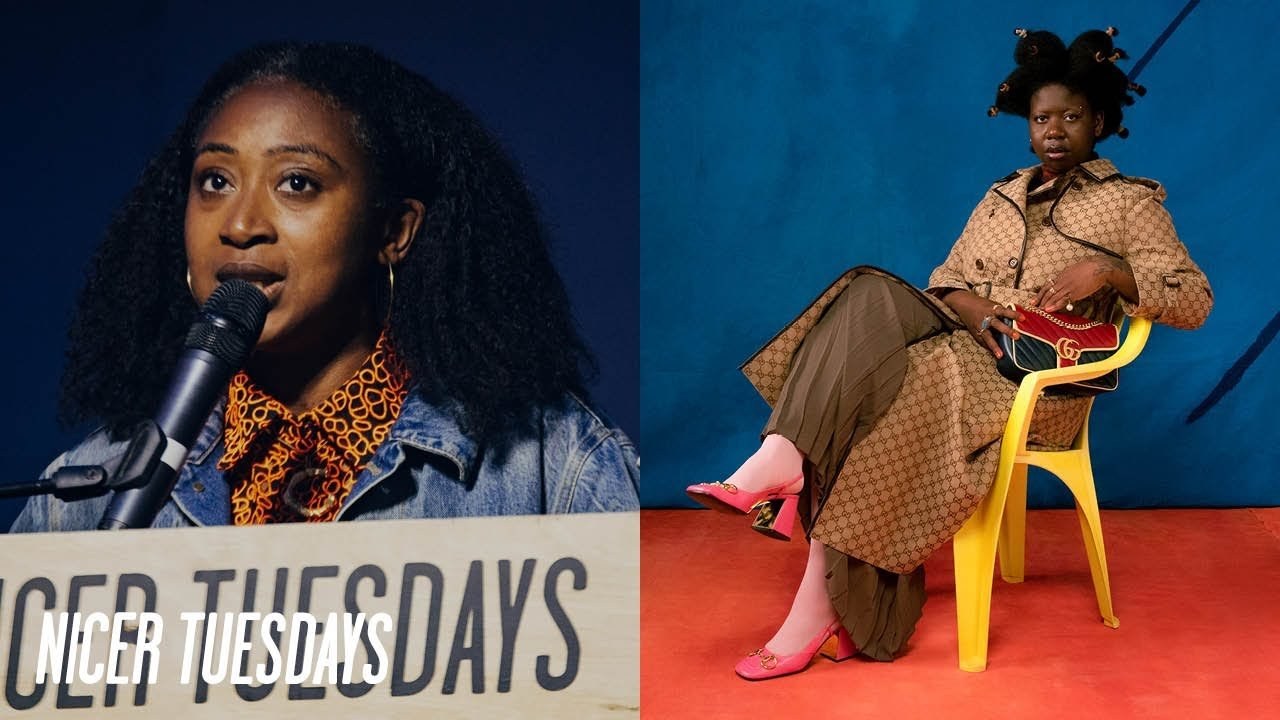
“Brands were very keen for diversity and representation in their work, but they didn’t think about what the nuances of those cultures are.”
Transcriptmay contain minor errors or formatting inconsistencies
[Applause]
thank you for having me today I'm still kind of fairly excited by crowds so yeah I'm having a good time we actually myself and our creative director lewis started having conversations about a vibe called tech maybe four or five years ago we were working together at freeze across the art fair and the publication setting up their creative studio and their first creative studio that was again working really closely with brands and what we were finding is that brands were very keen on diversity in representation in their work.
So they'd have like people of color in the campaigns people different body sizes in the campaigns different kind of cultures in the campaigns but they didn't really think about what the nuances of those cultures were or think about telling what those stories of the different cultures that was irritating we wanted to change that.
But we didn't really get around to it until all the kind of up people around blm and gucci was someone who we'd worked with before when we were together at freeze we found them to be kind of super open if you had a great idea they were kind of fairly willing to run with it believe it or not and we had a good idea.
And so we went to them and like in the introduction the agency you've kind of spoken about as looking at the intersection of black creativity and tech and culture it definitely did start that way but as time's gone on it's become really obvious to us the kind of intersectionality of margin life communities is actually what's really important so absolutely we still look at black culture it's central to our work.
But we also look at other marginalized communities and make sure that they're included I think the last I just want to say in terms of who we are when we started and who we are now it's about what the work is that's going to happen like when the party stops so I think you probably all saw there was a there's been a kind of like a feasting on on blackness there's been a kind of feasting on diversity and then when something else happens like the balls dropped and we want to kind of put something in place to make sure that that ball is never dropped because there's so much work to do it's not going to be done in my lifetime I want to kind of just say we wanted to set something up and yeah to make sure that the good work continues so I just want to take you quickly through the kind of different things that we do deep down I'm a nerd really into insights really into data did a lot of work with the bbc where we use kind of insights to inform programming so it's been like a part of my work for a long time.
And so we do a lot of insight work with clients now we did just a big piece with nike that was more kind of qualitative like in-depth interviews but I also love an excel spreadsheet and some kind of quant stuff so we do that too we do diversity and inclusion work so looking kind of the structures and processes of within companies to make sure that diversity is included brand strategy might be my favorite because to that point I was making about longevity it feels like to me when you get the kind of brand strategy right and diversity is at the core of everything that the brand's doing that's likely to have the most impact long term our creative network a lot of the point like well there's two things with the creative network the first is that we're really into telling like local stories globally I feel like for a very very long time brands have kind of been like mark like paris is our biggest market and therefore we're going to shoot in paris using parisian talent and when you think about it it doesn't actually make that much sense but I like to think that as a people we're interested in other cultures and if you look at things like squid game like it's really clear that like other stories speak to people globally and so that's something that we incorporate into our work and the other piece around our creative network is like financial sustainability for marginalised communities right. So a lot of the time especially when you're in the creative space I'm sure all of you here have felt the point of this at some point it can feel quite precarious in terms of like where the next paycheck is coming from and so we like to kind of bring as many people in as possible onto the projects that we're doing and we work with a really diverse range of talent so we don't use the same people again and again because like our goal is to spread the wealth as much as possible and then the final point and that like all agencies say this.
But I'll just have to say it too is there like execution wise we're absolutely channel neutral so like we just finished doing a book for the artist andre perry we do films at the moment I'm looking at a plant-based project so like it is it is all just about is the idea good where does it work best and we take it from there so gonna take you through some work and given that gucci was the first client I'm going to take you through that first project in many garnier languages there are no gender distinctions we are all there and the body is often tied to the way we describe our emotions ♪
it's really beautiful linguistically eyes are feeling bodies that do not have to be first defined by gender ♪
so what you're looking at here is a quote from an essay we commissioned as part of the campaign and what it's talking about is the fact that in ghanaian dialect for most tribes there's no words for he or she so what gucci came to us with was the launch of their new jackie bag which was meant to be gender neutral to the point of making earlier the kind of key markets were like the obvious ones in europe and america and they wanted us to look at doing campaigns in those markets with partners in those markets we went a bit rogue and went to a platform in ghana called manju journal and came up with a concept with them part of the reason for that was like I'm ghanaian I like ghana I thought it would be fun someone just woo good whoever did that.
And so I wanted to kind of do something in ghana and it turned out to be the first time that gucci's ever shot in africa which is wild but I think it's like I said it's an important thing about not focusing on obvious markets but another thing about this essay which became ♪
I suppose a thread in all the work that we did is that we do are working out in public right. So all of you work in the creative field you know how much research goes into that final product and everyone's up here talking about that today.
But the audience never gets to see it I kind of think it's really important for them to understand fully what the ideas are behind the work that we're doing especially because we're trying to tell new stories about like black culture so there was a very long essay talking about why this matters and that worked as part of the campaign so this was all happening like at the peak of lockdown.
So we couldn't travel to ghana which was upsetting but also there's all sorts of protocols to follow right because gucci's a big international company the last thing they needed was any kind of scandal around the fact that like everyone got covered on their shoot so all the models had to live together for a week in the run-up.
But we also had to kind of get regular updates they're all following guidelines on one picture they sent us it looked like a kind of covered nightmare where they were all like topless and hugging for a particular shot we got rid of that one but what was really interesting was how kind of how that relationship was with us and gucci so they were quite kind of those tricks about kovit understandably but also they've got super super strict guidelines when it comes to styling right and they couldn't be on the set because no one could be on set so that was quite kind of complicated to negotiate kind of making sure that we were getting the shots and that all of the things they needed to be in the shop were there.
This is a good example of what wasn't allowed so as well as the kind of styling it turns out they had rules around how people sit.
So the way that the legs are arranged here were not actually part of those guidelines so we also had to scrap this photo but I love it which is why I wanted to show it today what was really amazing for us right was it the response firstly like in ghana it's like everyone was going wild like cousins were calling up and being oh sure I keep saying whatever like youtube it was amazing but also manju journal went on to do some really good work.
And this was like their first big brand piece and they've since done stuff with like tommy hilfiger and like burberry and it was a springboard for them to do that right and like I said it's really important to us that people have been standing around like empty-handed get their flowers and that this was that moment from andrew journal ♪
so that very short snippet you just saw was from the project that we're doing with we present the creative arm of we transfer and they are a very very different type of client right whereas gucci is very much either the product they need to sell it like what's the idea we present act much more like facilitators so this all began with a conversation that I had with their at the time was their cmo damien bradfield and the conversation was super loose it's like what are you interested in the moment what are you excited about I was doing a lot of research at the time I was super excited about black media and like how it evolved from the beginning I thought oh I'd quite like to do a project looking at like what's happened since people didn't have any words like written word until now whenever all of you kind of new black owned media emerging and like what that evolution has been and they're like yeah cool let's do that then.
And so we are that film was part of the work for the first part of that which is looking at kind of the physical communications that we have with each other. And it was part of a bigger project that we did with plantain papers which is a literary magazine based between here la and new york and for that project we wanted to look at folklore there's a there's like a really naughty spider called anansi who's like quite a big deal in black culture like everyone's heard the story in some form but it's all really different stories and it's evolved so much over the past like however many hundred years.
So we spoke to a bunch of people like across the world to tell like their own stories about anansi and like soundscapes and illustrations all around that but what's been really nice is having like the time to evolve the idea so obviously we're doing this bit.
But we're going to have three other parts and then you can kind of change things up as you learn as you go along and like not many kind of brands would give you the opportunity to do that.
So it's been great so yeah what you're looking at here is some illustrations from cheryl tuesday because another thing we wanted to do is get to the root of the fact that the kind of tale of a nancy has been like appropriated so the whole kind of roger rabbit cartoons that you see are actually based on anansi with another season it was bray rabbit. And it was roger rabbit kind of annoying no one knows it we kind of use the time to tell that story.
And then there's kind of a whole bunch of photography around it as well like talking to people across the world where anarchy is an important part of their world yeah there was soundscapes portraits filmed interviews it was super rounded and as mentioned in the intro we're now on the second piece of the project which is working with paul mendes which is very very pleasing and boy brother friend and illustrator alex mayne on black satire so like updating black satire from the 20s and with people like jackie ormes and seeing what it means to us today and that my friends is it thank you
Latest Talks
-
Murugiah
Why you should reject the formula and make art about things you love
Watch -
Amber Weaver
How does contemporary type design translate into the wider world?
Watch -
Delali Ayivi
How does photography give us the right to imagine our futures?
Watch -
Will Anderson and Ainslie Henderson
Bringing stop motion sorcery to BBC’s Small Prophets
Watch -
Ollie Babajide Tikare
The importance of not flattening the complexity of observation
Watch -
Marina Willer
Design thrives when you find poetry in the simple things
Watch