
Weirdcore is a designer known for his mind and retina warping visuals, often incorporating live generated elements and manipulated pop culture imagery. His innovative work includes video installations for festivals and collaborations with notable artists.
Weirdcore
Designing live visuals for Aphex Twin and finding inspiration far from screens
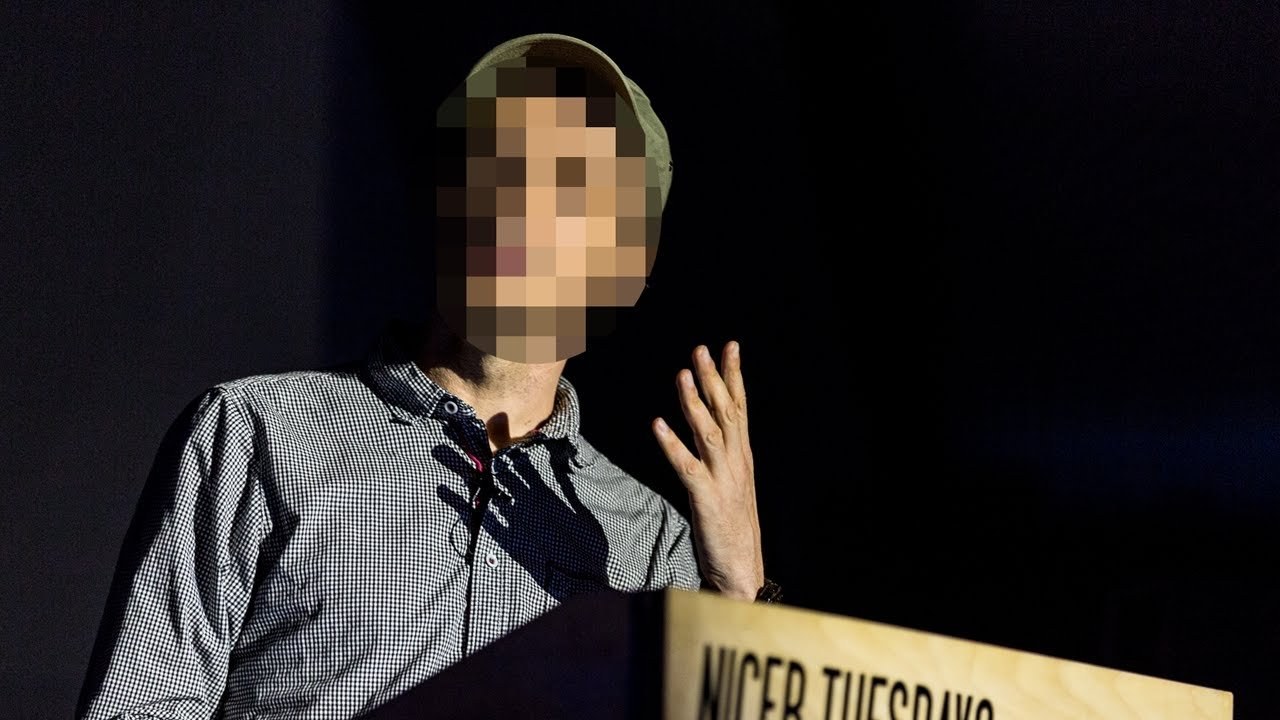
“I don’t know how to describe what I do but it’s just not corporate, basically.”
Transcript: May contain minor errors or formatting inconsistencies.
So, yes, like he said, I do stuff as a weird call and, yeah, I don't really know how to, yeah, how to describe it, it's really not corporate at all basically. So, yeah, I'll just show you a few bits and bobs of what I've done in the past and, yeah, so. So, this is something I did for, I made your head last year and, yeah, this is really chill to my standards.
But I thought I'd loosen you up with something easy before I assault you with other stuff. Yeah, I really like this one. It's really strong and I really like the campaign that they did because it was just loads of bite-sized stuff and I don't know if it's a future for music videos because, yeah, it just works a lot better for the social and this is much more my vibe for free music. So, yeah, this is more my vibe for 2D stuff. This.
And then I did this thing recently and I've watched it for the first time in ages when I was doing this keynote and it's pretty mad to think that there was not that longer we thought he was actually going to lose but, yeah, he was. Anyway, so that was a teaser I did for Apex for a gig where we did in Texas and you guys did it. So, like, it's nice that event. So, yeah, so how and what.
And I guess the kind of main inspiration for why I do the things in this show came from, unsurprisingly, a gig that I was at back in 1996. And, yeah, like it kind of really inspired me because it was just so wrong but, yeah, right. And, yeah, it was like in October and I think the weekend before I was in the forest looking for mushrooms so it was like in a perfect state of mind for this. And, yeah, I mean, this set, I mean, forget about being noxide ways. My brain was literally diagonal after that.
But anyway, it was really cool. And I was a bit of a fan for him for about three years at that point. I kind of wondered why I had not seen him before but he hadn't done gigs for three years so I haven't explained it. I've realised that it's been a long time like that on stage. And it was like, I couldn't really find much footage but it was really long time ago. But he was like also like laid down on stage, completely undone then.
And then later on, he also just got a cigar and he was like being filmed and that was the projections. And he also had his teddies on stage just like fighting and all that but I just wanted to recreate that in the visuals basically. So, I passed forward a few years and I kind of moved to London in about 1999 and I kind of hooked up with these two Japanese people, like a Japanese couple and they were kind of doing visuals and we started this thing called RGB Invaded. And I was using this software that they had from Japan where it's basically like V-Jam, that cold cut I had at the time where you basically assign a clip and like a blend mode or a kind of effect on each key.
So, you kind of do this a bit like that game where you've got to kind of get into a certain position but I'd get all my fingers like that and then you're like, oh no, I want to get to this button so you end up using your nose or whatever kind of thing. And I was playing quite a lot in squat parties and I don't know if you've been to many of those but it's pretty hard to keep it together just being there. So, trying to do this was pretty messy but a few years later I kind of started my own night called New Bleep and I actually did that before Bleep.com but it was kind of based on I was really into new beats and then I was really into the microchip scene so I kind of combined the two kind of vibes. But for this thing it was kind of the first time I kind of did a lot of stuff with live input so I couldn't really find any better pictures. I know I've got them somewhere but it's backed up somewhere on a CD and no idea but the vibe was to get computer games set up and people, the crowd would play it and the kind of the visuals from the game would get fed into the actual visuals projected on all the TVs and projection and the sound of the games would go into the, you know, would feed into the music that people were making.
So the kind of crowd interaction kind of started there and that's kind of some of the visuals that I did back there but like just through doing those kind of nights it was really good to network and kind of meet new people because yeah if you want to kind of get more gigs when you kind of start out when you move there like I find doing events is quite good. You probably lose loads of money and stress and sleep and all that but the kind of contacts, the good contacts come through doing that if you're into it.
So I started doing stuff with, a lot of stuff with warp.
So I did this with Alex at the A-Word and various things from this promoter called Geron Sabira. He was going out with A-Fix at the time so that was really a ride and then a lot of the stuff I did for visuals ended up in the music video on warp and then played up for a lot of the wall parties like this thing. And yeah this was all live. I'm really into just doing stuff closely live so I'm just throwing a few PNGs of like Queen Up Girls and the rest is all just processing real time. Like in the crappy laptops that we had back then.
And then I did another thing for Drana where it was on election night in 2005 and I did a thing where the whole visual for the night was basically getting a free from the TV and you know on election night they just have the election results and all that the whole night and they were just processing it to the music for the whole night basically.
And then I did this piece when I was just in my bedroom playing around with my new teammates but we all lived together in the same house in St Newton and I spent many days, nights just doing landings and stuff like that. You get the vibe. And I kind of led on to doing work with Maya who sort of spotted it.
I did all the kind of graphics in the back kind of thing. And I thought wow yeah so I'm now working with big names of Maya I think. I thought yeah it's going to lead on to loads of other work but it did. It took quite a few years.
So then I kind of did this piece and... It's kind of a piece I did for Drana Soguro again and she wanted a thing to... Where? Trying to skip through the... Oh sorry. She just wanted a thing where it was at the beginning of the event and it was just a test card that just kind of like changed throughout the whole time. And it's just a test card that evolves and it has her sound so it was great for the event. The man I really wanted to put it online.
So I got a lot of my friends to do the sound track and I think it was eight different sections. I got eight different friends to do it but then how am I going to coordinate eight different friends to do a specific bit.
So I kind of did this thing like you know that game when... I used to do a lot with my dad when I was in train journeys and stuff where you just draw like the head and then you fold it over and then you draw the next bit. Do you know the one I mean? And I did that with sound where I just gave the bit that they were going to do but without showing them what the rest was or telling them who was doing the next thing. And this is how it came out. Anyway, so this kind of led on to... It's on my website so you can check it out anytime.
This led on to Richard seeing this piece and he wanted visuals at the time. And he was like, yeah, I'll just have some of that basically. And I did that.
So I used the same kind of techniques as the next but did it in a live way. And so like the things you see out there is how I do that live. So those bits... Just get multiplied and... Spiralled in various ways basically. Yeah, it's all totally live. And we kind of discussed doing other things.
So I went to the warp office to get these masks to do visuals with and did stuff like that. And it's at that point that I was like, this is happening for sure because it just came out of the blue and I just had one month to do it. And I was like, this is so cool.
But I was like, it's so good. I was like, is it actually happening? And I spoke to him on the phone and it was like, it's a bit of a prankster. So I was like, it's just happening for sure.
But then once I went there to the warp office and got the masks, I was like, yeah, it's happening for sure now.
But it was great relief but then it was really daunting to like... See, I've only got like over three weeks to just put up this whole show because that whole TR3 thing was not live at all and I had to make it all. But you know, had to do it really. Did loads of stuff like that with the mask that I'd made into 3D. And I started messing about with a lot of his artwork stuff. Because he's got a whole theme of like using his face over things, quite suitable really.
And doing it all with sounds we have to do elements. But Richard had tons of... Oh yeah, I know. And throwing his cut teddies in there as well. But Richard's got loads of these random pictures that I just threw in as well and did the same kind of effect to it. And he just sent me loads more pictures. So yeah, let's do it.
And then also, I went that first tour, he was playing with Florian Hecker. I don't know if you know this guy, but I was a big fan of his as well. And this guy does full on eye art kind of sound installations. And he was dealing with the kind of sound reactive side of it. Not sound reactive, the surround sound. And I asked him what he wanted for the visuals and he was like, oh yeah, there's auction going on at the moment. Because Yves Saint Laurent was just passed away and he's telling all his art.
So I was like, okay, alright, so I made something with that as well. I mean there's loads more that I could go on about that tour, but I've got to move on to the next year.
So the next year, I thought, okay, I've got loads more time now. I can just refine it all, it'll be good.
So I thought, yeah, I'll just bring in some kind of 360 pictures. I've called Walker, that features in his artwork as well. And just play around with that.
And then like a week before the first show, Richard was like, okay, I just want visuals that's all just filming the crowd. And standing here, I can see why he's coming from there actually, because it kind of would reflect the attention back onto the crowd. Well, then just being focused on him.
So I was like, okay, so I'll do that. So all these nights that I did before, like New Bleep and that 5.5.5 just came in handy because I just started kind of just filming the crowd. But we have no time to prepare for that at all.
So I was just like getting someone to have my DV cam to just film someone in infrared light, which worked out okay.
But then I found it was for the Pompidou in Met, hopefully. We know that we've got like tape modern, but there's like tape cornwall and tape Liverpool. They've got like this new one in Pompidou thing in kind of Met. And I realized that they'd actually done a big opening before because things got delayed. And the one before they had Rerechaquilla doing the opening. And I'm a big fan of his as well. And I know that his stuff would have been so ultra tight. And we just turned up doing this random whatever.
But it worked out alright. No one ever complained to Richard, so it's fine. So for the next show I did a bit more stuff. It never quite felt like I really nailed it.
So I kind of started using like computer vision, which is like, you know, face mapping and stuff like that. Which is quite common now with all the snap tracks and all that. But back then it was not that used really. It was at an event in Victoria Park, a capsule day. And it worked out pretty good. Is there anyone at that gig?
And then later that year I kind of did it in Rome. And we started doing a bit more kind of 3D face mapping.
And then in 2011 I was like, okay, I've got to top that somehow. I'm not really top it, but I do just make it evolve. And straight after that gig I went to Japan. And like, you know, like those kind of things you set seaside towns? In Japan they've got them everywhere. And then I just saw that. This is by kids actually by the way.
So I'm actually showing you like holiday photos. And I saw that and I thought, yeah, okay, I'll use that on the show.
But I mean, the fact that I got inspired by that is kind of really relevant to my work. Because I kind of used it in that way for the show.
But I tend, although my work is really, really digital, I tend to try and get inspired by non-digital stuff.
So I tend to be inspired when I'm on a move or, you know, if I've got to work with certain artists and I'm going on holiday, I'll just make sure they give me a brief before then I'll just figure out what I'm away.
But I can't really be on a holiday the whole time. So, you know, I often get inspired when I'm just in the shower and stuff like that, which means I end up having really long showers. And, but I also have got tons of books and I try and just get inspired by non-digital stuff. Because otherwise it's so easy to just copy and paste that, you know, I think it's best to keep up to date with all the digital plugins and tutorials and softwares, but try to get inspired by something that's non-digital. Because, yeah, it just breaks a loop somehow.
So anyway, I did that where instead of putting Richard's face onto the crowd, I'm just taking the crowd's face and just putting it onto these random pictures.
But then I thought, OK, I'll take it one step further. And because he only does one gig here and there, like one gig in this country, one gig there in this other country, I'll do it in a way that it's customized for each country. And I'm really into that as well. I always try and do something that's so specific for a particular project.
So I kind of started doing it for each country. And I thought it went out well, but it went out super well.
This is one thing we did in Finland. And they actually cheered to the visuals. Which kind of froze Richard off for these like, you know, he's playing great too, but nothing particularly special at that point. And they're just like going, yeah, so, sorry, kind of weird patriotic thing going on.
But it's just great. And we did this one in low light. And it worked pretty good as well. And the thing with that gig as well, it was a double whammy for me because there was a kind of miscommunication where the promoters thought that the face mapping stuff wasn't working. And they were like, oh no, this is like a big deal. We thought like, A-Fix, we're going to do his face mapping thing.
But it kind of shows that, you know, there's something fairly special that the promoters would be bothered about the visuals when it's mainly about the music.
But anyway, so then for the next stage, like, I thought the best way that it's evolved into this current form was with the stage design. And basically in 2010, it was just like one big screen and maybe a plasma or maybe two free screens at the back.
And then in 2010, 11, it was pretty more kind of designed and still worked pretty good.
And then in 2012, where we just mainly toured in Australia, it was six big, equal size screens. Which was a little bit smaller.
And then more recently, we did it in Texas and it was a bit more kind of coordinated with the light. And it's a bit more kind of random and it's less like a cinema screen. And yeah, this curve that you're probably more familiar with. And the way that it's done is basically, I'm connected to the lighting desk, right, art net.
I mean, just the lighting guy just controls what screen goes on and off. And it just makes it a lot more dynamic, I think. And you'd think that because I'm now controlling like 12, 14 screens, the hardware setup would be a lot more complex, but it's not really. Like this is 2009 and this is pretty generic, VJ kind of setup kind of thing. It's not too bad.
But then we move on to this thing and it's just like, oh my God. It just gives me like bad flashbacks just so you can look at it. And I think the main reason is because we're split into like loads of different kind of screens, like there's projector and there's plasmas and we're using multiple computers.
But then when we switch to just LED screens, it simplifies a bit more and then it's this. Which is like some kind of minimalistic kind of design kind of thing. And the main key is just having this connection with the lighting desk and having audio reactive stuff.
And yeah, it just makes it so much more easy to set up really. And for the NTS show, it was marginally more complex but pretty straightforward. And the way that I kind of split into multiple screens, we do this thing called pixel mapping where this is just one big HD output and it all gets split up to the different screens because LEDs are pretty low res really. And yeah, just do that.
But then what I tend to do is I kind of do this live reconfiguration of the screens in various different ways. And it just makes it dynamic and then the lighting guy just turns them on and off.
This is like a technical drawing of the setup and this is the same kind of thing with all the lasers. Literally really nice lasers.
And then I think like this kind of recent show is a kind of combination of the best of all the shows that we've done before. Where it's a mix of all the kind of playful 3D stuff that we did in 2009 and a lot of the kind of crowd visuals. And another thing that we do is the lighting guy has control over what screen is on but also he controls the lighting within the 3D scene. So all the lighting and shading is all controlled by him as well.
But it's not quite obvious yet during the visuals. So I'm going to try and work on that.
I think a lot of my kind of stuff is really quite punk and I work for a lot of quite punk kind of clients. If they're not that punk, I mean when I say punk I don't mean like you've got Maheek and then we listen to Sex Rift.
But I mean the kind of punk attitude and I find if they're not that punk attitude, it doesn't tend to work out too well for you. But like this is some other kind of visual things that I did for Richard kind of thing. It's kind of got, it's going into kind of similar aesthetics to what I do with another artist that I work with quite a lot and this is Maya. U Guard Destination MB Music U Guard Destination Anyway, so, yeah, this is the latest thing I did for Maya.
So I do quite a lot of collaborations with a lot of people, like Maya, and I've done a lot of stuff with Dimartel and Sophie Molo. It works quite well when I work with more mature people that are not so familiar with technology, but I bring in the technology edge. But with Maya, yeah, it's kind of this collaborative thing where we come from quite different backgrounds and she's got really different tastes to me. So it kind of works where she comes up with this idea and then it's kind of really different thing and what comes up is something that I would never think of ever kind of thing, but it's quite different to what I do with Apex where we've got quite similar tastes and he just kind of throws me in this direction where I get the most of what I usually do.
And they're both quite punk and it's quite, they're kind of punk in quite different ways because like what's really challenging with the Apex shows is that it's really technical and it's really like there's so many things that could go wrong, but the actual figure out what you want is really quite simple. But with Maya, you know, the show is quite a picnic in comparison, but like her kind of taste changes all the time on a daily kind of basis. So it's really hard to keep up, but I found after working with both of them for nearly 10 years now that it's made me a better designer, you know, trying to keep up with their thing. And yeah, because I've kind of taken you on a bit of a tour of where I come from and all that. I just thought I'd mentioned what I'm doing next kind of thing.
So I've been kind of working with this director called Brian Welsh, which I don't know if you've heard of him. I haven't at all. But when I met him, I was totally starstruck because although I've met quite a lot of pop stars and famous people over the years, when I found out that he was one of the directors of my favorite black mirror episode, you know, the one when they've all got lenses and everything stored on that kind of back there. Do you know what I mean?
Anyway, I did that and when I found out, oh my God, I didn't know what to do with myself. And like, so we he's doing this film where it's all like set in the kind of early 90s and it's all about these kids going raving. And like this is exactly what I should do back then. And it's pretty crazy that all my experiences of doing that kind of stuff back then is now being useful.
So I'm kind of doing these visuals like that in the style of what's back then. And I'm kind of going to be doing, you know, the styling of how it is when they like intoxicated kind of thing. So I'm looking forward to that.
And then I'm also going to be doing visuals with Apex and Fuji Rock. And what I'm going to be working on a video for young Junvenile New, who does pretty cool visual, cool videos. And these two, which are just so only in Japan, so yeah, that should be quite interesting.
And then at the weekend, I was just talking to the people from WayVR.
So they're doing this thing where they want to create like a VR club thing, which I think once VR becomes mainstream, which it's bound to happen as soon as Apple brings out their VR set, that everyone, well not everyone, but a lot of people will be like clubbing in a virtual environment. So hopefully I'll be doing a lot of that by that point. And yeah, that's about it, really. So thanks a lot.
Latest Talks
-
Will Anderson and Ainslie Henderson
Bringing stop motion sorcery to BBC’s Small Prophets
Watch -
Amber Weaver
How does contemporary type design translate into the wider world?
Watch -
Murugiah
Why you should reject the formula and make art about things you love
Watch -
Marina Willer
Design thrives when you find poetry in the simple things
Watch -
Lizzy Stewart
The hundreds of drawings and writing-on-a-whim that goes into comic novels
Watch -
intra
The rewarding process of recognising the art in obscure everyday life
Watch