
Vikram Kushwah
Returning to my father’s rural Indian school to photograph the life I escaped
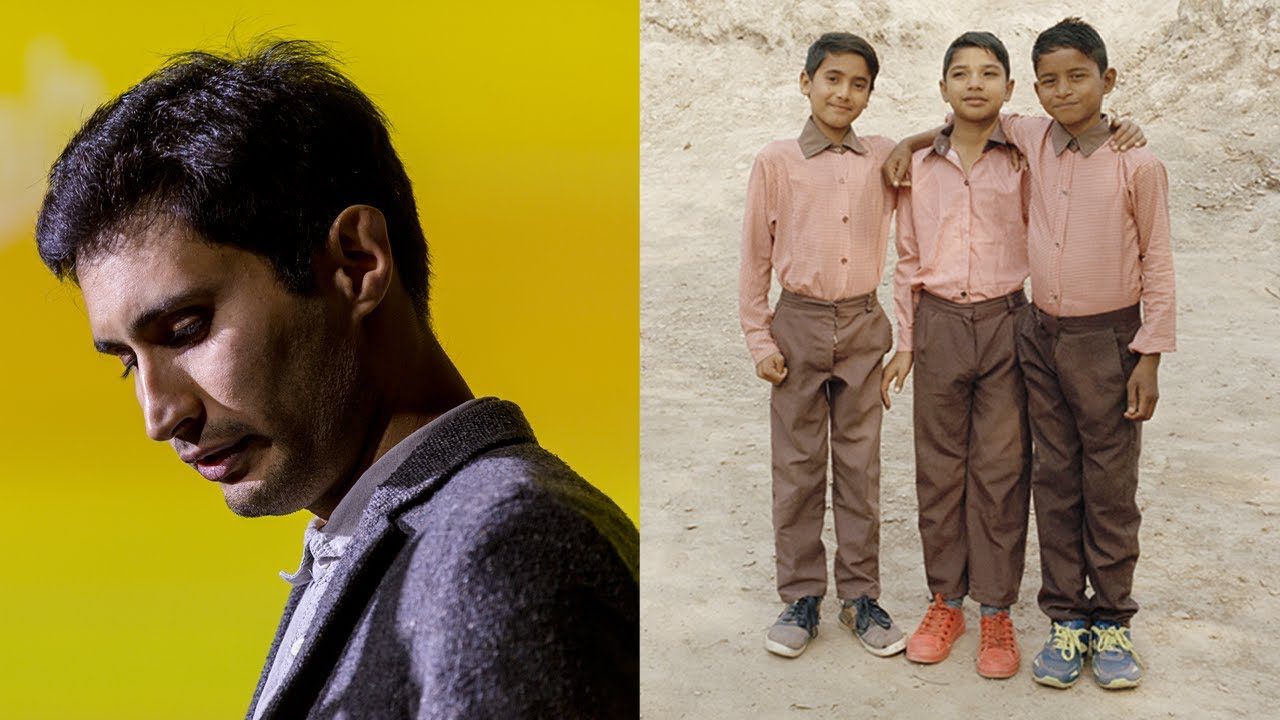
“My pictures are best understood when they are experienced rather than when they're explained.”
[Applause]
hello my name is Vikram cushaw I work as an art photographer where I create self-initiated art projects and sell my photographs as limited-edition art prints and I also work as a fashion photographer where I I create fashion editorials for magazines but tonight I'm mainly going to talk about my latest photo series the education I never had but I think for that for me to talk about that it's it's important to very briefly touch upon the work that I do in general as a photographer so normally it can take quite a bit of time to explain the complexities within within my photographs but I've often said that my pictures are best understood when they are experienced rather than when they're explained so these are a few these are a few examples of the kind of pictures that I I create so they're quite surrealistic in nature they're very intricately staged I draw a lot of inspiration from the Surrealists and especially their practice which involved digging deep into the subconscious through half awake and half asleep States also known as Lou also known as lucid dreaming so not all my work but some of my ideas have come from those kind of practices my work is also related to Sigmund Freud's theory on the philosophy of the of the uncanny so the feeling of the uncanny which is it's it's that very uneasy unsettling feeling that you get without knowing what's really wrong with what you're looking at so it's just under the surface but you can't quite put a finger on what it is so it's it's it's quite again it's quite surreal and it plays with your mind a little bit I ♪
also draw a lot from my childhood storybooks which as you can see were quite dark and quite magical and I also like to see my photographs as single-frame short stories short stories that are not well defined they're quite ambiguous.
But they're also directional so I always invite viewers to sort of reach their own conclusions so even the elements within the photographs are not defined so I'm I'm never going to define what the branches mean or what what the owl means or what the animals mean I don't define what led to these situations and I don't define what happened afterwards it's all the pieces of information are there.
And it's basically up to you as the viewer to to interpret my my photographs now for the for the main course I'm going to talk about my latest photo series titled the education I never had and to talk about this I will have to go and tell you a backstory which started in 1983 which is the year I was born I was born into a very poor household my parents lived in a one-room shack in a rural area just outside of New Delhi in India and my father taught in a in a government school in in an adjoining village and when I was two sorry he he was earning something like five pounds a month when I was two years old and I just started to learn how to speak my cousin's would take me out into the village and I started picking up some really horrible words swear words and profanity because you know they village boys teenagers that's how they speak and when my father found out about this he decided to send me to a boarding school and not just any boarding school he decided to send me to one of the most elite boarding schools in India in the foothills of the Himalayas he sold his inheritance he took massive bank loans and he sent me off fast-forward 35 years which is last year.
So I've been showing him my photography work over the last eight to nine years or so all the pictures that you've seen before this photograph I've been showing those to him and he he doesn't really understand them I talk about my achievements I talk about the fact that I my photographs are being exhibited at the National Portrait Gallery or one time kit harington bought my work I told him about that. And interviews and talks like this one and he doesn't really get it he's happy and excited because I'm happy and excited not because he understands my work and he says to me Vikram I I think you're a good photographer but why don't you take pictures of beautiful flowers and forests and mountains and rivers why do you do this hey why is it so dark and grim so and I understand that I understand because there's there's been such a huge divide between his life and my life over the last 35 years.
And so what I wanted to do most was to return and as in any journey there's a point of return and the return can either be spiritual or emotional or physical for me it was all of these things a return where what I wanted most was to understand his sacrifices and to go back and take a glimpse into this world that he had been living in for 35 years the school that he had been teaching in for 35 years. And so I arranged this visit with him for the first time in my life I visited the school he still teaches there he's going to retire next next year.
So I had to do do it this year so earlier this year in March I was there. And I photographed these beautiful children the staff members the school buildings and I really got a glimpse of what his life has been every single day for the last 35 years so he doesn't go anyway it's home and school home in school every single day for six six days a week so I mean this was a really eye-opening experience for me because you know there's such beautiful children a lot of them are talented skilled but I was also really sad because the sad truth is that they're also poor so a lot of their talents and skills may never be fulfilled just because they're poor my dad will warn me about some of the questions that I might be asked by complete strangers so and this teacher asked me things from how much do your shoes cost and then suddenly - why don't you have any children yet but it wasn't offensive I just learned something very different from my world how people are in his world.
That's my father there he didn't know what I was doing so he just stood there very straight a very important photograph because as I said maybe I didn't see that the school does not have electricity the school has dirt floors so what you can see outside the same floor is inside the classrooms so no electricity dirt floors when it gets too cold inside they come out the students come out and sit in the Sun when it gets too hot they come and sit under the shade of the tree to take their lessons that's the school building believe it or not that's the room they call their library I mean it's both humorous. But also I don't know sad in a way because I had been studying physics and playing cricket with sons of diplomats and film stars this is the stuff full strength nobody is missing that's the stuff this is the one and only female staff member a lot of these kids don't necessarily come there to study they come for the one free meal that the government provides every single day yeah I guess I mean that.
That's the end of the slideshow.
But I I would like to say that for me it's it was just it's not just a portrait of all these children and staff members and the school.
But it was it's also a portrait of all the sacrifices that my father has made for me it's also a portrait of what my life could easily have been because every member of my family has been educated in a school like that except for me I went to this really elite boarding school I studied fashion after that I moved to London to pursue an education and a career in photography and I'm just living this really privileged life and giving this talk in front of you amazing people.
So it's just a reminder of what my life could easily have been but because if my father is very progressive thinking it's it's not and some I'm just really happy to share this story with you guys thank you so much for coming you
Latest Talks
-

Will Anderson and Ainslie Henderson
Bringing stop motion sorcery to BBC’s Small Prophets
Watch -

Amber Weaver
How does contemporary type design translate into the wider world?
Watch -
Murugiah
Why you should reject the formula and make art about things you love
Watch -
Marina Willer
Design thrives when you find poetry in the simple things
Watch -
Lizzy Stewart
The hundreds of drawings and writing-on-a-whim that goes into comic novels
Watch -
intra
The rewarding process of recognising the art in obscure everyday life
Watch