
Steve Warne is an animator known for his innovative work in stop-motion animation, particularly highlighted in his film Pombo Loves You, which showcases a unique blend of live-action techniques and vibrant aesthetics.
Steve Warne
How a derelict Mr Blobby theme park inspired a father–daughter stop-motion tale
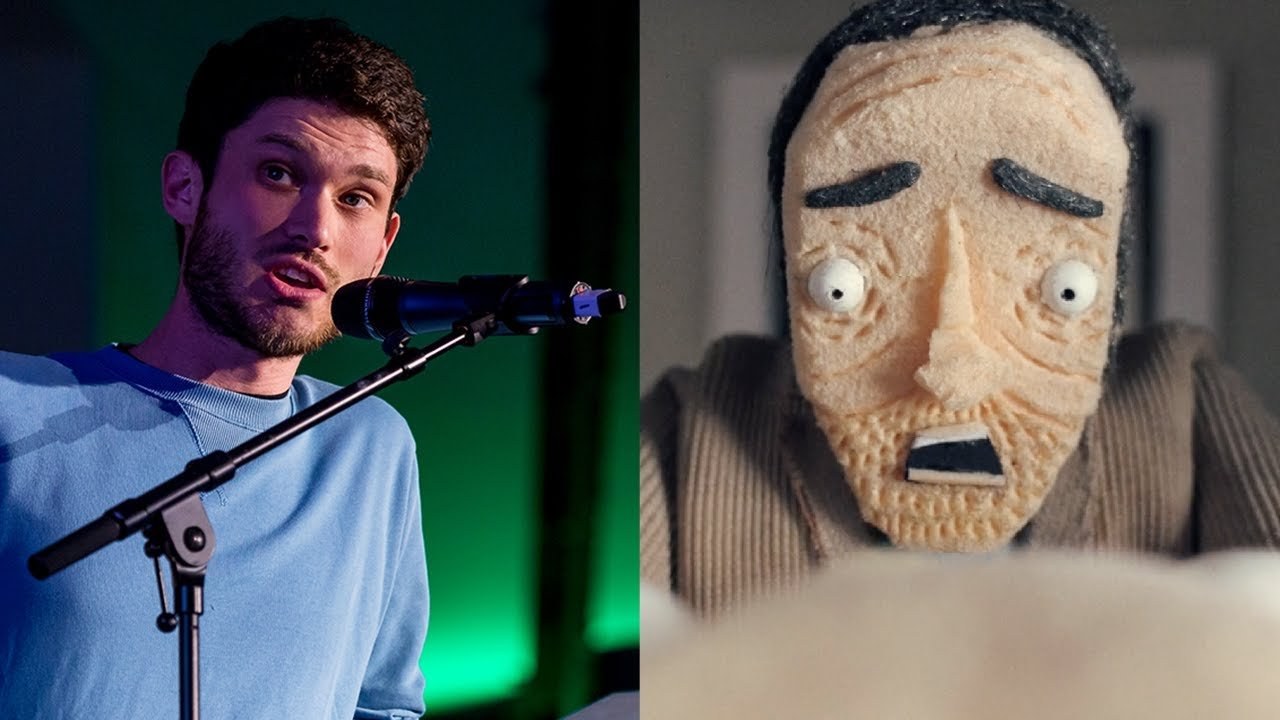
“It's a mixture of two mediums together.”
Transcript: May contain minor errors or formatting inconsistencies.
[Applause]
yeah I'm Steve Irwin I am a stop-motion animator and a filmmaker and that is to say I spend a lot of time in darkened studios manipulating small puppets in tiny increments for hours days weeks months and even sometimes years on end for example like this and at the end of that process end up with a finished film.
So these are some of the projects I've worked on Tim Burton's Frankenweenie Keeper and the T strings a lovely Swiss French film could my life is courgette and as Alex mentioned I love dogs which I've just spent a couple of years working on I was a key animator and it's out this week so it goes hear some of my shots that I did but I'm not going to talk about that I'm going to talk about Pombal of Z and this is a short stop frame animation 12 minutes long that I made as a graduation project at the National Film and Television school just outside of London.
And it's a little bit too long to show you in its entirety but I'm just going to kick things off with the trailer from the film to give you a little taste of what it's about so here we go Pompeii lucky ♪
[Applause]
you do and good luck okay [Applause]
[Applause]
feel something ♪
thank you yes a it's the story of a distant father he he is forced to confront heroic but tragic past life as a hit television show character called Pompeii and the story well we made the film at the national film and television school of a small team of people I was on the directing animation course. And I basically the school is great because you have a team of people around you studying all kinds of different disciplines like cinematography and editing and sound design and you. Basically recruit a small crew of people and you have an entire year to make one film.
So I'm just going to talk a little bit about where the idea came from and then I'm going to shoot through really quickly just some of the techniques that we used to get the visuals up on the screen so very early on in the process I basically teamed up with a writer called Josh and a producer called inner who's here tonight actually and basically talked about loads and loads of different things I didn't really have a distinctive idea of exactly what kind of film I wanted to make but something that kind of came up in conversation between Josh and I was this kind of shared memory of all these kind of crazy kids TV shows that we grew up with such as funhouse and get your own back and the Crystal Maze which we all loved as kids and there's something about this sort of feral chaos to a lot of those shows and they were like a little bit dangerous and for whatever reason they kind of stuck in my mind and I was sort of thinking is there something we could kind of explore in this realm and something strong aesthetically about some of these shows and I was digging a little deeper into the sort of character designs of the time. And I kind of realized that a lot of this stuff is meant to be absurd and funny but also has something slightly dark about it as well. And I don't know if that's just my adult kind of perspective projecting onto it or if it was always there but least of all you know least of all mr. Blobby hee those of you who grew up in the UK or around the UK and the 90s would be familiar with he was a pop cultural icon of his time he had a hit TV show merchandize everywhere even a hit hit single in the charts and so popular in fact that an entire theme park was built in his honor mr.
Blobby land and I was looking into blobby land for whatever reason I guess because of all this TV show stuff and I kind of stumbled one night upon this video this home video footage of mr. Blobby land and it was really late one night it was probably 2 at 2:00 in the morning I'd had a couple of drinks and I was playing this really you know ethereal post-rock music in the background and I was getting really dreamy and deep and I was just watching this video and a leap and for whatever reason it really stuck with me. And I think there's something you know just instantly appealing about the character as well as slightly sinister and dark but there was a third thing going on. And I think it was maybe the fact that you know there's all these families having a great day out and that you know it's kind of joyous occasion.
But I found myself actually watching it and feeling quite sad and I think it was possibly because apart from all the other things I mentioned it was possibly because you know none of this exists anymore and it's kind of like a bygone era and this kind of pop cultural icon has disappeared off our screens and and it got me thinking you know what has happened to blobby land now. And I did a little more digging and unfortunately this is the state of his bedroom now it's you know derelicts broken and forgotten about and probably the the scene of many a drug-fueled rave and not everyone's happy then mr. Blobby is gone but you know apart from the fact that it's really fun to poke fun at mr. Blobby and also be funnily nostalgic for it was really something in this imagery that I found kind of beautiful and kind of sad and I was trying to think up you know a story that would maybe involve some of this imagery and one of the main things that Josh and I and II know as well discussed a lot at the beginning was making a film that had at its core a real sincerity and a real human heart to it.
And we decided instead of just having fun with this potentially fictional world of a game show or of a TV show character we'd really focus in on that the character that was behind the seat and we kind of brewed up the story of a father and daughter and the the idea was that the father was you know we meet the father in his present-day situation. And it was decades after his heyday as a hit TV show characters such as mr. Blobby in our case we we came up a character called Pompeii and in the story the the the father's past life is this TV show character comes back to haunt him because of a tragic event that occurred live on the television show many many years before. And it's the idea was that it would be affecting his current day relationship with his daughter so there's there was going to be very two very distinct worlds going on one of the paths in which he was a great hero and then of course something tragic happened on in that time and that world needed to be very distinct and then the modern current day story needed to have a very different feel and different look to it.
So I started to kind of just play around with imagery and I started playing around with photographic backgrounds and just interesting character signs and mostly sort of looking in the color palettes and I wanted the modern-day world to be mundane and pedestrian a metered in tone and it needed to contrast very strongly with the vibrant world of Pompeii and these are some early kind of renditions of what Pompeii may have looked like and I was digging around and trying to find a way to visualize Pompey's world. And I previously experimented a bit with this kind of Yi V stop-motion animation for a music video this is just a toy car that I had animated and what's great about UV lighting is you can get a lot of quite bold visuals out of very little so it's a toy car and some fluorescent tape I cut up and stuck on the car and that's about it really. And I kind of realized that this would be a really useful way to go with the world of Pompeii so I decided that the Pompeii game show was going to be completely neon and garish and bold and the idea was that all of this color was going to serve two purposes it had to be fun and I had to be kind of really vibrant but it also had to be somewhat intimidating because as the story unravels Pombo starts to invade the present-day existence of protagonist father called Griff and he his home even gets invaded by Pompeii so the UV lighting turned out to be a really great technique to to achieve this and as you can see here there's a sort of before and after in the present day he's living in this kind of fairly mundane kitchen and we used very muted colors everything's made out of paper and card and the great thing about that was that we could really control the color palette and also give a quite a clean graphical look to the sets and then it really came in useful later on when we used the UV because paper has a really good fluorescence to it. And we could control which bits we wanted to make glow more than others and another technique we employed was the projection rear projection is actually a really old cinema technique but you don't really see it very often these days most people with she against the green screen and then decent computer effects to kind of make a background we basically had an entire sequence where our protagonist is driving in a car being chased by Pompeii and we basically we're looking at how we could achieve this in stock frame. And it's really really hard to build layers of backgrounds and kind of shoot it as models so I was thinking I've always wanted to try this technique of rear-projection. And it turned out to be a really really quick and fairly effective technique basically we were me my cinematographer Alastair little we went up to Derbyshire and we filmed lots of roads country roads and we bought that footage back to to the studio and we fed it all through a computer and tweaked the colors on it slightly and then.
Basically we projected those images frame by frame behind quite a rudimentary set of the car and it gave the the film a kind of kinetic energy that was really keen to and still in that. Basically stop frame is quite easy to think for things to become quite similarly paced and I need that this film needed an awful lot of energy to kind of tell the story. So it was kind of mixing to two mediums together. And I think it kind of worked out okay we basically started started the project by storyboarding and the drawings were very least and very rough and I deliberately wanted to keep at least at this stage and we cut all the storyboards together in an animatic which is quite a usual method in animation. But instead of religiously following this animatic we decided to approach the shoot in a much looser way and one of the things that I'd always been taught in stop-motion is to never touch the camera because if you start a shot and you knock the camera half way through its really really hard to get it back. And it can like ruin an entire day or even weeks worth of work.
But then at the school they had these kind of geared tripod heads which the camera was sitting on. And I realized you could basically animate the camera and I was thinking well if I can animate the puppets then why not animate the camera in the same way.
And I basically decided to approach the cinematography in the film in that way I wanted everything to feel quite instinctive and from you know just shoot from the hip kind of thing and being able to animate the camera really liberated the whole look of it gave it a kind of energy which it wouldn't necessarily have had before and basically I could animate the puppet and be completely free and also thinking about the way that the camera was animated was really important I just kind of thought that maybe that there should be a sense that someone's actually operating the camera behind behind the camera so you know in this instance you know I offset the camera move a little bit just to kind of give it a sense that someone's like following the character in the middle of the room yes so that's about it I kind of decided that this film really needed to have sincerity too. And I learned that that was the main thing to hold on to despite there being many different techniques that we employed in the production I found the the the the relationship between the father and daughter was actually the kind of key to it all and yeah embracing the familiar was another big thing that I learned along the way as well.
So I'm just going to leave you with a couple of clips from the film that illustrate some of these techniques that I've talked about.
And then if you do want to see it the film is online I'll leave up a couple of links at the end yeah thank you [Applause]
don't win [Laughter]
I love you you can't love that kind of love away forever you can't lock me away forever ♪
[Applause]
my key [Applause]
Latest Talks
-
Will Anderson and Ainslie Henderson
Bringing stop motion sorcery to BBC’s Small Prophets
Watch -
Amber Weaver
How does contemporary type design translate into the wider world?
Watch -
Murugiah
Why you should reject the formula and make art about things you love
Watch -
Marina Willer
Design thrives when you find poetry in the simple things
Watch -
Lizzy Stewart
The hundreds of drawings and writing-on-a-whim that goes into comic novels
Watch -
intra
The rewarding process of recognising the art in obscure everyday life
Watch