
Siân Davey is a photographer known for her deeply personal work that reflects her history and family life. She employs introspection in her practice to document her daughters, engaging audiences with her unique perspective on creativity and personal experience.
Siân Davey
Inspiration hides in the shadows of our own histories
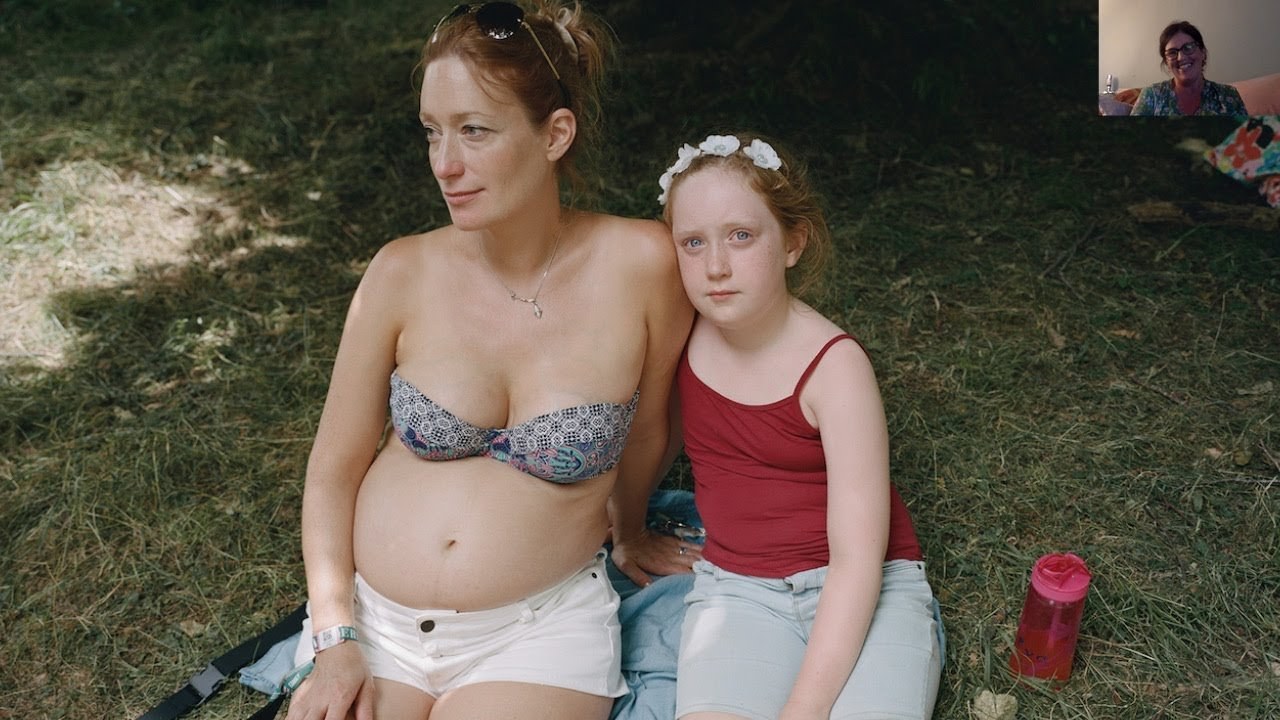
“Inspiration often hides in the shadows of our own histories; we just need to look closer.”
Transcript: May contain minor errors or formatting inconsistencies.
Right it's time now for our second speaker of the evening now before sean davey became a photographer she worked as a psychotherapist and ran her own practice for 15 years it's a profession that still influences her work today she's perhaps best known for her beautiful images of her daughters martha and alice and today she's joining us to talk about the broader philosophy behind her work how psychotherapy taught her to raise her consciousness and how it's often best to stay close to home in order to find your personal narrative sean can I please ask you now to turn your audio and video on please thank you hi matt hi there how are you very good you're dialing in from from devon yes yeah in the west country as yeah we should probably tell our us and and watchers abroad yeah how's everything going good I've got all my kids under the staircase so if you hear any noise it's them trying to get out so hopefully they'll stay quiet for about 10 minutes perfect okay well yeah from home I think exactly I feel like we're all getting used to that now yeah.
I think if you're a mother you never get used to it I think it's easy to go somewhere else yeah I'm sure it's true okay I'm going to leave you to it now and you'll have your presentation for about 10 to 12 minutes and again everyone else if you have any questions for sean please do put them in the chat and we'll try and get around to them afterwards over to you sean hi nice to kind of meet you all virtually what I'm going to do I'm going to share with you the next kind of 12 10 12 minutes or so about in a way it's about my living philosophy to my practice as an artist and and that's really deeply informed by my history and actually only by my history really. And so just so I'm going to just run you through the kind of in a way the trajectory of my life and what's happened and how I kind of so how that led me into this photographic practice which is where. I am now so so I was brought up in brighton which is on the south coast of england and I was the middle child the problem perceived as the problem child three children and both my parents experienced long-term chronic mental health and we were in and out of homeless accommodation until I was about 13. So it was kind of there was no sense of safety or resource and so what kind of resource me was my imagination kind of not being in my body and living in a kind of quite a dissociative state got to the age of 18 I left home. And it like it felt like I just kind of walked through my family and and carried on walking actually and didn't really look back and started a fine art painting degree and then. I found myself in the 80s 90s and immersed myself in the whole kind of dance culture and spent the next five six seven years or whatever taking kind of partying it was a very kind of vital period of time. Actually very creative period of time. And I found my community I found my kind of family and and then that took me into and it was actually very political time because actually the backdrop to that was thatcher. And we had michael howe the home sec secretary and they were kind of really closing down.
There were lots of kind of the polity you know. There was there was demonstrations here the poll tax rights this the criminal justice act they were trying to the home secretary was closing in on people congregating parties so it was there was there was a kind of strong movement which led me into my second degree it was a social policy degree and it felt just really important that I did that degree because I really wanted to really understand my place in the world as a woman I focused on feminism on the sexualization of women looking at issues of pornography social inequality but at the end of that I just hit the wall and my past collided with me. And it was a real wake-up call you know I felt very derailed to say the least and I had to start bringing myself out of this kind of dissociative dissociative state out of my imagination and bring myself into the world. And into kind of presence if you like which so that kind of led me into tibetan buddhism finding my spiritual path and into psychotherapy where I became a psychotherapist for 15 years. So it was really kind of shining a big bright light on my shadow and all the parts of myself I was felt that felt unbearable actually. And it was an extraordinary powerful period of my life. And it was hard work it was hard work. And it was also liberating extraordinarily liberating the whole period of time. And then.
But it was you know as I said it was kind of very gritty and I got into my early forties and I went to see this louise bourgeois retrospective at the tate when I was walking around that exhibition I can remember walking around and it was I was looking at the you know the works and looking at it kind of conceptually I was looking at the kind of materiality of the show and you know the form of it and you know deeply admiring of it didn't feel a great deal but when I came out of that exhibition I just sat down on the steps of the tate and I suddenly wept and I I just hit into another layer of grief so kind of my past came up again and kind of you know snapped at my heels and said you've got to wake up again you know life is is a series of kind of yeah and I'm sure we all know this to people listening you know you feel like you're kind of on this on the path is quiet and then it snaps at you again and it's a kind of series of wakings if you like and I felt like I'd the louise bourgeois the work had the unconscious material of the show had collided with my own history.
And it felt like a transmission.
That's what it felt like it felt like a transmission. And I sat there talking to my partner at the time. And I said I'm I think I need to do something creative I don't know what that's going to look like but I think I need to that's what I need to do and I didn't even know what that meant to what that would look like and over the next couple of years I picked up the camera and it was very kind of scary picking up the camera because I I don't understand technology at all.
And I've never read what you call I didn't know I've never read a a a kind of anyway I'm not very good on information so as you can tell already because I'm stumbling around it. And I I found a camera after trying to work out all the f-stops what they meant and it was freezing me. And then. I found a camera I could stick on automatic which meant I could circumnavigate this camera and just have a direct relationship with the world around me.
So I could just go from I could work intuitively basically. And so then I jumped onto an m.a in photography and I was very ♪
very blessed actually I was working with jem southam and david chandler and they didn't interfere with my practice they just walked alongside me and occasionally kind of tapped me on my shoulder and said that's not what you do sean and again it was a series of kind of keeping me awake and I think that was key working there with them so making the work that you can see here is about my family and of course my family represent different aspects of my history so but I'd rather kind of focus on about the potential of photography because when I made the work looking for alice it was my first piece of work really on my m.a and when I started at ma I had I'd only taken a couple of pictures and it was all very new to me. And I can't believe it someone's at my door anyone I'm going to ignore my door and this is the problem about working at home so let me get back on my on where.
I was so yes so when I started making this project looking for alice the work was essentially about my relationship with her and coming to terms or with my struggle about difference she was born with down syndrome and within that. There was also this story about them this kind of layers of narratives there was the mother's narrative the photographer's narrative the the traumatization of of how these children have experienced their lives being different and also about society's relationship with different as long as we perceive anything is different then we can somehow negate responsibility and which is where also prejudice is sprung from so I had no idea how I was going to make that piece of work. And I was thinking and thinking in fact I was overthinking and then I stopped working and then I turned around and I said okay I'm just going to take pictures I'm just going to start shooting and then.
And then the kind of then. I found that when I got those pictures back I I could see my whole history in fact you know it was almost like I could see feel and see my whole dna in those pictures and then I discovered quite powerfully and quite magically that the moment I pressed that shutter was a kind of direct kind of link to my history my dna the whole lot.
And then then the whole world in the whole kind of process opened up for me and and I guess with martha the mother was my second project about my daughter and it was a collaborative project with her the work became in retrospect deeply restorative and healing my my own you know when I was a teenager it was a very painful period of time. And I was deeply unresourced to needing approval very unhappy and I'm sure we can all relate to that but martyrs wasn't marty's mother thrived through this period of time.
So in a way these photographs and working alongside martin her friends gave me a different view of childhood and in in that way it was deeply restorative and there's some images up here that are showing here is my current piece of work called testament and the work is an examination and exploration of social inequality and it was a place to you know being subjected and you know in the uk we have these austerity measures and it's come down very very very hard on the vulnerable and I was watching this and struggling with my anger struggling with frustration and feeling like I I had to do something with it and of course I was able to do that through photography you know. I had to kind of land it somewhere and what was important in the making of that work was I never had a voice I felt silenced as a child you know I I could feel this craziness going on around me. And I couldn't obviously articulate my way out of it I kind of had to emotionally as I said kind of disappear so it was as much giving the people that I was working but I'm still working with actually a voice as much as giving me a voice and that's been and still is very central to the work so so to draw this to an end when I talk about making work close to home what I mean by that is my own journey has been about coming into body and coming into body into our kind of feeling sense intuitive sense intuitive body means that we have to feel safe in our body and so coming close coming so the home for me is the body actually and because the body is where we need to be and it holds all our narrative and it holds all our history and the closer we are to home or the closer I am to home is closer to stability and love and intimacy and that is what I'm striving for for myself and in my work so thank you for listening I feel it's a kind of a fast track on my life.
But it very much well.
Anyway I hope it kind of brings you closer to what kind of the psychology behind the work yeah thank you so much sean honestly that was that was amazing yeah really appreciate it it's an extraordinary extraordinary story I just had a couple of I guess a couple of comments and we'll stop sharing the sharing the screen now.
But I just had a question really I wanted to go back to something that you mentioned about when you first picked up the camera how you felt it was quite intuitive and to work with and you kind of didn't know all the technical details and I find that really interesting this idea that it's kind of actually less intimidating and I wonder whether you think we sometimes get a bit too hung up on trying to understand everything before we just start creating with with the tools at our disposal I mean maybe there's a bit more of a balance to it.
But is there something in that do you think well yeah. I just think we have to learn how to read the world first you know I get asked all the times like you know what camera and I just think it is relevant as well so you know.
But we have to learn how to read the world. And I think the more attuned we are to the world I mean I always think it's like a dance isn't it it's like dance between subject object between me and the world. And it just kind of moves like this. And it's a practice and I think people can lean too heavily into the technology and forget to do the important stuff they can work alongside each other.
But I just think put the tools down and and wake up.
That's the tough bit the tough bit is working on ourselves the camera is easy isn't it I think yeah it's great it's a great message yeah things go that's the hard bit john thanks so much we're going to have to leave it there but thank you so much for an amazing talk and yeah sorry that the the doorbell rang as you were going of it in the house they said don't make it easy yeah well yeah well done for dealing with that distraction but thank you so much really appreciate it welcome I'm going to ask you to turn your audio and video off yeah but thank you for joining again and yeah you
Latest Talks
-
Will Anderson and Ainslie Henderson
Bringing stop motion sorcery to BBC’s Small Prophets
Watch -
Amber Weaver
How does contemporary type design translate into the wider world?
Watch -
Murugiah
Why you should reject the formula and make art about things you love
Watch -
Marina Willer
Design thrives when you find poetry in the simple things
Watch -
Lizzy Stewart
The hundreds of drawings and writing-on-a-whim that goes into comic novels
Watch -
intra
The rewarding process of recognising the art in obscure everyday life
Watch