
Seetal Solanki is a designer and educator known for her innovative approach to materials and sustainability. She focuses on creating design solutions that contribute positively to the environment.
Seetal Solanki
A designer rethinking what materials and sustainability really mean
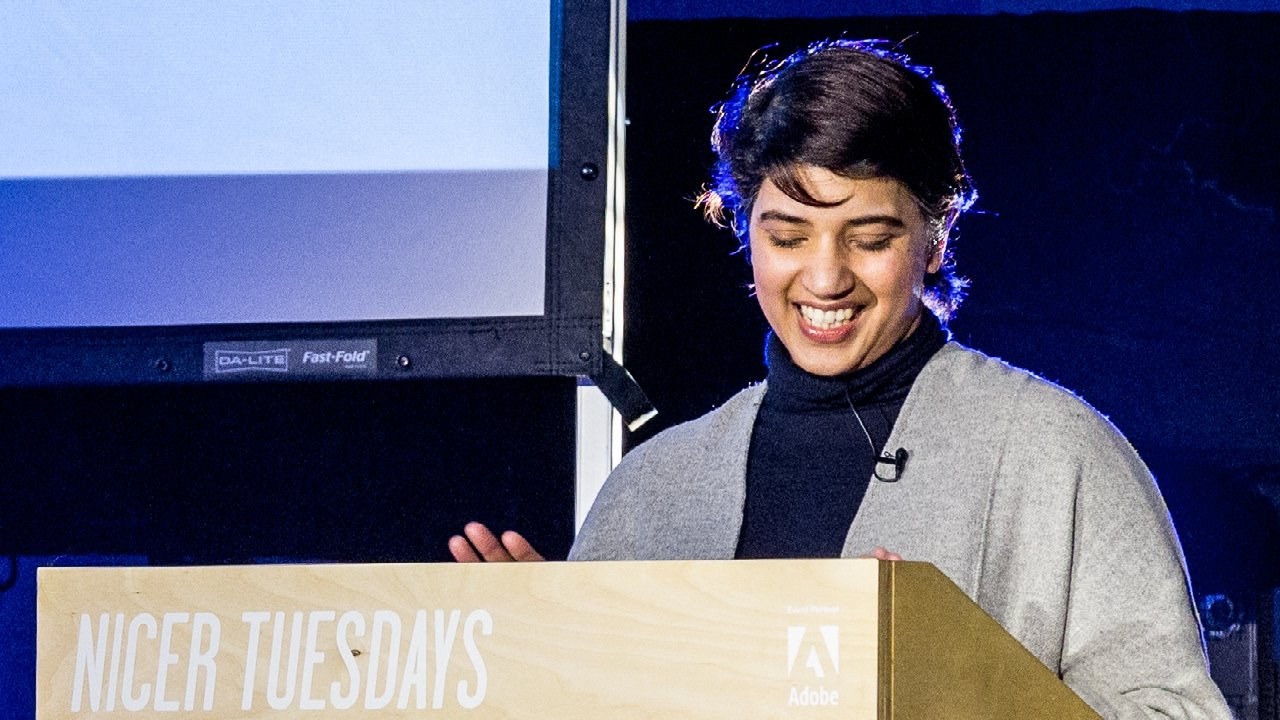
“Creating is not just about what you see, but what you feel in the process.”
Transcript: May contain minor errors or formatting inconsistencies.
[Applause]
that's quite and Oh hi everyone really nice to see you there's a lot of familiar faces here tonight it's quite a strange feeling being on this side of the room because I'm so used to seeing where you are and so thanks for having me tonight it's nicer so I wanted to talk about matter the work that we do and actually how I got there in the first place so I launched matter in September 2015 during the London Design Festival so we work across education industry designing and implementing how materials can create a more responsible future looking at how materials can shape the now at the knee and the far future so we work in three different time frames so between one to five years which is the immediate future five to 15 years which is the near future and then 15 years plus which is the far future this image here is our main page on our website and it's in the form of a periodic table which relates to the materials that make up our world as everything is made of something so to give you a bit of context about my background and it will help you understand why I decided to create myself so I started off by studying jewelry and silver smithing as a BA decided that wasn't right for me because it was an experimental enough I then went on to just do a multimedia textiles course that left bro and then finally ended up on an MA at CSM which is now call material futures about nine years ago and that involved smart textiles which encompassed working with electronics programming coding circuitry and then sustainable textiles and innovative textile so this quote here explains quite a lot what with what textiles actually is so Texas is older than bronze and as new as nanowires take files are technology and they have remade our world time and time again so after my ma I went on to work within the automotive industry and within listen and I was a kind of material finishes I know.
So I was working within interiors and exteriors and this is one of the cars that I worked on which was a Nissan Cube car so for example this is what an interiors it looks like for the car so you can understand life within the car you have like dashboards so that requires metal soft finishes with him seating and all sorts of things. And it's part of the experience and you're addressing different lifestyles and needs and wants and then.
I also worked at this amazing company called United visual artists so we worked on this project here called volume which was at the V&A and it was an interactive installation where people would interact with these pillars and they would change color and movement and all sorts of things.
So I was learning about experiential design interactive interactive design color and materials was a big part of that.
So I this project is probably one of my favorite things I've ever done and I got to do my dreams I used to be a basketball player for Leicester Wade way back in the day and so my care Dourdan approached me and asked me if I wanted to collaborate on one of their collections which was the Nike Air Jordan 29 so I'm kind of showing my age here because I remember the first ones that came out and the concept was so this was for Chinese New Year 2015 and with the concept behind it was water because they didn't want to focus on the year of the go because it was just gonna last for a year.
And it was a limited edition. And we made a complete capsule collection I actually only missed almost missed out on this project because I know what the email and I didn't even realize it was from a nike.com email address I was like oh this is a strange email oh it's a weird person that wants to work with me again so I ignored it completely and then later on write reread the email I was like oh this Nike so yeah I almost missed out but thankfully I didn't so I created this huge canvas of hand-painted water sort of liquid fluid sort of feeling basically I wanted to create a lot of depth and movement so yeah it was quite mixed-media and I guess and then manipulated it digitally as well.
So the capsule collection involved caps clothing branding and even packaging actually probably the box is my favorite thing because everything matches throughout the whole thing and there's a really nice tissue paper involved as well.
And then this was the best thing ever it was AI weiwei wearing my cup.
And I was a spy this is the dream so yes and that he posted this on Instagram so I was pre hyped and then more recently I got to work with Beyonce which is quite mental and it was I designed all have textiles within her autumn/winter 16 Ivy Park collection so as you can see I've done quite a wide range of industries and they all encompass working with materials so in hindsight it really enabled me to understand what connected all of these experiences together and that was the material so I decided to embark upon quite crazy journey and created matter because it was something that really meant a lot to me and materials is a subject that really isn't recognized and it's something that really needs to be highlighted because it's such an important part of every single one's process of whatever industry you are in or whatever you do and you'll understand that once I talk through the products that we do so what is a material it's a very big question but how what I believe is materials provide the missing link between all industries Nick Cave puts it really perfectly he says it's the invisible things that have so much mass so I want to start by explaining how we work. And this is part of our methodology and this is the first stage of how we work within any product so we think about the identity first and that means the material has their own characteristics and behaviors so when there is something it's textured or soft or cool or warm and then you you're thinking about a space so if you're designing a space you think you want to feel a certain way within that space so whether you want to contemplate in that space or you want to feel warm and cozy there's like different sorts of human behaviors I guess that go along with that.
So the material can lend itself to that space and the person experiences it. And that's how they're all connected so this is not happened yet so this is an exclusive so and I'm really excited about this project because we get to work in her live environment so it's this store called Clark my London.
And we're redesigning one of their interior spaces and this space is called the vinyl mount and so it's reflective of sound and you experience sound within that space but how we've approached it is thinking about its location. And this functionality so the vinyl lounge is set between their restaurant their wine library and their fashion retail space so how we approached it is thinking about how you can way find through that space with materials so materials can provide a communication tool so towards the restaurant we're going to be using food based materials and these tiles here are made from corn husk waste and husks are normally just burn and they create an incredible amount of pollution so and then the third largest crop in the world that is grown so actually it's quite a big problem and materials can solve these problems and you can create byproducts with them and also create new economies so which means that these people that are growing the like the farmers so the agricultural industry are able to gain an extra income in the in the seasons that they're not growing the crops and the this here is done in waste tiles so the fashion industry produces an incredible amount of waste as you probably all know.
So these tiles will be heading towards the fashion space so there's a relationship between where you're going and where you might end up so what's really interesting about these tiles is they don't actually look like denim so there's like this curiosity about it and one looks more like a wood grain or a marble so it bring it feels like it adds value or brings more value to a once discarded product and then we will use fabric for locating the wine library so we've chose our fabric because it's more like fluid it's like a liquid and we're going to be naturally buying them we're I've ingredients from the wine or tannins and finally for the vinyl lounge we're going to be using like acoustic material so these tiles here reflect absorb and diffuse toned around the space and there's like a three-dimensional quality to these tiles just reading a sound across the room and this will provide I got a multi full multi-sensory experience and there's like an intuitive Ness about it as well.
And it really lends itself to what Clark and while the London's ethos is so we'll be launching the space in April so I hope to see some of you there and following from that we work within life cycles so this is the next stage of our methodology and what that means is we look at the raw material where it comes from how it's currently used how it degrades and then if there's potential for it to be reused in some way.
So we're in the process of working with hat oh and with those press there with their press in their studio and so we approach this by understanding what do they have lots of and that's paper and how can there ways to actually turn into a resource of some sorts so what we've done is produced a couple of experiments where we've basically turned the paper back into a wood by compressing it and combining it with a binding agent so it's kind of turning back into its original material so these are just examples of what that looks like so they produce really beautiful patterns and it looks like a wood grain of some sorts and we're hoping to turn them into paper related products so the material has a relationship with the end use so these are just a few examples of what they could look like so that pencil holder a paper tray or a paperweight so these are things that were just experimenting with at the moment so they're not a final product just yet but these are just examples of how they could potentially look.
So and we'll also be turning them into workshops with hetero press so that would be really interesting to experience as well.
And then finally moving on to systems and this is the final stage of our methodology so we look at longevity and what that means we're looking at the sharing economy or no ownership how the the product or lifecycle of that product could prolong its life in some way modularity that means creating like modular systems within one product or service versatility so one ingredient being used in many ways and then ability so you're enabling people of how you can potentially reuse materials like precious plastics was a really great example of there.
So I was recently commissioned by frame magazine in their latest issue and they asked me to design a travel product for Mars so they've kind of blew my mind a little bit I was just like I can't design for a house let alone Mars so I normally with a brief I normally ask question.
And wear everything we do is thinking about what something is made of so I wanted to understand what Mars is made of so after a lot of heavy research I discovered that Martian dust was the most abundant resource and you could possibly call this an invisible resource of sorts I did we didn't traditionally consider dust as a material but lots of designers are actually working with this at the moment so there's a designer she's working with marble dust and pine resin and she's using a natural pigment to make these really incredibly looking vessels so there's movement within there.
So this is a picture with Mars rover and at the moment with this image it's covered in dust on a constant basis and then.
This is what it looks like when it doesn't have this so you can actually function and operate and provide the research tools that we need to understand the life on Mars if there is any because humans are about to or basically visit Mars quite soon in the next three years well Elon Musk's Mars Adventure well that was the whole principle behind this commission in the first place and the other materials that exists on Mars are iron and silicon.
So these materials could be mined and instructed in some way so after a lot of research and most deliberating because I kind of had an issue with this brief so I was like well I wouldn't take anything from Earth why would I contaminate the planets from foreign materials that the with a planet that doesn't have an atmosphere. So it's not protected in any way so really I would actually just take a camera that's all I would take so I kind of turned the project on its head a little bit.
So I decided to design a manual of how you can create your own Martian structures with indigenous materials so the regolith which is Martin discs and silicon can create a break like structure and iron could create the structural structural components of the building so you could potentially have a building made from indigenous materials so yeah. I just thought that was the most logical way to have people engaged with what actually is around you and exists around you.
So the silicon. Actually could produce the mortar as well so you could lay the bricks really well.
So yeah this was like a quite mind-blowing project for me this okay yes but bringing me a challenge it's all good I will try my best to resolve it with materials and our team is pretty good so yes bring it on [Applause]
Latest Talks
-
Will Anderson and Ainslie Henderson
Bringing stop motion sorcery to BBC’s Small Prophets
Watch -
Amber Weaver
How does contemporary type design translate into the wider world?
Watch -
Murugiah
Why you should reject the formula and make art about things you love
Watch -
Marina Willer
Design thrives when you find poetry in the simple things
Watch -
Lizzy Stewart
The hundreds of drawings and writing-on-a-whim that goes into comic novels
Watch -
intra
The rewarding process of recognising the art in obscure everyday life
Watch