
Roxy Rezvany is a journalist and filmmaker known for her personable approach to documentary filmmaking. Her recent work, Little Pyongyang, offers an intimate portrayal of the North Korean diaspora in London, emphasizing truthfulness and aesthetic design.
Roxy Rezvany
Behind the four-year fight to make audiences listen to a defector’s story
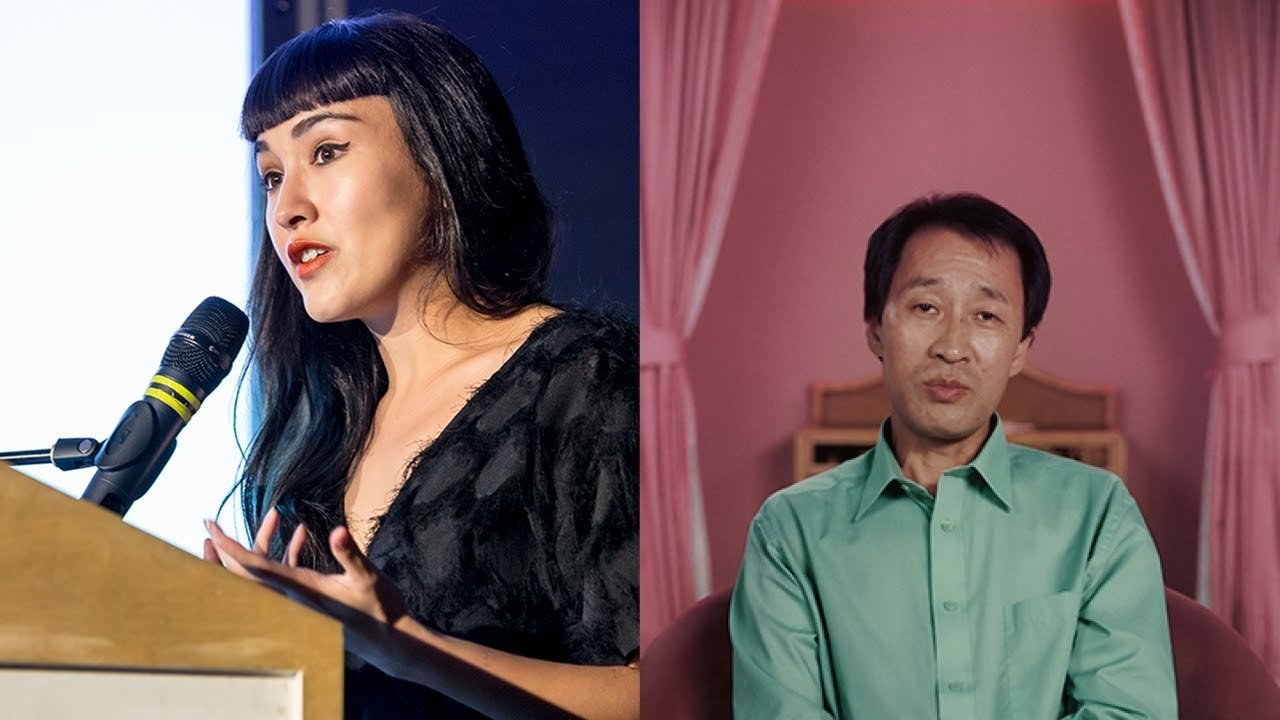
“I grew up loving art and stories and films, but I never went to film school.”
Transcript: May contain minor errors or formatting inconsistencies.
[Applause]
hello so my name is Roxy res Bonnie and I'm here to talk to you today about the making of a film called little Pyongyang as Alex said I am a filmmaker and I work as a director and producer in London. This is me.
So I grew up in London as well specifically in Northwest London in a place called Dallas Hill with my mum and sister and I've always grown up loving arts and stories and films but I never went to film school so a lot of how I've had to learn my craft per se has come through just jobbing and having to learn as I go luckily with the patience of a lot of like colleagues and friends who've helped me learn things along the way. And in my career I guess so far what I had the benefit of working with a lot of different brands companies galleries and in particular a lot of the work I'd done today before doing little Pyongyang had been to working in television.
And I guess one of the most formative projects that I'd worked on was a TV series that I made whilst I was working at Vice called gay keishon. And it was led by an actress called Ellen Page in light of her coming out and what it's why we went around to different countries around the world and looked to the nuances of the LGBTQ culture and culture identity in different countries and for me it was such a formative experience because I think it really taught me what's at the core of what I've tried to take forward with my own filmmaking which is really like a responsibility towards the people that you're working with and the stories that you're telling and really learning how to build relationships with people that are more than just superficial so what is little Pyongyang well I'm not sure if anyone here is watch it yet but the film is essentially about a North Korean refugee called jung-hwa choi and he lives today in a little suburb of London called New Malden where his greatest challenges essentially are getting by day today and being the father of two kids with three kids but he was formerly a soldier in the North Korean army and his dilemma really is the fact that whilst they think a lot of the people think of a refugee narrative as you were in a bad situation you left that situation you come to safety and everything's okay his the dilemma is that he still feels incomplete and a lot of that comes to do with the fact that he does really want to return home. And so for those before I keep talking about the film that haven't seen it I've got a little trailer to play for you now amaura's Hari ogo ohanga meet Okada Jurado Carlton on zài jiàn cohan Shabana Sangeeta katemel a concern clip Smita hustle Tintin yo who don't get our model click hard rim enjoy Hampton Donna yolks a column killing so k near on an issue Hachiko the whole ♪
[Applause]
so one of the first questions that people ask me when they hear about the project is how did you come across North Koreans living in the UK and it's really begins in New Malden which is where the largest community of North Korean defectors live not only in the UK in Europe but it's one of the largest and the highest concentration of defectors living together outside of Korea itself but a lot of people then I'll see well how did you come across a New Malden it's a really nondescript place not a lot of people have heard of it.
But it's essentially because it is home also to my partner of many years. And it's where he grew up and still part time lives today. And it's known for having one of already like a very big Korean community in London. There are lots of shops there's a big supermarket and getting to know like the idea was that as I spent more and more time there.
And I got to know Koreans living in the community that were primarily from South Korea more and more people would talk about North Koreans but in these really incidental ways and it was like one day when we were having dinner and my partner's brother came home and he kind of announced to the table do you know my best friend Jun he's not just Korean he's North Korean and and his parents dismissed it as something where they were just like oh this is like a young kid telling stories but it was the game the first time or I was almost surprised that I had never really thought about the fact that. There was a North Korean diaspora and that. There were refugees living in London. And so as I said I just got to normal people talk to people about it.
And then soon enough I had made friends with members of the community in New Malden and came to discussing a film.
So I was drawn to the project as I just described not as a journalist who in the first place had wanted to cover North Korea and therefore after that tried to seek out North Koreans but rather through these conversations that I was having with people day-to-day and a big thing that came across for me was the frustrations that people had with the coverage in the West of North Korea usually when we do see North Korea covered in the headlines it's through things it's generally through stories about the leaders so it'll be about Kim Jong formerly Kim Jong Il today Kim Jong earn and it'll be things like look if they're silly haircuts look at the ridiculous food they eat they're overweight and you know it'll be very superficial things and occasionally maybe things about the nuclear program and then again as a postscript to that maybe mentions about the human rights crisis there and again as I had more conversations with North Koreans in the community they would talk about how they felt that all the portrayals of themselves that they were seeing were of people that were brainwashed or people that weren't really human and were essentially when I heard these things it was I kind of felt almost the Gil on behalf of someone that was calling themselves a filmmaker and a journalist or at least part of the industry at that point and how we could have done so wrong by a community that.
That's how they felt and so as a result of that I thought well with what skills that I have I want to do something to change that so again the one of the next questions that people ask him and they then look at the project was where did the inspiration from the designs come from and what I'd say is that a lot of my approach to this film came essentially as part of a like problem solving process so in the same way that a lot of the inspiration and motivation for making the film in the first place was to solve a problem which was like the portrayal of North Koreans similarly when I wanted to approach how I'd put the film together it was it was that kind of approach because when people ask me wow it the project took four years why was that I tell people like and they'd assume a lot of it was getting people essentially to come on board as North Koreans to tell their stories I'd say no actually the the minute that they were sharing these stories with me and kind of encouraging me to write the wrong in the portrayals that was a that happened quite quickly in through quite quite quickly through our conversations but instead what really took time was finding people that would want to invest in the project to hear their stories despite the fact that I would say that we have a real deficit of portrayals of North Koreans and information about North Korea generally and that really surprised me.
And so I would be going to funders commissioners broadcasters and talking to them about Juwan talking to them at community and yet no one seemed interested and so when I again I was trying to unpack that myself and listening to the feedback I was getting essentially what I was hearing was well.
This is just another story about some refugees what do you know what are they doing are they doing anything different and again what it built out in me was this continued frustration of like wow I don't understand I still don't understand why people don't think that their voices alone and story alone are enough and so essentially when coming back to this question of where did the inspiration for the designs came from first and foremost it was to to kind of come up with a way that the film itself could ensure that no one would dismiss the story that people wouldn't be able to ignore what it is that Jim wah was saying when we were filming and I kind of used that as my guiding light going forward for all the decisions I was making with the aesthetic but with that in mind and actually picking out references and and thinking exactly of had the design would work and what it would be communicating I'd say first and foremost they turned to an artist whose work I really respect and that is AI weiwei and I think for me what's incredible about a way in the work that he does is not only do people know him as an activist and as someone that is really uncompromising in his message of fighting human rights abuses and people and for people's freedom but also that I think his the art he's producing itself is incredibly complex well thought out and he sort of almost enjoys the labor of time that it takes to create the artworks and in particular I think what else that he does so well that I really wanted to channel into this piece was I'd say essentially take very personal experiences and the richness of a lived experience but also combine that with something that is truthful and that we should see as factual and we should see as undeniable and that is something that I think that's a real problem that North Koreans have to grapple with and as I said I really wanted to bring to the project as part of making something that essentially would really bring attention to their stories and then the other place that I looked for inspiration for references for the design was North Korea itself and I began firstly with looking at any of the photographs that I could find of actual North Korean homes and as you can see here I'm assuming that most of these were actually taken from Pyongyang because that's where people have access when they do as journalists but you could even see in the different homes that were being captured there that.
There were features that were kind of coming up quite frequently in the design and little intricacies that I found so interesting that I thought that I really wanted to bring to the piece because I felt it was again very important that these stories would be heard and represented and depicted within a space that was recognizable to Jinghua but I never at the same time wanted it to be an exact recreation. And in the other place that I looked was at the architecture and design of North Korea as the state wanted to portray itself and the photographs that you see here that have all been taken by an amazing journalist could Ollie Wainwright.
I think really depict something that it's it's kind of contributed to why we have this very difficult relationship with North Korea because on the one hand you're looking at these things that are for me at least in terms of visual terms just that they are interesting they are beautiful but at the same time they are obviously like distraction from what's also going on in the country with its citizens and so that's why again like as part of that and part of my inspiration was how do we take that and turn that on its head as I said and kind of make it not a distraction. And in fact what is drawing you into here the voices of people so what were the designs well I had the help of an amazing team to put together all the designs that I work with we work with an amazing production designer called Kat Hawker a set designer called lui Gibson and designers who were working on the graphics on particular props that we were making up Erica dawn and Maya by Duke Epstein and I also had the help of some amazing producers as well. And it was basically a lot of like begging borrowing and having to pull stuff together to make it work because because whilst you can have these big ideas right in theory documentaries are not the best funded filmmaking artform and the first set that design that we came up with and also was kind of integral to the film was the space in which we would do the master interview with Jim wah and that's the design that you see here and the idea first and foremost was to create a space in which you would be drawn to him as I was saying but also would kind of uncannily feel midway between this idea of like a homely space but at the same time something where you would get the sense that things weren't sitting quite perfectly and hopefully you can see where the references were coming into it.
But also for us obviously a big decision was when we made the decision to go with pink as the color that with the matically run through the film and all our sets and for me again it kind of comes back to what I was saying with this idea of how North Korea decides to portray itself in relation to the state and pink is a color that seems to come up in a lot of the propaganda and in a lot of their own design and even in for example the sort of sartorial choices of one of their major news readers whenever she reads out big iconic events on their state news broadcasters she's always wearing pink and so yet again I was I this is a way in which this colors clearly means something to them. And is part of the way that they represent the regime. And so I thought what better way to bring that back into the film and bring that back into what Jim Marrs statement was then to kind of unashamedly use that through the film the next set design that we came up with is essentially expanding the world of the constructed scenes to this living room and here again as I said you can kind of see where we were trying to bring in elements from the references but also the idea is that within that room each and every object relates to a specific story or experience that Jim was shared with us not all of which make it into the film.
But the idea was that I really wanted everything in that space to carry meaning and be something that whilst constructed and you know in that sense quote unquote false it would have a realness that when he himself would even be looking at that it would be like laden with meaning and then the last set that we came up with was this dining room for me food is a really really important part of immigrant cultures but also is really significant I think to displace people I think that's a lot of the factors because food in and of itself is something that you can experience you know.
And interact with that can remind you of home but more so than that I think it's so important that the act of like cooking and eating and sharing that with people is one that is not passive but one that you are a part of and you're a part of creating was also drawing from the past and it was also a really easy way I think when I was talking to in Jaguar about North Korea and really wanting to create a space where he felt safe to share stories and did not only feel the pressure to share stories that were negative that he could convey again in essence this the nostalgia and just the experience of growing up there and what that place meant to him through food and through telling me about his favorite childhood dishes or things that his family would cook or things that he remembers but at the same time it was indeed like a gateway to some of the problems that were at the forefront of what he faced in a lot of other North Korean defectors faced which were problems of starvation and last but not least some of the designs that we incorporated into the film came through the specific graphics that we were putting together for individualized props and for example here we have this tin can that was designed by the graphic designer Erica dawn or another example is this matchbox which my badou capstan put together which features again iconography from North Korea and the idea for me was that not only would they just add again really drawing audiences into the world but more importantly as well I think hopefully helped to serve to really try and draw audiences into the whole experience of what it is like to be someone who is carrying a traumatic experience with you through but having to power through and by that what I mean is that even individual objects can one remind you of home. But also remind you of experiences that people may never have attached to something as innocuous as a matchbox but was it more than window dressing well I'd say it's people custom for us that they can watch the film and decide but but again in terms of going deeper into my intention at least when I was bringing this to the projects and really deciding on using the specially crafted designs as part of the visual storytelling what I really did want them to be was more than illustrations and more than recreations but actually part of how I was encouraging an audience to take in general story.
So I thought again to explain that a little bit better I'd show you a clip and then explain the processes explain the process as a filmmaker of how I integrated the designs to his story grant or Noreen is a comer Tom Warner kono kimochi Grande is a tiger Kingdom uncle ♪
Bocek a cigar suki na GE Kinkaid a determine a suture Elaine or a semi degrees amo tanto credo eco Mangal Harajuku girl adversities amalgamin is a package ever gotten pakoda one on de Indias certain ingenuity broken apart comic enjoy keeping the air the entire carton - super moon or Imamate o que ma who was present at your cousin tenants great engagement as a year ago she greeted on jehannum una Hanukkah the cans high achievement critical is a tie in nørrebro Adam this was at a Samaritan Tehran catering more enjoin upon Oregon Jacinta tenancingo so as you can imagine the first time that I heard that story for me it was one of those moments where. I was just like for me it was kind of like one of those moments where. I was kind of thinking this is like stranger than fiction or better than fiction in the way that I felt that what he was really sharing through just telling me that story about his childhood was an insight that was so layered and so deep and carried so many meanings as to his relationship with where he'd come from that I actually thought that the best thing that I could do as a filmmaker was to not interrupt that so as you see there from that clip we just let him tell you the story and again that was part of also trying to on purpose use this device of him talking straight down the lens so that you didn't feel that.
There was anything stopping you feeling like you were just having a conversation with him and connecting with him. But instead what I then wanted to do was take this story about much Iggy the game with the nails and the chalk and the idea was to say whilst they want the audience to take that in and listen to that story and react to that as they want the most that I can do as a filmmakers that as the film goes on and you learn different things that have happened to him and you see him react to different things that are happening in his life to just bring that back and throw that story back in so that people can again as they wish think about how that story in that relationship with North Korea has affected and impacted his day to day in these different situations and so what we did is we took then this image that we constructed and you'll see it come back through the film particular turning points in order to kind of show that wholeness of being and wholeness of experience and similarly the last thing that I'll talk about is again is this image it's a postcards of North Korea that it's a vintage postcard that I actually found on eBay and for me again when I saw it it was an image of North Korea that I thought was completely alien to me or the information that I'd been provided in the kind of images that I was seeing of North Korean and it felt the obviously it looks looks beautiful and I really connected with it because again over time and over really understanding that the dilemma that North Korean defectors are in when they are displaced especially and as many of them have been like Jaguars now been here in the UK for ten years is that he's now though he wants to go home and he wants everything to change he's now raising a family here he's now facing the prospect of essentially being here for the rest of his life and with that comes a kind of new dilemma and that is not only trying to retain your own memories and own sense of your identity but thinking about how you pass that on to the next generation and that in particular was something that struck a chord with me personally because my own father is not from North Korea but is displaced also he's from Iran and he hasn't had the opportunity to go back there since the 70s when there was political turmoil there so and I've never been myself either so similarly for Jaguars kids Oh similarly to Jamal's kids and a lot of other kids of refugees Iran for me only exists through the media and what I get from the UK from America or any english-speaking sources through stories and poetry and film and also through my relatives and my father. And in that way again as I said I've said that growing up is that I had to sort of build up my own filter to what was coming in and not let that affect me or affect the possible positive relationship that I could have with my heritage was also acknowledging the politics of estate and as I connected with that and again like tried to channel that into what I was doing with the film and and how I could relate that to Jaguar and also trying to convey that within the film for some reason it all came flooding to me with this image because again it was this thing and that I was like ah like if you're in North Korean and you were living in the UK you never get shown this kind of image in relation to North Korea and so it is an image that we use to bookend the beginning and end of the film because and for me it really came from that and also something that jung-hwan said to me that isn't in the film but he said at one point that his relationship with North Korea and waiting for it to change he said is like chasing Eden and it's the idea that it's this place that you can see and you can feel and you know really well but at the same time it's very difficult communicating that to other people and simultaneously is you change and you go through your life and you get new information and you build new relationships with your family with your friends that image of Eden at once being really clear and an existing is also at the same time incredibly intangible and ever-changing and adaptable and so again like the reason we bookended the film with that was this idea of like essentially showing that whilst the film gives you a really clear idea of where this man is now and what his story is at the same time it's again up to the viewer to take what they will from it and also understand that.
This is part of changing an ongoing journey so what is the reaction been to the film.
So the film first premiered in competition a film festival called CPH dots and has since gone through a few different festivals and screenings from the in the UK and in America but I guess it really had its biggest outing when it went online a month ago and obviously the reaction that I have received has been incredibly positive in Jinghua too.
But I thought that it's I'm cynical so it's one thing people coming up to you and giving you positive feedback.
But it's another one they don't know you and you and you're not in the room so I thought the best place to look for really unfettered reactions to the film was to look at the YouTube and reddit comments and when I did even though people advised you not to I was actually really pleasantly surprised and though I've like you know.
This is this is me selecting some again people can go and read for themselves but I was really overwhelmed with the fact that when people were reacting they were genuinely reacting to North Korea they were reacting to the particular dilemmas that genoise was going through and the vulnerability that he was showing and they were able to again like take essentially the messages honor the film. And then. There were a lot of people who also really did notice surprisingly the design and they were drawing a lot of comparisons to was Anderson which I obviously take as a massive compliment but also again I find it funny because obviously where's Anderson himself draws from a lot of Asian aesthetics so I was partly frustrated being like no I just go and look at look at all the amazing creators and history of design and an art in Asia but again it was it was great that it was something that people weren't resenting but engaging with I did however have to I feel like for balance show you.
And I grateful to say it was one of the few negative comments that we did get for the film and as you can see here this person expressed real frustration with what they felt was not a journalistic endeavor and a film that didn't really tell you much about North Korea but then when you expand that comment and you look at all the replies that it gets I was very pleased and again very happy that it was almost like all the rebuttal to that comment were like straight out of my treatment why people were kind of advocating for the approach to this film that we took which was again to essentially offer someone something different to what would have been the kind of journalistic film that you could get from any other broadcaster but was something that given that I wanted to give this time. And I was willing to put the time in and I felt that myself as an individual could you know bring something to it that people were responding to that and lastly the comments that made me feel the most or my heart the most warms were the ones where people were really reacting to Jawad the man himself and really understanding what he'd been through and essentially not just seeing this at the end of the day is like a refugee that people should feel sad about but as someone in an individual that was striving something for something that was strong and that was an individual and so thank you very much for listening to their talk today. And if anyone does want to know any more information about North Koreans in the UK I really advise that people look to a charity called Connect North Korea and and if you haven't watched the film please do watch it and share it thank you very much [Applause]
Latest Talks
-
Will Anderson and Ainslie Henderson
Bringing stop motion sorcery to BBC’s Small Prophets
Watch -
Amber Weaver
How does contemporary type design translate into the wider world?
Watch -
Murugiah
Why you should reject the formula and make art about things you love
Watch -
Marina Willer
Design thrives when you find poetry in the simple things
Watch -
Lizzy Stewart
The hundreds of drawings and writing-on-a-whim that goes into comic novels
Watch -
intra
The rewarding process of recognising the art in obscure everyday life
Watch