
Ronan McKenzie is a London-based photographer known for her diverse portfolio that highlights a range of races and ages, as well as her dedication to creating inclusive spaces for artistic expression through exhibitions like I'm Home.
Ronan Mckenzie
Why galleries should feel like home and welcome everyone in
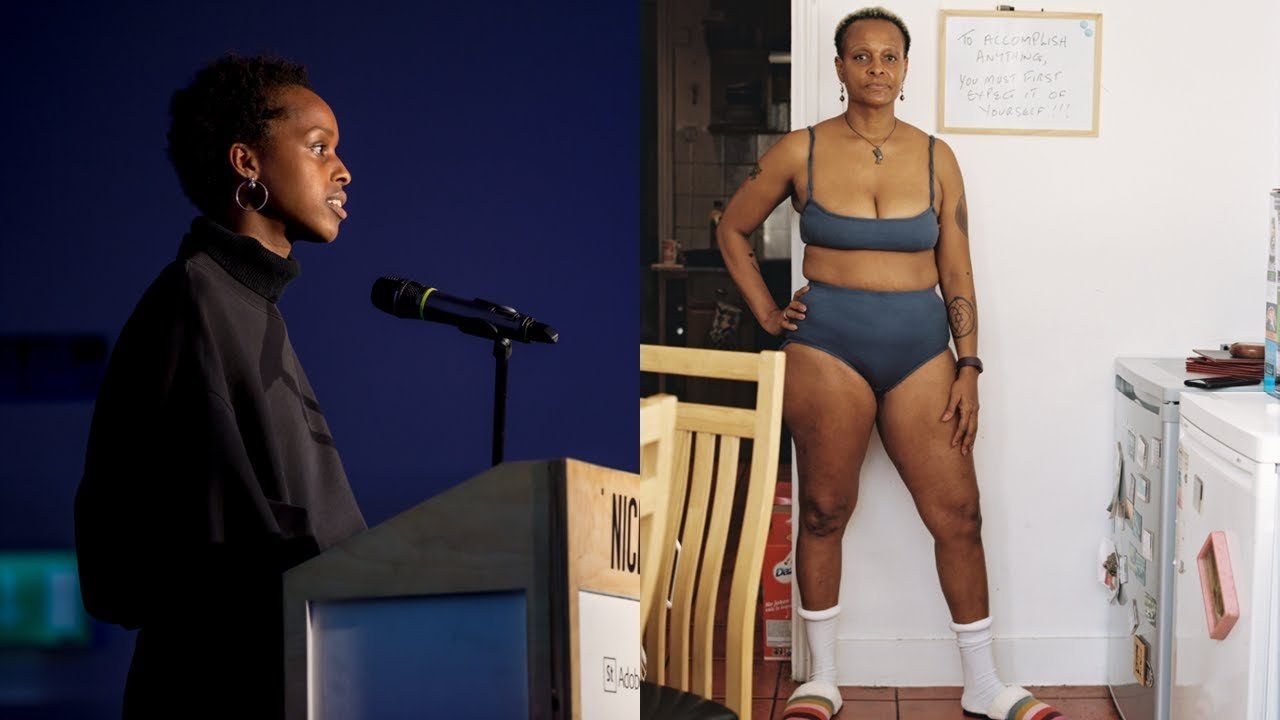
“I hope that if somebody younger or somebody sees they feel like they can be empowered by them.”
Transcript: May contain minor errors or formatting inconsistencies.
[Applause]
hi I'm Ronan and yeah. I just had an exhibition that I wanted to talk about.
But I also wanted to introduce my work to you if anyone hadn't seen it already so yeah I do photography most of my subjects are what I started with family so I kind of fell into photography I wanted to be a stylist first actually.
And then I assisted for three months and realized I didn't like clothes that much. And so realized I really preferred faces and people and stories so I kind of switched into photography and it's been like four years.
Now that I just kind of rolled with it I just started shooting yeah like my mom similar to Duncan friends family like pretty much anyone my boyfriend anyone who I'd like would let me take pictures of them. And then.
I started with models and tested and after maybe like four or five months I realized that I was just kind of shooting anyone that would allow me.
And I wasn't being choosy over who I photographed and I think once I decided who I wanted to photograph and why and I kind of stuck to photographing people that I guess I had some connection to or was something got their face I was interested in or something about the energy that drew me in that's when I kind of really started to work out what my style was and and obviously after experimenting with like lights and things like that I found that I just like shooting natural light and I just like shooting people in a kind of a real and honest way which for me it's just me and them and the camera and I'm really not technical so I kind of learned how to use I shoot with film mainly because my boyfriend had a film camera at the time which I was using then I bought my own film camera and I kind of just started that way.
And then I eventually got a medium format camera at the beginning of last year which my friend Ruby sent me loads of YouTube videos on.
And we kind of worked out together which is kind of nice because I think sometimes people think that to do photography you have to know a load of technical staff or generally need to know something about photography and I didn't I just kind of like went in wholeheartedly and worked in retail part-time. And so I could focus on it by itself and I kind of think I learned a lot from retail too because I mean I think if anyone's worked in Stratford West woods like I have then you can kind of deal with any other any other situation.
So I shoot I guess a lot of people say that my work is diverse because I shoot a mixture of races and ages and I guess that's also something that I didn't really think about until maybe like two years ago in diversity came into fashion I just shot people that were around me. And I've always been inspired by different kinds of people this shoe actually. That's on the screen now I did a couple months ago because I kind of always neglected Brown probably some sort of like inner prejudice by a neglected Brown and I never really pay much attention to it.
And in this shoot I kind of wanted to recreate those like typical well there's like iconic Kate Moss images where she's like a cowboy which is something that I never never related to but I wanted to use Brown and use people that look more like I do so I guess create images that related to me that I hope that if somebody younger or somebody else sees them they feel like they can be empowered by them or it's okay to kind of create your own iconic images so that's pretty much my work this was like kind of major I shot Serena Williams like two weeks ago which I'm still kind of gas from so threw them in I wanted to put these in here though because I I really try and see everybody as equal so even if I shoot I didn't even think it was that big a deal until it came out and whenever I shoot somebody I really try and put them on the same level as me because they're just the person. And I don't want to get freaked out and and I don't want to feel that somebody's better than I am just because of who they are or what they've achieved and Serena's achieved so many amazing but I try to also be proud of my small achievements - that's super important so one another thing that I was really really proud of was this exhibition I'm home that I had in October so the idea kind of came about last year I went to the soul of a nation exhibition at Tate which was showcasing a lot of black artists I also went to one at South London gallery and I kind of just felt like there are not many opportunities to see the work of black British photographers or artists in general but photography specifically and so I feel like that's something that I would really have enjoyed and so I I tried to get funding I tried to get Arts Council funding and that just flopped because that takes forever and also it's really hard if you don't know how much things are going to end up costing or where exactly you're going to do it. There are some loopholes but for me it was seem like I kind of needed to be in the know of how to even fill out an Arts Council application. And so I kind of tried I looked for a space for about six months and then I eventually found somewhere that would let me for a relatively cheap ish price a doable price because I guess after looking for Arts Council looking out reaching out to brands and nobody wanted to give me funding for it because I guess it is sort of a risk I just decided to pay for the whole thing myself which again is also a little bit tricky because I mean it's not like I'm made of money or anything.
But I think it's really important for me to invest in my own work especially when it comes to creating a space myself within the industry especially within an industry where I might not all.
So I went back.
And I might not be the first person that would get given a job it's important I put my own money into projects that not only give me space but give people like myself space so the show was black for black British female photographers myself one year one Rio Dylan and to establish one's Lewis Johnson Arthur and joy Gregory and people always kind of ask me like how did you get them involved and I literally just emailed them I just went to their websites and just emailed them I think it seems harder than it is sometimes I'm just I was saying there's somebody the other day I'm just the master of Bogg until somebody replies and I think that's legit like that's fine because I think if I don't send the email then they're never gonna get the message and it's worth a try like I kind of even actually I didn't really prepare that well for this talk I'm just kind of winging it now.
But I thought like what's the worst that's going to happen so if I don't email by definitely not gonna do it. But if I email they might reply like who knows and they did so it was them and the the show was on for nine days because I wanted it to be an art space that people come to and they come back to and there's things going on and making feel comfortable it feels like a home I hired quite a few people in this process I mean it was only a tiny bit.
But I really wanted to give them monetary appreciation for the work that they were doing I think as a creative it's really easy to do load of free stuff and I think it's I've done ton of free stuff and there are some projects that are paid in there some that aren't but if I'm asking somebody for their skills and if I have the capacity to give them a little bit of money for their time than I did so I had two girls helping me with the interior design and I had loads different workshops that was like an Edina where.
I did a talk there were two supper clubs there was a film nights and all of these things that I just thought would help people engage with the space because of course it was about the work and the whole concept of the show was home and family but to me home is somewhere that I feel comfortable to just kick back and like relax and read and I don't feel rushed and I feel like a lot of time in galleries when I go there I feel like I go in I see the work. And I come out.
And I don't relate to this space or I don't relate to anything within the space they don't feel like it was designed for me and although the work only had the work of black British females the space was just open to anyone one thing that I did with the show that was really really special to me is donated I mean obviously I lost like a ton of money this wasn't about money for me this project but to come to all of the events it was five pounds and then that could either be refunded when you come because five pounds to me. Now isn't much.
But there have definitely been times even earlier this year where.
I didn't have five pounds I did like a big shoot for night town and it was in the it was in the store but that time I didn't have money because I'd been paid so late that we had to mean I had to cycle there because I was like can't get on the bus today so gonna cycle dogs a circus which is fine but I think I'm not sure where. I was going with that.
But yeah I'm not sure I was going with that by name oh sorry five pounds so five pounds might not be a lot to some people but to some people is a lot. And I wanted everything at this pace to be accessible so that's why I had a refund option or the five pounds can get donated to this really cool charity called Hackney quest and what they do is work with young people and families in the area just providing a lot of support for between like families and schools and just giving opportunities and just trying to I guess get the minds of young people in Hackney going and giving them the support they need to do that and that was really special to me because my dad's from Hackney I'm from were from stones which is not really far and I guess I really try in my work that it's relatable when you look at it but just the fact that I kind of created something that other people will actually benefit from is really really special more than just being a show.
That's nice the company which is great and I think even if it was just that that would have been absolutely fine but the fact that someone can come have dinner talk to somebody I guess the space kind of like tonight where maybe you'll speak to somebody that you didn't know before. That's that's really special so that's kind of how I did it I just paid for everything I guess money can do a lot of things can't make you happy but it can enable you to do things. And I want to share opportunities with people I'm really not somebody who's Precious about like contacts or precious about clients because I think there's space in the industry for everyone and I try not to be competitive with anybody because I'm the only person that can do what I do and so I shouldn't feel competitive for somebody else because they they're going to be the only person to do what they do and I guess I want it I guess the summary is that I wanted to have a show next to Liz Johnson art on and to being in a show with her work.
So I created an opportunity for myself to do that. And that's kind of how I try to work in in the rest of my work.
So yeah that's my show thank you all for listening to me. And I hope you enjoyed my little insight [Applause]
Latest Talks
-
Will Anderson and Ainslie Henderson
Bringing stop motion sorcery to BBC’s Small Prophets
Watch -
Amber Weaver
How does contemporary type design translate into the wider world?
Watch -
Murugiah
Why you should reject the formula and make art about things you love
Watch -
Marina Willer
Design thrives when you find poetry in the simple things
Watch -
Lizzy Stewart
The hundreds of drawings and writing-on-a-whim that goes into comic novels
Watch -
intra
The rewarding process of recognising the art in obscure everyday life
Watch