
Robert Rubbish is a founding member of the iconic illustration collective Le Gun and is known for his anecdotal storytelling of Soho through illustration.
Robert Rubbish
Drifting through Soho’s ghosts, dandies and minotaurs in an illustrated love letter
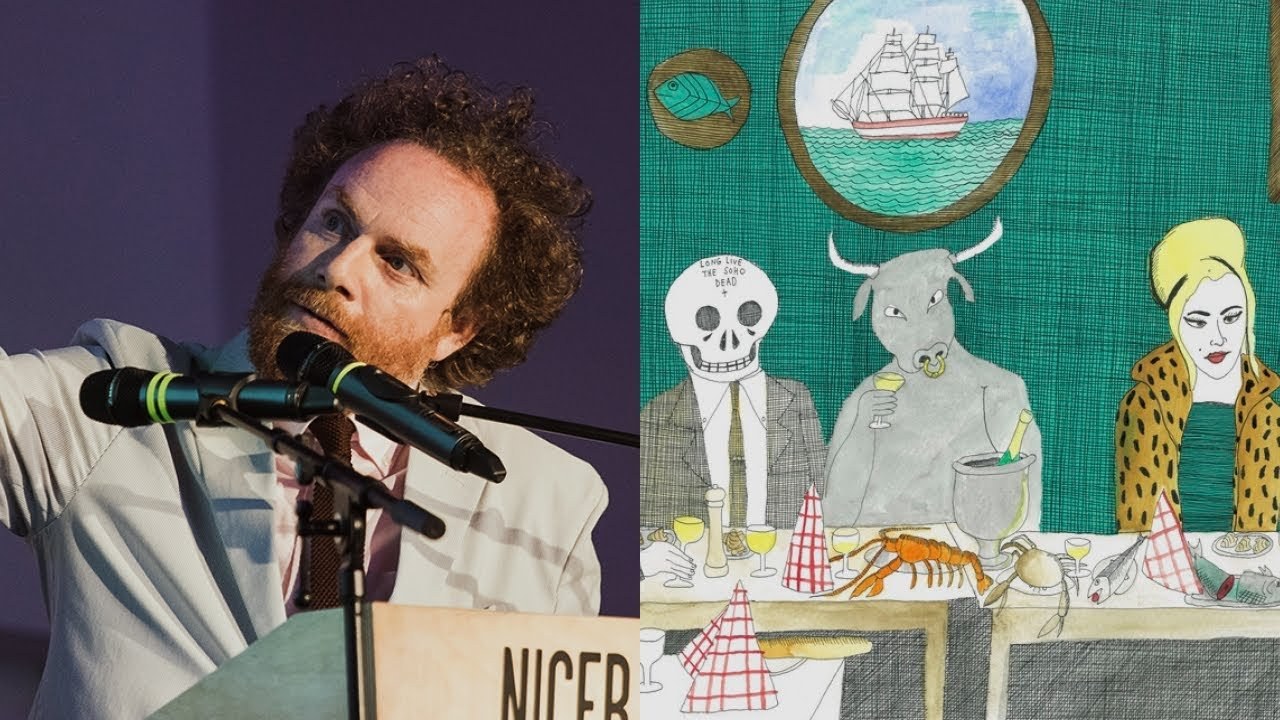
“Soho is a canvas where every eccentricity paints a part of the city's story.”
Transcript: May contain minor errors or formatting inconsistencies.
[Applause]
thank you very much home I will start so as Alex said I'm a member and co-founder of the gun collective which is a narrative illustration collective and magazine and we've been working and producing stuff since 2004 so this is all the members of several members of the gun two designers and five pies illustrators and at the moment we're working on the gun number six so this is just a publicity shot for that. And this is a picture of me which you know it's me because I'm here but and it's some advertising one of my artworks what load of rubbish the print and I'm standing on a traffic island in Regent Street which is a couple of metres away from so low and so hoes what I'm going to be talking about mostly so after leaving the Royal College I started to make this project with a friend of mine called Paul viel offered this other guy with the beard here. And this was in about 2006 to 2010 we did this thing called the rubbish men of Soho which was like so we made zis and made videos and we made our work.
And we'd had a live bands that's us playing at our coping fair one year. And so from that I took the name Robert rubbish I liked the kind of sound at that. So that was when my stage name my artist name was born and here is a drawing so I'm sure you all know what so-oh is all where is but it's right in the middle of the West End in London. And it's roughly about a mile square mile and this has been a really important place for me since I've come to and a lot of my work has been about here and the lot of the guns early days we did a lot of stuff around Soho socializing and shows and other things.
So this is if you imagine what within these streets is what my work for this book spiritus oo is all about. And this was the first drawing I did in 2015 that when I got the idea that was gonna make this book and four shows a show each year that was gonna be about all about solo because I've been so interested in it for years that I thought now I was gonna collect all the images and all my ideas and stuff to make artwork.
So this is the first drawing and you'll see these two characters I'll explain who they are later but things start to develop from that and over the years I've had an interest in collecting books about Soho so I sort of read as much as I could here's a few from my collection and they're all different varieties of subjects and they informed the beginning of the artwork for this project. And some sort of pulpy soho books are quite hard to get and I've been researching and reading these for a couple of years some other ones all about the history.
And then these really old books so also these books and having hung around Soho and kind of know a lot of the stories and the history I started to go on the internet and try and find as much visual information as I could and I used to find images and download them and print them as photographs so they've become more like snapshots when I was doing the research for this book.
And this very varying times in different places in the history of Soho some some are really obscure old things some are just random stuff I found and there's a collection of other other photo with some characters like in the middle this guy Jake Vegas it can be sometimes seen with a bag with a stereo and just leaning on the lamppost he can't sometimes to you. And this guy here Terry who is on a temper and a month for a teener for me and there's other characters like this guy Sebastian horsely who was like a modern-day dandy he comes with he's in a lot of the work.
So there's being poor when we were the rubbish bin in this cafe called the Lorelai so this kind personal and things I've found on the Internet so this is the first bit of artwork which was called spiritus Soho which was the starting point and I'd like to think of so I was a woman from that is many different sort of nationalities and kind of mysterious like a genius spirit that this was the first image I made which is kind of part serpent goddess sort of sixties to a woman then.
So this is the first ever image properly I made for solo spiritus Soho and then this one the dilly boys which is based on Quentin crisp who was a a trailblazing gender-bender from the from the forties onwards and he he experimented with cross-dressing and all sorts of things in the 30s and 40s when it was quite dangerous to do this and he used to hang around Piccadilly and so on. So this is a picture based on him then.
This is a picture based on a character called Teresa Cornelius who was the first-ever nightclub owner and she night club in Soho Square and she thought she had a child with Casanova and she had this really weird life that kind of went from high to low and it quite an interesting character so she was another feature in this.
And then sailors have always been a part of the soho mythology people coming into the area and spending a lot of money and looking for a good time so sailors have start started to come into my work at this point and this guy I am foot jack was called the king of bohemian is a guy who had one leg shorter than the other and a big iron contraption on it and he used to hang around sorry he opened a gay club in the 1930s and got put in prison for it and he was a kind of mystic guy who would just hang around the area and this is an image that just kind of my interesting Chinatown as well then I write the story when I was at college in 99 about Chinatown this is a reoccurring image this photo has been a really big influence on me.
And it shows the London School of painters in wheelers which was a fish restaurant on old Compton Street and I just love this picture and I left by John Deakin and I just love what it's about like a group of art is having this boozy lunch and it was massive influence on my work.
So I took that and kind of added my own characters to it like the stay alone this is the first time the miner tour appears which he's got a big part of the spirit of Soho as you'll see and also around this time I was looking at this place called llama carved cafe on Main Street and it was opened in 1955 and it was a deaf themed coffee bar and played all death type music and you drank your coffee of coffin and kind of crazy idea that kind of existed till the 70s and I found online from looking on ebay I found this goal that was for sale which up the top is they had loads of these scholars that were just from the tables so I tracked one down but unfortunately it was solved before I got it. And so I commissioned a friend of mine to make me one where I put the writing long live the solo death so it was a kind of momentum or a about sorrow and about what was going on the change in the area and how all these things were dying right.
And this is an image of the miner tour in the 6th war the 6th wolf is a character that appears in a soft cell song and I liked to kind of marry the two of these characters together because the miner tour is a character that in mythology guards the labyrinth and I've always thought of solo as a labyrinth and that kind you can get lost in this labyrinth so he's like the guardian of it. And this is a picture based on the King's song Lola where a guy finds himself in a basement nightclub and has a dalliance with the transvestite and I've always loved that that song and the imagery day it portrays so this was one of my first bigger pictures this is a tune and then.
This is a scene with soft Zelda band from the 80s with their famous non-stop erotic cabaret album and this is them and the sex dwarf and Paul Raymond at the back on Walker's Court which is now being transformed into and yummy heaven but at one time it was like the sleazy real sleazy bit of Soho so that's kind of a celebration of that. And then.
I started to get into this idea about Soho was the red-light district for many years in London and the way prostitutes have always advertised their wares is with these light red lights so I started to make this idea of making these red lights as images and then.
This is based on a Picasso print where I've changed like the going to a sailor and the other guy into a minor tool so the red light acted as a spirit.
So it's kind of that's what I wanted to get close and then this was another picture about when acid and psychedelia hit the 60s and there was this famous shop on Carnaby Street called Lord John's and this represents sort of when the consciousness expansion of the 60s happened and there's his famous really psychedelic mural on that building so I took that as reference and then it kind of comes alive and that's kind of what that one's about this picture is probably the most important picture I've done to do with the concept of what I'm getting across in spirit is so and it's based on this place called where was the gargoyle club at one time it's 69 Dean Street and that's the back end of it side entrance on Main Street now it's the Dean Street townhouse and this is kind of a collection of everything. That's gone on in that Street so that Street at one time housed the house that now Gwen who was the lover of King Charles lived in and then it was knocked down this but her ghost was supposed to haunt it.
And then it was it into this really elaborate club called The Gargoyle club and that ran in the 40s and 50s then it turned into gossips which was sort of late 70s club where the first ever Bowie night was held which from that came the New Romantic movement so the characters in EO represent the New Romantics and then a bit later on. There was a club born there called the bat cave which owned sort of the goth movement so there's all these characters in there then Gaza's rocking blues originally was that that at that base as well.
So it's all about how one space has oh it has so many different histories to it. And this is a portrait of William Blake the mystic poet that was born in this tower block on Marshall Street in Soho and the more I read about him the more I thought he's sort of a guardian and a spirit of the area because he was like this kind of mystic who were loose mated and Roby's kind of flamboyant poems and then he kind of influenced lots of stuff including their beats and the hippies so I kind of liked the fact that there's this big Monument if you like to him this big tower block that you used to live in and this is a picture of the post box on old Compton Street which I feel is the center of the universe of Soho and I've always loved this post box so I wanted to kind of add William Blake and the post box together.
So I and I've taken a bit from ♪
Ginsburg's how the poem how cuz Ginsberg was very into into William Blake so I like the fact that all these things lead back onto each other. And this one's called Carla crossroads where you see the flames head hipster is on his sermon on his post box and there's all these different characters that make up this sort of bit of Soho and it's kind of a piece that has real and unreal characters in it. And it's looking up Dean Street from old Compton Street and then.
This is another person who was big in the influence of my research and development of spiritus isono and this is this guy his name was Derek Raymond and he was zone and noir writer and I really liked his by came across his books but didn't know he had anything to do with Soho and then one day I was in the French and someone's dice sawed my book and said oh that guy's used to drink in this pub and pointed to a light that had his beret on it the bear only used to wear so I was like all right he's one of like these spirits of Soho so I got very into his writing and he's become quite an influential character in it.
And in this he's he's down an alleyway soon hands caught in Soho and he's he used to work there in the 60s and one of the sex shops so this is him in the 90s in the foreground in the middle ground him in the sixties then in the background him as a Etonian in the forties so yeah he is very important and this picture is of the French house which has been an important part of my Soho history and what I wanted to do in this picture is to bring together all the elements of all of the history.
So I researched this picture from the 50s and I got a photographer to take a new picture without anyone in the front so I could reference it then I added in this characters and like Derek Raymond is in the other side of the bar there with the original spiritus soho woman and then there's their original owner of the French house up there drinking wine and as the French sailors that hung out there in the in the war because the French free army used to use it as a base and then there's a landlady Leslie now at the front of the picture and this character here is Tom Baker who was dr.
Who and he used to drink in there in the 70s and this is great interview about him just describing a day in his life that was in the sunday times so I quite liked to have this you know this this idea that this this Time Lord was present in there as well because a lot of the work that was in my Spiritist IO book is about a sort of drift through time a psycho geographical drift where all time is present at all time so he's and it's like this kind of sums are and this in the book is the last page of the book which is like the death of the miner Torrance X de wolf which is kind of symbolic to how I feel about Soho now and how these characters have been snuffed out. And this was taken from a photograph obviously not the people.
But they the area one day when I walked around the corner and saw they started demolishing parts of Walker's core I took a photo and then based this drawing on that. And it's kind of a metaphor for what really is going on in so I like the you know getting rid of the culture and getting rid of the end so this was the last image in my book. And it's basically you know that.
That's how I feel about the whole thing at the moment and this is yes this is a plug because this show is still on that the French house Dean Street if anyone's ever there passing so this shows on till Saturday and it has a ATS eight pieces of the work that I've made for the book. And this is the last slide and this is the book spiritus soo which is available for me if anyone wants to purchase it.
And I the book is made up of all four years worth of exhibitions and artwork with chapters with people with me explaining what each each chapter each exhibition is about. And I worked with one of the designers from the garden Alex Wright. And we came up with this format and the style of the book. So that's in I'm afraid yeah okay [Applause]
Latest Talks
-
Will Anderson and Ainslie Henderson
Bringing stop motion sorcery to BBC’s Small Prophets
Watch -
Amber Weaver
How does contemporary type design translate into the wider world?
Watch -
Murugiah
Why you should reject the formula and make art about things you love
Watch -
Marina Willer
Design thrives when you find poetry in the simple things
Watch -
Lizzy Stewart
The hundreds of drawings and writing-on-a-whim that goes into comic novels
Watch -
intra
The rewarding process of recognising the art in obscure everyday life
Watch