Richard Turley is a graphic designer known for his innovative approach to print and digital media. He explores the tactile qualities of paper and design in his work, making him a distinctive voice in the creative industry.
Richard Turley
Making a tactile lockdown newsletter to escape the overwhelm of digital life
“Getting through the day is the main objective; every day is its own universe.”
Transcript: May contain minor errors or formatting inconsistencies.
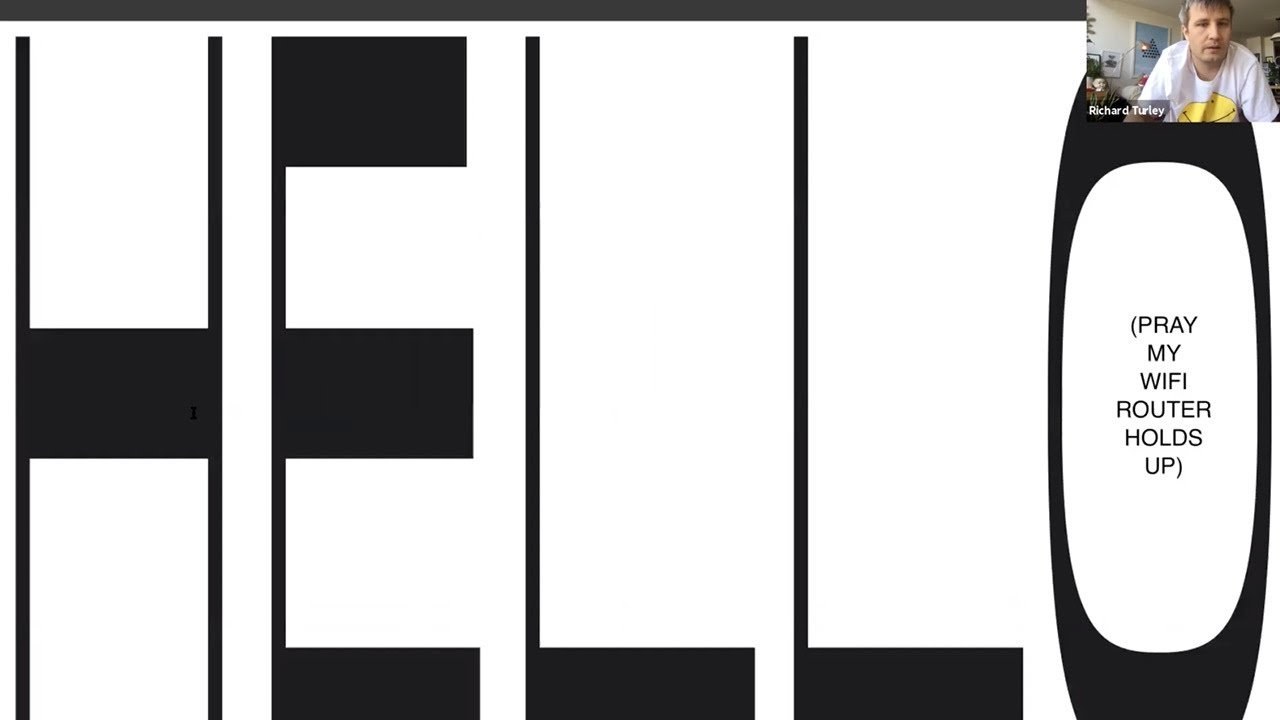
It's time now everyone for our fourth and final Speaker of the evening Richard Turley will be well known to regular readers of it's nice that as one as the one time creative director of Bloomberg Businessweek and as the man who relaunched interview magazine and gave MTV its distinctive aesthetic a few years back he's currently executive creative director at Weidman Kennedy in New York but tonight he's joining us to talk through a really lovely project he's been working on during isolation alongside Lucas Muscatello with whom he founded civilization which they refer to as a newspaper come support group for New York City and Richard if you're there and please turn on your audio and video say hello so you're in you're in New York I guess I am yeah yeah how are you getting through the lockdown slowly every day is its its own universe of sorts I feel like kind of just getting through through the day is kind of the main objective but you know I'm not hating it either I'm quite enjoying just having a little bit of time just to think and ponder and and spend time with family so I think it's not been about it's not being bad fair enough listen I'm gonna let you share your screen and take us away on the presentation and yeah I'll check back in in in ten minutes hello we can see it I'm hope that my Wi-Fi root is gonna hold up here but so yes I'm gonna talk about this thing that I've been doing my friend Lucas which is a kind of a letter series a newsletter but they wanted me to do a quick potted history.
So I work for Wyden Kennedy which is a big sad agency I work in a global team which means I have to go I had to in the past the past four years go around the world.
So I can live out the suitcase these kind of experiences which I'm assuming we'll come back to at some point so these sort of things have kind of like very late meetings and presentations which I'm sure most of you're familiar with its of kind of like hotel rooms lots of 5:00 a.m. Well. Actually not lot.
So this is one particularly awful neutral presentation.
This is like 6:00 a.m. In the flavor hotel trying to fix the presentation lots of mood boards didn't all this kind of horror show.
But then you know how you can't complain you know. I mean I get to see things like this.
This is about getting 5 a.m. Jet-lagged in Tokyo and daily this of the you know they even well the mist and look and the haze it's still kind of a real honor to a bell to visit that City and then when I was there I mean I think the thing that I've done there's most notable is this formula on branding which we did a couple years back I also work for into you as Matt was saying you know it's a magazine you know Andy Warhol started a few years ago about 50 years some crazy 50 years ago something.
And then I do this with a guy called Mel Ottenberg primarily just from the kind of creative point of being you know it's a magazine you know some pages for a mint I just also do some things with friends this is a project if for Barneys last year Barney's is a department store in New York a bit like Selfridges in London they were me know really going out of business but they can quite say and they didn't quite know but me and Tom kind of got asked to just to help them with the final which turned out to be their final windows I didn't really know at the time and at the time you know there's a lot of kind of things in the press about about the store closing and so instead of qalaat hiding from it we thought it would be much more fun just to lean in and and just put all the pain on the outside of the building instead of just hiding from it in the inside so it was just a civic work an anarchic you know way of kind of thing addressing kind of consumerism and the kind of the frustration of buying things and needing to bring money you know that was you know the fact that the store wasn't closed do you know how we had to you know they were very keen system address the fact that it was still open and so we solved that problem by kind of writing not closed or library then MTV I think it's a little bit overstatement to say that I could have affected much good over the aesthetic kind of direction but you know I were thrown on TV for a couple of bits for a couple of years sorry initially I was doing the the kind of the the bumpers and the branding all around the arts and then that could've landed up to being given a couple of hours each week day for a month just to come to mess around with this is this is Taylor Swift inside a jihadi hostage video which is you know you you don't you constituents sneak little things out and hope you didn't get caught by the kind of people you know you know it's just small acts of rebellion kind of mean kind of you know take on bigger meanings in kind of big corporate institutions yeah this show we did was called empty you know chill okay and the thing I suppose that I'm kind of like most known for is Business Week and you know some covers I mean there's no point going to phone to this fellow you know yeah we had to do a cover each week obviously I need only try to do a kind of a big idea you know there everyone I hope was there was some kind of idea behind it mean you know it's also kind of a bit of an oversimplification somewhat you know you're gonna see about eight covers here.
But there was a ton of kinda crap ones these are some of the better ones and there.
But it was the most incoming important project that I've done really because it you know because if only one main reason is because kind of brought me to New York and you know.
That's why I am and that's where I stayed and you know.
This is essentially you can love what another project that I'm gonna talk to you about is a is a newspaper for and kind of about New York this is the Naked Cowboy than one his mask on.
But yeah. So me and Lucas set up this map this newspaper about two years ago called civilization it was but I did it for a couple you know for a few reasons but I think the overriding reason was that I missed you know bit on what Liz was saying earlier actually I kind of just like you know really missed paper I missed an genome tactility you know I missed analog things and you know touching stuff and I think that's something.
That's kind of extended all the way through the kind of the process with civilization you know I wanted something to touch and hold in my hand something that could was kind of real and you know that made me feel something and there wasn't just as in a digital kind of interface I mean yet the idea of civilization in a sense there are lots of kind of conflicting reasons for the paper but it's all about living in cities it's about living in kind of New York and so how to navigate that and the dissonance of living in a kind of a city which kind of just shouts at you all the time you know the chaos the frenzy you know and the kind of the interesting thing I suppose is that we should have tried to do this or we do do this like mostly without pictures you know.
This is the sort of a flat line with it's a 16 page newspaper and broad shoe so it's this huge it's like I just go on like that it's done you know it's huge and we want it to be kind of overwhelming you want it you know what we want but to be overwhelmingly with kind of text and you know the reason for not using pictures I suppose was the you know with no disrespect to all the amazing pictures we've seen so far is that we just see a lot of pictures you know we're almost entirely an image based kind of maybe that's an overstatement but we you know we are you know we are an image based society now and you know. And I wonder if he who kind of if you could find in the equivalence with the frenzy of pictures and the way that you get fed pictures now through Instagram where it's kind of they rub up against each other they don't make any sense next week you see a picture of kind of Trump you see a picture of your best friend you see a picture of pot plant you see a picture of somebody's food and like you're never quite sure what's coming next and that gives them this kind of addictive quality so why sort of that was you know one of the you know could you have the same sort of feeling with work with words could you still have that same kind of tension and that same kind of kind of connection I mean obviously we know we've done for now and you know the kaabah clearly which is this kind of like fallen angel sort of character which has come to be kind of symbolic for us and kind of you know as a kind of proxy for what you know for us and for people you know again the choice of pitting are not having too many pictures or very few pictures are just that you can't really identify in any of the voices that they're all lost the sexes race is kind of Ages all get going to blended and you never quite sure who who's been to who you're talking to or you're reading about you know.
I mean as he said that slide before there's about 75,000 words in each in each issue you know a few diagrams you know the interviews are mostly recorded with either me or Lucas or one of our friends and we spiced these kind of thing conversations with this with slogans half thoughts lots of lists kind of offcuts things we've come overheard and emails books you know Word documents we've recorded work meetings before and you know we just wanted to really really have this kind of blend of information just kind of you know in this very traditional form but that's been kind of scrambled and like it's been kind of put in a liquidiser you know each of the issues has followed kind of basic the same form you know a different color in each but you know you know it's a design point of view I found that they've got more and more complicated as I've gone on you know. And I've kind of wanted to serve to increase more and more kind of complexity into the into the kind of the layout and you know yeah I mean that leather center of this thing here where the kind of you know it's stories really bleeding into each other just so they can know completely kind of confused and I don't know if that's something about the way I think about things but you know how I configured I get by everything.
But I really wanted it to be you know to have that kind of energy in that scattered nature and to you know. I mean that again it was like like the content itself is really it started off being about the exterior New York and became really about being about the interior about what you feel and kind of how you feel about things and he's kind of quite quite personal missives and it's on.
But yeah we were just approaching issue fiber for the virus and you know Lucas I were talking about what we wanted to do you know the idea of doing sort of an email newsletter was something kind of digital didn't really seem kind of right for us and you know.
This is a picture of New York a lot dome and you know.
And I think on the subject of a newsletter we were kind of you know that seemed to be something that we wanted to do or something that some work and communicating what it's like to be locked up and trapped and it felt very much in our kind of wheelhouse I mean really kind of like we'd be talking a little bit before about kind of mailer and you know I don't know how you know how widespread this is but Mellaart kind of grew out of for the fox's movement which as far as he's famous protagonist would be someone like Yoko Ono you know and and it kind of grew and the idea was that. There are these small-scale artworks that was sent to the Postal Service that were almost kind of like validated by the means of how it was how it was received you know and the dirt and the grime stickers and things and stand or became part of the artwork that the most famous protagonist of this is a guy could write John sand you know who there's not enough time to retorque about.
But they know the the postal service also was someone who it's something that was kind of said that felt fairly unaffected by the young by the virus you know it was actually a way of a means of getting getting tactile things in people's hands you know you could kind of instructors that like in a world where human content was being denied this is a moment where you could actually touch someone and kind of and you know the same paper would be passed hand to hand you know.
So we invested I think about 30 bucks in a you know in a pillow box in a local store in a local post office and come began really you know and say you know I've always been in kind of you know you've done everything without supporting kind of printing but now they sort the other kind of interesting thing that I didn't realize with this process is that.
But I was also kind of taking charge of the manufacturing as well which I've actually really enjoyed you know really enjoyed so touching something and making something you know and kind of being kind of responsible for every kind of part of it. And I did all of my kids you know inkjet on the left-hand side picture here you have you know a trips to Staples and all the kind of the ephemera that we've collected on the right hand side you've got you know.
That's that's the tool that you know that phrase you know kind of you know you want to take charge of the body means of production control the means of production well. There is it's just like a simple office Jeff it's my kids look at the computer printers in the corner of his room he was very upset by this whole my intervention in his Roman was kind of hey so so yes so the first one we put the first one out on let me finish the first one is the beginning of April and it was really just a letter you know it was you know it's hard to kind of to what I'm not going to start reading it now.
But I didn't want it to be a kind of a replica of the newspaper by I wanted it to feel like a letter and so they said the typeface kind of felt appropriate if do you need you know kind of obsessed by the typewriter so it faces the moment anyway.
So anyway so you know and there's some close-ups that some scans of it you know each one is personalized he said what I write the name you know do you know mister you know if it's your name is Sam you'll get a letter which it says dear Sam on it and you know we will come little messages on the letter on the artwork you know we still have these kind of diagrams that we kind of think about slightly differently liza liza lists you know the overall effect is kind of is about you know he's really just so this idea of containment and being again being swamped by by messages but I suppose this time the messages are all coming in from kind of like news sites and kind of internet and it's just let this overwhelm kind of you know information overload and you know the whole club project really has been about kind of that being about how you know words and you know in messages just going I've got blended together and how you know the day's get blended together.
And it's but you know you know there's some sort of and then you know the container for the letter is you know we you know I'm there with my stickers in the sort of you know I've got one of those stamps and you know we kind of made the envelope stirs you know effect the envelopes as well which kind of picks up a little bit of that whole kind of just ignore the addresses ignore the addresses okay.
So the second the second one yes we did that did that that one and that kind of you know sank so quite cute well there's a remapped have yourself we sold a load and then we moved on to the second one and the second one in each one of these things we wanted to be a slightly different thing you wanted it to be kind of let every is the only kind of consistency being that there's a sort of lesser kind of component and it's something it's in an envelope and this one we kind of went a bit more to town and became this kind of multi piece sort of thing you know including can let perf I mean I went crazy estate I mean it turns out there's all this stuff at staples I never knew like perforating card and you know different colored paper and so I wait then it's a bit weak and I'm marinating just to the stuff that's you know just paper I suppose really and you know.
So this is this is all the kind of components pretty much in the second part the second letter so again you have the kind in the top left hand corner you got a letter itself and then some postcards and on the right hand side is me and mail going for a walk and then just some more currently he's got a poster forms I'm just some closer more kind of close-up details here yeah you know it's kind of quite poetic and I suppose in places it's it's definitely sitting like marinate in sort of feeling text you know you know weep for me in the middle of that. So that you know there's a lot of kind of there's a lot of that and like sorry I'm a mess you know.
And it's kind of it definitely is that sort of vibe and you know which I think turns a lot of people or I think a lot of people kind of just can't stand there now boredom in its just again this like blend this idea of everything kind of blending together well I had this that was just like a print that again look like when you start making things yourself when you start to operate at the kind of you know the very basic end of kind of how you make things you get accidents as well and suddenly accidents that misses me accidentally sending the wrong thing through the printer we're not realizing the printer was in and just this kind of beautiful kind of result at the end of it it's like perforate cardboard ripped apart yeah I mean there's lots of lists and things and kind of things I miss doing and then oh god Maura don't read the addresses and then then this time. Actually can let's send the envelopes through the printer through the office do you have to do the you know that the print thing again sometimes letting this is when he inks running out he gets a really cool effect with the kind of the the guy this is me then literally I mean you know I'm you know some kind a lot highfalutin fancy kind of you know advertising exec now.
But I here's me just serve like stuffing things into envelopes and you know I kind of looked it you know it's a nice way to spend my weekend and then we on to the third one no so this is very much in progress we're just about to kind of like launch this one and so unless I mean you know is this is actually more of a zine it seems and we've kind of like stapled it together.
And it's gonna be more of a commerce just to sort of you know staple kind of bunch of thoughts as a few of us have kind of networks and at this time this the interior that you know kind of covers here here has got it's kind of quite lurid tale of collecting me missing a boyfriend there's various different passages that come through there's quite a lot of kind of commentary around sort of how you make Matt Jones and we've kind of like slide that is you know color you know collided that with the world with all sorts of stuff already so you can see on the right-hand side of this page there's a little bit of stuff around kind of like the coal bed and all that kind I mean we tried to keep the word kind of virus out of it. So it's all it's all obviously kind of about the virus but never really could directly mentioning it too much missing drawing that Lucas did and some spinach on his plate liter yeah I mean you know the void this is some cereal this is at least this is someone's dogs who are kind of fighting yeah an excerpt so the whole thing is a sort of confusing kind of old is here something like Buddhists of Scripture type things and settings in the left hand side over pictures a pro class and stuff here's a list of kind of excellent karaoke songs and then the ends lovely to death and then the continuation of that piece the missing boyfriend piece and then.
That's kind of the end I think I think he's probably going to look like that oh I was hoping to if I mean I actually thought this talk was on Thursday so I thought he had this thing finished by then.
But this was it has him about 11 o'clock last night and that's it I'm done learn that was my project thanks very much Richard it's never been nicer Thursdays I have to tell you but thanks so much thanks very much I think you can stop stop screen show now and as with all the other speakers I've got just one question for you really and which is also submitted by our audience and what are you most looking forward to once the lockdown is over it's kind of a cheeky one there's two questions in here.
And is there anything you're actually quite thankful for during this time well I I'm weird stocking say stuck in New York it's been fine that like you know we I miss my family so it's really just boring stuff about missing my family and and kind of that really you know we felt you know we've always feel quite a long ways away from home when you don't live there.
But it's there it's felt like a long way you know these past few weeks I'm at some point hopefully I can kind of get back there. I haven't hated this experience though if I'm being honest I'm already slightly nostalgic for it in a funny sort of way and you know I you know the chance just to sort of you know. I mean it's been busy and difficult and torturous in many many ways but you know.
I think you learn things I've learned I don't know I've actually quite enjoyed just hitting the pause button and kind of just what you know what the am I doing I mean just to come out you know you just keep on making decisions and you keep on doing things.
And I don't think I've ever had the chaco part and kind of like you know going on holiday for a couple of weeks you don't really have the chance just to hit pause and really reflect and think about you know what what are you doing where are you going and I don't know necessarily if that's gonna net out into anything beyond doing exactly the same thing again when I come back yeah fair enough though I mean I think like for you as well probably not jumping on a plane every few weeks is probably also quite nice listen I was gonna say thanks so much for joining us and for that fantastic presentation a couple of people have said can you send those things to to London I think that'd be a great kind of negative project you can if you want to find out the ending you can you can buy me I'd kind of hesitated to put it in because I don't really want to be completely inundated by start because I actually had to physically make them. But if you we ran up Internet you can kind of awesome okay well thanks so much I'm gonna ask you now to turn off your audio and video but thank you again for an amazing amazing presentation and one final announcement for everyone and that's just basically they're the best social posts of the evening that goes to Laura Sinclair so Laura we will be in touch with you to send you your kind of two free tickets to the next nicer Tuesday so well done for that everyone else I'm afraid that brings us to the end of tonight's show our first ever online nicer Tuesday's I really hope you enjoyed it and that you
Latest Talks
-
Will Anderson and Ainslie Henderson
Bringing stop motion sorcery to BBC’s Small Prophets
Watch -
Amber Weaver
How does contemporary type design translate into the wider world?
Watch -
Murugiah
Why you should reject the formula and make art about things you love
Watch -
Marina Willer
Design thrives when you find poetry in the simple things
Watch -
Lizzy Stewart
The hundreds of drawings and writing-on-a-whim that goes into comic novels
Watch -
intra
The rewarding process of recognising the art in obscure everyday life
Watch