
Prarthna Singh is a photographer known for her empowering work that champions women in India. Her ongoing series, Champion, explores female strength and challenges Western stereotypes of Indian female identity through powerful portraits and narratives.
Prarthna Singh
Photographing Indian women who champion the patriarchy every single day
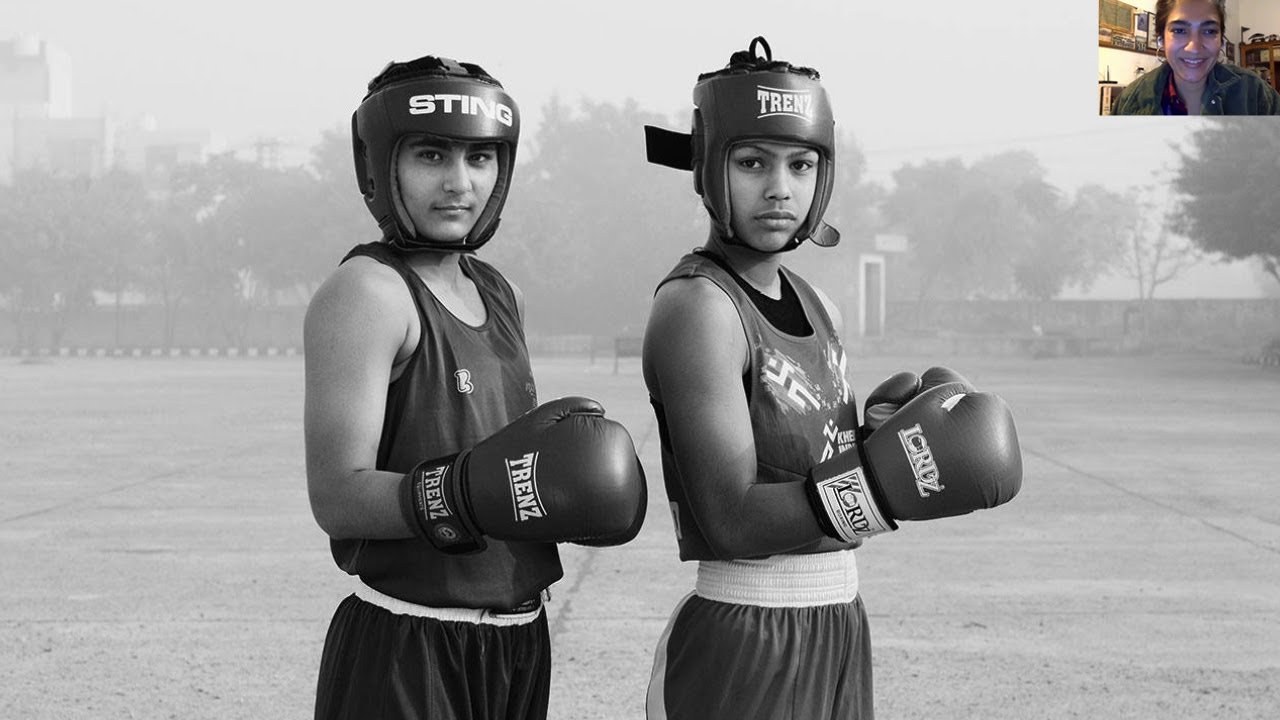
“These women are champions in their own way, they are challenging the patriarchy every day.”
Transcript: May contain minor errors or formatting inconsistencies.
Uh it's time now to meet our first speaker prathan singh is a photographer based in mumbai who's shot for everyone from nike to the new york times the guardian to instagram but it was part of his personal projects that really caught our eye in her personal work she interrogates female identity in contemporary india highlighting stories such as the women-led sit-in protests in new delhi last year meanwhile in her ongoing series champion she captures portraits of female athletes in the northern state of haryana ratner if you could turn your audio and video on.
So we can say hello that'd be great hello how are you I'm very well thanks how are you way well thank you for the introduction not at all no thanks thanks very much for joining us tonight yeah it's great great to see you an amazing background as well you've got there. And I'm gonna hand over to you now to kind of start your presentation so feel free to share your screen and everyone else if you do have any questions for pratna as she's speaking yeah just let us know put it put it in the chat and we'll we'll try and get around to it afterwards so over to you over to your bratman great so all right I'm gonna I'm pratna I'm a photographer and a visual artist based in bombay india and today I'm gonna speak about a long term project of mine called champion champion is a continuation of my journey as a visual artist exploring feminine strength through portraiture so so this project is a long-term project that I've been working on for the past six years in india and it began at a point of time when I had just moved back from living and working in america and I was in new delhi and I was relearning and rethinking a lot of the things that I had learned and done when I was educating myself and at risd in america and when I reached when I came back to india I I realized that I had you know. I was feeling very claustrophobic I didn't have the kind of freedoms that I enjoyed when I was living in america and you know photography has always been a very emotional medium for me it always reflects kind of the current space that I occupy and of course the space that reflects what's happening in the world.
And I was at a stage in my life living in new delhi where I you know. I was reading and learning a lot about what was happening in india and every single day I was hearing stories about women being attacked women being physically assaulted abducted raped and you know these are common stories that we hear coming out of india and I was really desperately looking for a story for new role models for women that inspired me. And I wanted to be able to tell a story that challenged all these stereotypes and you know just serendipitously the story came to me. But also because I was really seeking it.
So the story of champions is me going to different I began by just going to different sporting camps across india and photographing different women in their specific sporting milieus.
So these women are champions and heroes in their own way they are challenging existing structures of power and patriarchy every single day so my story began with a chance encounter with one of these female athletes a wrestler a young wrestler at my physiotherapy clinic I was immediately enthralled and I wanted to tell her story I began I started a conversation with her and she invited me to come to a female wrestling camp where young women from across india come and train to be wrestlers of course in india you know when you begin telling a story like this access is the is a very important part of being able to get to these sporting camps because they're all government-run and anything.
That's government-run in india has a lot of bureaucracy involved in it.
So I really I took over a year to just get access to these sporting camps but I did not give up because I knew that this was a story I genuinely wanted to be able to tell so in the heartland of india in states like haryana and uttar pradesh where their some of the highest rate of female infanticide and child marriage and domestic violence against women reside the sporting camps where young girls from all over come and train to be wrestlers judo players swimmers and boxers and you know.
So it's a really interesting dichotomy that exists within these spaces because the larger space the states and the cities that they're in are known for you know this attack and violence against women but here these women are in this safe space in these camps really determined to change their destinies and that is what I found so exciting and interesting about this story is that these spaces have been for decades and for centuries have been occupied by men you know swimming and wrestling and boxing are not sports that are encouraged in india because we as women are constantly told that our bodies are supposed to look a certain way that we are meant to be married at a certain age that we're supposed to have children at a certain age so just watching these women train and watching them kind of really break away from all those societal questions that interrogation that constant you know family and societal questioning you know and coming to these camps and you know a lot of them told me that their family members and their grandparents and the elders and their families could not be told that they're training to be swimmers because as a swimmer you know you wear a bathing suit and that is not an acceptable thing in a lot of societies and a lot of places in india a lot of families would not accept that. And so there's this very interesting kind of you know the idea between nationalism because when I would ask these women what is it the one thing that you want most in the world they would say that we want to women win a medal for india and you know it's it is this conversation that I thought that was really you know I wanted to dig deeper in is that you know india and wanting to prove yourself to your country to your people to your society to your villages when these are the same people who are perhaps in a stray comment from a relative at home on being more feminine or like a humiliating comment on the street you know you're so you're trying to prove yourself to the society and the same society is trying to tell you that what you're doing you're not good enough for that and you shouldn't be occupying this space and another really interesting thing for me for me was to study how these women you know move away from all these ideas of femininity of what the feminine body should look like of how they should align themselves to a certain way of thinking and being and in my efforts for a more compassionate storytelling I wanted for them to have a say in the way in which they would be depicted so we would have a conversation and my style is less documentary in nature and I always knew I wanted to make more formal portraits of them.
So I would have a conversation with them about how they would like to be represented and often they said that they would like to be in action. And so I photographed them while they were in action and often they would say they would like to be photographed while doing a certain like for instance this girl said she could do a split and she really would like to be photographed like that or for sometimes they would say that they would want to be photographed and you know.
I really I wanted to make an effort to be able to see and listen in my individual capacity because you know I come from a place of privilege and I have to acknowledge that especially in a country like india where you know I I enjoy class privilege cast privilege financial privilege I had the privilege to study in an art school and become a photographer today. And I realized that I I have to be I I that is the weight that I carry with me.
But that is also something that I hope to incorporate in my work is empathy in my storytelling and often it is just hearing out people's stories and you know in case of being at these training camps it was really a wonderful time for me to grow as a person as an artist and also I feel like I found my freedom through these women often you know the freedom that I felt that I was being taken away from me I I found it via them from their stories and that that is something that I constantly strive to do within my work and of course as most artists would tell you that their their projects are a work in progress this is also very much a work in progress and you know I would I it was it for instance in these images it was really interesting for me because the girl on the right is actually one of the women who represented india for the first time in olympics in wrestling and I photographed her a few years earlier and she went on to win a medal for india and I remember that moment when I read the news and I was so overwhelmed because I you know power and vulnerability are two sides of the same coin and while making the story it was so evident because these girls there's something so powerful and they're so determined but there's also something.
So they're so wonderful and they have this very childlike and girlish quality to them so and these are some of the spaces the internal spaces that I photographed and I made a decision to do them in color to kind of separate them from the portraits and yeah.
So these are the some of the wrestlers and I'm in touch with a lot of them.
And I hope that eventually I can compile this work and really make it a a body of work that can inspire other people other women young women people across the world and especially in india in a country like india where women are constantly questioned for the choices they make to be able to go ahead and really you know through these stories and these stories which I feel are so incredibly important to take out in the world and to you know see for other women to be able to see them and to connect with them as I did and I I feel like as I continue to do within my work and my stories and you know these women are champions in every which way in regard and I hope to be able to take the story forward so thank you. And I think faith you could stop great thank you thanks so much partner and you can stop sharing your screen if you if you can yeah brilliant we've had some really interesting questions come through from the audience so I'm just gonna fire them at you if that's okay one's come through from saskia how do you make the choice between color and black and white photography a really interesting question for kind of any any photographer grappling with that absolutely I think you know in this story sometimes it's on the job you know you go ahead and you while you're making the work you realize that this this body of work seems like it might be better in black and white or might be better in color but you know oddly in for me when I when I met that initial wrestler like I said like my first meeting with that young girl there was something about her.
But I just had imagined the kind of image I wanted to make and and I and I cannot say that it's across the board for all the projects I work on because you know for instance like the one you mentioned I've also recently done a project about this protest that was happening in delhi at the beginning of the year and you know that project was I there was no way I had I could imagine what I was getting myself into you know because a protest site is a volatile space and every every day something changed but for instance with this project I took six months to be able to even enter this first sporting camp so I had six months to mull over it to think about the kind of image I had made and I maybe I had like just envisioned it and often you envision things and they don't happen they don't work out the way you did but in this case it did I really envisioned making this structural constructed portrait of these women because of you know of course also the form that they've taken on and how just their bodies are sites of rebellions you know just their resist their existence that these women are here in india and they are training to be wrestlers and boxers I knew I I yeah I'd imagine this to be a black and white structural portrait.
And then. I had when I reached there.
I made these color portraits of the sights of the spaces that they occupy so yeah I cannot say if this is an answer across the board it will obviously be different for each project.
But in this particular project that is how it happens fantastic I guess one one final question it's kind of similar to that it's about how you kind of work with your subject really you mentioned that you you have a conversation or you had a conversation with these women and said you know how would you like to be portrayed or how would you like to be depicted how does that work with something that you have quite a strong vision for as a as a series it kind of means you have to be a bit more flexible doesn't it with what you're what you end up with I guess absolutely I think it's like a it's like a bunch of parameters right it's like my vision about I want to make a structural constructed portrait I know I don't want to just make an image of them like I don't want to be a fly on the wall so now I kind of have a structure for my project going in I know what I want but of course like when I reach there like I said I spent like two or three weeks at the camp because the first week I didn't really take any pictures I just wanted to be around I wanted to experience what was happening also they have a very hectic schedule you know they they don't have time for me because they they're like they have to be training for certain hours and then giving their body rest so I really had to find a way to kind of make myself present and then of course I have to make friends and I think that like maybe that's like a quality I can say I have in me like I I can I can make friends so over the course of the week when I was living with them and eating and the same mess and everything I I began speaking to a few of them.
And then you know asking them would they be okay to have a portrait and honestly most of them are quite excited by this heart I won't say that they were like you know they were quite excited by it.
And some of them like I said told me that you know today doesn't work for them or they're not feeling their fittest or they would like to work out for another week before they get photographed and these are things you have to pay attention to and for instance you know. Actually when I met the first girl who was a wrestler I wanted to make a picture of her when I met her in bombay I went to her apartment and she told me you know I'm not comfortable right.
Now I don't feel that my fitter I and she was going through physiotherapy and she said if you really would like to continue this story I invite you to come to my camp in lucknow which is in another you know in uttar pradesh in india and and you have to respect that and you know that is what honest and open conversations I feel like are the key and especially to my work because I work so much in in an intimate style of portraiture and I really would I imagine and I would like that that comes true in my work that yeah.
So when they tell me that I want to wear my full kit. And I want to be in my boxing gloves and my gear then I respect that or they tell me that I want to do it right after my session.
So I'm you know I'm really like pumped up and charged then I would do that or in you know there's certainly there's definitely ways to have I think yeah I I'm a big propagator for honest conversations and in my work at least I can say that. That's something that I I try and yeah fantastic brother listen we're gonna have to leave it there but thank you so much that was such an interesting thank you so much for having me not at all yeah thank you
Latest Talks
-
Will Anderson and Ainslie Henderson
Bringing stop motion sorcery to BBC’s Small Prophets
Watch -
Amber Weaver
How does contemporary type design translate into the wider world?
Watch -
Murugiah
Why you should reject the formula and make art about things you love
Watch -
Marina Willer
Design thrives when you find poetry in the simple things
Watch -
Lizzy Stewart
The hundreds of drawings and writing-on-a-whim that goes into comic novels
Watch -
intra
The rewarding process of recognising the art in obscure everyday life
Watch