
Peter Anderson is a photographer known for capturing the indie club scene in the 70s and for his experiments with a Widelux camera, showcasing its unique distortions and panoramic capabilities.
Peter Anderson
Shooting drag racers and Mick Jagger with a panoramic camera that distorts everything
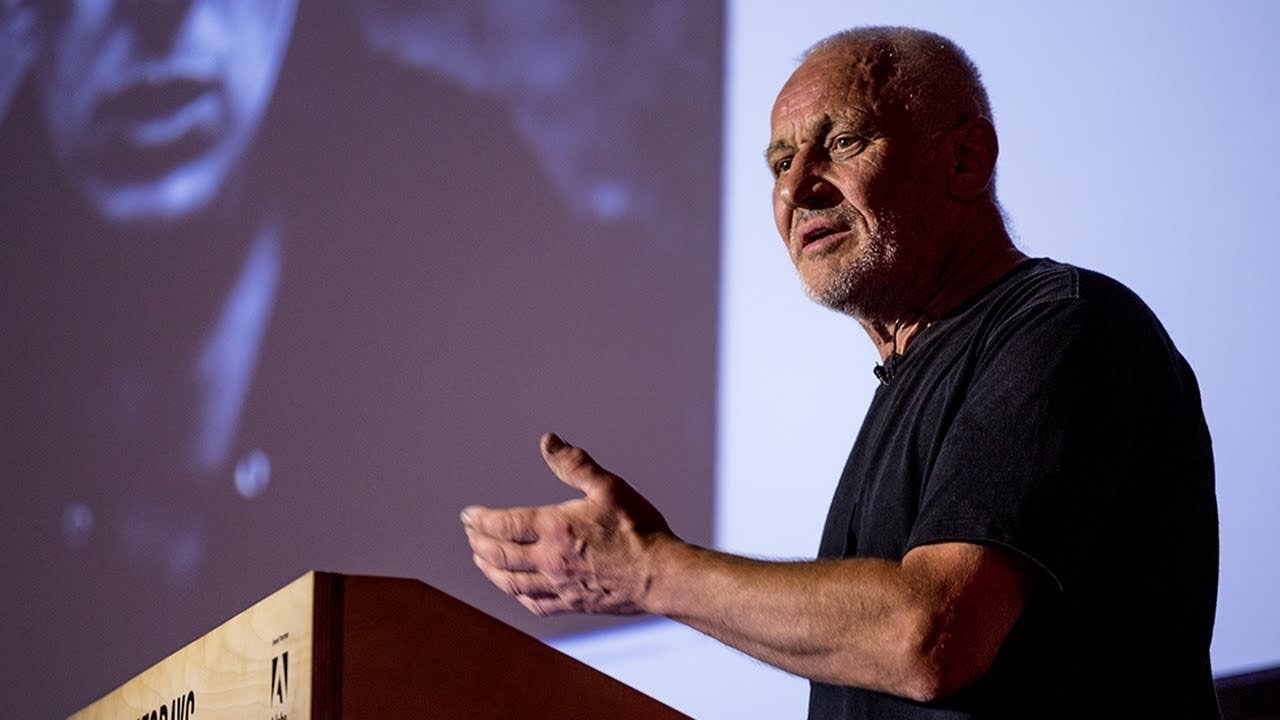
“What I love about photography is the magic of it.”
Transcript: May contain minor errors or formatting inconsistencies.
[Applause]
hello well itit says on the screen and people I'm looking and I'm I I was interviewed to him by Lucifer it's nice that a couple months ago and she really sort of looked into some of the what I'd done quite a long time ago. And it's not quite an historic piece and tonight I thought that I quite like to do something different so I want to talk about using a specific camera which is the way blocks camera but before I get to that I'm actually going to show you some of the Oh block but as well as the old work.
This is a this is a film which a friend made of me recently and and one of the things which I of them you know it might be expected I sort of champion the idea of using film and all processes but absolutely love technology and I think it's wonderful that the technologies enable the film to be made which is made in the darkroom and to be able to make a film in the darkroom high-speed digital and that's wonderful and then.
I am after making a lot of photographs a long time I decided a few years ago I'd actually like to print some the photographs because the negatives always have but they were always just stored away in my darkroom I left and really untidy boxes and a terrible mess and I decided that I'd actually like to print them the photograph so I got stuck into printing which you can see here and hangs on I made some photographic dishes of sheets of them shuttling plywood and the developer spit onto the with buckets and dusty old develop and that's me with actually with some gloves on which is great good that don't always weird girls to walk in and as you see in the film of me was the way Glocks camera got messy hands and one of the things that I love but photography is the magic over and apart from the magic of been able to capture an image it's also the magical when a print is made and this is some of it.
This is just some little short cuts out of a film which am a friend of mine made a couple of years ago and the film's called available light and that some it's on Vimeo and it's also can be found on. And website which is the state home films and it's filmmakers join Edwards so this is after the prints made and term no it's going to be hung up it's all completely hands-on.
So the the prints are fifteen hundred by twelve hundred millimeters and HV was just done in a in a three meter plywood with a bucket developer and there is and some of my work which I what for a long time. And it's covered by their to view which endlessly made and I tended to make a lot of on the photographs that probably obtained it to not remember most but I've become popular for me and other people have seen them tend to be quite often through Facebook trips and a lot of them are black and white but a black and white is because actually if I use black and white which was relevant at the time I work for I mean I music paper enemy a long time ago when it was a really interesting paper and a bit like and you know is it just covered a lot of things that covered a lot of things like film fashion as well as music and politics and events and people a bit like later twosies and then.
And I take that the fame that oh L so sorry so that a lot of what was black and white of the time because that when it got to the stage of trying to refugees color and newspapers at that stage it was really bad and everyone strike the old photographer strive to keep walking in black and white which is a for us great important the time. But also it meant that but no digital you had to go to a job bata photographs Russia after that some sort of makeshift art room somewhere process the film and print and then go and deliver to the office the next morning or sometimes same day and then quite a tall order but we all caught the certain run ruin like my and you know.
So I photographed a lot of people.
But the thing about the black and white was always kept the negatives because I process in myself and the color stuff got a bit lost because it was transparencies at the time and had hand over to the client and never see it again and so the gist of this is is also a full face photograph and another aspect of I got really interested in was what else happens at the edge of the frame was something. That's not just old Rufus.
And I had them when I was at college of that Royal College and wondered a long time ago. And in the cupboard there was a camera called away blocks and occasionally he could train borrow it. And I used that few things are quite liked it.
But I didn't really frame at the application for it.
But then when I started working and doing jobs and working for a rest companies I just occasional decide oh I'll try and do something where the egg-whites camera and so I the it will be photographs actually talk about reasons I went to America all over America actually.
And I somebody had given me some voters that were walking with a band and they have some voters for a tool that got canceled so I went all over America and stayed in all the details of these voters and I was really interested in street photography but I didn't want to just make photographs in street I wanted to have a reason for it.
So I started compiled a set of photographs of people with possible music and you know New York San Francisco which is quite interesting the contest in New York in San Francisco here.
And then I then you know coming back to London I made some photographs working photographs and commissions Notting Hill Carnival and one of the things I realize that always lights the extra things happen to photographing the things which you can't set up. And it just has to be what you captioned the moment and it just thinks brilliant as always people and photographs doing different things and one of the photographer's that probably inspired me in that time was American photographer William crane and he made photographs leap photographs in Tokyo New York Rome and Madrid in Paris I think and quite famous photographer was researching and there's also a lot of things happen this photograph a lot of extra little detail so that led to the thing that I had the Commission make photograph of Mick Jagger and he hadn't said anything for a while at the taemin's I went along to press call. And I'd never been to one before.
So it was a situation where about 20 or 30 photographers were given 10 minutes to witness Mick Jagger making it performances back of a nightclub and Soho and my instant reaction was did I make the picture for the job Baker picture of Mick Jagger's face or do a document and scene so I think a dead boss and I quit quite like that. And it sort of inspired me. And it's just really an ideal you know whatever else is going on and sees like the guy behind on with his camera and and a distant disa gate thing to do really and and that that photograph was since you know it's been so it was used an enemy we thought to use and really explore Ian's book at one time. And I talking about trying to use the camera using a job.
So I did it that early he's had a lot of work with them misspell COINTELPRO well as banne so decided at one time I would actually use a way to lock camera so this is Wade locks camera and one of the things that Wade locks camera is it's a panoramic camera which can make a Wade I wait angle image without distortion if you use in a conventional wave which ie put it on a tripod and look at the spirit level on the top and make sure it's absolutely horizontal and flat but I couldn't do that I just had to hold it and hope for the best and then hoping for the best of the exciting thing to me and but it would work. And so this was it became one of the things I loved the both it was almost like being put into a situation of using a camera which was almost making like you were done near sort of still from a film or something and you know nowadays panoramic cameras can be operated from your phone which is brilliant the software which stitches an image together and you get instant panorama but then.
There was nothing like this it was just a large camera so I'm now going to show you the camera and this is the camera it's an old Japanese camera and this is a small film major friend last week of me awarding the film into the camera the film has a 35-millimeter camera and the film has a way around the barrel in the back of the camera so that when the lens moves to the front it's always. And it means that image is always in focus if it's used conventionally so that's that's the wave lights cameras are now going to saw some examples of using wavelets camera again Commission job.
This is a portrait of him metal worker sculptor artist builder Abdul Russian he was sort of a piece of infamous for some of his work of large-scale sculptures and some of the objects that used in festival a class envy and this wasn't one of hers workshops we lived in the workshop and had all the things he makes it makes robot story and machine everything announcing it were metal usually furniture and it was big to be able to go along with the wakelock camera and capture him but everything around him in his environment it was in a caravan and some stilts above all the workshop of which one of the things.
That's quite interesting Wade locks camera is that to me is that certainly ideas if you use it in a certain way you can create a sort of focal point at the center of a frame at the side of the frame.
And then you saw always the things going on and and one thing is that if it's used conventionally as a panoramic camera using a tripod everything will be in focus and you've got a Wade image I can use that all that we as I said sort so it becomes distorted the images really becomes sorted this is jewelry these build fits and I just caravan behind it again doing what with it not just playing with it as a hobby I actually use it a lot for worked and I made some photographs for a an organization called the big wheel that were in charge of all the promotion of public transport and lighting them.
And it's quite interesting the thing about me seeing the camera distorting things.
And then using as a bad viewpoint is the wonderful distortions are we can get floors of things. And this was a campaign which is all about probably I'm sport and hope people got around so including baked included you know just wonderful distortions can be really interesting and it also included change buses a lot of photographs have been devices and really distorted buses I've been finding them to bring it here.
But this event walk when ever ever which is quite interesting and there was part of the campaign was about parking raids and the things put interest in the way that the cameras - to capture the detail of the drivers have got on the bus happily in West the powers behind and they're also reflected in the siege of the windows of the bus as well. And that's another thing that I think extra wear is something which in using a camera that you can't teammate escape what you're going to get from it you just have to point the camera a direction and accept something.
And then look at it afterwards think oh wow I've got that but all that reflects and I think that can be quite an exciting thing really another thing about more reflections or the reflections become even more intricate and it doubles image I decided recently to go and train them go to a place that I love and make some images with the way Glocks camera and tank capture something there.
And its own police force act afford those drag racing and cars them drives on a track record or mail and they can actually from a standing start get down across the mail and waste from four seconds which is great and place and one of the most impressive things about it is as you can imagine that it's that the noise the sound not noise zone this mail speeds are in a zone than the actual thrust of a car getting up speed from sounding start it. Actually shakes right through your body and I don't have a kind of camera which can somehow capture that action.
So I'd say do something different so we're going to the pit that sounds important and photograph cars which are they're all completely built by hands and record it plays and there's no huge great sponsorship but it's absolutely so objects almost art objects are using like a wave lights camera I thought well if I even thought them even more to me will be really interesting and hopefully to other people as well and just it's the thing about the distortion.
But the distortion and capturing something in the foregoing which is the car that and a roller that things you know in a dress really I find interesting this is one of the things that had phone with interims all the way all the cars were painted and knows a whole new thing which is wraps and then.
This is a car which completely in fact body but the paintwork on it is photographed from a NOAA car which taken out of a barn and photographed and then wrapped onto this one its placing is not shiny and super slick anymore it's in a bit falling apart by looks and one of the things about these photographs is that I traveled a lot and a sapphic off making photographs in New York and I worked a lot in America and I worked music doesn't has earned them.
This is not America this is middle England the one thing that is really hard in the middle of England some things that the weather's not conducive to drag racing but you know it can look pretty good that's painters which is amazing a little radio that. Actually was driving but also couldn't be any bumps around and that's a camera just two on the floor like them.
Now what the thing about the weighed camera was I just put unfeeling I keep seeing it we could set whole thing about it is so much image it can be fun and you know just little details and to be able to pick up the drivers and really interesting graphics which pretends our self-tan floor and all sorts of things.
This is a nice material over her car and she's been driving directives and all over Europe for decades and then she's the person who's driven that car look yeah.
I think that time. Actually went down that tractor I think three point four seconds which is just three point four seconds from a standing start for a quarter-mile is quite phenomenal that's a classic example from year to wait like stamina versa the engine and in this Center and focus.
And then this narrative annoying about mechanic from one side and then as a passerby forcing an elevated it just all happened and it's and it's quite interesting that in Kelly's talk where one of our slogans was just focus and and I I guess I was really good and it's just them would often focus on look up and focus on what you're looking and the subject matter not don't look through the camera and then. That's a surprise event oh I'm going back to that ones like that and just to be able to put subject matter right in the foreground get them one else another women derive earlier who's looking a bit me bemused because the thing about that camera is you need to be so close to subject matter and and I'm told I probably got the camera about 300 millimeters away from that engine so the girl in the back don't let me use what am I doing and but she's them I would been abused at heart because she had driven that that engine has just been taken a car which she had driven down the track it was a father's carne asada load if the driver and she drove it down the track at speak point nine seconds which is amazing it's a lot of them I've done there's a lot of energy of interiors and kitchens and cooking and all sorts of things.
And this is what this sub kitchen I like the gas masters because of the nitrous oxide which is quick stinging in the eye the things are not always changing some things they get a bit dilapidated this is past register the fast ready and I just strange all them rebuilt pick up the keeps rebuilding it always brings it back and keeps going and then because he's written in the side up it's collapsed into the body of the trader tactics got written on it the show must go on. And I think it was aware they made them can actually can see just on the way and the last time savers are removing this guy that's fast ready bus latest are fascinating mechanics and it's a fraud now the other thing about drag racing is it's not always safe then cars crash and then.
This is the bits of a car that being laid out in a cold sweat enough the ghouls and it's all the people looking at all the parts flying over the parcel I know because it's going to collect some money to rebuild it another subject matter this with them again trying to make photographs where there would be interesting subject matter which is to me lots of people will end up meeting machines so I went to M Naga cultural fear in France which is just a spectacular place for the way Glocks camera you can choose your chainsaw there and one time when I was in France and then Northwest France and then it was a Saturday afternoon and and this photograph reminds me of it and just at the Saturday afternoon and getting dark and in November and walking doing the street and a lot of local strange stones have pretty quiet and dead but there's a bit of action in a bit to shorten those three butchers were actually you know what creating or really fighting the chainsaws that was France and again it's like that thing that I love this is a memory of could it could be a French film.
And I felt like it would have to wave my god camera become a bit like films or exist you in the film I think it was a disgusting machine and I think that sort of amusing in a way to myself just that these photographs because of the way they're taken and the black and white film they looked a bit sort of historic that could be in the fifteenth of the fourth these are something. But that was actually last year ♪
people like in amongst machines just looking at things in this little Americana for me was quite you know quite late sets who used to work a lot in America and it was just occasionally it may take the wave lights camera and you know something like American trucks or big and shiny which you know the art everybody on over at that table seemed to only America as a place you've seen something like that.
And it's them again it's just added to by the bag distortion by the handheld camera and this is one of these places that to me always seemed them quite nice place because the functions palm trees but that's that notorious sort of southeasterly in the way to watch camera can go in the beach as well.
And then the sea and for the water toss and that's showing it I was using as a panoramic camera the whole thing the whole panorama and then it can get right in amongst before. And this is the source yeah.
I just mentioned the whole thing about inspired by from the William Klein and he just went great in amongst people when he photographed them I suppose it's a bit like him using a GoPro but that was just an old camera and I actually thought that you know one of the things I've talked to get all the little details that sometimes there isn't any little details and a landscape that like a beach in France is just that empty landscape and I know that I've got you know friends and lovers that. Actually love looking at dog photographs of hearts but in a few dog photographs all the better and the dog is actually and the dog actually couldn't be captured with the camera because the camera's not fast enough and he moves too fast so I had to wait till he was tired but he's run up to us the whole landscape totally tired cause he's run for miles very fast almost as fast a dragster again just sort of being with the captor Wade image and sort of always been as well as making a lot of photographs of people a Great Lakes idea I've made photographs of people places and things. And then.
This is another thing I was like fuss of degraded them urban landscapes I correlate this in particular because it's a situation of phones which is actually going no but it was a whole unfinished holiday village which started crumbling but the CT office really created at a place and them and as you can see that there's a picture postcard of the tone called Peru and going bikini sort of plastic postcards and end of a building there. And I think that's quite enough for anything piece of graffiti to find in sort of totally rural France somewhere and your installation and the way the web camera can just capture so much is going to enter our house and all the risks and they decease never think I actually thought that.
There was some pretty nasty quite a long time ago and just them really trying to you the camera in a really odd way and and this was these were photographs taken and the tunnel in Greenwich and it's really interesting that the actual the camera being away could actually get the ball chains in the tunnel but the corner it's non-existent that's a flat wall and and also there was a yeah there was them yeah it just it fits the moment 19 1980 at least photograph of a a band called the last few days now. There was a question nice I'm Eve by journey from it's nice and she said we're hoping you open your deal with the camera if it's if the subject matters moving is really small exposure as well.
That's what happens which is really great excitingly because that has it's got three settings it's got 250 of a second at 125 and fifteens the sixteenth would normally be too slow to hunt all the special in the lanes moving to the lanes was mm was but it makes exciting images the other thing I hadn't really mentioned tall lows treated panoramic as horizontal but finite it can be vesicle and I didn't really put enough water into this because it's widescreen and I think that the vertical maybe is just too difficult to visualize but here is the camera used actively again back in the tunnel which is that to say to the tunnel behind the rest and and I did some sort of harder more miserable what will account as well where.
I was asked to testify this guy and then.
So I could side them in must you do and then made for to ask the weight loss camera and that's all about say saw him [Applause]
you [Applause]
Latest Talks
-
Will Anderson and Ainslie Henderson
Bringing stop motion sorcery to BBC’s Small Prophets
Watch -
Amber Weaver
How does contemporary type design translate into the wider world?
Watch -
Murugiah
Why you should reject the formula and make art about things you love
Watch -
Marina Willer
Design thrives when you find poetry in the simple things
Watch -
Lizzy Stewart
The hundreds of drawings and writing-on-a-whim that goes into comic novels
Watch -
intra
The rewarding process of recognising the art in obscure everyday life
Watch